
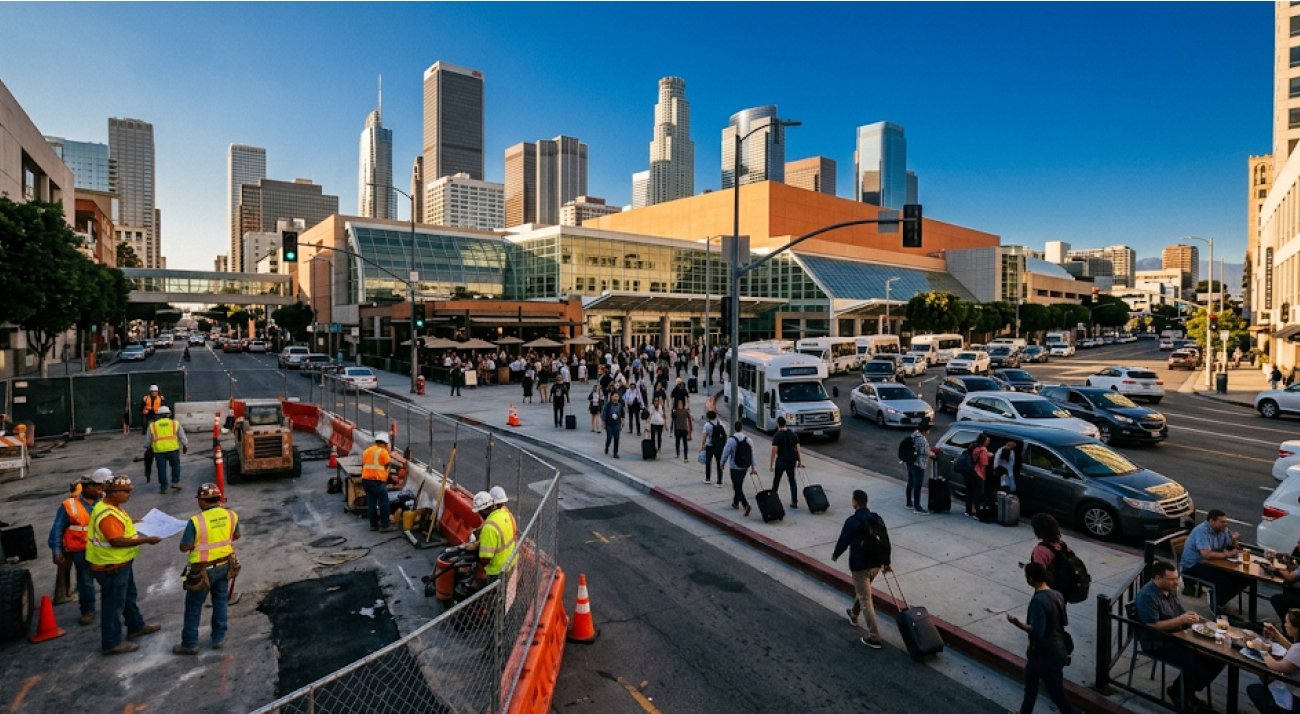
Los Angeles is beginning to see the economic-development value of its new convention strategy before the $2.6 billion expansion of the Los Angeles Convention Center is even finished. One year after construction began, 18 new conventions have already booked dates for the expanded facility. City officials estimate those events will bring approximately 186,000 visitors to Downtown Los Angeles and generate more than $400 million in economic impact.
That figure is a projection, rather than revenue already collected. But the bookings provide an early indication that additional convention capacity can influence where large organizations choose to hold future events. For Los Angeles, that distinction matters because the project is intended to compete for conventions that the existing facility could not accommodate.
The expansion is also becoming part of a broader economic-development strategy for Downtown Los Angeles, alongside the city’s preparations for the 2028 Olympic and Paralympic Games and other major international events.
Los Angeles Has Already Secured New Convention Business
The Los Angeles Convention Center expansion officially broke ground on October 1, 2025. One year later, the project remained on schedule and within its approved budget, according to the city and convention center officials.

The most significant early result is the number of future conventions already committed to the expanded facility.
Eighteen conventions have booked the center for dates after completion, with organizations including the American Heart Association, American Chemical Society, American Immigration Lawyers Association and National Association for College Admission Counseling among those listed by the city.
Together, the events are projected to bring 186,000 visitors to Downtown Los Angeles and produce more than $400 million in economic impact.
The bookings build on announcements made earlier in 2026. In July, Mayor Karen Bass said 13 major organizations had selected Los Angeles for annual conferences following approval of the expansion. Those events were projected to attract more than 103,000 people and generate more than $242 million in economic impact.
The city also announced three additional conferences in January that were expected to bring 55,000 attendees and generate nearly $100 million in economic impact. The American Speech-Language-Hearing Association, American Geophysical Union and International Association of Chiefs of Police were among the organizations cited, with events scheduled for future years.
The pattern suggests that convention infrastructure can influence business decisions years before a facility opens.
The $2.6 Billion Project Is About More Than Exhibit Space
The physical transformation is substantial.
The expansion will connect the existing South and West Exhibit Halls across Pico Boulevard, adding approximately 190,000 square feet of exhibit space and creating a contiguous exhibition area of more than 750,000 square feet. The project will also add new meeting-room and multipurpose space while modernizing portions of the existing facility.
The project is being developed by the City of Los Angeles with Plenary Americas as development partner, PCL Construction and Webcor as the general-contractor joint venture, and Populous leading the design.
For convention planners, contiguous space can be a major factor. Large associations and trade shows often need substantial exhibition floors, meeting rooms and supporting facilities within one campus. Los Angeles has historically competed with other major convention destinations for this business, making additional capacity a strategic issue rather than simply an architectural upgrade.
The city’s decision to build capacity around that demand is already producing evidence through new bookings.
The Economic Impact Will Extend Beyond The Convention Center
A convention does not generate its economic value inside an exhibit hall alone.
Visitors need hotel rooms, restaurants, transportation, entertainment, retail and other services. That creates opportunities for businesses across Downtown Los Angeles and the wider regional visitor economy.
Los Angeles entered the expansion project with an unusually large tourism base. According to Los Angeles Tourism and Tourism Economics, visitors generated $42.6 billion in total business sales during 2025 and supported more than 530,000 jobs across Los Angeles County. The region welcomed 49.5 million visitors that year.
The existing convention center was already contributing to that economy. In 2025, the facility hosted 19 citywide conventions, attracting more than 260,000 attendees and generating over 209,000 hotel room nights. More than 470 self-contained meetings and events hosted through the city’s hotel community generated another 254,000 room nights.
The expansion therefore represents an attempt to increase the scale of an existing economic sector rather than create an entirely new one.
For local businesses, the difference could be measured in visitor nights, restaurant transactions, transportation demand and spending before and after major conventions arrive.
Construction Is Already Producing Local Economic Activity
The future visitor impact is only one side of the equation.
After its first year of construction, the project had generated nearly $10 million in wages and created more than 1,700 new union jobs, according to Mayor Karen Bass and the Los Angeles Convention Center. The city also reported approximately $500 million in contracts awarded to small and minority-owned businesses.
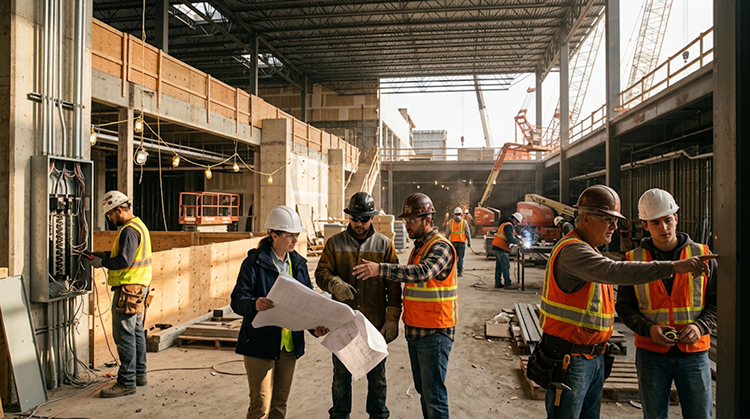
Those figures represent economic activity occurring before the expanded facility begins operating at full capacity.
The project is also being used as a workforce-development opportunity. City officials said hundreds of apprentices are building careers in the skilled trades, including veterans, transitional workers, people with criminal-justice-system involvement and former foster-care alumni.
That adds another dimension to the economic-development case. Large infrastructure projects can create immediate construction employment while also attempting to build a longer-term workforce pipeline.
The Long-Term Visitor Spending Target Is $150 Million A Year
The city expects the completed project to generate more than $150 million in additional visitor spending annually.
It also projects more than 15,000 jobs, more than 500,000 additional visitors each year, and approximately $652 million in additional General Fund revenue over 30 years.
These numbers should be viewed as projections rather than guaranteed outcomes.
The $400 million associated with the 18 already-booked conventions is also a projected economic impact. The actual value will depend on attendance, visitor spending, hotel stays and the broader activity generated by each event.
That distinction is especially relevant for economic-development organizations evaluating convention-center investments. A large headline number can demonstrate potential, but the stronger long-term measurement comes from tracking actual room nights, visitor spending, jobs, tax receipts and repeat bookings.
Los Angeles is effectively creating a benchmark for those measurements.
The Olympics Add Another Test Before Completion
The timing of the project gives Los Angeles another unusual challenge.
Construction began in October 2025, but the facility must remain usable during preparations for the 2028 Olympic and Paralympic Games. The city plans to turn the convention center over to LA28 in March 2028, with final project completion expected in 2029.
That means the project is being built in phases around one of the largest sporting events the city will host.
The Olympic connection also makes the convention center part of a larger Downtown Los Angeles visitor strategy. Hotels, restaurants, transportation infrastructure, entertainment venues and other attractions can potentially benefit from the additional traffic generated by conventions and major events.
This is similar to the broader economic-development pattern seen in other U.S. markets where major event infrastructure is increasingly evaluated as part of a year-round visitor economy rather than as a standalone venue.
For another example of how a major event can produce measurable economic effects, Richland Chamber previously examined the Phoenix Women’s Final Four economic impact, where visitor spending, hospitality demand and community programming were all part of the event’s broader value.
The Financing Question Remains Part Of The Story
The economic opportunity does not eliminate the financial questions surrounding the project.
Los Angeles’ Chief Administrative Officer has estimated the project’s financing cost at approximately $2.6 billion over 30 years, with debt-service payments beginning in fiscal year 2028-29. The city’s budget documents indicate the project will affect projected General Fund surpluses as those payments begin.
The city has also structured additional bond financing for remaining convention-center costs. Its 2026-27 budget documents anticipated approximately $1.74 billion in Series 2026-C bonds and another $62.4 million in Series 2026-D bonds for the project, subject to market conditions and funding needs.
That makes the future performance of the facility particularly important.
If the convention center attracts the additional events projected by city officials, the resulting hotel stays, visitor spending, business activity and tax receipts could help support the investment case. If demand falls short, the city would still face the financing obligations associated with the project.
The economic-development question is therefore less about whether the building will be busy and more about whether incremental business will be large enough to justify the long-term public commitment.
Los Angeles Is Building A Convention Economy Around Its Existing Visitor Base
The strongest argument for the expansion may be the scale of Los Angeles’ existing visitor economy.
The city already attracts tens of millions of visitors annually and generated $42.6 billion in visitor-related business sales in 2025. The convention center has also demonstrated that large meetings can generate substantial hotel demand and visitor activity.
The expansion gives Los Angeles more capacity to pursue events that require larger contiguous exhibition areas.
That could matter as cities compete nationally for conventions that bring thousands of visitors for several days at a time. Unlike a single sporting event, conventions can create recurring business across different years, industries and seasons.
For economic-development officials, that repeatability can be valuable.
A successful convention center does not need one massive event to transform the local economy. Its impact can come from hundreds of smaller decisions made by associations, corporations, trade organizations and event planners over many years.
The $400 Million Booking Pipeline Is The First Real Test
One year into construction, Los Angeles already has an important early indicator: 18 conventions, 186,000 projected visitors and more than $400 million in projected economic impact.
The next stage is turning those commitments into actual visitor activity.
That means tracking how many people attend, how long they stay, how much they spend, how many hotel rooms are occupied and how much revenue reaches local businesses. Those measurements will provide a much clearer picture of whether the $2.6 billion expansion is delivering the economic return Los Angeles expects.
The project is also arriving at a critical moment for Downtown Los Angeles. With the 2028 Olympics approaching and major international events continuing to bring visitors into the region, the convention center will become one piece of a much larger visitor-economy strategy.
Los Angeles has already secured the demand.
The real economic test will begin when those 186,000 visitors arrive.
