
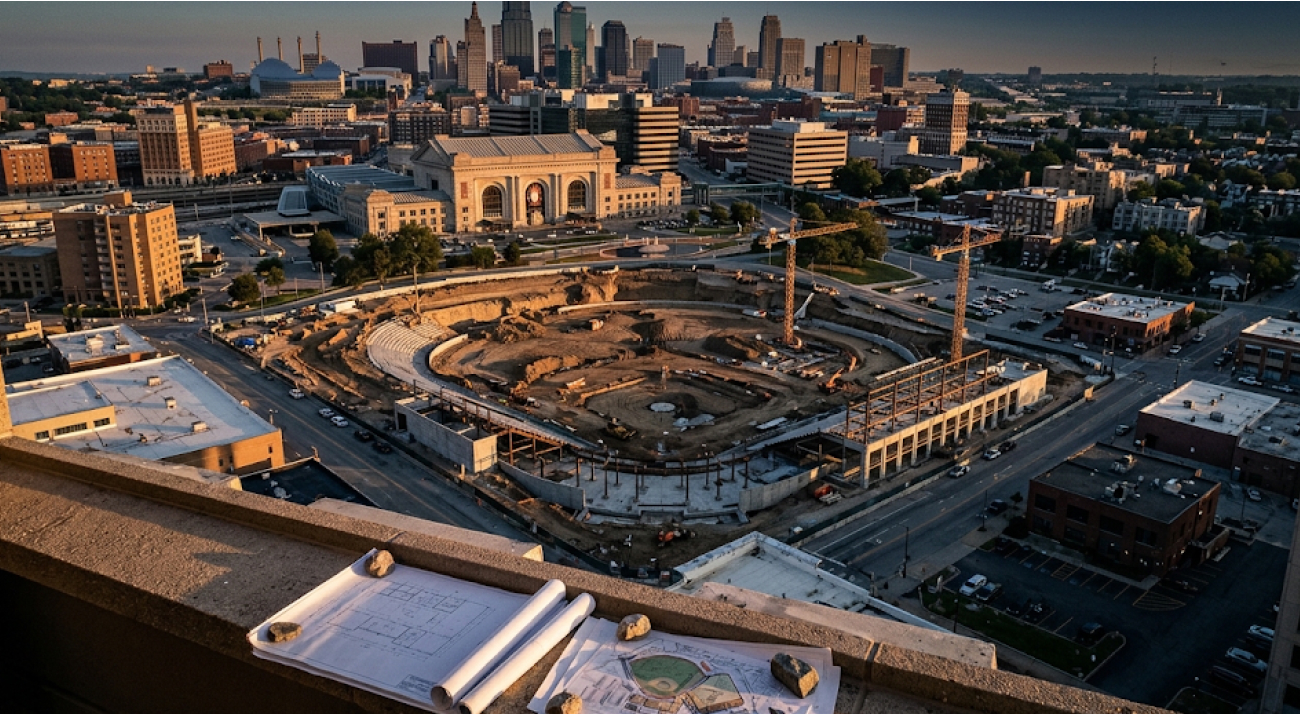
Kansas City has cleared major legislative hurdles for a new downtown Kansas City Royals ballpark, but the financing behind the approximately $2 billion development is creating a much larger conversation about public investment. City financial projections indicate that the financing structure could require approximately $1.393 billion in debt-service payments over 30 years, even though the city’s stated contribution toward the project is $600 million.
The distinction is significant. The $600 million represents the city’s planned contribution, while the larger figure reflects the projected cost of financing and repaying the obligations over time. Kansas City officials expect future tax growth, stadium-related activity and other revenue sources to help cover those payments. However, the plan depends on assumptions about attendance, development activity and the ability of the surrounding district to generate additional revenue.
On October 8, 2026, the City Council approved a package of measures advancing the proposed stadium at Crown Center. The decision moved the project closer to its anticipated May 2027 groundbreaking and March 2030 opening, while placing the long-term financial commitments under greater public scrutiny.
Kansas City Approved The Stadium’s Major Financing Measures
The proposed ballpark is part of a larger redevelopment initiative centered on the Washington Square Park and Crown Center area. The approximately $2.05 billion first-phase development includes a new stadium, team offices, public spaces, hospitality facilities and supporting infrastructure.
Kansas City Council approved three important measures on October 8. They covered rezoning approximately 68 acres, authorizing financing arrangements and approving a tax increment financing plan intended to help repay stadium-related obligations.
The bond authorization includes up to $537 million for stadium construction, team offices and supporting infrastructure. The broader bond allocation is approximately $615.2 million after accounting for capitalized interest, issuance expenses and other financing costs.
Mayor Quinton Lucas described the approvals as the completion of the necessary legislative steps to move the development forward. The vote followed months of negotiations between city officials, the Royals and state representatives.
The financing ordinances passed 11-2, with Councilmembers Johnathan Duncan and Nathan Willett opposing the bond authorization. Their objections focused partly on the use of city resources and the possibility that stadium financing could compete with other municipal priorities.
The approvals establish a framework for proceeding, but they do not eliminate the financial risks associated with a development that depends on revenue generated over several decades. Kansas City’s October stadium financing legislation provides the formal authorization and funding instructions behind the plan.
Why The $1.393 Billion Figure Matters
The most consequential financial question is how a $600 million city commitment can translate into a projected $1.393 billion obligation over the financing period.
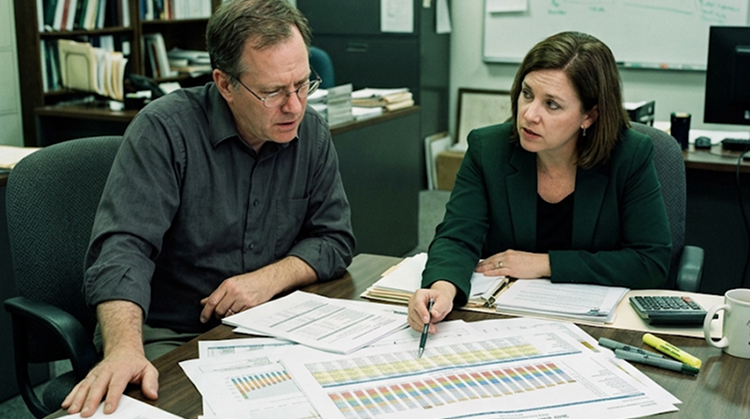
The answer involves borrowing costs, repayment schedules and the structure of the city’s funding commitments.
Kansas City’s planned contribution includes approximately $510 million for stadium construction and related facilities, along with $90 million for infrastructure. The financing package also includes bond-related expenses and interest.
The Missouri Development Finance Board is authorized to issue revenue bonds for up to $537 million in project costs. The broader allocation of approximately $615.2 million includes $58.8 million in capitalized interest and $19.4 million in issuance costs.
The city’s financial forecast estimates approximately $1.404 billion in revenue to cover roughly $1.393 billion in debt service over 30 years. That leaves a projected difference of approximately $11 million.
The narrow margin makes the assumptions behind the forecast especially important. If revenue sources perform below expectations, the financing structure could face pressure.
The $1.393 billion figure should not be interpreted as an immediate cash payment or as the stadium’s construction price. It represents a projected long-term repayment obligation under the financing plan.
That distinction is central to evaluating the proposal. A stadium may cost a certain amount to construct, but the amount required to finance that construction can be considerably higher once interest and other costs are included.
The Stadium’s Tax Revenue Projections Depend On Future Growth
Kansas City’s repayment strategy relies on capturing additional tax revenue expected to emerge from the stadium development and its surrounding economic activity.
One major component is tax increment financing, commonly known as TIF. This mechanism uses eligible increases in tax revenue within a designated redevelopment area to reimburse approved project expenses.
The Downtown Stadium TIF Plan is expected to generate approximately $381.9 million in reimbursable project costs, plus associated financing expenses. The plan covers the stadium development area and is intended to direct eligible new revenue toward the project.
The Economic Development Corporation of Kansas City outlined the structure in its September 14, 2026, explanation of the proposed financing plan.
The development area includes a stadium expected to accommodate at least 30,000 spectators, public spaces, hospitality and entertainment areas, and the Royals’ offices. The estimated investment for this first redevelopment area is approximately $2.05 billion.
The TIF mechanism is only one part of the repayment strategy. Kansas City also approved a larger stadium impact area designed to capture certain increases in tax revenue over a 30-year period.
The 2025 tax collections provide the baseline. Eligible increases above that level can be redirected to help pay stadium-related debt.
The revenue categories include portions of hotel and restaurant activity, sales and earnings taxes, utility-related revenues and other eligible sources. Additional support is expected from parking revenue, gaming activity and surrounding development.
The strategy assumes that the stadium and surrounding district will generate new economic activity beyond what would have occurred without the project. That is the central economic proposition behind the financing arrangement.
Attendance Assumptions Could Determine Whether The Numbers Work
The projected repayment figures depend partly on how many people attend games and events at the future stadium.
According to the financial projections reported by KCTV5 on October 8, the revenue model assumes average attendance of nearly 26,000 fans per game.
That would represent an increase of approximately 20% over the Royals’ reported 2025 average attendance of 21,590.
The difference is important because attendance influences more than ticket sales. More visitors can increase demand for parking, restaurants, hotels, retail businesses and other services in the stadium district.
The forecast also relies on the assumption that the development will attract activity beyond regular baseball games. Concerts, special events and other entertainment programming could help create additional revenue throughout the year.
However, projected attendance is not guaranteed. Team performance, ticket prices, regional competition, economic conditions and fan interest can all affect attendance over time.
A stadium with strong attendance can support nearby businesses and increase demand for services. A venue that consistently operates below its projections could generate less economic activity than anticipated.
For Kansas City, the attendance assumption is therefore a financial variable, not simply a sports-performance statistic. The city will need to measure actual results against the projections used to justify the financing.
The Public Contribution Extends Beyond Stadium Construction
The stadium’s financial structure also involves city resources that serve broader municipal purposes.
The October financing package directs the city manager to use several funding sources for portions of the development. These include allocations from the Waterworks Fund, Sanitary Sewer Fund and Stormwater Fund, as well as other municipal resources.
The legislation includes appropriations of $1 million from Waterworks, $6 million from Sanitary Sewer and $8 million from Stormwater.
The city also plans to coordinate improvements to nearby streetcar stations and transportation infrastructure.
These allocations have attracted criticism from councilmembers who argue that money intended for public services and neighborhood improvements should not be redirected toward a professional baseball development.
Johnathan Duncan and Nathan Willett raised concerns about the potential impact on other city priorities. Their objections reflect a broader question facing municipalities that use public financing for major sports facilities: what other projects could receive funding if those resources were committed elsewhere?
The issue is not limited to the stadium’s construction budget. It involves the opportunity cost of allocating public resources to one large development instead of distributing them across other infrastructure and community needs.
The Royals Are Bringing Private Capital Into A Larger Development District
The public financing debate does not mean the Royals are relying entirely on taxpayers to build the project.
The Economic Development Corporation of Kansas City estimates that approximately $911.2 million will come from the team, while roughly $1.14 billion will come from public sources, including the city and state.
Those figures place the public-private financing structure under close examination. They also demonstrate that the project is larger than a conventional stadium construction contract.
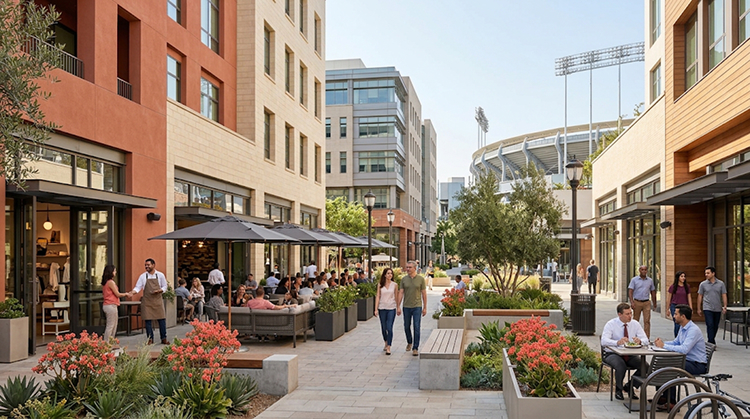
Royals Chairman and CEO John Sherman has discussed additional private investment in the surrounding entertainment district. The team has indicated plans for approximately $1 billion in additional phase-one mixed-use development investment, including potential retail and entertainment uses.
The broader district could include restaurants, public spaces, commercial development and other visitor-oriented businesses.
The development strategy is intended to make Crown Center a destination beyond the baseball calendar. That matters because a stadium operating for a limited number of home games cannot generate the same year-round activity as a district with multiple businesses and attractions.
Kansas City is attempting to connect the ballpark to a wider downtown economic strategy.
The city’s official development framework also includes a 30-year lease arrangement for the Royals, under which the team would be responsible for stadium repairs, maintenance, utilities and operations. The agreement includes a city share of 5% of net profits from non-baseball events and a community impact partnership valued at no less than $55 million.
These terms provide additional context for evaluating the balance between public investment and private responsibility.
Infrastructure Spending Could Shape The District’s Long-Term Value
The stadium development plan identifies approximately $422.7 million in infrastructure improvements within the first redevelopment area.
That investment covers streets, utilities, pedestrian routes, public plazas, traffic management, highway access, streetcar stop upgrades and green infrastructure.
Infrastructure is a major part of the economic-development argument because accessibility can influence whether a stadium district attracts activity beyond game days.
Visitors need convenient transportation connections. Nearby businesses need reliable utilities and pedestrian access. Residents need streets and public spaces that remain useful when the stadium is not hosting an event.
The planned improvements could therefore serve a broader area than the ballpark itself.
According to the Economic Development Corporation’s September financing summary, the construction phase is projected to create approximately 16,000 jobs and $1.1 billion in labor income. Once completed, the redevelopment area is estimated to support 2,275 permanent positions, including full-time, part-time and seasonal jobs.
Of those positions, approximately 200 are expected to represent new jobs in Kansas City, while the remaining 2,075 would involve existing team and stadium-support employment being retained.
These figures are projections. Their value will depend on the construction schedule, final development scope and the extent to which the district attracts additional private businesses.
Economic Impact Estimates Need Independent Measurement
Large sports developments often come with substantial economic-impact forecasts. Those estimates can help explain the potential value of a project, but they do not automatically establish that a city will recover its public investment.
The Royals’ financing plan depends on future economic activity being strong enough to support repayment over an extended period.
Kennesaw State University economics professor J.C. Bradbury, who studies sports economics, questioned the clarity of the financial estimates reviewed by KCUR. His criticism highlights the importance of making assumptions transparent and allowing independent analysts to evaluate the calculations.
University of Colorado Denver professor Geoffrey Propheter, another specialist in public finance and sports stadiums, also told KCTV5 that more detail was needed to assess and reproduce the projections.
These concerns point to an important distinction between gross economic activity and actual public revenue.
A busy stadium district may generate substantial restaurant sales, hotel bookings and retail spending. However, those transactions do not translate dollar-for-dollar into municipal revenue.
The relevant measures include incremental tax collections, eligible TIF revenue, operating costs, debt service and the economic activity that would have occurred in the area without the stadium.
For a useful comparison of how event-related visitor spending can be measured, Richland Chamber previously examined the Phoenix Women’s Final Four economic impact, including visitor spending, hotel demand and community benefits.
Kansas City will need similarly clear reporting as the Royals project moves from financial forecasts into construction and operation.
The 2030 Opening Creates A Long-Term Economic Test
The current schedule calls for groundbreaking in May 2027, with the Royals targeting a home opener at the new Crown Center stadium in March 2030.
That timeline gives the city several years to complete site preparation, infrastructure improvements, stadium construction and the surrounding development.
The proposed venue is expected to accommodate at least 30,000 spectators. Its success, however, will be measured by more than the number of seats or the architectural scale of the project.
Kansas City will need to evaluate attendance, non-baseball events, hotel demand, restaurant activity, employment, private investment and actual tax collections.
The city should also compare revenue performance with the assumptions used in the financing forecast. That would allow residents and businesses to see whether the district is generating the activity necessary to support its financial commitments.
The project could create new opportunities for Downtown Kansas City, particularly if the surrounding development attracts visitors throughout the year. But the scale of the public commitment makes financial transparency essential.
Kansas City’s Royals Stadium Deal Is Now A Test Of Public Investment
Kansas City’s new Royals stadium has moved beyond negotiations and preliminary concepts. The October 8 approvals established a financing framework, authorized major bond arrangements and advanced the Crown Center development toward construction.
The economic opportunity is significant. The project combines a new baseball venue with infrastructure improvements, hospitality, entertainment and additional private development.
But the approximately $1.393 billion projected debt-service obligation changes the scale of the discussion. The city is not simply committing $600 million to a stadium. It is relying on a complicated financing structure that must perform over several decades.
Future tax growth, attendance and development activity will determine whether the financial projections hold up.
For Kansas City, the next challenge is making sure that the economic benefits reach beyond the stadium gates and that the public investment produces measurable value for the wider community.
The Royals’ new home could become a major downtown destination by 2030. Whether it becomes a successful economic-development investment will depend on the revenue it actually generates, the private capital it attracts and the city’s ability to manage its long-term financial obligations.
