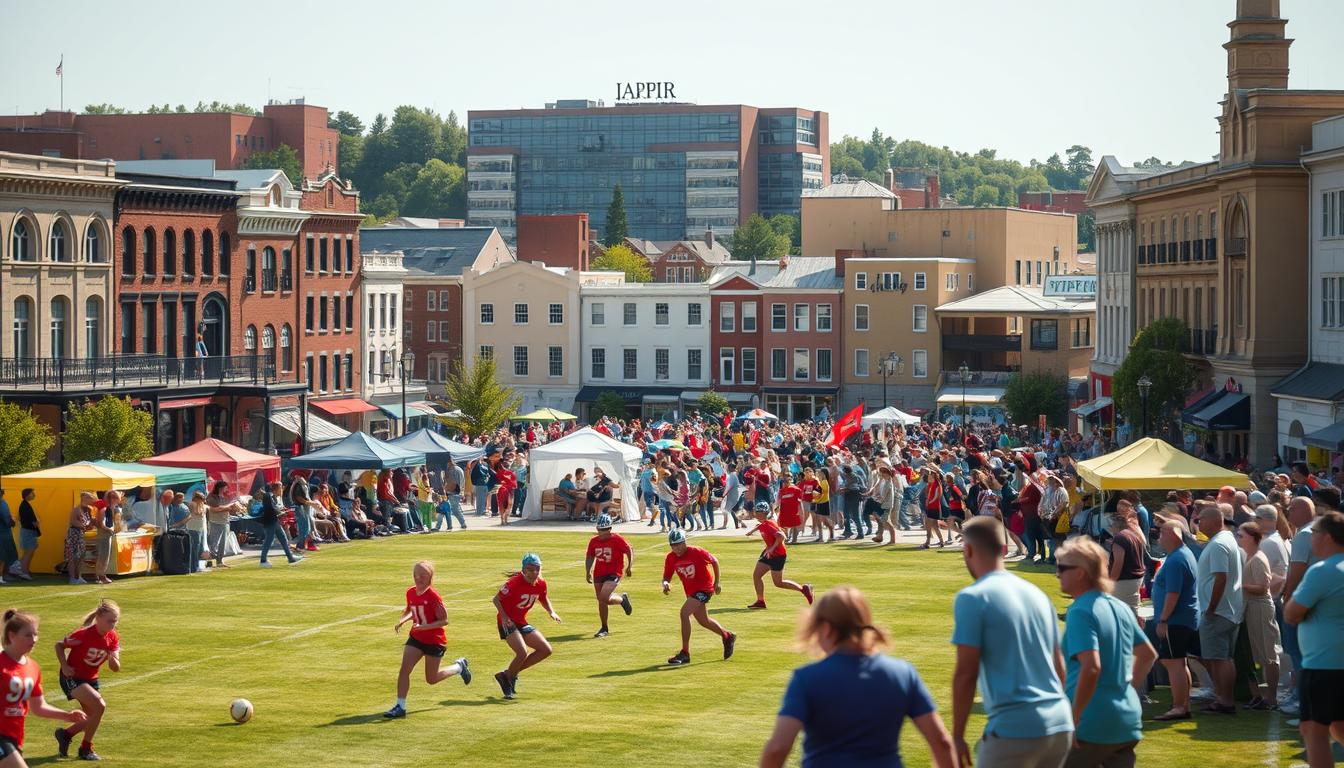
Why do cities bet big on billion-dollar games? Paris is getting ready for the 2024 Olympics, while economists look at Rio’s 2016 success. That event boosted tourism by 4.8%. Now, stadiums are mostly empty.
Attracting big sports events is like a crazy gamble. It’s not just about planning; it’s a high-risk bet.
The costs are huge, but the numbers are tempting. An $8 billion budget and temporary jobs sound good. But, Oxford researchers say these events often cost 185% more than expected. Cities keep betting, hoping for a win.
Let’s look at sports tourism and its impact on local economies. Does hosting big events really help Main Street? Or do they just make corporate profits soar? Can a short event really change a local economy for the better?
We’ll examine ticket sales, vendor profits, and long-term effects. Taxpayers should know if they’re winning or just getting a few empty beer cups.
Introduction: Why Economic Impact Matters
Why do cities spend billions on sports events? It’s not just about pride—it’s a smart business move. Mayors hope for big wins from visitor spending and permanent boosts to their local economy. But, as Sochi’s $50 billion Olympic ghost town shows, the outcome is often not what they hope for.
Let’s look at the reasons behind these big bets. Hosting major events involves three main strategies:
- Immediate cash from tourists (hotel stays, $18 craft beers)
- Upgrades to infrastructure called “legacy projects”
- Global PR that lasts longer than a Snapchat story
Toronto’s $60M bid withdrawal in 2023 was a smart move. Their study showed that 82% of event revenue disappears within six months. Yet, cities keep taking the risk. Why?
| Event | Investment | Outcome |
|---|---|---|
| 2014 Sochi Winter Games | $50B | 27/34 venues abandoned |
| Toronto 2026 Commonwealth Bid | $60M (planning) | Withdrawn after cost analysis |
| Average NFL Stadium Deal | $1.2B public subsidy | 0.3% long-term GDP growth |
The real goal isn’t just selling tickets—it’s brand arbitrage. Cities trade short-term losses for long-term marketing benefits. Barcelona became a top tourist spot after its 1992 Olympics. But, Detroit’s failed Super Bowl bids show that not everyone wins.
Next time you see a mayor with a big check, remember: They’re not just funding sports. They’re buying lottery tickets with taxpayer money. The real question is, whose economy benefits from these events.
Measuring Economic Benefits
Think economic analysis is just about numbers? Cities hosting big events know it’s more like a high-stakes game. They use two main methods: National Income Accounting (NIA) and Keynesian multipliers. NIA is like playing defense, while Keynesian multipliers aim for economic growth.
The Scoreboard of Success
Let’s dive into these economic strategies like we’re analyzing game footage:
National Income Accounting vs. Keynesian Multipliers
The AISTS’ NIA method is like a strict budget manager. It tracks sports event revenue through three main areas:
- Ticket sales & merchandise (the obvious slam dunks)
- Hotel occupancy rates (the assist leaders)
- Public transit usage (the unsung heroes)
Keynesian multipliers, on the other hand, are like the “what if LeBron showed up at your pickup game” scenario. This method looks at how spending affects the local economy. Paris 2024’s planners think every euro spent on infrastructure development could lead to €1.70 in economic activity.
| Metric | NIA Approach | Keynesian Model |
|---|---|---|
| Time Horizon | Immediate game stats | Full season outlook |
| Optimism Level | Replay-reviewed certainty | Pre-draft hype machine |
| Infrastructure Impact | Concrete pours counted | Neighborhood revitalization projected |
Most cities blend these methods. It’s like combining data with creative economic storytelling. The goal? Turning temporary stadiums into lasting community assets through infrastructure development.
Case Studies: Cities That Won Big
What makes a city’s economic win a slam dunk or a buzzer-beater loss? Let’s dive into two famous examples in the sports event collaboration local business field.
Gold Medal Economies
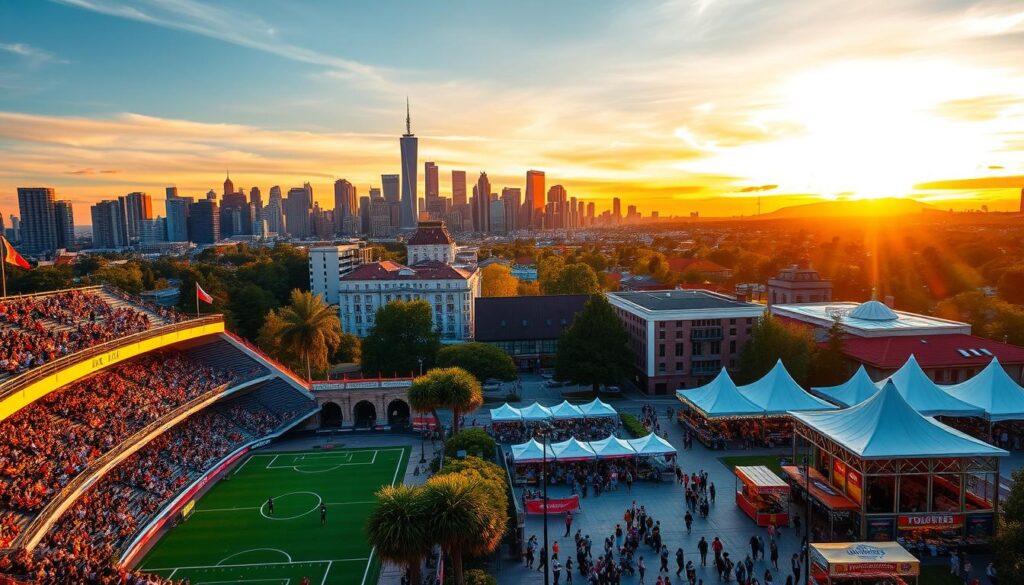
Barcelona’s 1992 Olympic win was a game-changer. It turned an industrial area into a stunning Mediterranean view. Was it luck or a well-planned move?
Barcelona’s 1992 Cinderella Story
The results were clear: 15km of new beaches and a 78% jump in hotel rooms. Tourism soared. But what really made it work was combining local tourism and sports events.
Family-run tapas bars and fishermen’s co-ops became key players. They welcomed international visitors and helped with sailing events.
Rio’s 2016 Olympics brought in $1.2B in tourism. But it also left Maracanã Stadium empty. Yet, favela tourism grew 340% as visitors sought real experiences.
| City | Short-Term Win | Long-Term Legacy |
|---|---|---|
| Barcelona | €17.5B economic boost | Global tourism hotspot status |
| Rio | $1.2B tourism revenue | 8 underused stadiums |
The key to success is giving small businesses a role early on. Barcelona trained local merchants in English and credit card use before the Olympics. Rio, on the other hand, let corporate sponsors choose vendors.
Can cities like Barcelona succeed without Rio’s mistakes? The answer is yes, by creating lasting infrastructure and cultural impact.
Tax Revenue & Job Creation
Hosting big sports events is more than just fun. It’s about boosting the local economy. Cities invest in projects and strategies to create jobs. But do these efforts really lead to lasting community revenue? Let’s take a closer look.
The Payroll Playbook
Think of job markets at big events like a fantasy sports draft. Cities must choose between short-term gains or long-term investments. They face a tough decision:
- The Rookie Contract: Temporary jobs that disappear quickly
- The Franchise Player: Long-term projects like London’s $7B transport upgrades
- The Sixth Man: Small businesses that see a boom in customers
Rio’s jobs were mostly temporary, but London’s subway upgrades are a lasting success. They keep moving people today.
Short-Term Gains vs. Career Stats
Let’s compare the economic impact of events like a player’s career:
| Metric | Rio 2016 (Short-Term) | London 2012 (Long-Term) |
|---|---|---|
| Jobs Created | 50,000+ (80% temporary) | 30,000 (40% permanent) |
| Infrastructure ROI | Abandoned venues | 30% faster commutes by 2023 |
| Tax Revenue Boost | 2-year spike | 15-year tourism increase |
The real winner is community revenue that keeps growing. London’s transport upgrade is a lasting success. Rio’s jobs boom was short-lived.
So, when a city promises Olympic jobs, ask if they’re thinking long-term or just for a quick win.
Local Business Spotlight
Forget the star athletes – the real MVPs often wear aprons. While big stadiums get all the attention, it’s the small businesses that really shine. They turn sports events into economic wins.
Main Street MVP Candidates
In Rio, a taco stand owner went from 50 lunches to 10,000 fans a night. In Milwaukee, a screen printer quadrupled their staff during the NBA Finals. These stories show how small businesses can make a big impact.
These successes aren’t rare. Rio’s program helped create 380+ temporary business licenses. Paris 2024 wants 15% of suppliers to be local. Smart cities treat small businesses as key players.
Vendor Victories and Revenue Fumbles
But there’s a catch: big sponsors often try to push out local businesses. In Atlanta, Olympic merchandise wars led to a ban on street vendors. But public outcry changed things.
The key is finding a balance:
- Give mom-and-pop shops their own zones near transit
- Share revenue with local suppliers
- Let businesses with local employees bid first
A BBQ pitmaster turned World Cup caterer said, “Partnering with local businesses isn’t charity – it’s how you avoid serving lukewarm hot dogs to 80,000 people.” That’s a winning strategy.
Long-Term Benefits Beyond Tourism
When the fireworks end and tourists leave, cities face a big test. They must turn temporary excitement into sustainable growth. It’s not just about souvenirs; it’s about lasting economic improvements.
Legacy Projects That Last
London’s 2012 Olympic Park did more than show Usain Bolt’s speed. It kick-started the East End’s transformation. Now, it’s home to tech hubs and green spaces, showing stadiums can change.
On the other hand, Beijing’s “Bird’s Nest” stadium is a lesson. It cost $480 million but hosted zero major events in its first decade.
Infrastructure That Keeps Giving
The best host cities invest in lasting assets. These are not just for sports events. They’re for everyday use too.
- High-capacity transit systems for daily travel
- Affordable housing from athlete villages
- Stadiums that serve the community
Good infrastructure boosts economic integration. It connects neighborhoods to job opportunities. A study showed cities with strong plans saw 23% more GDP growth in nearby sectors over 15 years.
But can cities focus on both showy projects and practical upgrades? The answer shows who’s serious about urban planning. Next time you see a city’s plans, think: “Will this matter in 20 years?”
Mitigating Economic Risks
Hosting big sports events is more than just fun. It’s a big gamble with taxpayer money. Every success story like Atlanta ’96 has a Sochi warning. Here’s how cities can dodge becoming financial losers.
Defensive Economic Strategies
Smart cities plan for big events like a chess master. They think ahead, like Tokyo did in 2016. The key is to have strong event partnership strategies.
- The escape clause: Contracts with penalties for not meeting expectations
- Modular infrastructure: Buildings that serve more than one purpose
- Revenue sharing: Leagues must share profits from merchandise and tickets
The Art of the Bailout
When the event ends, cities face big bills. They can’t just sell off city buildings. Sochi’s failure shows the need for legacy-first planning.
| City | White Elephant | Rescue Strategy | Outcome |
|---|---|---|---|
| Sochi | Abandoned sliding center | Failed tourism pivot | $50M annual maintenance |
| Tokyo | Unused Olympic Village | Converted to affordable housing | 82% occupancy rate |
| Rio | Maracana Stadium | Private management lease | 30% revenue increase |
These examples show a hard truth: event partnership strategies need exit plans. The best approach? Treat every stadium plan like a prenup. Hope for the best, prepare for the worst.
Gaining Stakeholder Support
Getting a city to support a sports complex is like a UN negotiation and a halftime speech. Mayors can get nervous when faced with protesters. The key is to see stakeholder support as building a team, where everyone has a role.
Building the Dream Team
Good sports event sponsorship deals are like winning teams. They need teamwork, as HLB Global’s models show. Every city needs a few key players:
- The Point Guard: Local officials who know zoning laws inside out
- The Sixth Man: Community leaders who turn doubters into supporters
- The GM: Corporate partners who bring more than money, like training programs
Persuading Taxpayers to Cheer
When Minneapolis proposed U.S. Bank Stadium, they focused on benefits for taxpayers. The AISTS framework offers winning strategies:
- Start construction to create jobs right away
- Make sure venues are open to the public
- Use revenue from luxury suites to fund youth sports
The Golden State Warriors’ Chase Center deal is a great example. They promised $40M in benefits before starting. This shows how to win stakeholder support.
But, some cities fail by ignoring public input. The best approach is to talk about sports event sponsorship as investing in the community. When people see themselves as part of the team, even the toughest critics might join in.
Infographics/Charts
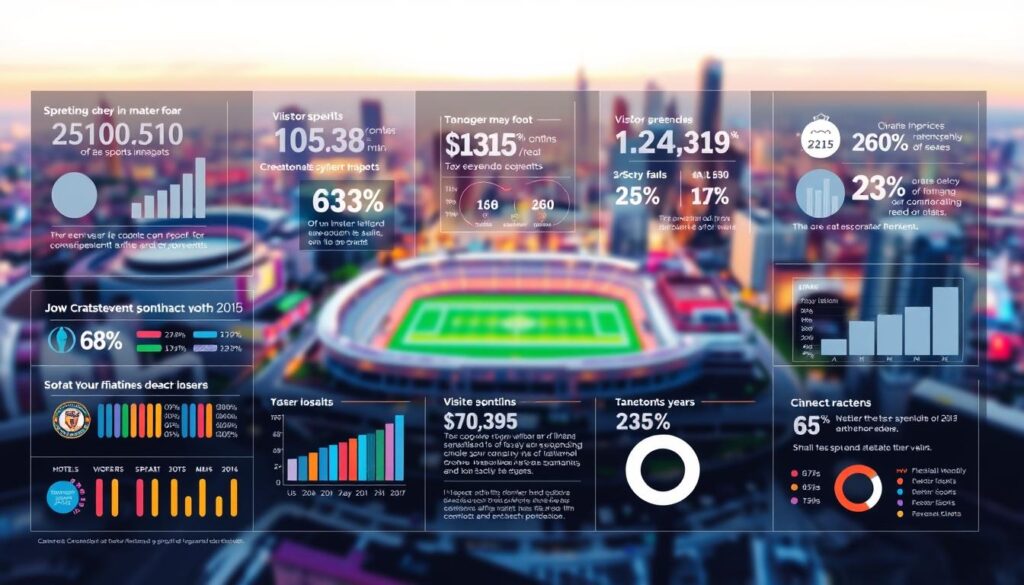
Let’s cut through the spreadsheet fog with X-ray vision. If spreadsheets were stadiums, we’d need binoculars to see the top row. This is why economic impact visualization is more important than ever. Think of this section as your instant replay booth for decoding sports economics.
By the Numbers
Olympic budgets are huge, making NFL salary caps look small. The average Games cost 172% more than expected. But tourism revenue often jumps up like Steph Curry’s three-point shots.
Budget Breakdowns That Don’t Lie
Our playbook compares host cities like fantasy football rosters:
| Host City | Budgeted Cost | Actual Cost | Revenue Generated | ROI (%) |
|---|---|---|---|---|
| Rio 2016 | $12B | $20B | $7.6B | -62 |
| London 2012 | $15B | $18B | $16.5B | -8 |
| Tokyo 2020 | $7.3B | $28B | $5.6B | -80 |
These numbers don’t excite anyone. Infrastructure costs alone could fund NASA’s Mars rover program twice. Yet sports event revenue from merchandise and broadcasting rights keeps cities coming back.
Tourism spikes post-event? They’re as reliable as a rookie’s free throws. Barcelona 1992 saw hotel stays triple within five years. Atlanta 1996 built a stadium that’s now making money through MLS games and concerts.
Why do cities keep bidding for these financial marathons? Because legacy projects, like Vancouver’s athlete village turned affordable housing, score political points. The real MVP? Data visualization that separates touchdown budgets from fiscal fumbles.
Conclusion
Hosting big sporting events is not just a quick shot. It’s a detailed plan that needs careful execution. The real win is turning the excitement of the games into sustainable growth that lasts long after the event ends. Paris 2024 showed how venues can change from just being places for games to being economic drivers.
Recent numbers show sports tourism brought in over $90 nationwide. This proves that stadiums can be more than just places to make money. The key is to see ticket sales as a starting point. Cities like Indianapolis turned one-time game profits into jobs all year round, showing the community economic impact of sporting events depends on hard work after the games.
But we can’t ignore the challenges. For every Atlanta ’96 that helped with affordable housing, there’s a Montreal ’76 that’s paying off Olympic debt. The strategy is clear: tie big projects to local needs, not just what sponsors want. When Minneapolis used Super Bowl LII money for small business grants, they helped local businesses thrive.
Now, smart cities view big events like fantasy drafts. They focus on lasting projects over just winning. Can your city turn old media towers into homes? Use volunteer efforts to create lasting jobs? That’s how winning games can lead to economic growth. The real victory is not just winning, but also rebuilding the community after the games are over.
