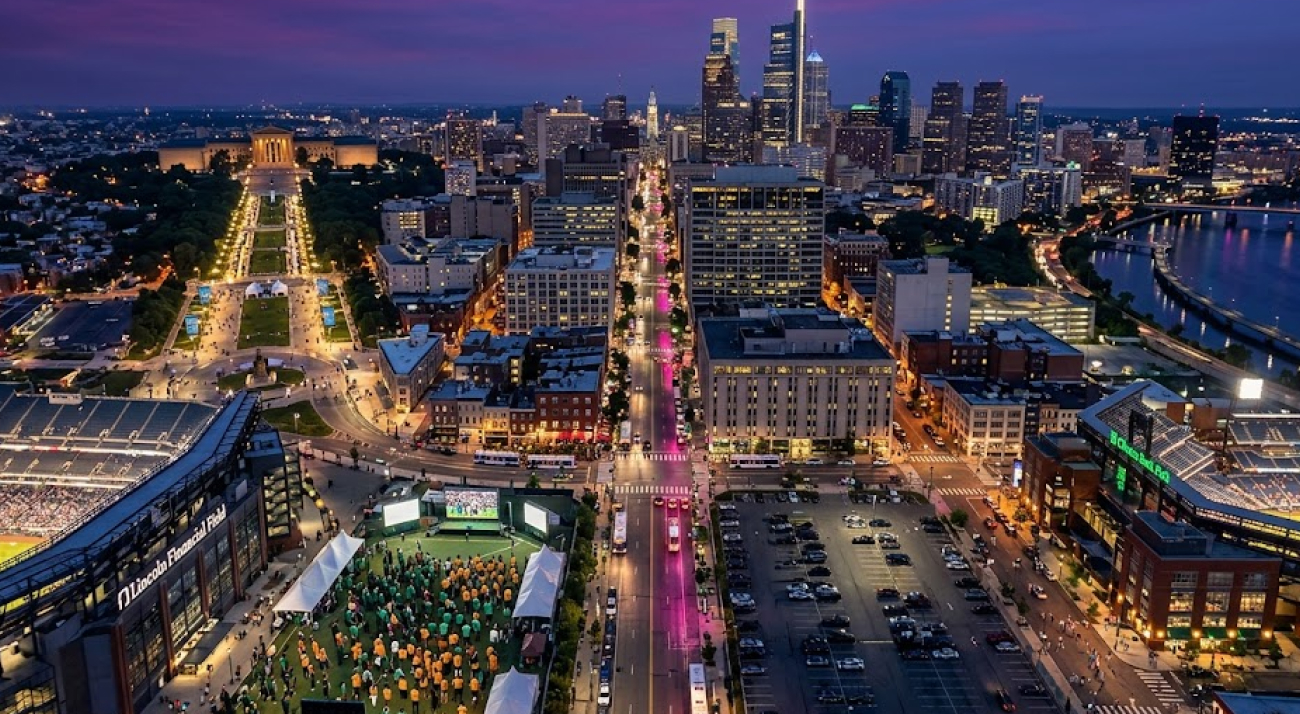
Philadelphia is about to put one of the biggest assumptions surrounding major sporting events to a harder test: whether headline economic-impact numbers actually translate into broad local gains. On August 20, 2026, Mayor Cherelle L. Parker’s administration selected Epsilon Economics to conduct an independent study of Philadelphia’s 2026 major events, covering activity through July 31. The review will examine the FIFA World Cup, MLB All-Star Week, America250 celebrations, the 2026 New Year’s Eve celebration, the One Philly Unity Concert and other major programming, with a focus on visitor spending, tax revenue, industry impacts and where economic activity was distributed across the city.
That distinction matters because Philadelphia already has evidence that 2026 produced substantial visitor activity. Pennsylvania officials estimated that more than 500,000 people traveled to the Philadelphia area for the city’s six World Cup matches, with a projected $770 million economic impact for the Commonwealth. But early analysis has also shown that strong revenue numbers can conceal more complicated results. Hotel revenue rose sharply during World Cup match dates, for example, while occupancy gains were much smaller because higher room rates accounted for much of the increase.
The Epsilon study could therefore become more than a post-event report. It could become Philadelphia’s most important test of whether a packed calendar of global events creates lasting economic value for businesses, workers, neighborhoods and city government.
Philadelphia Has A Rare 2026 Economic Experiment
Few American cities have had the opportunity to observe so many different major events within such a compressed period.
Philadelphia’s 2026 calendar combined international sports, professional baseball, national commemorations and large civic celebrations. The World Cup brought six matches to Lincoln Financial Field between June and July, while MLB All-Star Week followed in July and included the All-Star Game at Citizens Bank Park. The city also hosted programming connected to America’s 250th anniversary.
That concentration creates an unusually valuable research environment.
Instead of measuring one isolated weekend, Philadelphia can compare different types of visitors, different neighborhoods, different businesses and different event formats. The city can examine whether international soccer supporters behaved differently from domestic baseball visitors, whether visitors stayed overnight or simply traveled into Philadelphia for a few hours, and whether spending reached neighborhoods beyond the traditional tourism core.
The city’s contract with Epsilon Economics is expected to begin around August 24, with compensation capped at $75,000. The firm will develop the methodology alongside Philadelphia’s Office of the Director of Finance and publish its methodology, data sources, assumptions and findings.
That transparency is particularly important because economic-impact studies can produce very different results depending on what they count.
Gross visitor spending is one measurement. New local income is another. Tax revenue is another. The amount of money retained by Philadelphia businesses after accounting for imported goods, outside suppliers and other leakages is another.
The city’s decision to examine all of those layers could produce a much more useful picture than a single economic-impact headline.
The World Cup Already Shows Why The Numbers Need Context
Philadelphia’s World Cup experience illustrates the challenge.
Before the tournament, Philadelphia Soccer projected that the city’s six matches could bring approximately 500,000 visitors and generate about $770 million in economic impact for Pennsylvania. The estimate also projected thousands of jobs associated with the event.
The actual tournament clearly produced major bursts of activity.
The Philadelphia Fan Festival attracted more than 575,000 visitors, while the city’s six match days generated significant hotel, restaurant, transportation and entertainment activity. Axios reported that Philadelphia hotels recorded more than a 50% increase in revenue on World Cup match dates compared with the same dates in 2025. Short-term rental revenue reached approximately $38.3 million, according to AirDNA data cited by the publication.
But those numbers do not automatically prove that the city received a proportional economic windfall.
A June analysis by the Economy League of Greater Philadelphia had already raised the question of how much of the World Cup spending would become lasting local income and how widely those gains would be distributed. The organization pointed to early indicators including Broad Street Line ridership, Fan Festival attendance and airport traffic while warning that visible crowds do not necessarily tell the full economic story.
The August analysis in The Philadelphia Inquirer made that distinction even clearer. Center City hotels saw a 50.3% increase in revenue across the six World Cup match dates compared with the same dates in 2025, but analysis suggested Center City hotel occupancy increased by only about 3%. Much of the additional revenue came from higher nightly prices rather than dramatically more occupied rooms.
That is exactly the kind of distinction the new citywide study needs to capture.
Hotel Revenue Is Not The Same As New Tourism
Hotels provide one of the clearest examples of why economic impact requires careful interpretation.
Philadelphia hotels reached nearly 90% occupancy on July 4, when the city combined a World Cup knockout match with Independence Day celebrations. City hotels generated almost $6 million in revenue that day, while Philadelphia County hotels generated more than $7 million. The average daily room rate in the city reached approximately $459, more than double the previous year’s July 4 rate.
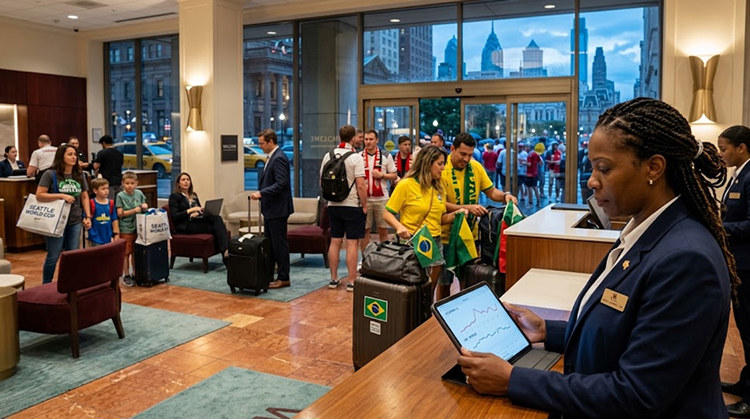
Those are impressive numbers.
But they raise another question: did Philadelphia attract more visitors, or did existing visitors simply pay more for rooms?
The answer matters for urban development.
If an event fills otherwise empty hotel rooms, the additional revenue represents genuinely new demand. If hotels were already near capacity and simply raised prices, the economic benefit is different. Hotel owners may earn substantially more without the city necessarily attracting proportionally more visitors.
Short-term rentals provide another complication. Philadelphia’s World Cup short-term rental revenue increased to about $38.3 million, up 25% from the comparable period, but AirDNA data indicated that approximately $7.5 million of the $7.8 million increase came from higher prices rather than additional occupancy.
Epsilon’s study should therefore distinguish between higher prices, higher volume and genuinely new spending.
That distinction could determine whether Philadelphia’s 2026 event strategy looks like a sustainable tourism model or simply a temporary pricing opportunity.
MLB All-Star Week Adds A Different Test
The MLB All-Star Game provides another valuable comparison because its audience and event structure differ from the World Cup.
Philadelphia hosted the 96th MLB All-Star Game at Citizens Bank Park on July 14, with All-Star Week beginning July 10 and including the HBCU Swingman Classic and multiple fan experiences.
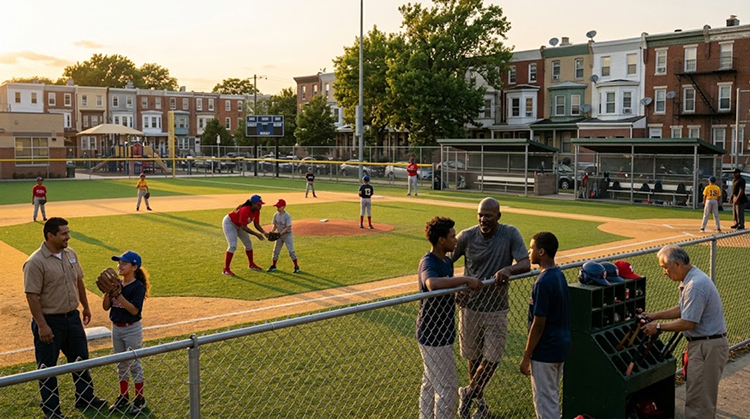
MLB and Phillies Charities also announced more than $5.5 million in All-Star Legacy projects for Philadelphia. The initiative focused on expanding youth access to baseball and softball, supporting veterans and providing educational and nutritional resources. MLB said the broader All-Star Legacy initiative had contributed nearly $125 million to host communities since 1997.
This creates an important distinction between economic impact and community investment.
A hotel might benefit from visitors. A restaurant might benefit from increased foot traffic. A stadium vendor might benefit from event attendance. But a youth baseball program, school or community organization may benefit from a legacy investment long after the final game.
The Epsilon study has the opportunity to examine these effects together rather than treating them as separate stories.
For Philadelphia businesses, that matters because major events can create opportunities that extend beyond the event itself. The Richland Chamber business community reflects the broader principle that economic development depends on connections between businesses, community institutions and local opportunities rather than isolated transactions.
The $5.5 Million MLB Legacy Investment Matters For A Different Reason
The MLB investment also complicates the question of who really benefited.
The more than $5.5 million announced by MLB and Phillies Charities is not equivalent to visitor spending. It represents a deliberate transfer of resources into community-oriented projects. That makes it easier to identify a specific long-term beneficiary.
The same cannot always be said about a restaurant or hotel.
The city may record higher tax collections. A hotel may record higher revenue. Employees may receive additional hours. But the economic benefits can be distributed unevenly.
Epsilon’s methodology specifically calls for analyzing the distribution of economic activity across industries, sectors and geographic areas of Philadelphia. That could reveal whether 2026’s event economy was concentrated in Center City and the stadium district or spread more broadly across neighborhoods.
That geographic question could ultimately become one of the report’s most important findings.
If most of the gains remain concentrated around hotels, stadiums, restaurants and entertainment districts that already receive heavy visitor traffic, the city’s economic-development strategy may need to change.
If the events generated measurable gains for businesses and workers throughout Philadelphia, the argument for hosting another major event becomes considerably stronger.
The Study Could Put Public Costs Into The Same Equation
There is another side to the calculation that often receives less attention: what Philadelphia spent to host the events.
Major events require police deployment, sanitation, transportation management, street closures, emergency planning, public communications and other city services. Those costs can be difficult to isolate because some personnel and infrastructure would have been needed regardless of the event.
The city has already acknowledged that Philadelphia’s 2026 events required significant public-sector planning and operations. The new study is intended to evaluate the economic and fiscal impact of those activities, including state and local tax revenues.
That means the eventual report could move the conversation from gross economic activity toward net fiscal impact.
For example, suppose an event produces $500 million in additional visitor spending but requires $20 million in public spending and generates $8 million in additional city tax revenue. Those numbers tell a very different story from simply saying the event produced $500 million in economic activity.
The calculation becomes even more complicated when infrastructure improvements have benefits beyond the event.
A transportation project built for a World Cup may remain useful for residents for decades. A renovated public space may support businesses long after the tournament. A marketing campaign may introduce international visitors to Philadelphia who return years later.
Those longer-term effects are harder to measure but potentially more important.
Neighborhood Distribution Could Be The Most Important Finding
Philadelphia’s major-event strategy will ultimately be judged partly by geography.
Center City was clearly one of the largest beneficiaries of the World Cup. Hotel demand surged, restaurants and bars experienced major crowds, and Independence Mall and the Benjamin Franklin Parkway became central gathering places during the tournament.
But the city’s broader economic-development ambitions extend well beyond Center City.
The key question for Epsilon will be whether event-related spending reached neighborhood businesses, local suppliers, workers and cultural institutions outside the established visitor economy.
That is particularly relevant for Philadelphia because major events can create a temporary concentration of international attention. The city has an opportunity to use that attention to direct visitors into neighborhoods they might not otherwise explore.
The same principle applies to MLB All-Star Week.
If visitors traveled between Citizens Bank Park, Center City, historic attractions, restaurants and other neighborhoods, the economic footprint becomes broader. If most spending occurred within a narrow stadium and hotel corridor, the event’s development value becomes more limited.
A detailed geographic analysis could therefore be more revealing than another citywide spending estimate.
Philadelphia Has Already Started Asking The Right Questions
The city’s decision to commission the study is significant because Philadelphia did not simply ask for another promotional economic-impact report.
Mayor Cherelle L. Parker said the administration wanted residents to understand what the events meant for the city’s economy, businesses, workers and neighborhoods, as well as the return on the investments Philadelphia made. Finance Director Rob Dubow similarly emphasized that the study would go beyond headline numbers.
That approach reflects a broader shift in how American cities are evaluating major sporting events.
The old question was relatively simple:
How much money will this event bring?
The more useful questions are harder:
Who earns that money?
Where is it spent?
How much stays local?
How much tax revenue does government receive?
What did the city spend to generate the activity?
Did the event create benefits that remain after visitors leave?
Philadelphia’s 2026 calendar provides enough data to begin answering all of them.
The Results Could Influence Philadelphia’s Next Major-Event Strategy
Epsilon Economics has experience studying major events for public-sector clients, including the FIFA World Cup in Los Angeles County, Super Bowl LVI for Los Angeles County and Inglewood, the 2023 College Football Playoff National Championship and the 2018 NBA All-Star Game.
That background is important because Philadelphia is not merely looking for an attendance count.
The city is trying to understand whether its unprecedented 2026 event calendar produced an acceptable return on public investment.
The final report could therefore become a reference point for future decisions about World Cup-scale competitions, professional sports events, conventions, cultural festivals and national celebrations.
If the findings show broad business gains, meaningful tax revenue and lasting visitor growth at a reasonable public cost, Philadelphia will have a stronger case for pursuing major events aggressively.
If the benefits turn out to be concentrated among a relatively small group of industries while public costs remain substantial, the city may take a more selective approach.
Either outcome would be useful.
The real value of Philadelphia’s 2026 experiment is that the city is now willing to measure what happened after the crowds disappeared.
The World Cup produced more than 500,000 projected visitors, MLB All-Star Week brought another major wave of national attention, hotels captured significant revenue increases, short-term rentals generated tens of millions of dollars and MLB directed more than $5.5 million toward community legacy projects.
But those figures answer only part of the question.
The more important test is whether the money reached Philadelphia’s workers, businesses and neighborhoods broadly enough to justify the costs of hosting such an extraordinary year.
That is what makes the upcoming study more consequential than a standard post-event report. It could establish a clearer framework for deciding when a major sporting event is genuinely an economic-development opportunity—and when a spectacular crowd simply produces spectacular headlines.
