
What if the most powerful tool for your next big game isn’t a new stadium, but a story from the past? Tapping into local history is a proven strategy to draw crowds and create unforgettable experiences.
The concept isn’t new. For millennia, people have traveled for competition. The ancient Olympic Games in Greece drew spectators from across the known world. This deep-rooted heritage shows that sports and travel are fundamentally linked.
Today, destinations with a rich sports past have a unique advantage. By uncovering and promoting this legacy, event organizers can craft compelling narratives. These stories tap into nostalgia and local pride, setting an event apart in a crowded market.
Understanding this evolution from ancient gatherings to modern mass travel is key. It allows communities to leverage their unique heritage, whether it’s a historic venue or a longstanding local tradition. This approach directly supports the economic impact of local sporting events by building a stronger, more emotionally resonant draw.
Integrating this deep history isn’t just about looking back. It’s a forward-thinking method to boost visitor interest, enhance attendance, and build a lasting legacy for any sports event.
Integrating History into Modern Events
The magic of today’s sports events often comes from blending local culture and history. Events like the FIFA World Cup and the Olympic Games have grown beyond sports. They now shape a city’s image for years.
These events are a chance to show off a place’s heritage to the world. By mixing history into the event, it becomes more than just a game. It turns visitors into part of a living story.
The 1992 Summer Olympics in Barcelona is a great example. The games sparked a big change in the city. They linked new areas to Barcelona’s old charm. This mix of old and new made the city more appealing to tourists.
London 2012 also showed off British history. The opening ceremony told the country’s story, and venues like Horse Guards Parade combined old and new. This blend boosted tourism and the UK’s image.
To do this well, you need a clear plan. It’s not just about using old sites as a backdrop. It’s about making the event truly reflect the place’s story.
Here are some ways to mix history into events:
- Narrative-Driven Ceremonies: Create ceremonies that tell the area’s story, using local artists and symbols.
- Venue Selection and Design: Pick or design sites that connect to history or show off local culture.
- Heritage-Themed Fan Zones: Make public areas with traditional food, crafts, and history exhibits.
- Collaboration with Cultural Institutions: Work with museums and historical groups to offer special exhibits and programs.
These efforts help visitors stay longer and explore more. They learn about the place, creating a real connection. This is what travelers want.
For the host city, the benefits are huge. Events bring in more than just fans. They leave a lasting mark, attracting cultural tourists for years. This boosts local businesses and the economy.
Integrating history is not about the past. It’s about making today meaningful. When events connect with history, they become unforgettable. This connection makes a game into a memorable part of a city’s story.
Storytelling Techniques to Engage Audiences
Storytelling is more than just sharing facts. It’s about creating an experience that touches people’s hearts. For sports events, it’s a way to build fan loyalty and increase attendance.
The key to great sports storytelling is making the past feel alive. It connects fans to the stories of teams, athletes, and venues.
Behind-the-Scenes Stadium Tours
Walking in the footsteps of legends is unforgettable. Stadium tours are a lesson in storytelling through sight.
At Camp Nou in Barcelona, fans don’t just see a locker room. They stand where soccer history was made. At Old Trafford in Manchester, visitors touch walls that saw decades of triumph. These tours turn a building into a living museum.
Every corner has a story, making fans part of the sport’s history.
Sports Museums and Interactive Exhibits
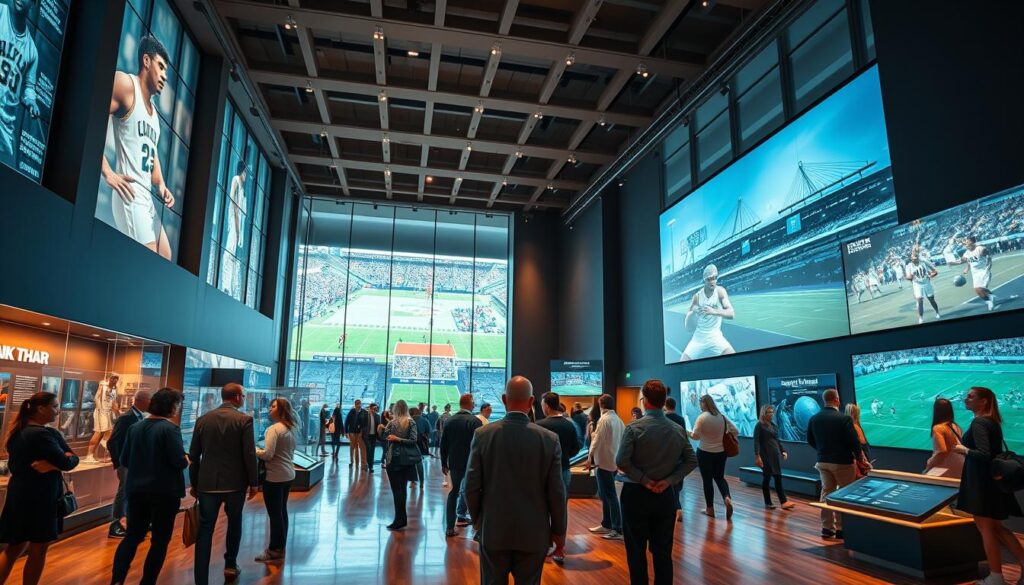
Sports museums make the experience interactive. The Olympic Museum in Lausanne is a great example. It doesn’t just show medals. It lets visitors feel the weight of achievement and the thrill of competition.
Interactive exhibits use tech to celebrate history. Guests can test their reaction times or simulate a race. This hands-on approach makes history personal and fun. It educates and entertains, fulfilling the role of sports in our lives.
Augmented and Virtual Reality change how we engage with history. AR can show historic footage on a modern stadium through a smartphone. Suddenly, a fan sees a championship-winning goal right in front of them.
VR can take someone back to a famous match from 50 years ago. They see it all in 360 degrees from the best seat. This tech makes legendary events accessible to new fans. It’s a powerful tool for creating memorable moments.
The table below compares these techniques, showing their strengths in engaging audiences.
| Storytelling Technique | Primary Example | Key Engagement Impact |
|---|---|---|
| Behind-the-Scenes Tours | Camp Nou, Old Trafford | Creates a tangible, physical connection to hallowed ground. |
| Interactive Museum Exhibits | The Olympic Museum, Lausanne | Encourages active participation and emotional learning. |
| Digital AR/VR Experiences | Stadium AR overlays, VR time travel | Provides immersive, cutting-edge access to the past. |
| Narrative Audio Guides | Player-narrated stadium tours | Builds intimate connection through firsthand stories. |
These methods do more than inform. They build community and shared identity. When fans share a story, they strengthen their bond with each other and the team.
Using historical anecdotes in event promotions is smart. It gives people a reason to care before they arrive. For more on effective audience engagement, check out dedicated narrative resources.
Applying these techniques requires creativity. They can be key to your creative marketing ideas for sporting events. The goal is to create lasting emotional connections that turn visitors into lifelong fans.
Promoting Through Heritage Tours
Heritage tours around sports history offer a deeper travel experience. They turn spectators into active participants in a location’s athletic past. This approach meets the growing demand for authentic, story-driven tourism.
These tours are not your average bus rides. They are carefully planned journeys. Fans explore legendary stadiums, training facilities, and memorials. Each stop adds a piece to the story of local culture and community identity.
The Melbourne Cricket Ground (MCG) offers tours for cricket fans. Guides share the ground’s history and its impact on Australian sport. Visitors get cultural insight that a single match ticket can’t offer.
Strategic packaging is key. Event organizers and travel companies combine heritage tours with game tickets. They also add local food experiences or cultural festivals. This creates travel packages with more value.
Here are some packaging ideas:
- Game Day Packages: A morning heritage tour followed by an afternoon match ticket.
- Cultural Immersion: A sports history walk combined with a tasting at a historic local brewery.
- Family Heritage Day: Interactive stadium tours for all ages, ending with meet-and-greets.
During big events, this concept works well. Host cities for tournaments like the FIFA World Cup create fan zones. These zones mix live sports with local history. Heritage walks link these zones to landmarks, making the city a sports museum.
This approach attracts different groups. History buffs and academic groups find it intellectually stimulating. Families see it as a fun, educational trip. This broadens the visitor base beyond just fans.
The economic benefits are clear. Heritage tours keep visitors longer. They spend more on guides, merchandise, and other services. This boosts tourism revenue for the destination.
In the end, promoting through heritage tours is a powerful strategy. It makes a destination a keeper of sports history. This creates a lasting connection that draws visitors year-round, not just on game days.
Case Study: Successful Historical Integration
Barcelona’s transformation for the 1992 Summer Olympics is a prime example of blending history with modern events. The city didn’t just build new stadiums. It merged the games with its rich culture and architecture, like Gaudí’s Sagrada Família. This mix created a new, powerful identity for Barcelona.
The impact is clear. After the Olympics, Barcelona became a top spot for sports tourism. Places like FC Barcelona’s Camp Nou attract millions every year. The economic boost was huge, making the waterfront better and increasing tourism for years.
London followed a similar path for the 2012 Olympics. It used historic sites like Wimbledon and the Tower of London. This showed off British history to the world. The games brought in a lot of money and made London more famous globally.
Rio de Janeiro also showed the power of history in sports events. The 2014 FIFA World Cup and 2016 Olympics highlighted Brazil’s culture and sports passion. These events made Brazil’s heritage a key draw for visitors.
These examples show how to connect big events with a place’s history and culture. This approach keeps visitors coming back, boosts the economy, and builds community pride. Other places can use their own history to achieve great results.
