

American consumers increasingly expect businesses to demonstrate environmental responsibility alongside product quality and customer service. This trend is influencing purchasing decisions across industries including retail, manufacturing, food service, technology, construction, and professional services.
The U.S. Chamber of Commerce has identified sustainability-focused companies among the fastest-growing business models, pointing to continued demand for products that reduce waste, improve energy efficiency, and support responsible sourcing.
Many entrepreneurs now evaluate sustainability through measurable business outcomes instead of viewing it as an added expense. Lower utility costs, reduced material waste, and stronger customer loyalty often offset the initial investment required for operational improvements.
According to the U.S. Small Business Administration, entrepreneurs planning new ventures are encouraged to incorporate long-term operating efficiency into their business models from the beginning. Those decisions can improve competitiveness while helping businesses adapt to changing market expectations.
Business owners seeking guidance on strategic growth can benefit from exploring our guide to business development resources, which outlines programs and tools that support sustainable expansion.
Federal Programs Continue Supporting Sustainable Investment
Public policy continues to influence private investment in clean technologies and operational efficiency.
The Inflation Reduction Act remains one of the largest federal investments supporting clean energy, manufacturing, and energy efficiency projects. Tax credits available through the legislation have encouraged companies to upgrade equipment, improve building efficiency, and invest in renewable energy systems.
The U.S. Department of Energy reports continued growth in clean energy manufacturing projects throughout the country, with billions of dollars committed to facilities producing batteries, electric vehicle components, solar equipment, and grid technologies.
Entrepreneurs may not build large manufacturing plants, yet many benefit indirectly through expanded supplier networks, local workforce opportunities, and lower costs for energy-efficient equipment entering the marketplace.
Businesses evaluating facility improvements can review current incentive programs through the U.S. Department of Energy, which regularly updates information on available grants, tax incentives, and energy-saving resources.
Sustainability Creates Financial Opportunities
One misconception surrounding sustainability is that environmentally responsible operations always require significant spending.
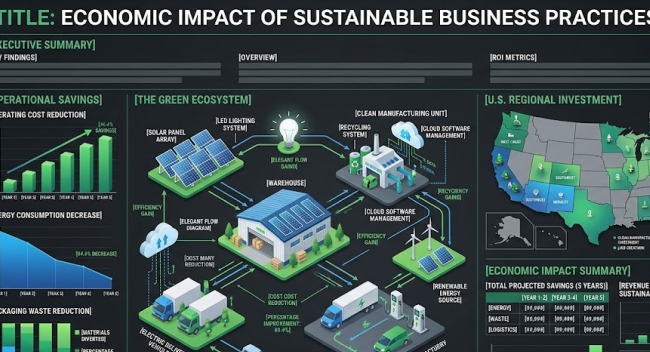
Many small businesses begin with relatively inexpensive operational changes that generate measurable savings.
Examples include:
- Switching to LED lighting and energy-efficient equipment.
- Reducing unnecessary packaging materials.
- Improving inventory management to decrease waste.
- Installing programmable heating and cooling systems.
- Transitioning to digital documentation.
These adjustments often reduce recurring expenses while improving operational efficiency.
A growing number of lenders and investors now include environmental performance among their evaluation criteria. Businesses demonstrating responsible resource management may strengthen their position when pursuing financing or strategic partnerships.
| Sustainable Practice | Potential Business Benefit |
|---|---|
| Energy-efficient equipment | Lower utility expenses |
| Sustainable packaging | Reduced shipping costs and stronger customer perception |
| Waste reduction programs | Lower disposal costs |
| Digital workflows | Less paper usage and administrative savings |
| Local sourcing | Shorter supply chains and community economic support |
Financial institutions increasingly recognize that companies with efficient operations may experience lower long-term operating risk, making sustainability relevant from both environmental and financial perspectives.
Technology Is Making Sustainability Easier for Small Businesses
Digital technology has lowered the barriers for entrepreneurs interested in measuring environmental performance.
Cloud-based software can now track electricity usage, transportation emissions, inventory waste, recycling rates, and supplier performance without requiring large internal teams.
Artificial intelligence is beginning to support sustainability planning through predictive inventory management, route optimization for deliveries, and smarter energy consumption monitoring.
These tools allow smaller companies to make decisions using data that previously required expensive consulting services.
The National Institute of Standards and Technology continues supporting manufacturers through programs focused on improving operational efficiency while reducing environmental impact. Resources available through the agency help businesses modernize production without sacrificing competitiveness.
Entrepreneurs interested in manufacturing improvements can explore guidance available through the National Institute of Standards and Technology Manufacturing Extension Partnership, which works directly with small and mid-sized manufacturers throughout the United States.
Local Communities Benefit From Sustainable Business Growth
Sustainability produces benefits that extend beyond individual companies.
Businesses investing in efficient facilities often create healthier workplaces through improved air quality, better lighting, and updated equipment. Local suppliers frequently gain opportunities when entrepreneurs prioritize regional sourcing over international alternatives.

Community partnerships have become another defining feature of sustainable entrepreneurship.
Many companies participate in recycling initiatives, sponsor environmental education programs, organize neighborhood cleanup projects, or collaborate with nonprofit organizations focused on conservation.
These activities strengthen relationships between businesses and residents while supporting local economic development.
Regional chambers of commerce continue encouraging sustainable practices through educational workshops, networking opportunities, and recognition programs that highlight innovative local businesses.
Investors Continue Prioritizing Responsible Growth
Environmental, social, and governance considerations remain an important topic within the investment community, even as reporting standards continue evolving.
Private equity firms, venture capital investors, and institutional lenders frequently review operational efficiency, supply chain resilience, and environmental risk management during investment evaluations.
For entrepreneurs preparing to scale their businesses, documenting sustainability efforts may improve credibility during funding discussions.
Investors increasingly seek companies capable of managing future regulatory changes, consumer expectations, and resource availability.
This trend has encouraged startups to incorporate sustainability metrics into annual reporting much earlier than in previous years.
| Investment Focus | Why Investors Pay Attention |
| Energy efficiency | Lower operating expenses |
| Supply chain resilience | Reduced disruption risk |
| Waste management | Operational efficiency |
| Environmental compliance | Lower regulatory exposure |
| Community engagement | Stronger brand reputation |
Sustainable Entrepreneurship Continues Building Long-Term Value
Business success has always depended on adapting to changing market conditions.
Current trends show that sustainability has become part of that evolution rather than a separate initiative.
Entrepreneurs who reduce waste, improve efficiency, adopt responsible sourcing practices, and monitor environmental performance position their businesses to respond to changing customer expectations and economic conditions.
Federal incentives, advancing technology, and growing consumer awareness continue creating opportunities for businesses of every size to improve operations while contributing to healthier communities.
For many entrepreneurs, sustainability is no longer viewed simply as environmental responsibility. It represents disciplined financial management, operational resilience, and long-term business planning that supports growth well into the future.
