
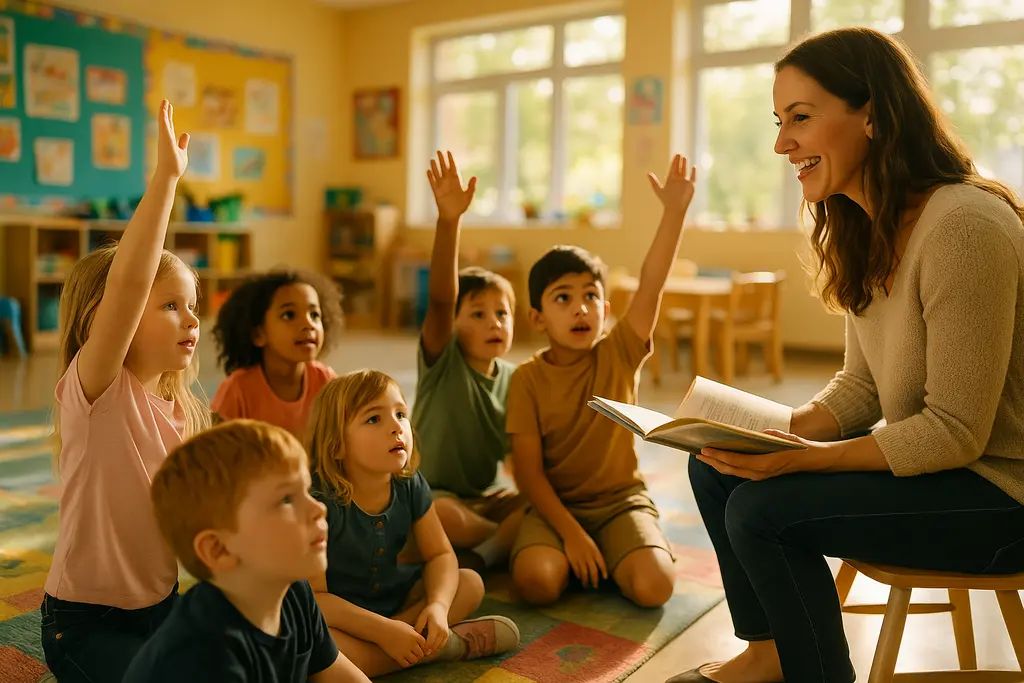
Richland First Steps is drawing renewed local attention because its work sits at the center of a practical Richland County question: how early can families, child care providers and community partners help children arrive at school ready to learn? The nonprofit serves children from birth through age 5 in Richland County and focuses on early childhood development and school readiness, according to the organization#8217;s program overview.
For Richland County families, the issue is not abstract. Early learning affects parents who need dependable child care, schools preparing for new kindergarten classes, employers whose workers depend on family stability, and civic organizations trying to direct resources where they will have the clearest use. That makes the program a local education issue, a workforce issue and a community planning issue at the same time.
Why Richland First Steps Starts Before Kindergarten
Richland First Steps And Early Brain Growth
The organization#8217;s case for early work begins with child development. Its materials state that about 85% of a child#8217;s core brain development occurs before age 4. That figure helps explain why support for infants, toddlers and preschool-age children is treated as preparation for school rather than a separate social service. If families receive help only after a child enters kindergarten, much of the earliest developmental window has already passed.
For Richland First Steps, that timing shapes the way services are organized. The stated mission is to empower the community to nurture children from birth to first grade so they are ready to thrive in school. In local terms, that means the work is not limited to one classroom or one agency. It depends on parents, child care centers, health-related referrals, early learning materials and public awareness moving in the same direction.
Why Readiness Is A County Concern
RCFS materials cited in the research for this report say 42% of children under age 5 in Richland County live in poverty or low-income households. The same materials say four out of ten kindergartners in the county start school without basic skills needed to thrive. Those figures point to a readiness gap that affects school systems, families and neighborhood organizations long before a child takes a seat in kindergarten.
The statewide First Steps network also gives local residents a sense of scale. In 2021, First Steps#8217; 46 county-level partnerships collectively served 57,345 children across South Carolina, according to the organization. Richland County#8217;s local partnership is one part of that larger structure, but its work is shaped by county-level needs and local participation.
Programs That Meet Families Early
Early Head Start And Child Care Support
The research materials for RCFS describe Early Head Start as full-time, high-quality care for infants and toddlers, with attention to brain development, health and social-emotional growth. For working parents, this kind of service can affect more than a child#8217;s daily schedule. It can influence whether a parent can keep steady hours, attend training, or remain connected to the local labor force.
That connection matters in community development discussions. Early childhood programs are often discussed as education services, but they also support household stability. When parents trust the care setting and children receive consistent early learning support, the benefits can reach employers, schools and local service agencies. The economic effect is indirect, but it is still part of the county#8217;s civic picture.
Home Visitation And HIPPY
The program#8217;s home visitation work is described in the research materials as one-on-one support for families. The goal is to strengthen parenting practices and help with early detection of developmental delays. That type of work can be especially useful for families who may not know which developmental milestones to watch, when to ask for help, or how to connect with early services.
RCFS also offers HIPPY, Home Instruction for Parents of Preschool Youngsters, described in the research as a free program for parents of 4-year-olds. Its purpose is to equip parents to be their child#8217;s first teacher. In practical terms, the model recognizes that school readiness does not begin at the schoolhouse door. It begins in daily routines, reading time, counting games, conversations and parent confidence.
RCFS materials cited in the research also point to a 2019 evaluation finding that children who received services from First Steps local partnerships were 74% more likely to score at the highest level on the Kindergarten Readiness Assessment and 34% less likely to be chronically absent in kindergarten. Those figures should be read as program evaluation findings, not as a promise for every child. Still, they give county leaders and families a measurable reason to keep early support in the public conversation.
How Richland First Steps Measures Community Need
A 2025 Survey Sets The Next Civic Step
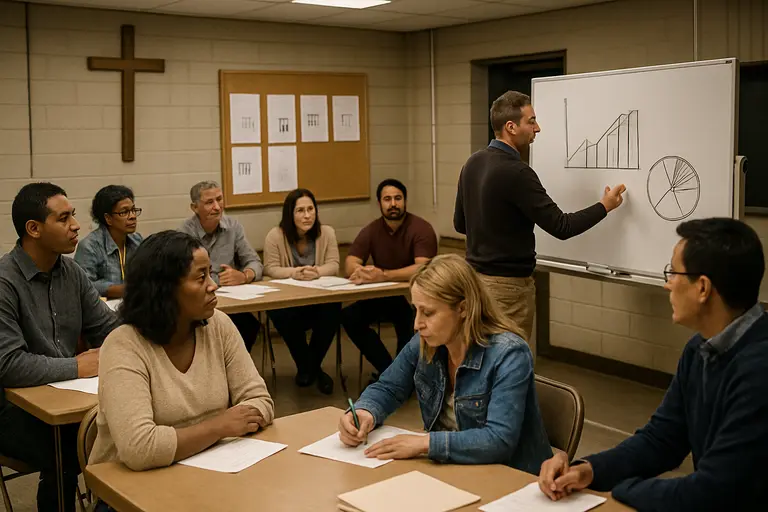
In September 2025, RCFS launched a Community Needs & Resource Survey to better understand family needs and guide future services, according to Who#8217;s On The Move. The 2025 survey gives Richland First Steps a direct way to hear from families and partners before decisions are made about service priorities.
That matters because early childhood needs can vary across a county. One area may need child care access. Another may need parent support, transportation coordination, developmental screening awareness, or better connections between families and existing services. A survey does not solve those issues by itself, but it creates a civic record that can help agencies, nonprofits and funders compare community needs with available resources.
Why Public Input Matters
Public input is especially useful in early childhood work because many families with young children do not attend public meetings or have time to track service changes. A survey can reach parents who are working irregular hours, caring for infants, or unsure which organization handles which need. It can also help child care providers and community groups document the barriers they see each week.
Funding is another part of the local story. Since its inception, RCFS has drawn $24,848,826 from sources outside state government, equal to $3.17 for every state dollar received, according to the organization#8217;s published materials. That ratio is useful for residents because it shows that local early childhood work depends on a mix of public investment, nonprofit capacity and outside support.
Those interested in exploring related community site coverage can visit the Houston LWS Forum, a dedicated space for similar issues. For Richland County, the immediate local action remains the same: families, providers, and civic partners need clear channels to share what they are seeing before resource decisions are made.
Richland First Steps And The Readiness Work
What Local Stakeholders Can Watch
The next practical question is how survey input, program data and family needs will be connected. Residents should watch for whether RCFS reports common themes from the Community Needs & Resource Survey, how those themes relate to child care and home-based support, and whether partner organizations adjust outreach based on what families identify.
Local leaders can also pay attention to whether early childhood data is used in budget conversations, grant applications and school readiness planning. The strongest use of the information would be specific: where families need services, which age groups are hardest to reach, what barriers limit participation, and which partners are positioned to respond.
A Practical Community Role
For parents, the most direct role is to use available programs and respond when RCFS asks for input. For child care providers, the role is to share what they are seeing among infants, toddlers and preschoolers. For civic groups, churches, employers and neighborhood organizations, the role is to help families find services without forcing them to sort through every program alone.
Early childhood readiness is not a quick county project. It is steady work that links family support, child development, school preparation and resource planning. RCFS has published a clear mission, reported statewide reach through the First Steps network, and launched a 2025 survey to gather current local input. The value for Richland County will depend on how well that information is used by families, service providers and civic partners who want more children to begin school ready to participate, learn and grow.
