
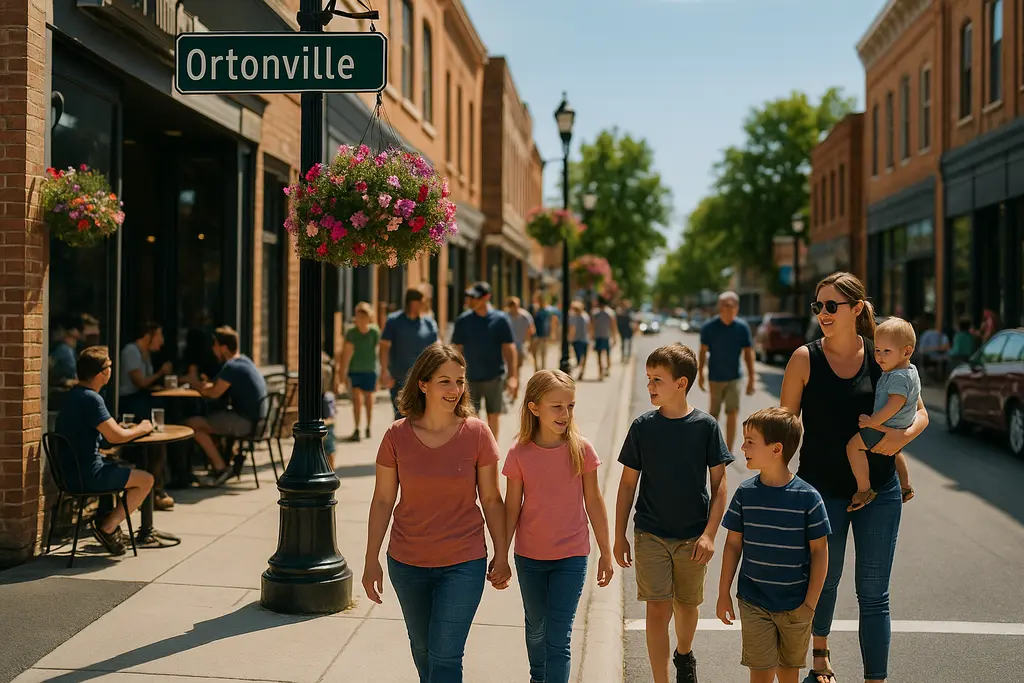
Ortonville DDA Initiatives have moved into a practical phase for downtown facilities, with grant-backed work focused on walkability, accessibility, and public connectivity. On August 6, 2026, Oakland County Times reported that the Ortonville Downtown Development Authority received a $60,000 GM on Main Street Grant for sidewalk realignment in front of the Old Mill Museum, a project intended to close a 200-foot pedestrian gap and create a continuous ADA-compliant route between nearby residential areas and downtown businesses, according to Oakland County Times.
For local business owners, the grant matters because customer access is not only a transportation issue. It affects whether residents can comfortably walk from neighborhoods into the business district, whether older adults and people with mobility needs can reach storefronts, and whether the Old Mill area serves as a stronger gateway into the village’s commercial core.
Ortonville DDA Initiatives Put Access First
Why The Pedestrian Gap Matters
The Old Mill Historic Gateway Initiative centers on a specific facilities problem: a missing sidewalk connection. The research notes identify the gap as 200 feet, which may sound modest on a map but can create a meaningful barrier for pedestrians. A short break in the sidewalk can force people into less predictable walking patterns, especially near a destination tied to local heritage and downtown activity.
By realigning the sidewalk in front of the Old Mill Museum, the DDA is treating pedestrian access as part of the business environment. A safer, continuous path can help connect residents to shops, services, and community spaces without making every downtown trip dependent on parking. That is a pragmatic form of economic development because it improves the conditions around local commerce rather than relying only on promotion.
How Ortonville DDA Initiatives Support Storefronts
Ortonville DDA Initiatives also show how small facility investments can compound over time. The research supplied for this report identifies streetscape work such as pedestrian lighting, benches, trash receptacles, flower planters, sidewalk construction and maintenance, and parking facilities. Those items do not operate as stand-alone attractions. Their value is in making everyday trips easier, cleaner, and more predictable for residents, visitors, employees, and property owners.
The business case is straightforward. People are more likely to walk between stops if the route feels connected. They are more likely to stay downtown if seating, lighting, and public spaces are usable. They are more likely to support local merchants if parking and pedestrian routes work together rather than competing with each other.
What The Old Mill Sidewalk Grant Changed
A Facility Project With Civic Stakes
The $60,000 grant did not simply add money to a construction account. It placed the Old Mill corridor into a broader civic conversation about how public infrastructure supports downtown commerce. The Old Mill Museum area is identified in the research as part of local preservation work, including rehabilitation of the Old Mill property and improvement of its grounds. The new sidewalk work connects that preservation emphasis with daily access.
That connection is important for Ortonville because historic properties often sit at the intersection of civic identity and commercial function. If a historic site is difficult to reach on foot, it can remain visually important while contributing less to downtown movement. If the route is accessible, it can help bring more foot traffic past nearby businesses and public spaces.
What Residents Can Watch Next
The next civic question is implementation. Residents and business owners can track whether the realigned sidewalk fully resolves the gap identified in the grant announcement, whether the finished route remains accessible in all ordinary conditions, and whether the work improves the link between residential neighborhoods and the downtown business area as intended.
For property owners, the sidewalk project also sets a useful standard. Facility work is most valuable when it connects private investment, public space, and mobility. A storefront improvement may help one building. A sidewalk connection can help an entire block function better.
Wi-Fi, Streetscape Work, And Daily Use
Mill Street Connectivity
The second major 2026 initiative identified in the research is free public Wi-Fi along Mill Street. The AARP Livable Communities Map lists the Ortonville Downtown Development Authority as a 2026 Community Challenge grantee for a project involving public Wi-Fi and workshops to help older adults connect to health care and community resources online, according to AARP Livable Communities.
This is a facilities issue as much as a technology project. Public Wi-Fi can support residents who need online access while they are downtown, and the planned workshops connect that access to practical needs for older adults. The research frames the project around digital inclusion, not entertainment. That distinction matters because public connectivity can serve as a civic utility when tied to health care information, community services, and access to local resources.
Public Space As Business Infrastructure
Together, Ortonville DDA Initiatives point toward a downtown strategy built on public space. The research identifies Crossman Park enhancements, including a pavilion, electricity, plantings, and playground equipment maintenance. It also identifies Heritage Garden and Native garden areas near Kearsley Creek, along with a placemaking effort with the Village to improve public and green spaces where people can sit, stay, and participate in downtown activity.
Those projects matter because businesses do not operate in isolation from sidewalks, parks, lighting, seating, and gathering areas. A restaurant, retailer, or service business benefits when the surrounding district gives people reasons to arrive, remain, and move between destinations. Public facilities can help create that pattern when they are maintained and connected to the places people already use.
For readers following similar community infrastructure coverage, the Houston LWS Forum offers insights into civic-information developments in related areas.
Civic Follow-Up For Property Owners
Design Assistance And Historic Fit
The research also identifies a Design Assistance Program through the DDA to help business and property owners make building improvements that fit the downtown’s historic character. While the details of individual projects were not provided in the research notes, the program’s purpose is clear: align private exterior improvements with a shared downtown appearance.
That type of program can be useful when public infrastructure improves around a business district. New sidewalks, lighting, seating, or Wi-Fi may bring more attention to storefronts. Property owners then face practical questions about signs, facades, entrances, windows, and accessibility. Design assistance can help owners make improvements that support their own property while respecting the broader district.
Questions For Public Meetings
Residents and merchants have several reasonable questions to raise as these projects continue through public oversight. Clear answers would help the community judge whether the facility work is producing the intended business and access benefits.
- What is the expected construction timeline for the Old Mill sidewalk realignment after the August 2026 grant award?
- How will the DDA measure whether the 200-foot pedestrian gap has been fully resolved?
- Where along Mill Street will free public Wi-Fi be available, and how will users receive help connecting?
- How will maintenance costs be handled for benches, planters, lighting, park facilities, sidewalks, and public connectivity?
- How can business and property owners participate in design assistance or related improvement programs?
These are not abstract policy questions. They affect budgets, maintenance capacity, merchant participation, and resident confidence. Facility projects are most effective when the public can see what was funded, what was built, who maintains it, and how it supports the local business district.
Ortonville DDA Initiatives And Business Access
The practical value of Ortonville DDA Initiatives will be measured in daily use: whether residents can walk more safely, whether older adults can get help connecting to online services, whether business owners see a more functional public setting, and whether downtown spaces remain well maintained after grant announcements fade from view.
The strongest point in the current record is that the 2026 projects are specific. The Old Mill work identifies a 200-foot sidewalk gap and a $60,000 grant. The Mill Street Wi-Fi project identifies a public connectivity need and workshops for older adults. Those details give residents, merchants, and village stakeholders clear items to monitor as downtown facilities work continues.
For a small downtown, facility improvements do not need to be large to matter. A connected sidewalk, reliable seating, usable public space, visible lighting, practical parking, accessible Wi-Fi, and historically sensitive building support can all influence whether people choose to spend time and money locally. The civic task now is to keep the work transparent, maintain the improvements after installation, and ensure that downtown businesses remain part of the conversation.
