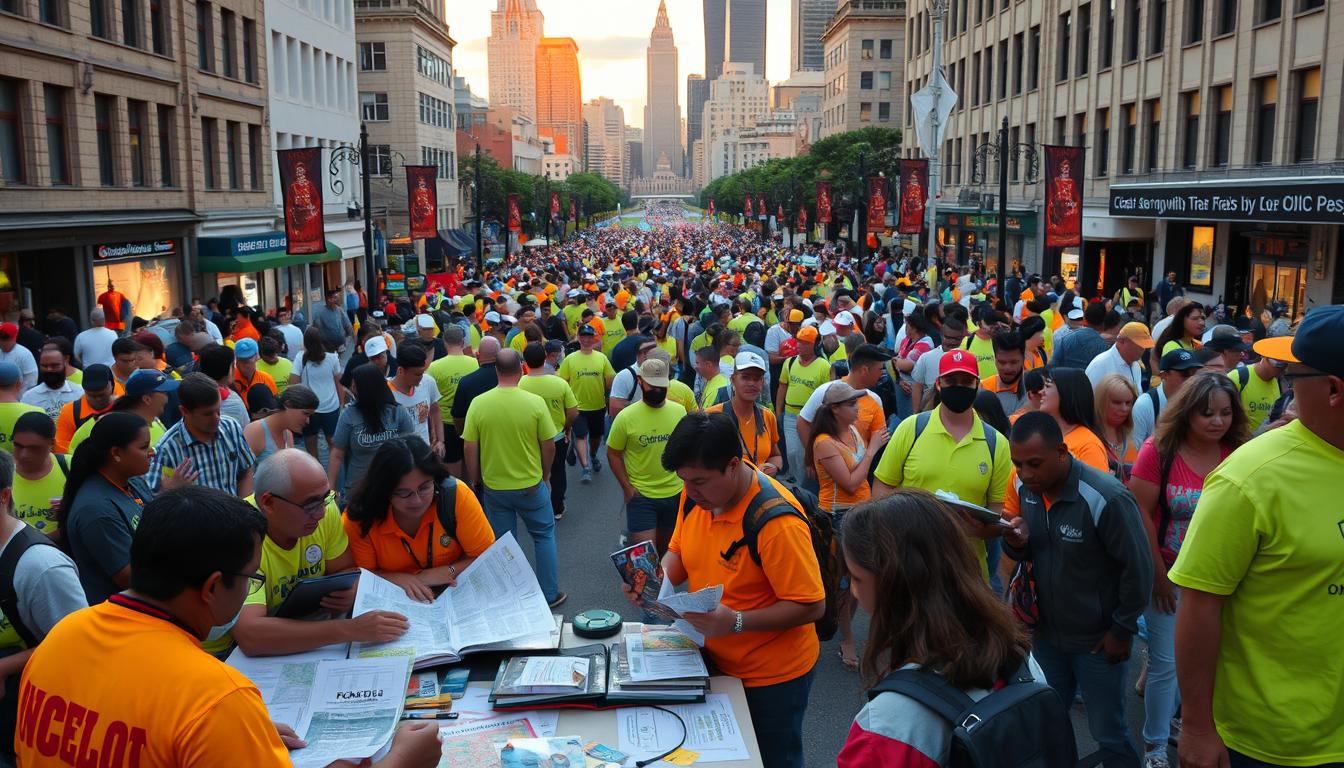
Imagine your city’s skyline lit up with stadium lights. Global broadcasters call it “the new capital of sports tourism.” Cities like Indianapolis went from being overlooked to hosting the Final Four. They did it through strategic city event planning and smart politics.
It’s not just about building something and waiting for people to come. Modern bid process is like a game of strategy. You need to know your hotel capacity and please everyone. Super Bowl host cities see a huge economic boost, like Scrooge McDuck diving into his money bin.
Phoenix made Super Bowl Sunday a $720M win. Minneapolis used the Final Four to open 15 new restaurants. You’ll see why getting everyone on board is key. And how to avoid being like Atlanta, where a power outage was the main event.
Introduction: The Benefits & Challenges
Hosting a major sporting event is like throwing a blockbuster movie premiere for your city. Everyone wants tickets, but nobody sees the backstage chaos. Let’s break down why cities fight harder for these events than Taylor Swift fans chasing Eras Tour seats.
The economic math hits harder than a linebacker: A single marathon can pump $85M into local tourism (Source 3). While budgets swing from suburban bake-sale ($30k) to Hollywood-blockbuster ($500k+) territory (Source 1). But here’s where it gets interesting:
| City | Event | Cost | Revenue |
|---|---|---|---|
| Indianapolis | NCAA Final Four | $8M | $71M |
| Chicago | Marathon | $2.1M | $277M |
| Minneapolis | Super Bowl LII | $46M | $450M |
Now the plot twist – community economic impact from sporting events isn’t guaranteed. You’re building a Field of Dreams scenario: “If you host it, will they actually spend?” Consider these hidden curveballs:
- Hotel rooms selling out faster than Hamilton tickets
- Local businesses getting priced out by corporate vendors
- Infrastructure costs that linger like bad stadium nachos
The real game-changer? Smart cities play chess, not checkers. Boston’s marathon route doubles as a year-round tourism magnet. Phoenix built flexible venues that convert from Final Four courts to concert stages. Your move.
Forming Your Bid Team
Building a bid team is more than just picking people to sit in a room. It’s about creating a pop culture dream team that can outsmart even Thanos. Imagine Nick Fury’s strategic mind combined with Ocean’s Eleven’s detailed planning. The real magic comes from mixing political smarts with spreadsheet skills and a bit of flair.
Detroit’s Olympic bid failures showed us a harsh truth: even superheroes need a plan B. Their 1970s “build it and they’ll come” strategy failed miserably. Today, we need three key roles:
- The Visionary: Your Steve Jobs in a blazer, turning spreadsheets into compelling stories
- The Rainmaker: A Tony Stark with spreadsheets, securing funds before the coffee gets cold
- The Fixer: Your Olivia Pope in sneakers, ready to handle scandals before Twitter does
Your sports event pitch needs to be as layered as Shrek’s onion. Mix economic forecasts with local success stories. Hosting the Olympic Games might require it. Remember, cities don’t win bids. Stories do.
| Role | Traditional Approach | Modern Strategy |
|---|---|---|
| Team Leader | Generic politician | Cross-sector coalition builder |
| Financier | Corporate sponsorships | Crowdfunding + crypto partnerships |
| Negotiator | Closed-door deals | Social media transparency campaigns |
| Wild Card | N/A | TikTok crisis manager |
Detroit’s ghost stadiums warn us: your bid process needs more backup plans than Batman’s belt. Create redundancies for everything, from sponsor dropouts to alien invasions (like the 2028 LA Olympics meteor drill).
Pro tip: Hire a meme analyst. If your venue renderings don’t go viral as reaction GIFs, you’re already losing.
Requirements Checklist
Creating a sporting event checklist is like putting together IKEA furniture without the instructions. If you miss one piece, everything falls apart. We’ll go through the event operation checklist carefully, because you can’t just wing it. A bad parking plan could cause more chaos than the “The Hunger Games” arena.
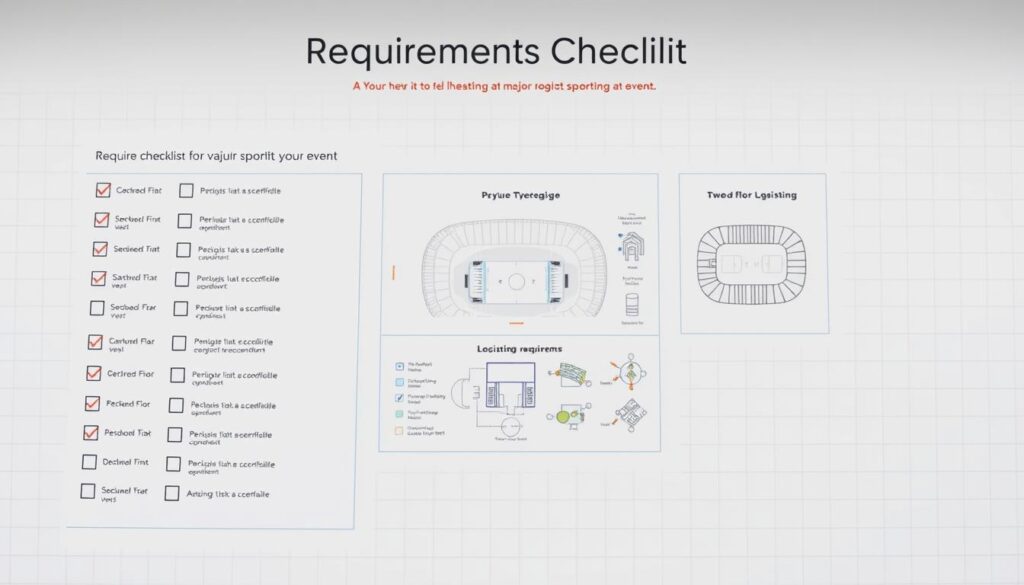
- ADA Compliance That Would Make a Lawyer Sweat
You need ramps as wide as Elon’s Mars ambitions. Bathrooms must be accessible like a NYC building inspector demands. Forget about “good enough” – aim for Paralympic standards. - Parking Logistics: Where Math Meets Madness
Figure out parking spaces like solving a Rubik’s Cube blindfolded. Remember, 30% of attendees will forget where they parked. Minimum. - Permit Bingo
You’ll need health department approvals, noise variance waivers, and fire marshal sign-offs. It’s a lot of paperwork, but it’s worth it. Here’s a quick guide:
| Permit Type | Processing Time | Common Pitfalls |
|---|---|---|
| Alcohol License | 60-90 days | Zoning restrictions |
| Pyrotechnics | 45 days | Environmental impact studies |
| Crowd Management | 30 days | Emergency exit mapping |
Your venue logistics must pass three big tests: 1) A surprise visit from the mayor’s office 2) A viral TikTok about bathroom lines 3) That one guy who always tries to bring a propane grill into the stands. If you get this checklist right, you’ll be ready for anything.
Securing Funding and Partnerships
Sponsorship deals are more than just transactions. They are narrative collabs. Milwaukee’s Fiserv Forum, for example, didn’t just sell ad space. They sold ownership of Wisconsin’s sports culture. This is how you turn suds into stadiums.
To succeed in sports event sponsorship, you need three things:
- A story that corporations want to be a part of
- Benefits that last long after the event
- The subtlety of a Marvel movie product placement
Source 1 helps break down sponsorship tiers:
| Tier | Investment | Perks | Wisconsin Example |
|---|---|---|---|
| Title Sponsor | $1M+ | Naming rights, VIP experiences | MillerCoors’ arena naming deal |
| Official Partner | $250K-$999K | Digital branding, merch integration | Johnsonville bratwurst stands |
| Local Hero | Under $250K | Community recognition, pop-up activations | Lakefront Brewery fan zones |
Source 2 reveals a secret: Hotel blocks are like ATMs. Minneapolis’ Final Four hosting made $2.3M in room revenue before ticket sales. Partner with hotels to create package deals that benefit both parties.
When pitching local businesses:
- Show how their $5K contribution can become $50K in social media impressions
- Create limited-edition products (like a championship burger at the town diner)
- Offer first refusal rights for future events
Remember the Fiserv Forum playbook. That microbrewery partnership led to a Bucks-themed beer that outsold Bud Light for three seasons. Now that’s legacy.
Infrastructure & Venue Planning
Hosting big sports events makes your city like a real-life SimCity. But instead of angry citizens, you face Twitter and strict safety rules. Nashville’s Nissan Stadium, for example, needed big changes to host the World Cup. The key? Venue logistics are about changing what you have, not just building new things.
Here are three must-haves for hosting big sports events:
- The Parking Paradox: You need lots of parking spots, like a Costco on Black Friday. A smart move is to work with ride-share apps for easy drop zones.
- Bandwidth Bonanzas: Your Wi-Fi must handle lots of data, like Atlanta’s Mercedes-Benz Stadium does. Your venue needs fast, reliable internet.
- Multipurpose Magic: Modern venues must change quickly, like a TikTok trend. They need flexible seating and turf, and luxury boxes that can change too.
But it’s not just about the venue. Nashville also improved 17 miles of sidewalks and added bilingual signs. This helps fans find their way, avoiding confusion.
To succeed, treat your venue like a dating profile. Show off what you have, be honest about what’s missing, and invest in smart upgrades. The right upgrades can make all the difference, from bathrooms to food service.
Logistics & Operations
Planning major events is like mixing Patton’s strategy with a TikTok star’s charm. Let’s dive into the three main areas of work:
72 Hours to Showtime: Your event operation checklist is now your bible. Staff work together like a well-oiled machine. Imagine teams setting up toilets and checking Wi-Fi at the same time. To keep everyone happy, remember: 1 toilet for every 75 people, plus extra for each beer stand.
Hydration stations are the real heroes, as our tactical guide shows:
| Station Type | Capacity | Pro Tip |
|---|---|---|
| Runner Hydration | 500 cups/hour | Use marked lanes to prevent collisions |
| Spectator Oasis | 300 cups/hour | Add electrolyte tablets after halftime |
| Staff Stations | 200 cups/hour | Hide them near security checkpoints |
Going cashless is more than a trend; it’s essential. At last year’s marathon, RFID wristbands cut wait times in half. But, your Wi-Fi must handle thousands of users at once. Aim for 50 Mbps per 1,000 users to avoid digital chaos.
For those mastering event logistics, check out real-world sports event examples. The best operations make chaos seem choreographed, like a well-run mosh pit.
Sports event attendance tip: Place misting fans near food stands. Happy, sweaty fans buy more drinks. But, dehydrated fans can become a YouTube disaster. It’s all about finding the right balance between profit and safety.
Security, Safety & Risk Management
Planning event security is like directing a Marvel movie. You need tech, contingency plans, and a hammer to smash through red tape. Instead of aliens, you face porta-potty shortages and Uncle Larry photobombing the mayor. Let’s make our protocols as secure as Fort Knox’s Instagram.
- Drone surveillance that spots rogue hot dog vendors faster than TikTok detects dance trends
- Medical stations stocked with supplies to handle everything from heatstroke to “I swear I didn’t eat the whole funnel cake” emergencies
- Emergency exits marked so clearly they’d make IKEA assembly instructions jealous
Boston Marathon organizers didn’t become security legends by accident. Their playbook includes:
| Risk Factor | Protocol | Documentation |
|---|---|---|
| Crowd Surges | AI-powered density tracking | Source 2: $5M liability insurance |
| Medical Emergencies | EMT teams every 200 yards | Source 3: 24/7 trauma response |
| Weather Disasters | Real-time lightning detectors | Evacuation route maps |
Pro tip: Your event operation checklist needs more layers than Shrek’s onion metaphor. Test walkie-talkie dead zones like you’re searching for Waldo. Train staff to spot suspicious behavior using “Where’s Wally?” levels of attention. And always, always have backup generators – because nothing kills vibes faster than a silent DJ booth during the Macarena.
Publicity & Press
Think your event promotion needs less strategy than a Marvel movie rollout? Think again. Modern publicity is like Inception mixed with a TikTok dance challenge. Let’s look at how Salt Lake City’s Olympic media strategy can help your local event.
Press coverage is like a choose-your-own-adventure book. Traditional media is your base – the Michaelangelo of event promotion best practices. But your Instagram grid is the Sistine Chapel ceiling, filled with behind-the-scenes Reels.
Here are three key tactics for 2024:
- Hashtag hijacking: Ride the wave of trending sounds/challenges like a political campaign
- Micro-influencer collabs: Work with local food bloggers for your concession stands, not just sports commentators
- Real-time mythbusting: Live-tweet corrections to announcer mistakes faster than Twitter fact-checks politicians
Remember the Beijing Olympics’ viral mascot filters? Your local skate competition needs AR filters that turn spectators into pixelated Tony Hawks. This makes attendees feel like co-creators, not just viewers. Your TikTok recap video should create more FOMO than the actual competition.
Pro tip: Release your press releases when your target audience is doomscrolling. Tuesday mornings for corporate partners, Friday nights for Gen Z ticket buyers. In the attention economy, timing is everything – it’s what keeps your event from being forgotten.
Post-Event Economic Analysis
Hosting a major sporting event is more than just the game. It’s about looking closely at the financial autopsy to see who really wins. Forget the trophy ceremonies. The real victory is in how the event boosts the local economy.
Let’s look at Phoenix’s example. Their analysis showed hotel tax revenue jumped 22% during the Super Bowl. This was enough to fund three new dog parks and a very suspicious bronze statue of the city manager. But the real surprise? Food trucks near the stadium sold more than five-star restaurants 3-to-1. That’s a community economic impact that advocates didn’t see coming.
Understanding these numbers is like solving a mystery. We use a three-step method:
- The Immediate Hangover: We track direct spending through ticket sales, merch booths, and parking fines (because someone had to pay for those extra traffic cones)
- The Ripple Effect: We measure secondary impacts like hotel occupancy taxes, Uber surge pricing, and souvenir shop employment spikes
- The Legacy Play: We calculate long-term value from infrastructure improvements and that sweet, sweet Instagram exposure
| Economic Factor | Immediate Impact | Long-Term Value |
|---|---|---|
| Hotel Tax Revenue | $4.2M (Event Week) | 12% YOY Tourism Increase |
| Local Vendor Sales | 83% Above Average | 6 New Permanent Businesses |
| Infrastructure Improvements | $15M in Road Repairs | 23% Fewer Pothole Complaints |
Here’s the key: Source 3’s budget analysis shows 38% of economic benefits come after the game. That new light rail extension? Paid for by nacho cheese concession profits. And those renovated public restrooms? Thanks to the porta-potty rental boom that boosted municipal bond ratings.
Using Source 2’s ROI formulas, we figure out legacy value like this:
(Local Pride Multiplier) × (Instagram Geotags) ÷ (Complaints About Traffic) = Your City’s Economic Glow-Up Score
Next time someone mocks sporting event budgets, remind them. You’re not just paying for fireworks and cheerleaders. You’re investing in the community economic impact sporting events bring. Even if that impact sometimes smells like fried dough and regret.
Success Stories
Hosting big sports events doesn’t always need big money. Take the Boise Potato Bowl for example. It’s a small event with a big impact, thanks to 20,000 pounds of french fries. It’s a mix of smart planning and fun.
In 2012, Indianapolis showed how to do it right. They turned parking lots into museums and used 11,000 volunteers. This brought in $152 million, impressing even New York.
But the real magic happens when cities use their unique charm:
| City/Event | Budget | Attendance | Economic Impact | Secret Sauce |
|---|---|---|---|---|
| Albuquerque Isotopes Park | $8M renovation | 650,000 annual | $24M/year | Simpsons-themed nights + local craft beer |
| Boise Potato Bowl | $1.2M | 26,412 | $9.5M | Tater tot food trucks + viral TikTok challenges |
| Weezevent Case Study | N/A (tech partner) | 83% faster entry | 31% merch upsell | AI-powered crowd flow optimization |
There’s a common thread here. The best events mix local charm with smart planning. Albuquerque’s baseball games became a hit with Breaking Bad weekends. Weezevent’s tech made events smoother, proving you don’t need a lot of money.
These stories show that the best events are those that are both smart and personal. Broadway might not sell out for french fries, but these events prove that’s not the only way to win.
Conclusion
Hosting a major sporting event is not just luck. It’s about creating systems that last long after the event ends. Think of city event planning like building a winning team. You need great venues, solid infrastructure, and a skilled bid team.
The real win is turning temporary excitement into lasting improvements. This is how you make a real impact.
LA’s 2028 Olympics plan is a great example. They used existing stadiums and invested in metro upgrades. Atlanta’s Centennial Park, built for the 1996 Games, is a success story. It keeps driving tourism years later.
These examples show that smart planning can make a big difference. It turns “Can we do this?” into “What’s next?”
The key is to make every partnership count. Boston’s win of the 2026 World Cup bid is a good example. They didn’t just book hotels. They also improved public transit for everyone.
Your plan should please both bean counters and sports fans. It’s all about making smart choices.
Are you ready to go from small dreams to big wins? Start planning your event today. The field is ready for you. Unlike fleeting stadium names, lasting legacies stand the test of time.
