

Pender County Schools moved deeper into a multi-year facilities program after the Board of Education approved design work, change orders, safety upgrades, and future bond planning tied to growth across the county. The most recent action, on September 1, 2026, included design plans for the internal renovation of the existing Topsail Middle School campus, a design-build agreement with Bordeaux Construction Company, and two covered walkway projects at Surf City Elementary/Middle School and Cape Fear Elementary/Middle School.
For families, school staff, contractors, and nearby neighborhoods, the issue is more than new construction. Facility decisions affect daily arrival patterns, cafeteria capacity, classroom crowding, utility reliability, and the public identity of fast-growing communities such as Hampstead, Topsail, Burgaw, Rocky Point, Surf City, and Cape Fear. As a sports tourism analyst, I view schools as civic anchors in much the same way small stadiums, parks, and recreation centers shape a town’s sense of place: they are where families gather, where local pride is built, and where infrastructure choices become visible every weekday.
What Changed For Pender County Schools Facilities
Bond Vote And Local Authorization
The foundation for the current facility program was the November 8, 2022 school bond referendum. Pender County voters approved the measure by 11,133 yes votes to 9,842 no votes, authorizing up to $178 million, plus interest, for school facilities and related capital improvements, according to the county’s official bond certification. That vote was close enough to remind county leaders that facility spending depends on public trust, not just enrollment projections.
The bond package covered several major needs identified in the research record: construction of a new elementary and middle school, renovations at Topsail Middle School, an addition at Rocky Point Elementary School, rebuilding the cafeteria at Burgaw Middle School, a new Central Services Building, and a new eight-bay Maintenance Building. Each project addressed a different part of the county’s school operations. Some were classroom-capacity projects. Others involved food service, administration, maintenance, and daily building function.
Why Pender County Schools Capacity Matters
For Pender County Schools, the facilities program reflected a practical civic question: how does a growing county add seats while maintaining safe, workable campuses? The research notes state that the North Carolina Local Government Commission approved the $178 million general obligation bond on July 11, 2023, which allowed the county to proceed with land acquisition and design-build contracts. That step mattered because voter approval alone did not build classrooms; the financial and procurement process still had to move through public channels.
The county’s facility choices also have local economic effects. A large school project brings design, construction, inspection, maintenance, and transportation considerations. Those effects should not be overstated as if every dollar remains in the county. Still, major public construction can shape contractor demand, road activity, and the pace of nearby service planning. For communities that host school campuses, the work also affects community identity. A school is often the place where new families first connect with a county.
Hampstead K-8 Campus And Growth Pressures
A Large Site With Countywide Effects
The largest single project in the current program is the new K-8 school in Hampstead. According to Pender County’s FY 2024-25 adopted budget document, the project had an estimated cost of $135,547,525, was planned for a 145-acre site off NC Highway 210 in Hampstead, and was intended to serve 800 elementary students and 1,200 middle school students county budget document. Those figures place the campus among the most significant public facility investments in the county’s recent school planning.
The research notes state that the Board approved a redesign in May 2024 that added 24,000 square feet, increased capacity to 2,312 students, and included 14 additional classrooms by adding a second story on the middle school wing. That decision showed how quickly planning assumptions can shift in a growth county. A school that appears adequate during one design phase may need more space before construction is complete.
Design Changes And Construction Timing
The groundbreaking for the Hampstead K-8 school took place on August 21, 2024, and construction was expected to be completed in fall 2027, according to the research notes. By May 12, 2026, the Board had approved change orders and payments for the ongoing J.H. Lea K-8 campus. The same meeting included approval of covered canopies over drop-off and pick-up areas and replacement of a failing chiller system at Cape Fear Elementary & Middle School to support reliability for the school year that followed.
The core issue for Pender County Schools was not only adding a building. It was aligning classrooms, mechanical systems, traffic flow, and student movement with real daily use. In facility economics, the best project is not simply the largest or newest. It is the one that reduces friction for families, supports staff, and avoids avoidable operating problems. Covered canopies and chiller replacements may sound smaller than new construction, but they directly affect comfort, safety, and predictability.
Topsail Renovation, Walkways, And Daily Operations
Campus Work After September 1, 2026
At the September 1, 2026 meeting, the Board approved design plans for the internal renovation of the existing Topsail Middle School campus. The research notes also state that the Board approved a design-build agreement with Bordeaux Construction Company, with construction expected to begin in June 2027 and a current estimated budget of up to $30 million. That timeline placed Topsail’s renovation behind the broader bond authorization process but within the same countywide effort to update school facilities.
Internal renovation can be less visible to the public than a new campus, yet it often has major operational value. Renovated interiors can improve how students move through a building, how teachers use instructional space, and how administrators manage daily schedules. The Board’s action indicated that Pender County was not relying only on new campuses to manage growth. Existing schools remained part of the plan.
Safety Investments During Arrival And Dismissal
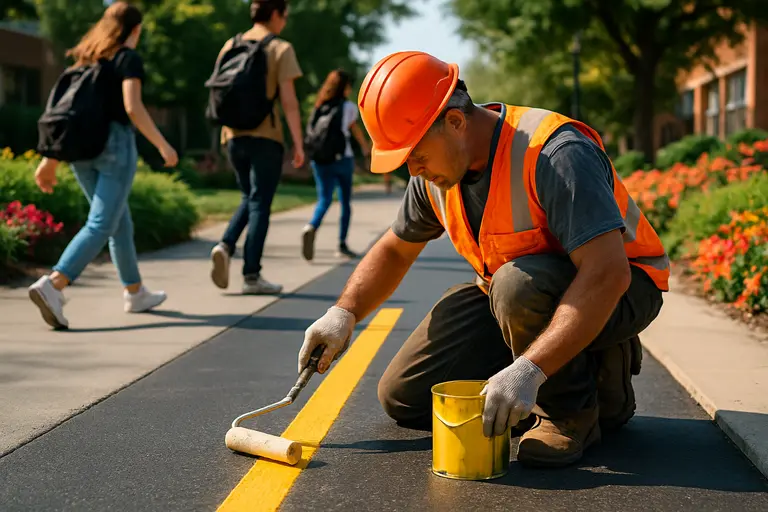
The September 1, 2026 meeting also included two covered walkway projects. The research notes list the Surf City Elementary/Middle School project at $265,625 and the Cape Fear Elementary/Middle School project at $180,000. Both were aimed at improving pedestrian safety and traffic flow during arrival and dismissal.
That type of project deserves attention because school facilities are used under pressure at the same times each day. Morning arrival and afternoon dismissal concentrate buses, family vehicles, walkers, staff, and sometimes younger siblings into tight windows. A covered walkway is not just a shelter feature. It can help define movement patterns, reduce conflict points, and make a campus easier to manage during weather events.
To explore more on how such civic projects impact communities, additional community reporting is available through the related site One United Michigan.
Pender County Schools Facility Decisions
Civic Follow-Through For Residents
On June 9, 2026, the Board approved a resolution to prepare a school construction bond request for 2028, according to the research notes. That action suggested county leaders were already preparing for additional capacity needs even as the 2022 bond projects continued. Because the future request had not gone before voters as of September 9, 2026, the public process remained central.
For Pender County Schools, the next civic step was not only construction management. It was public explanation. Residents will need clear updates on costs, schedules, project sequencing, and how each project addresses enrollment or building conditions. The narrow 2022 referendum result showed that voters did not give a blank check. They approved a major investment by a limited margin, and that makes transparent reporting essential.
The county’s school facility program now includes several layers: a large K-8 campus in Hampstead, renovation work at Topsail Middle School, safety and access upgrades at Surf City and Cape Fear, mechanical reliability work, and planning for a possible 2028 bond request. The practical measure of success will be whether these projects improve daily school function while keeping residents informed about spending, timelines, and tradeoffs.
School buildings are public assets that shape more than education. They influence where families settle, how neighborhoods manage traffic, how local employers view workforce stability, and how children identify with their community. Pender County’s recent Board actions showed a county trying to match facilities to growth. The work ahead will depend on steady project oversight, clear civic communication, and continued public engagement.
