
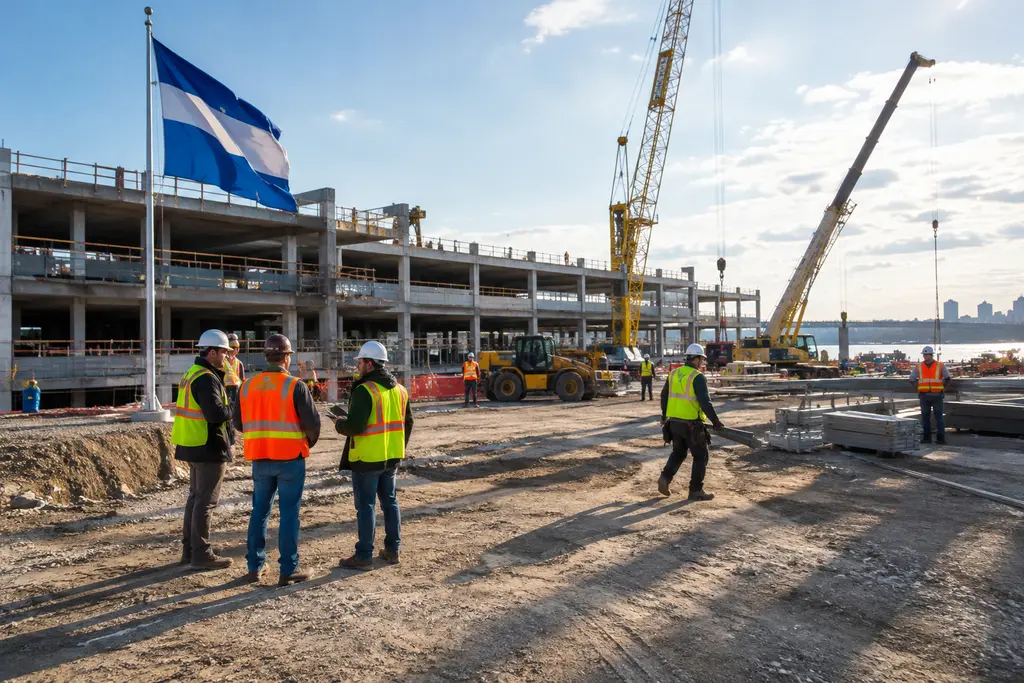
Riverport West moved from a long-discussed infrastructure need to a fully funded project after a $40 million federal Port Infrastructure Development Program grant was announced on October 26, 2026, bringing the total federal and state funding package in line with the project’s estimated $78 million cost, according to The Waterways Journal.
For Paducah and McCracken County, the funding decision is more than a port announcement. It affects river freight capacity, rail access, industrial site readiness, and the way local officials prepare for private investment near the Ohio River. The existing riverport operation, now identified as Riverport East in the project materials, has been described in published reporting as 95% full and without rail access. That capacity issue gives the western Kentucky project a direct civic and economic-development purpose.
The available records do not provide a confirmed jobs estimate, local tax revenue projection, or private-company commitment tied directly to the new grant. That matters for public discussion. Residents and business owners can celebrate the funding milestone while still asking practical questions about construction timing, wetland mitigation, permitting, public match obligations, and how the port authority reports progress during the next phase.
What Changed For Riverport West Funding
What The Riverport West Grant Covers
The October 26, 2026 announcement involved a $40 million federal grant through the U.S. Department of Transportation’s Maritime Administration Port Infrastructure Development Program. Rep. James Comer announced the award, according to published reporting. That grant followed a $24 million BUILD grant announced on July 1, 2026. Together with state funding, the package now matches the project’s estimated $78 million cost.
The funding sources have different construction purposes. The Port Infrastructure Development Program grant is expected to fund two of the three planned barge berths, rail infrastructure, and associated equipment. The BUILD grant is expected to fund roadways and one 200-foot barge berth. For local officials, Riverport West is no longer only a concept tied to future growth; it now has identified funding streams attached to core pieces of the site.
The planned facility is intended to add a dock with direct rail access. That feature is central because the current riverport facility lacks rail access, according to project reporting. In freight terms, the difference between a river-only site and a river-rail site can affect which customers the port can serve and how efficiently bulk materials can move between barges, trains, and nearby industrial users.
Why The Local Match Still Matters
The federal awards do not remove every local obligation. In March 2026, McCracken County Fiscal Court applied for Kentucky GRANT Program funding as part of the local match requirement, according to a Kentucky Cabinet for Economic Development report. The same report described Phase I as civil and structural work for the main access and haul road and one riverfront berth, with full federal BUILD funding contingent on the match. The local contribution requirement was listed at about $5 million.
That match detail is the kind of item county residents should continue to track through fiscal court records, port authority updates, and state reporting. Grant announcements set the direction, but agreements, matches, reimbursement rules, and permit conditions determine how a project moves from award letter to construction site.
How The Port Expansion Fits Paducah Industry
Rail Access Changes The Site’s Utility
The new site is planned next to Paducah’s Triple Rail Site and less than two miles from the U.S. Department of Energy’s Paducah site, according to project reporting. It is also near a planned $1.5 billion commercial uranium enrichment facility cited in published accounts. The port project is intended to support movement of raw materials, construction equipment, and finished products tied to nearby industrial activity.
Those connections explain why the project has drawn attention beyond port operations. An 800-acre industrial site, nearby federal property, and river access can shape the way companies evaluate Paducah-McCracken County for logistics-heavy projects. The public record supplied for this project does not state that the port grant itself guarantees a specific employer or payroll figure. It does show that public agencies are preparing infrastructure for heavier freight demand.
Richland-area readers may recognize the same planning question from local economic-development discussions: infrastructure decisions often come before the measurable jobs and investment numbers. That is why reports such as the Richland County planning indicators can be useful for comparing how communities weigh site readiness, transportation access, and public investment.
Capacity And Site Layout
Published project details place the site at Ohio River Mile 944 on the left descending bank. Plans include a 650-foot dock, three barge berths, more than a mile of rail, a triple-track railyard on the dock, and roughly 6.5 acres of operating space. Those figures matter because they describe a freight asset built for transfers between river and rail rather than a small river landing.
| Project Element | Reported Detail | Local Relevance |
|---|---|---|
| Estimated project cost | $78 million | Sets the scale of the public funding package |
| New federal PIDP grant | $40 million | Funds major berth, rail, and equipment work |
| BUILD grant | $24 million | Supports roadways and one 200-foot berth |
| Dock plan | 650 feet with three barge berths | Adds river transfer capacity |
| Rail component | More than one mile of rail | Connects port activity to rail-served industry |
The existing Riverport East facility handles about 500,000 tons of material annually, including aggregates, fertilizer, and other bulk materials, according to published reporting. With that facility described as 95% full, the proposed western site is being framed as a capacity expansion rather than a simple relocation.
Permits, Mitigation, And Public Follow-Through

Schedule Still Depends On Agreements And Permits
Project reporting states that environmental assessments and studies have been completed and that engineering design work is about 90% complete. The next steps described in the public reporting include finalizing grant agreements, developing a wetland mitigation plan, and obtaining construction permits.
The projected schedule calls for groundbreaking in about one year from the late October 2026 announcement period, which points to late 2027 if agreements and permits proceed as expected. Construction has been described as an 18-month process, with a goal of having the facility operational in 2029. Those dates should be treated as planning targets, not guarantees, because federal grant agreements, mitigation work, and permitting can affect timing.
Questions Residents Can Track
For civic discussion, the most useful questions are practical ones. They do not require residents to oppose or support the project in broad terms. They ask how the work will be managed, reported, and connected to local economic goals.
- When will final federal and state grant agreements be signed?
- How will McCracken County document the required local match?
- What wetland mitigation plan will be submitted before construction?
- Which permits must be secured before work can begin?
- How will the port authority report schedule, cost, and construction updates to the public?
Those questions are useful for chambers, fiscal court members, port officials, nearby property owners, and employers watching freight access. For community members interested in broader regional insights, the Trinity Chamber website provides additional perspectives on business and civic developments.
Riverport West And Local Civic Planning
The $78 million funding package gives Paducah-McCracken County a stronger position for freight-related development, but the next stage will be measured through public execution. A grant award is a major milestone. It is not the same as a finished dock, completed rail, issued permits, or operating berths.
That distinction should guide local coverage and public meetings through 2027 and 2028. Residents should expect updates on grant agreements, design completion, permitting, wetland mitigation, construction bidding, and site work. Business owners should watch how the new capacity may affect bulk handling, rail-served development, and industrial recruitment near the Triple Rail Site.
As Riverport West moves toward the construction phase, the key civic task is to keep the project specific: what is funded, what remains to be approved, what public money is committed, and how progress will be reported. That approach gives Paducah and McCracken County a clear way to celebrate the infrastructure win while still holding the project to measurable public expectations.
