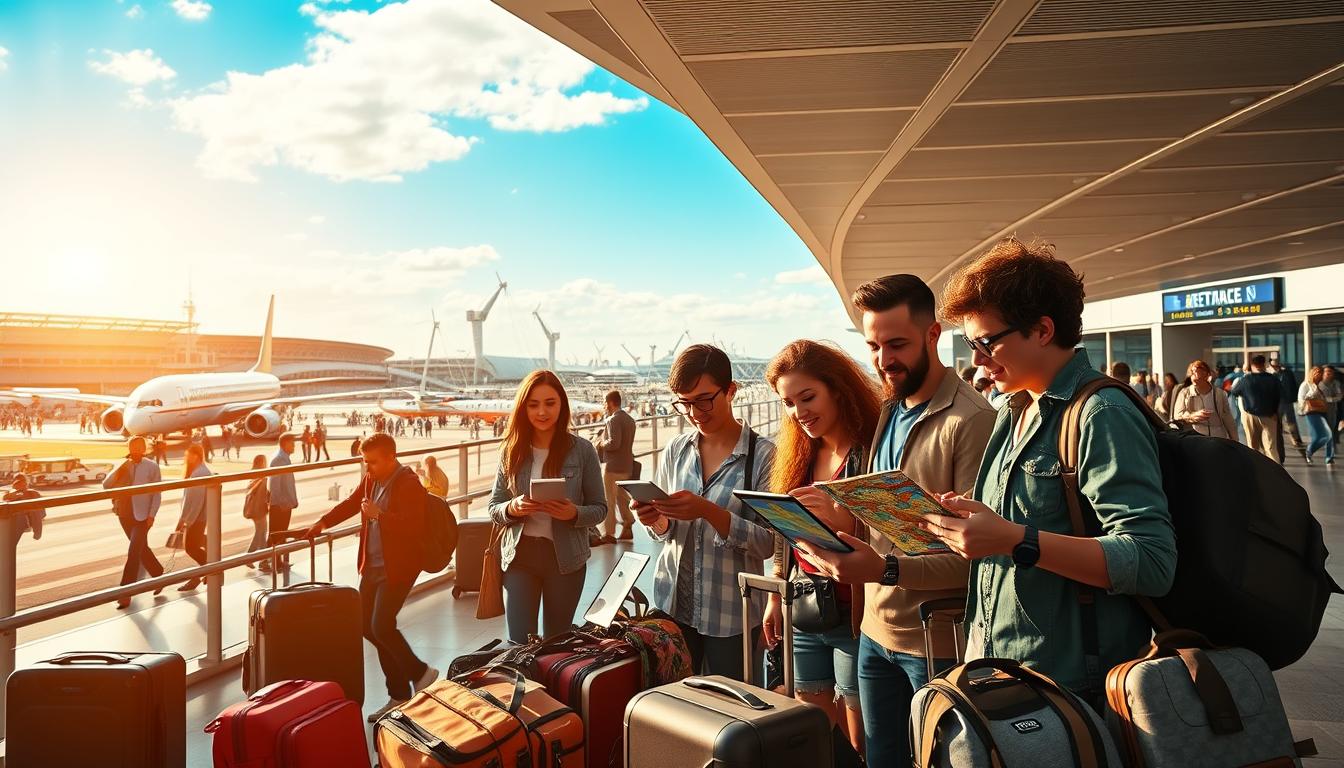
Taylor Swift’s Eras Tour made headlines, but another fan migration is changing the game. Fans dressed in jerseys are driving a $52 billion global industry. This mix of FOMO and smart city economics is like Renaissance art and fantasy football combined.
Why are cities treating marathon organizers like tech geniuses? The answer is in destination marketing’s new strategy. Phoenix spent $28 million on the 2023 Super Bowl and made $1.3 billion. That’s a return on investment that impresses even the most seasoned investors.
Pickleball retreats in Aspen and “run-cation” packages at fancy hotels are the new sports tourism. Fans want cool finish lines and gourmet stadium snacks. They’re ready to spend big for experiences that mix sports with luxury travel.
Is this growth sustainable or a bubble ready to pop? Let’s explore how stadiums became economic powerhouses. And why your next trip might include a photo at the finish line.
The Evolution of Sports Travel
Remember when “sports tourism” was just about going to a minor league baseball game? The growth of sports tourism has changed a lot, like LeBron’s hairline. Now, people travel to experience unique events, not just watch games.
From Station Wagons to Streaming Wars
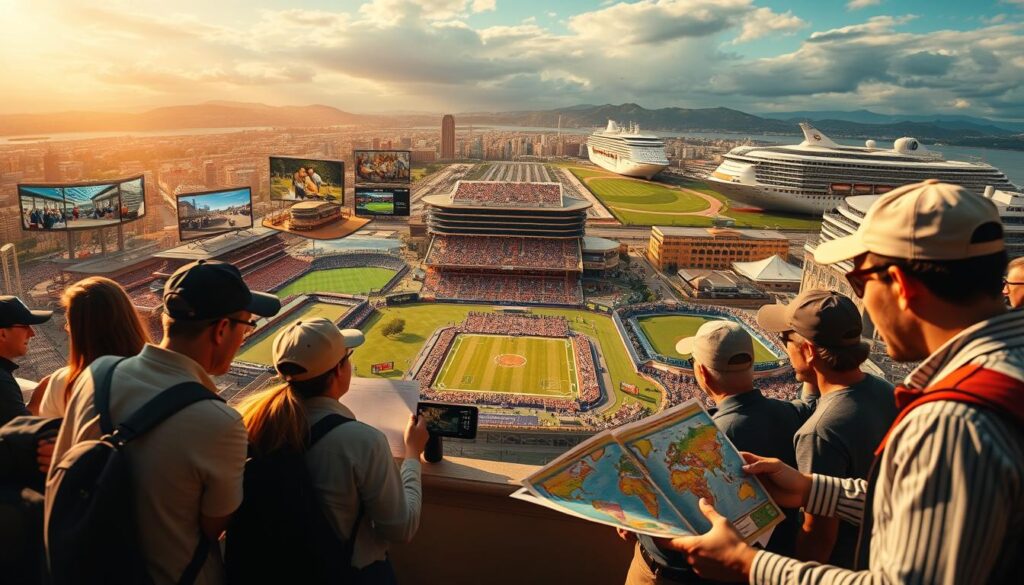
In the 20th century, going to the stadium was all about eating mystery meat and watching athletes from far away. This “stadiums and hot dogs” way was the norm when TV options were few. But now, with the end of cable, people want to travel for sports experiences that are cool to share on social media.
The New Tribal Gatherings
Today’s sports events tourism shows our love for small groups:
- Pickleball tournaments are as big as some congressional hearings
- E-sports arenas are where victory dances are all about keyboard smashing
- Hybrid events mix Wimbledon with Coachella, even with strawberry cream merch
These aren’t just games; they’re geolocated personality quizzes. Choosing between the Boston Marathon and a Mario Kart VR championship tells more about you than your dating profile. And let’s not forget about fantasy camp, where people pay $5k to play against retired pitchers – the ultimate Boomer twist of “participant trophy” culture.
Current Key Trends
If sports travel were a football playbook, 2025’s strategies would make Bill Belichick’s head spin. Three seismic shifts are rewriting the rules faster than a referee at the Super Bowl: hyper-personalized tech, green stadium revolutions, and business travelers trading boardrooms for bleachers. Let’s break down how these trends in sports tourism are changing the game.
Personalization Meets Digital Wizardry
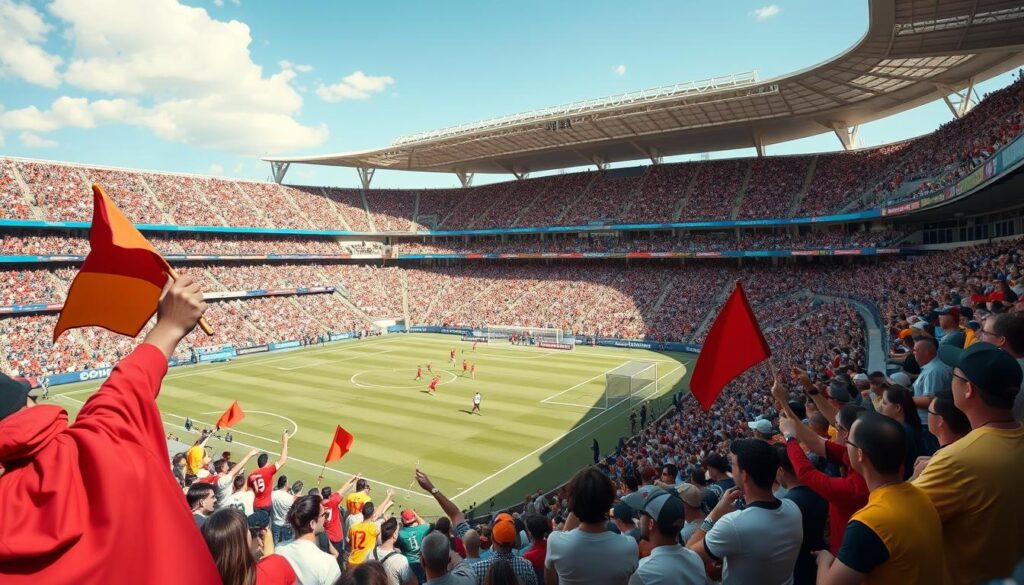
Imagine an app that knows your love for vintage jerseys better than your therapist. Teams now use AI to curate experiences like sommeliers pairing wines – except here, they’re matching fans with “your uncle’s 1985 Bears nostalgia trip” packages. The Denver Broncos’ app recently suggested a Mile High Stadium tour + craft beer crawl to users who watched more than three Elway highlights. Talk about knowing your audience.
Eco-Conscious Fandom Takes Center Field
Today’s nacho purchase might plant a tree in Patrick Mahomes’ name. Empower Field at Mile High became the NFL’s first carbon-positive stadium last season – their solar panels generate enough energy to power 1,500 homes annually. Fans earn loyalty points for taking light rail to games, proving sustainability scores bigger than touchdown dances now. Even sports travel trends show 68% of millennials pick destinations based on eco-credentials.
The Bleisure Blitz
Why network over coffee when you can bond over free throws? Consultants now expense Warriors tickets as “client relationship building” – and honestly, we’re here for it. Salesforce’s latest conference included optional Lakers suites access, resulting in 40% higher attendance than their previous Vegas meetup. The new corporate playbook? PowerPoint by day, penalty kicks by night.
| Aspect | Traditional Travel | Bleisure Blitz |
|---|---|---|
| Primary Focus | Meetings & Deadlines | Deals Over Draft Picks |
| Networking Style | Conference Badges | Jersey Swaps |
| Expense Reports | Hotel Receipts | Playoff Tickets |
| ROI Measurement | Contracts Signed | Free Throw Contests Won |
This trifecta of sports events tourism innovations reveals something critical: fans aren’t just spectators anymore. They’re co-creators of experiences, sustainability partners, and yes – occasionally expense-report hackers. The real winner? Anyone smart enough to ride these trends like a wave at the Daytona 500.
Visitor Behavior Insights
The modern sports fan isn’t just about the game. They’re all about capturing the perfect photo. Gone are the days of foam fingers and hot dogs. Today, fans show up with cameras and a plan for social media.
Who Are Today’s Sports Travelers?
At the Miami Grand Prix, you’ll see a lot of activity. Millennials dance on TikTok, Gen Z live-streams, and Boomers debate racing history. It’s a mix of ages, all looking for their moment in the sun.
Here’s who you’ll find:
- Millennials (63%) choose sports over work for social media points
- Gen Z (22%) values experiences over possessions, making F1 TikTok challenges popular
- Boomers (15%) are looking for classic sports trips, but now they Google how to block stadium music
What Motivates Them?
Why do people spend big to see Formula 1 in Miami? It’s not just for the win. They spend an average of $5,600 each for three main reasons:
- Digital bragging rights: Photos from the stadium boost local businesses, like breweries near Lambeau Field
- FOMO engineering: Unique Snapchat filters at NBA games create a sense of urgency
- Hybrid validation: Sharing photos of networking at sports events satisfies both travel and career desires
This new way of experiencing sports changes places fast. Restaurants in Miami now offer special menus for Grand Prix fans. It’s all about the social media buzz and supporting local chefs.
Impact on Local Destinations
When 100,000 Patriots fans storm a Georgia town, it’s more than just football. It’s about Airbnb hosts getting that kitchen remodel they’ve always wanted. Host cities are like chess players, using events to boost their economy.
Milwaukee’s Giannis Antetokounmpo Victory Tour brought in enough money for brunch sales to fund a small country. Nashville turned NFL Draft hype into a $133 million jackpot. But the real secret? It’s all about $18 craft beers and foam fingers.
Let’s look at the numbers:
| City | Event | Revenue | Hidden Costs |
|---|---|---|---|
| Nashville | NFL Draft | $133M | 3-month hangover for local Uber drivers |
| Milwaukee | NBA Finals | $132M | Bucks championship merch overtaking Packers gear |
| Small-Town GA | Patriots Training Camp | $42M | Permanent PTSD from “Brady! Brady!” chants |
Secondary markets are the real MVP. That Milwaukee hotel maid working overtime is a hero of sports tourism. But cities are doing more than just selling tickets. They’re making money off fandom itself.
Atlanta’s MLS stadium became a $50 million meme factory thanks to viral tifos. Phoenix turned Super Bowl week into a lesson in parking space arbitrage.
But there’s a downside to this rush. When big crowds come, things get tough:
- Local diners start calling themselves “Baconator Experience Centers”
- Airbnb rates go up, even higher than Manhattan penthouse prices
- Craft breweries face a tough choice: Do we make IPA or Patriot Pale Ale?
The good news about sports tourism has fine print. Smart cities now carefully choose events, looking for infrastructure upgrades and a plan for after the event. They don’t want to wake up with a big headache and empty pockets.
Recommendations for Stakeholders
Stadiums are more than just places to watch games. They are economic powerhouses that need smart strategies. The Louisville Bats showed how minor league baseball and bourbon tastings can attract fans without breaking the bank. This approach can make sports trips more affordable for everyone.
Why not use halftime to highlight local businesses? The NBA All-Star Weekend’s pop-up markets are a great example. They turn concession stands into platforms for new brands.
Forget about using coupons. Today’s fans want experiences that influencers like Prime Hydration provide. When WNBA star A’ja Wilson shares photos from the game, her 1.2M followers see your city in a new light. Fast, reliable WiFi is also key, as it boosts visitor spending more than parking ever could.
March Madness is a game-changer. Cities like Phoenix turned Final Four visitors into repeat guests with VR basketball experiences. Make every sports trip special, like giving fans a peek behind the scenes.
This isn’t just about selling tickets. It’s about creating a community where every dollar spent supports local art and businesses. Hosting events like Formula 1 races can increase visitor stays by 23%. It’s time to think bigger and smarter, like the Moneyball approach.
