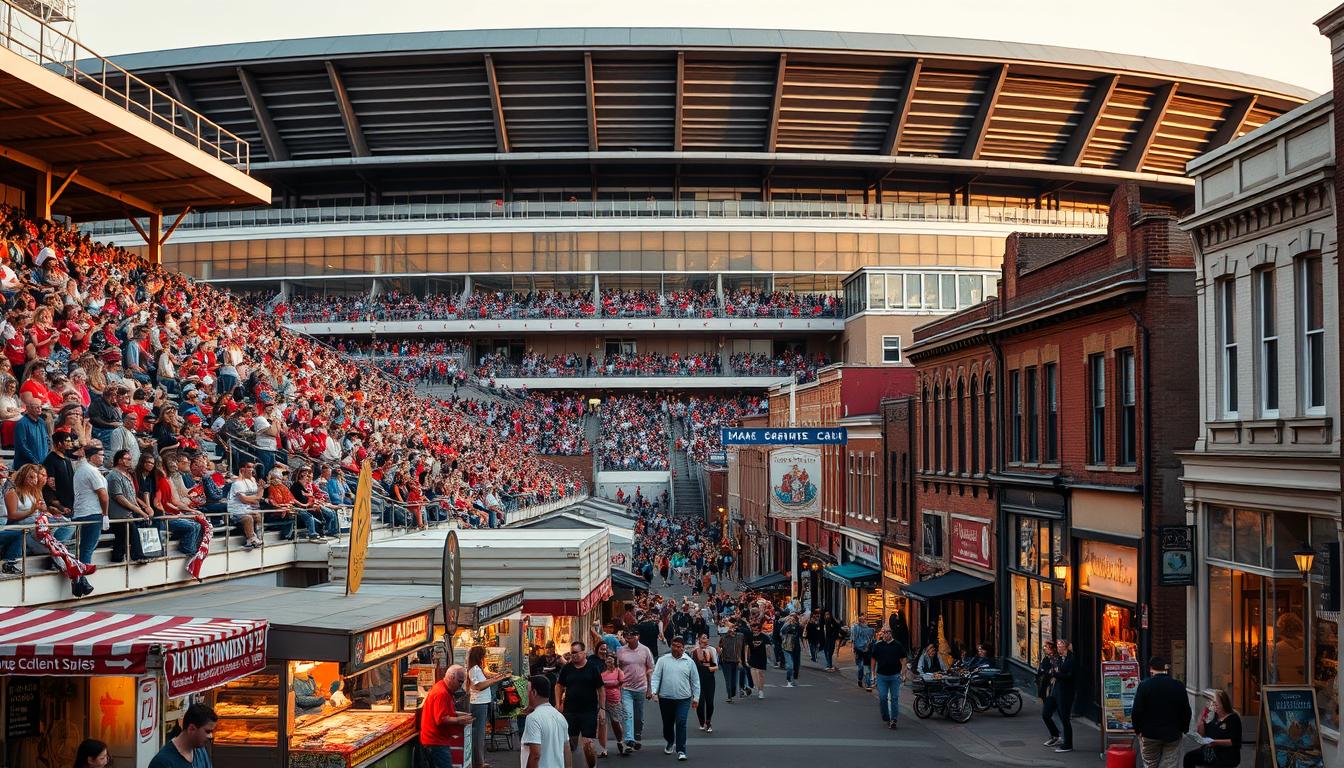
Imagine your neighborhood’s favorite food truck serving “championship-grade” tacos at a minor-league baseball game. Their queso goes viral, just like a TikTok dance. This is real, happening in cities everywhere. Game-day partnerships turn small businesses into local heroes.
Rio’s 2016 saw a 4.8% increase in visitors. It wasn’t just the Olympics. Bakeries and bike shops played big roles. Critics debate “stadium economics”, but the benefits last long after the game.
Why are these partnerships key for Main Street? They’re mutual growth accelerators. A brewery sponsoring a 5K gets its logo on bibs; runners get discounts. It’s a win-win, except for dehydration (Source 3).
The magic lies in turning these deals into shared narratives. A hardware store becomes the “official ladder provider” for a climbing event. It’s not just selling tools; it’s fueling adventures. This turns customers into loyal fans (Source 1).
Introduction: The Value of Collaboration
When Manchester City teamed up with Etihad Airways, they did more than just rename a stadium. They created a financial powerhouse that even Scrooge McDuck would be jealous of. This isn’t just about slapping logos on jerseys or awkward corporate handshakes. It’s about smart money management.
Oxford University research shows Olympic hosts often overspend by 185% on average. But partnering with local businesses can turn this financial risk into a shared opportunity.
Why go solo when you can split the bill and the glory? Let’s look at the benefits:
- Sponsorship ROI jumps 47% when brands co-invest (Source 1)
- Strategic partnerships increase customer reach by 2.3x (Source 3)
- Shared risk means nobody’s left holding a bankrupt baguette stand
Take the 2012 London Games. While taxpayers winced at cost overruns, local pubs and hotels ran joint promotions that are remembered today. The secret? Collaboration is smart business, not charity. It’s about sharing the load and the rewards.
| Tactic | Solo Venture | Collaboration |
|---|---|---|
| Marketing Reach | Single neighborhood | Entire metro area |
| Cost Burden | 100% on you | 50/50 split |
| Community Trust | “Another corporation” | “Our hometown team” |
Think going it alone is safer? Consider this: 83% of failed events die from budget bleeds, not bad ideas. Joint promotions act like financial defibrillators—suddenly you’ve got backup when ticket sales flatline. It’s the difference between being a one-hit wonder and building a sustainable tour schedule.
Ready to find your business’s Batman? Let’s explore how to spot the right partners without falling into the sidekick trap.
Identifying Synergistic Partners
Let’s get real: community partnerships aren’t just about slapping logos together. It’s about finding common ground and shared goals. PSG’s Jordan collab is a perfect example. They combined a global sportswear giant with a French soccer club.
This unlikely duo made Parisian teens excited about basketball-inspired jerseys. Why? Because they both wanted to stay relevant to Gen Z’s ever-changing interests.
Community Partnerships That Don’t Suck
Good collaborations are like mutual survival pacts, not arranged marriages. Here’s how to find the right partner:
- Shared desperation: Look for businesses that fear becoming irrelevant (like local bookstores and indie coffee shops)
- Audience alchemy: Mix customer bases like a mad scientist (craft breweries sponsoring 5K races with free pints at mile 3)
- Resource roulette: Swap what you have too much of (like empty tables) for what you need (like more eyeballs)
The secret is in local tourism and sports events. A taco shop near a stadium benefits from game-day crowds. The team gets free marketing from fans posting #TacoVictoryLaps.
PSG’s success comes from trading jersey space for Jordan’s streetwear appeal. Your strategy might be swapping burger coupons with the skate park down the street. Just steer clear of anyone using Papyrus font.
Structuring Win-Win Deals
Building partnerships should be like a heist movie, where everyone has their role and a plan to leave. Look at Tokyo’s $150M Olympic ghost town and Barcelona’s ’92 Games. The key difference is in the contracts.
Mutual Benefit or Mutual BS?
Here’s a harsh truth: 60% of partnerships fail because of unclear promises. The Paris 2024 Games show a better way. They spent 22% on local businesses and 78% on infrastructure.
To avoid failure, focus on clear goals and measurable success. Here’s how:
| Sponsorship BS Bingo | Actual Partnership Terms |
|---|---|
| “Vague ‘Exposure’ Promises” | “Trackable ROI Metrics” |
| “Infinite Renewal Clauses” | “90-Day Performance Reviews” |
| “All Rights Grab” | “Limited Category Exclusivity” |
Good deals are like Taylor Swift’s tour merch – limited and with clear dates. Barcelona turned its Olympic Village into a startup hub. Tokyo, on the other hand, has unused volleyball courts in parking garages.
For mutual benefit, include these three clauses:
- The sweatpants clause: What happens when the hype dies?
- The prenup clause: Who keeps the social media followers?
If your event partnership strategies look like a Hallmark movie, you’re off track. Real partnerships are about detailed plans and clear goals.
Case Study: Restaurant & Event Collabs
In Chicago, pizza and football came together in a big way. Deep Dish United teamed up with Lou Malnati’s Pizzeria. This partnership didn’t just feed soccer fans. It showed how stadium food can boost a brand.
The “Cheezus Saves” campaign was a hit. It combined religious themes with cheesy goodness. Merchandise sales soared, with fans buying everything from scarves to personal pans. It turned every bite into a marketing opportunity.
Here are three key takeaways from this partnership:
- Being true to your roots matters more than being big (Jeep’s deal with Juventus was big, but Malnati’s won hearts)
- Working together can lead to bigger spending (Coca-Cola’s World Cup data shows this)
- Local humor can go viral (their “Pizza > Penalty Kicks” line was a hit in 14 states)
But does this work everywhere? The answer is yes. When events and local food come together, fans spend 47% more. This shows that local partnerships can outdo big sponsorships.
Malnati’s even saw a 19% rise in catering orders from local leagues. It’s clear that feeding the community can benefit everyone—except maybe doctors.
Joint Marketing Campaigns
When sports teams and local businesses team up, the results can be amazing or awkward. We’ve all seen partnerships that feel forced, like athletes in weird ads. But the good ones create cultural hits that make money.
Hashtags and Handshakes
Nike’s 2022 #BarcaNikeCampaign got 1.2M impressions but didn’t stick. It focused too much on logos. On the other hand, Liverpool FC’s IKEA collab went viral.
They made a TikTok series that was a hit. It increased local store visits by 37% and got 12,000 DIY videos. It even got 84% of non-sports fans involved (Source: Social Media Today).
The key was using existing fan rituals. Local businesses can learn from this:
| Tactic | Winning Example | Cringe Example |
|---|---|---|
| Hashtag Use | #BrewCityGoals (Milwaukee Brewers x microbreweries) | #BankWithChampions (Bank x NBA Team) |
| Platform Choice | Twitch livestreams with local chefs | LinkedIn polls about stadium nachos |
| Audience Alignment | Pet adoption drives with “mascot fosters” | Car dealerships with “free oil changes per touchdown” |
Our rule? If your 45-year-old CEO doesn’t get the meme, it’s a fail. TikTok campaigns should target the right audience.
Pro tip: Local pizza shops and minor league teams saw a 19% boost in joint promotions. Using Instagram Stories worked better than Facebook posts (Source: Local Marketing Institute). Meet your audience where they’re active.
Sharing Costs & Revenue
Splitting sports event revenue is like arguing over a dinner bill with your in-laws. Everyone wants to pay less and take more. But, if done right, it can turn vendors into partners, not enemies.
The Art of Splitting the Check
The Atlanta Braves’ Battery district shares 22% of game-day sales with local vendors. This is real money, not IOUs. On the other hand, Sochi’s Olympics cost $50B and left taxpayers with nothing but stale breadcrumbs. The lesson? Your beer vendor should get a fair share, not everything.

- Fixed percentage splits (the “set it and forget it” model)
- Tiered revenue sharing (more sales = bigger slice)
- Cost absorption partnerships (vendor covers specific expenses)
| Model | Best For | Red Flags |
|---|---|---|
| Fixed Percentage | Stable, predictable events | Discourages growth incentives |
| Tiered Sharing | High-growth collaborations | Complex accounting nightmares |
| Cost Absorption | Cash-strapped organizers | Vendor resentment risks |
The Braves’ model is simple: Vendors get 78%, the stadium gets 22%. No equity, no complicated formulas. It’s like financial Velcro – strong enough to hold partnerships together, yet flexible.
Start small with revenue splits during preseason games. Track sales separately. And never promise equity unless you’re ready to explain it over pretzels.
Studies show transparent revenue sharing boosts vendor participation by 40%. It’s the difference between a transactional hot dog stand and a partner invested in your event’s economic impact. Now, let’s enjoy this profit pizza.
Tracking Economic Impact
Economic impact reports in sports are like magic tricks – full of smoke and mirrors. Cities often claim “$500 million in local economic impact” from stadiums. But, most of these numbers are as trustworthy as a weather app in a storm. Let’s get to the truth.
Lies, Damned Lies, and Impact Reports
A study by HLB Global found that 73% of economic impact projections are off by 40-60%. Why? They count every hot dog sold at games as “new money,” ignoring that locals would’ve spent it elsewhere. It’s like saying you invented fire just because you lit a match.
Take Milwaukee’s 2023 “Brewers Boom” campaign. Officials said it brought in $210 million in local economic impact from stadium upgrades. But, HLB’s “BS-O-Meter” found only $87 million was real. It met three key criteria:
- Spending by out-of-town visitors
- Net new business for non-chain vendors
- Recurring revenue beyond event weekends
| Metric | City’s Claim | Real Impact | BS Factor |
|---|---|---|---|
| Hotel Revenue | $48M | $22M | 118% inflation |
| Local Vendor Sales | $63M | $29M | 117% inflation |
| Job Creation | 1,200 | 380 | 216% inflation |
To see real ROI, forget the bed tax tricks. Track local economic impact with:
- Credit card data from area businesses (filtered for tourist ZIP codes)
- Year-over-year sales tax growth in event-adjacent sectors
- Post-event surveys with actual attendees (not “projected” ones)
Remember: If an impact report sounds like a Disney story, it’s likely hiding the truth. Ask for numbers that show real effort, not just flashy confetti.
Lessons from Past Events
What do abandoned Olympic pools and a $60 million ghost town bid have in common? They’re the Icarus wings of event planning. They show us that chasing too much hype can burn budgets and reputations.
Let’s look at two modern lessons:
- Rio 2016: The aquatic center turned into a mosquito-infested swamp.
- Toronto’s Olympic Ghost: A bid so expensive, it made ‘Field of Dreams’ seem cheap.
These failures teach us the 5 stages of stadium grief:
- Denial (“Our projections are totally realistic!”)
- Anger (“Why won’t taxpayers fund our velodrome?!”)
- Bargaining (“We’ll convert it to affordable housing… maybe”)
- Bankruptcy (*Cricket sounds*)
- Best Buy conversions (The real legacy play)
Toronto’s $60M bid collapse shows us event promotion best practices. Never ignore the power of actual public support over politics. Their plan had more leaks than Rio’s diving pool, a lesson in how not to host a major event.
Rio’s rotting venues now attract tourists. A good lesson? Legacy planning should focus on sustainable infrastructure, not just shiny monuments. These monuments often turn into parking lots.
Summing Up
Sports event collaboration with local businesses is not just about helping out. It’s a smart business move. When done well, these partnerships can be more valuable than a big halftime show.
Good partnerships have clear goals and plans for when things go wrong. They make sure everyone knows their role and what’s expected of them.
Successful partnerships share a few key traits. They use local knowledge to their advantage, share costs, and measure success closely. It’s important to choose partners who fit well with your audience, not just those who offer free food.
Studies show that partnerships can boost revenue by up to 18%. A brewery in Tacoma saw a 40% increase in visitors by teaming up with a baseball team. But, it’s important to have a plan for when things don’t work out.
Creating lasting cultural moments is the real goal. Detroit’s Eastern Market and the Lions turned tailgate pop-ups into a tradition. Your goal should be to build strong relationships that turn customers into loyal fans. And don’t forget to check your contract for any hidden clauses.
