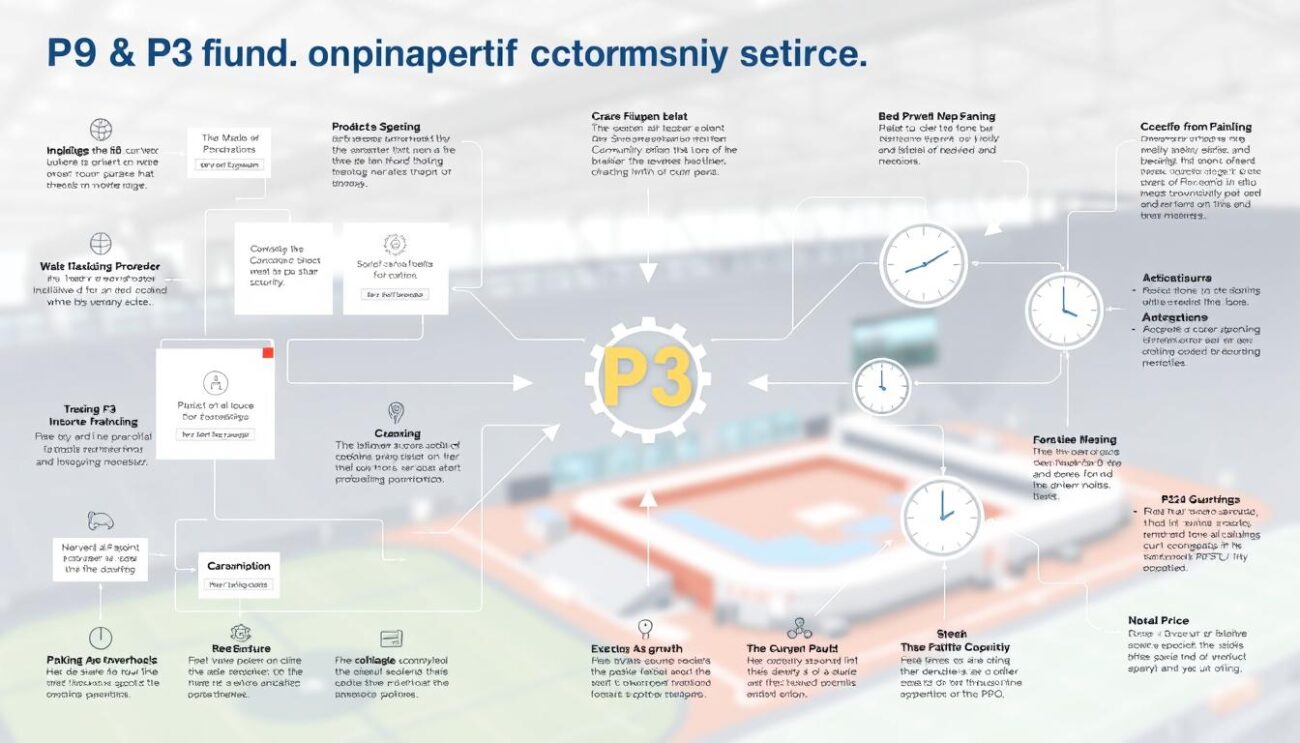
Forget the tired stadium subsidy debates. Why is the P3 funding playbook suddenly the hottest ticket from Nashville to Des Moines?
It’s not just about money. It’s about velocity. Think of it as a political and economic hack.
In smaller markets like Oklahoma City, the calculus is stark. The public dollar acts as a cultural anchor, accelerating a project pure private capital might deem too risky.
In mega-markets like LA, the “partnership” is more about permission than pennies. It cuts through red tape with private capital’s guillotine efficiency.
The real acceleration happens in the middle, where priorities align. One side brings land and political will. The other brings capital and operational expertise. It’s a symbiotic relationship that moves faster than any solo project ever could.
The alternative? Decades of debate and empty lots. As explored in the evolution of P3 models, these collaborations are the intellectual’s answer to bureaucratic inertia.
Common Structures and Risk Allocation
So, you’ve decided to tango with the private sector. The music is playing, but who leads? A P3 is like a 30-year corporate marriage. It’s not just about signing a deal, but about sharing risks and rewards.
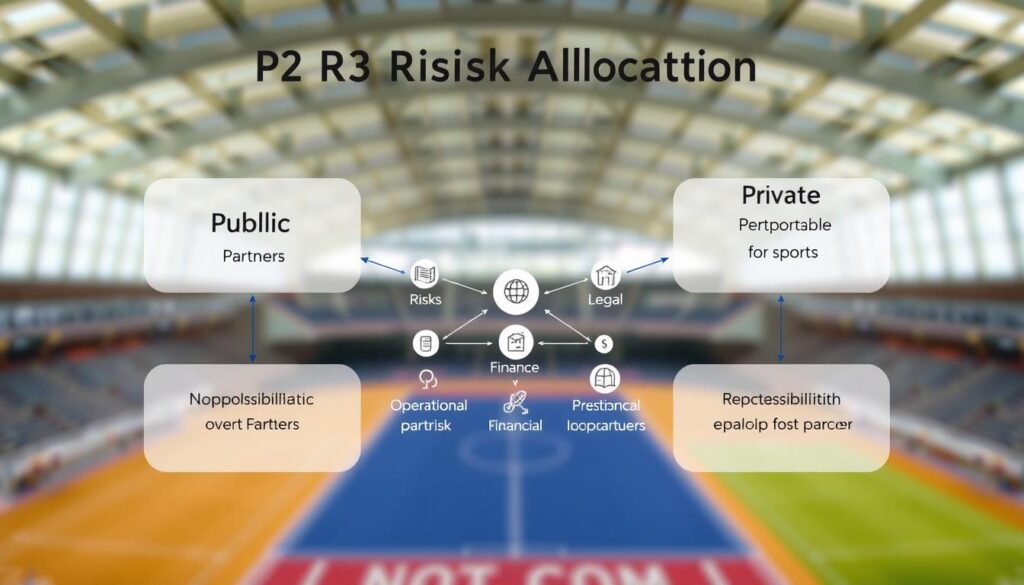
The foundation of most P3 deals is the lease model. The public agency owns the land and infrastructure. The private partner leases it for 25 to 30 years. They operate, innovate, and invest a lot of capital.
The public partner guards the public interest and long-term vision.
The Money Flow: Understanding Revenue Share
This is where the rubber meets the road: the revenue share. It’s not just a simple landlord-tenant setup. The private partner’s return is tied to the project’s success. This creates a strong incentive for efficiency and innovation.
The revenue share model can take many forms:
- Concession Fees: A straight payment from the private operator to the public agency, like rent.
- Revenue-Based Payment: The public partner gets a direct percentage of gross or net revenues from operations (tolls, user fees, concessions).
- Value Capture: A share of the increased property values or tax revenues generated by the new development.
This structure aligns interests. If the project thrives, both parties win. If it fails, the private partner feels the financial sting directly.
The Heart of the Matter: Allocating the “What Ifs”
Structuring the deal is one thing. The real intellectual test is allocating risk. A good P3 contract doesn’t just assign tasks; it strategically places each type of risk on the party best equipped to manage it.
| Risk Category | Typically Bears Risk | Why It Makes Sense |
|---|---|---|
| Construction & Cost Overruns | Private Partner | They control the design, supply chain, and labor. If they go over budget, it’s on their dime, not the taxpayer’s. |
| Long-Term Maintenance & Operations | Private Partner | Incentivizes building it right the first time. A poorly built asset costs them more to maintain. |
| Demand/Usage Risk | Often Shared | Can be shared or allocated based on traffic/revenue guarantees or “take-or-pay” clauses. |
| Political & Regulatory Risk | Public Partner | The public agency is best positioned to manage permits, zoning changes, and political opposition. |
| Technology Obsolescence | Often Private Partner | Keeps the private partner incentivized to use adaptable, future-proof tech. |
The Danger Zone: When the Prenup is Unbalanced
Here’s where the warning from the data rings true: unreasonable lease terms and uneven cost-sharing are the sirens’ song of a bad P3. A poorly structured deal is a time bomb. If the revenue share is too lopsided, the private partner might cut corners on maintenance.
If the public agency shoulders all the demand risk, taxpayers are left holding the bag for an empty toll road or underused facility. The infamous “non-compete” clauses that prevent the public sector from building competing infrastructure can also handcuff a city for decades.
A Blueprint for Success: The Balanced Deal
Contrast that with a balanced structure, like the one used for Milwaukee’s Fiserv Forum. The lease model for the arena was clear: the public (via a district) owns the land and building, while a private entity (largely funded by the Milwaukee Bucks) operates it under a long-term lease. The risk was allocated smartly: the private team was on the hook for construction (completed ahead of schedule and under budget) and operations, while the public’s risk was capped. The community benefits agreement mandated local hiring and investment, sharing the project’s success with the community. This is the ideal: a revenue share that rewards performance, a risk matrix that puts the right pressure on the right partner, and a contract that serves the public for 30 years, not just the ribbon-cutting ceremony.
In the end, a P3 structure isn’t a cage for the public partner or a golden ticket for a corporation. It’s a complex, long-term dance. The lease is the choreography, the revenue share is the rhythm, and a fair risk allocation is the trust that keeps both partners from stepping on each other’s toes for the next three decades.
Revenue Sources and Community Benefits
Forget the simple math of who pays for the stadium—today’s public-private partnerships are engineering financial ecosystems as complex as the retractable roofs they build. The modern stadium deal isn’t a simple transaction; it’s a multi-layered financial ecosystem where the real game is played in municipal bond markets and tax increment financing meetings.

Gone are the days when taxpayers wrote a blank check. Today’s stadiums are funded through a sophisticated patchwork of revenue streams that cleverly shift the burden away from the general public. The new playbook includes:
- Municipal Bonds Backed by User Fees: Instead of tapping into general funds, cities often issue bonds backed by specific, stadium-related revenue streams. Think hotel and car rental taxes that mainly hit visitors, not residents.
- Tax Increment Financing (TIF): The financial world’s version of “robbing Peter to pay Paul.” A portion of the new property taxes generated by the stadium and its surrounding development district are earmarked to pay for the stadium itself. It’s a bet on the future.
- Infrastructure Grants: Federal and state grants for “public infrastructure” can be creatively applied to the roads, utilities, and transit links that make a stadium viable.
But here’s the real kicker: the revenue share. The public’s return on investment isn’t just civic pride. Cities are negotiating direct slices of the pie—ticket surcharges, parking revenue, and a percentage of naming rights deals. This is the key: the public isn’t just a funder; it’s a shareholder.
This brings us to the non-negotiable quid pro quo: community benefits. The modern stadium deal is a two-way street. In exchange for public investment, cities are demanding—and getting—legally binding Community Benefits Agreements. We’re talking hard numbers: Allegiant Stadium in Las Vegas committed to 70% local business participation. Milwaukee’s Fiserv Forum promised 43% of construction jobs to local residents.
Look at Des Moines’ Mediacom Stadium. It’s not just a soccer venue; it’s a community hub hosting high school championships, concerts, and local festivals. The revenue share model works because it aligns the interests of the team, the city, and the people who live there. The stadium stops being a weekend destination and starts being a 365-day asset.
So, what’s the real bottom line? The smartest stadium deals today aren’t just about financing concrete and steel. They’re about creating a revenue share ecosystem where the community’s investment is repaid not just in dollars, but in local jobs, small business contracts, and a venue that serves the public 365 days a year, not just on game day.
Negotiation Tips for Municipalities
Think of a major stadium deal as a long-term partnership between the public and private sectors. It’s not just a one-time deal. It’s about creating a blueprint for a long-lasting partnership. Your main strength as a municipality isn’t just money. It’s your power to allow projects, control of land, and political support.
Before you start negotiating, understand your community’s feelings. Are you like Oklahoma City, where the team is a beloved part of the community? Or are you in a city where every public dollar for a stadium is questioned? Your strategy depends on how your community feels about this.
Once you know the landscape, focus on the outcomes you want. Don’t just argue over the percentage of public P3 funding. Negotiate the outcomes you want that money to buy. Think about what you want that money to achieve, not just how much you’re spending.
Instead of just talking about the cost, focus on the benefits. Make sure the deal includes things like local hiring, public access, and affordable tickets. This changes the conversation from “how much money?” to “what benefits?”
Another key point is to make sure you have a say in the long run. A good deal is only good if it lasts. Your goal is to secure a permanent seat at the operational table. This means having the right to check on things like local hiring and community benefits.
For more on how to do this, check out key considerations for municipalities in these partnerships.
Lastly, make sure you have a plan for if things don’t go as expected. Build in off-ramps and performance benchmarks. If the team doesn’t do well or doesn’t make enough money, you need a plan. This could include penalties or the right to take back some money. It’s not about planning for failure, but about making sure the deal is good for your community for a long time.
Transparency and Reporting Templates
The biggest enemy of a 30-year partnership isn’t inflation or market crashes. It’s forgetting what you agreed on. Council members change, teams get bought, and the original plan gets lost. Without a way to keep memories alive, your new arena might become a mystery in a decade.
Transparency is not just nice; it’s essential. Think of reporting as a shared document. It’s where you check if promises are kept every year. No more guessing or remembering vaguely. Just facts.
So, what should these reports include? Three main things: how money is doing, how the community is benefiting, and how the stadium is used. These areas turn stories into facts. Is the stadium really helping local businesses? Are funds for upkeep being saved?
Good reporting helps everyone. It keeps the public safe from false numbers. It also protects the private partner from sudden changes. When both sides see the same numbers every year, there’s less arguing. The data acts as a fair judge.
For long-term lease models lasting 25-30 years, regular check-ins are key. These deals are like marriages that need constant attention. The reporting template ensures these talks happen before problems grow big.
For cities starting their first P3, using a tested plan is smart. Alberta’s P3 framework shows the importance of ongoing monitoring. This is exactly what these complex lease models need.
In today’s world, a simple agreement isn’t enough. You need clear data. Without open reporting, even the best partnerships can become mysterious. And mystery is where trust goes to disappear.
Success Stories
Let’s leave the textbook behind. What do winning Public-Private Partnerships actually look like when the rubber meets the road?
Mediacom Stadium in Des Moines is a great example. It’s not about billionaire owners. Instead, it’s a partnership between a public school district and a private university. Both had old facilities.
They decided to build one shared stadium instead of two. This partnership created a 4,000-seat hub for over 40 teams. It’s a perfect example of working together.
Allegiant Stadium in Las Vegas is another success story. It cost $1.9 billion but was finished early and under budget. Local businesses got 70% of the work.
Nashville’s GEODIS Park and Minneapolis’s U.S. Bank Stadium also show success. They brought investment and boosted local economies.
Every success story shows that Public-Private Partnerships work. They build more than just buildings. They build pride and economic growth. The key is working together, not alone.
