
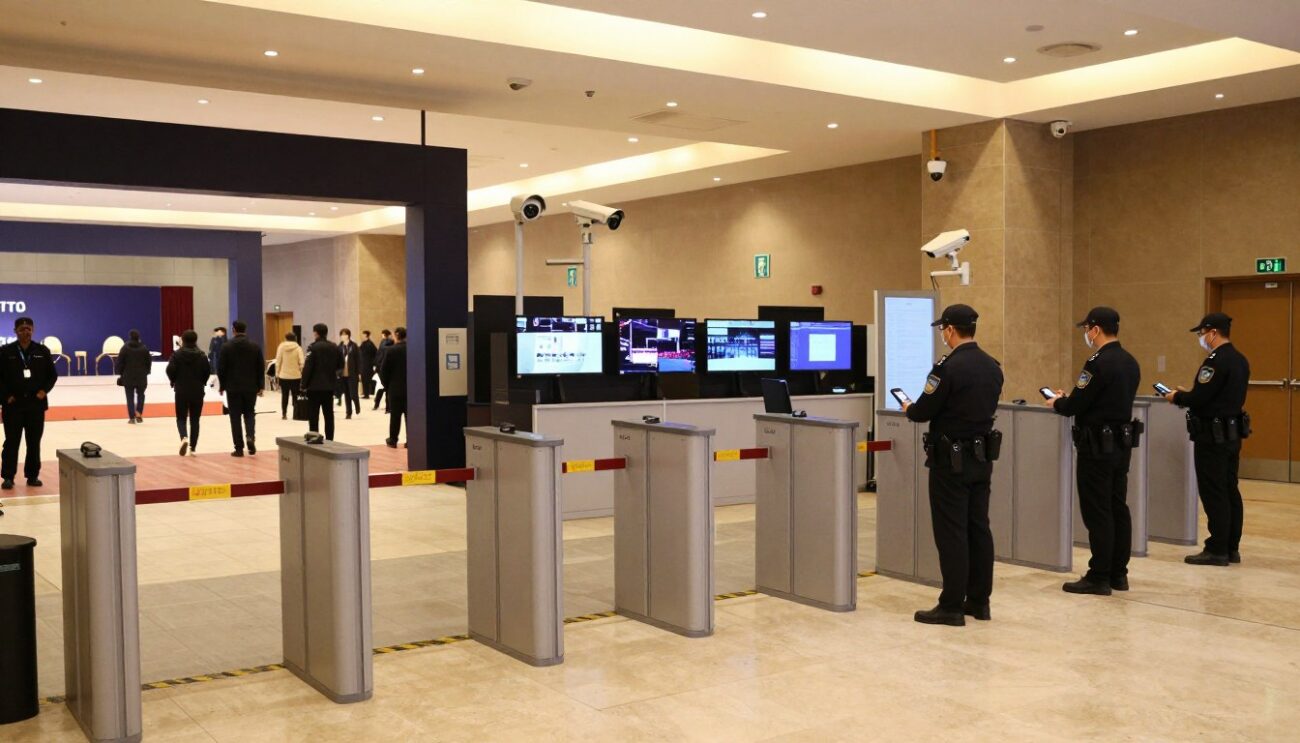
The roar of the crowd and the thrill of the game are back. Live event attendance has soared after 2020.
This surge brings big challenges. Tragic events at places like the Manchester Arena and Astroworld festival show the risks. Keeping thousands safe needs a strong, multilayered defense strategy.
Just one fence or metal detector isn’t enough anymore. Today’s protection uses advanced tech and smart design. It includes physical barriers, digital watch, and strict entry rules.
Venues face special challenges. Big crowds, many entry points, and emotional moments raise the risk. A solid plan tackles these with five key areas.
These are physical barriers, constant watch, controlled entry, skilled staff, and detailed emergency plans. It’s key to follow a step-by-step guide for risk management.
True safety is about design, screening, and planning working together. By using emergency planning guidelines, we make sure protection reaches every guest.
Perimeter and Entry Screening
Keeping venues safe starts at the fence line and gate. This first layer keeps threats out and manages people flow. A strong perimeter and entry process build attendee trust.
Robust perimeter defenses are the first line of defense. Fences are 8 to 10 feet high with anti-climb features. Crash-rated bollards and barriers protect vehicle access points, meeting strict ASTM standards.
Controlled entry points are key. Gates direct visitors to specific areas. A “sterile” zone between the fence and screening tents helps manage queues and isolate issues.
The entry security process is thorough yet efficient. It starts with electronic ticket validation. Then, attendees go through bag inspections and person screening.
Magnetometers, or metal detectors, scan individuals. These units detect metallic objects as people pass through. Handheld wands are used for secondary screening or crowded events.
Bag checks happen alongside person screening. Visual inspections are common, but X-ray systems are used in large venues. They quickly identify prohibited items like weapons or alcohol.
Managing people flow is a big challenge. Advanced screening layouts ensure safety without long lines. Real-time monitoring helps adjust resources as needed.
| Screening Technology | Primary Function | Throughput Speed | Key Advantage |
|---|---|---|---|
| Walk-Through Magnetometers | Detects metallic objects on a person’s body | High (20-30 people/minute) | Provides hands-free, consistent screening for all attendees |
| Handheld Metal Detectors (Wands) | Pinpoints location of metal; used for secondary screening | Medium (requires staff interaction) | Offers flexibility and detailed inspection in crowded areas |
| X-Ray Bag Scanners | Provides an internal view of bags and belongings | High (15-20 bags/minute) | Allows thorough inspection without physically emptying bags |
| Integrated Ticket Scanners | Validates entry credentials and controls access | Very High (30+ people/minute) | Links entry to a verified database, preventing fraud |
Modern perimeter security is more than just fences. It includes sensors and cameras for real-time intruder detection. This alerts a command center quickly, preventing breaches.
A hardened perimeter and efficient entry screening create a strong barrier. They deter threats and filter out prohibited items with magnetometers. This layer is essential in a venue’s security plan, making all other measures more effective.
CCTV and Command Center Design
A good CCTV system is like the brain of venue security. It sends important data to a command center. This network of cameras and analytics helps keep things under control in real-time.
Today, we use both fixed and PTZ cameras. They are set up at key spots like entrances and seating areas. Ultra-high-definition 4K resolution cameras help spot faces and objects from far away.
Watching many video feeds at once can be tough. People might miss important events. That’s why smart software turns video into a tool for security.
AI video analytics find threats automatically. They watch for things like people hanging around where they shouldn’t or bags left unattended. They also notice when a crowd gets too big, which could mean trouble.
Behavioral detection algorithms do even more. They spot unusual movements or visible weapons. Some systems can even search for specific people or cars in old footage.

In the security command center, all these systems come together. This room is where everything happens. Video feeds, access control logs, and communication systems are all on one screen.
This setup is a big plus. Security managers don’t have to look at different monitors. They can see alarms, check CCTV camera feeds, and call for help from one place.
This makes security more proactive. Problems are caught and fixed before they get worse. The command center, with its smart surveillance, helps everyone work together and stay informed.
Weather/Medical Response Plans
When severe weather hits or a medical crisis unfolds, a solid Emergency Action Plan (EAP) is key. It goes beyond just design and tech. It gives step-by-step guides for staff and visitors in emergencies.
A good EAP tackles specific threats head-on. It has clear steps for medical crises, severe weather, fires, and threats. For medical issues, it shows where first aid stations and AEDs are. It also outlines who does what and how to call for outside help.
Privacy and minimal disruption are key in medical protocols. The plan should have private treatment areas. It should also have clear ways for staff to talk to paramedics quickly.
For weather emergencies, the EAP needs to say who decides what actions to take. It answers big questions like when to shelter in place or evacuate. It also shows where to go outside if you need to leave.

Good planning means thinking about “what if” situations. A solid plan covers for things like power outages or communication failures. It has backup systems and plans to keep everyone safe. Making these plans early, with help from experts, is key.
The table below shows important parts of your EAP for weather and medical emergencies:
| Plan Component | Weather Response Focus | Medical Response Focus |
|---|---|---|
| Primary Action | Shelter-in-place or evacuation to pre-defined safe zones. | Immediate first aid and rapid escalation to professional EMS. |
| Key Staff Roles | Spotters monitoring weather alerts; ushers guiding crowd movement. | First-aid trained responders; a dedicated liaison for incoming ambulance crews. |
| Communication Method | Public address system for clear, calm instructions to all attendees. | Discreet radio codes or panic buttons to alert medical teams without causing panic. |
| Public Instructions | “Please proceed calmly to the marked shelters in Concourse B.” | “Give the responder space, please. Professional help is on the way.” |
| Critical Equipment | Weather radios, megaphones, illuminated exit path lighting. | AEDs, first aid kits, oxygen tanks, stretchers, and privacy screens. |
An Emergency Action Plan is a living document. It needs input from security, operations, medical, and facilities teams. Regular drills are a must. They make sure everyone knows their role, which saves lives in real emergencies.
Just like a safety plan for weather emergencies is key in healthcare, it’s also vital for public venues. Planning ahead makes a venue’s security strong and ready to act.
Coordination with Police/EMS
Memorandums of Understanding (MOUs) with law enforcement are more than just paperwork. They are the key to saving lives during emergencies. True venue security goes beyond your property line, working well with public safety. This partnership makes police, fire, and EMS more effective from the start.
Starting with pre-event planning is key. Teams meet early to plan together. They set up shared communication, decide on command structures, and agree on protocols. They also make sure EMS vehicles have clear entry points, saving time.
Technology plays a big role in this partnership. Connecting with the local Computer-Aided Dispatch (CAD) system is a big help. When a threat is found, an alert goes straight to 911 dispatch, saving precious minutes.
When an incident happens, the plan is clear and quick. An alert from AI surveillance doesn’t just tell your team. It starts a chain of actions:
- Internal security teams move to contain and assess.
- At the same time, a CAD alert goes to police and EMS.
- Video feeds from the scene are shared with responders on their way.
- First responders arrive ready, knowing what’s happening and where.
This coordination is more than just a phone call. It creates a shared view of the situation. Police and EMS don’t just arrive; they come with important information. EMS finds patients quickly, thanks to clear directions.
The table below shows how much better a planned response is compared to one without coordination.
| Aspect | With Pre-Coordination & MOUs | Without Formal Coordination |
|---|---|---|
| Initial Response Time | Sub-90 seconds to dispatch | Several minutes of call screening and verification |
| Information for First Responders | Real-time video, floor plans, and threat details received en route | Limited to initial 911 caller description |
| On-Scene Command | Unified command structure pre-established | Potential for confusion between private and public agency leadership |
| EMS Access & Efficiency | Pre-cleared routes and entry points expedite medical aid | Vehicles may be delayed at perimeter or stage far from the incident |
Investing in deep coordination turns your security plan into a strong network. It makes sure everyone works together when time is critical. This partnership is a major security improvement.
Tabletop Exercises and Checklists
The best security plans need practice to work. Annual tabletop exercises turn ideas into action.
In these sessions, key people go through fake scenarios. They test how well they communicate and make decisions under stress. This helps find weaknesses in plans before they fail.
Checklists keep important steps on track. They guide security checks before events and reviews after. They make sure everyone follows the same steps.
Drills must involve everyone who runs important systems. This includes those watching the CCTV cameras. Testing how well they respond makes them better prepared. It shows the CCTV center works as planned in emergencies.
Keeping records of all training and updates is key. This cycle of practice, review, and improvement makes responses automatic. It turns plans into reliable protection.
