
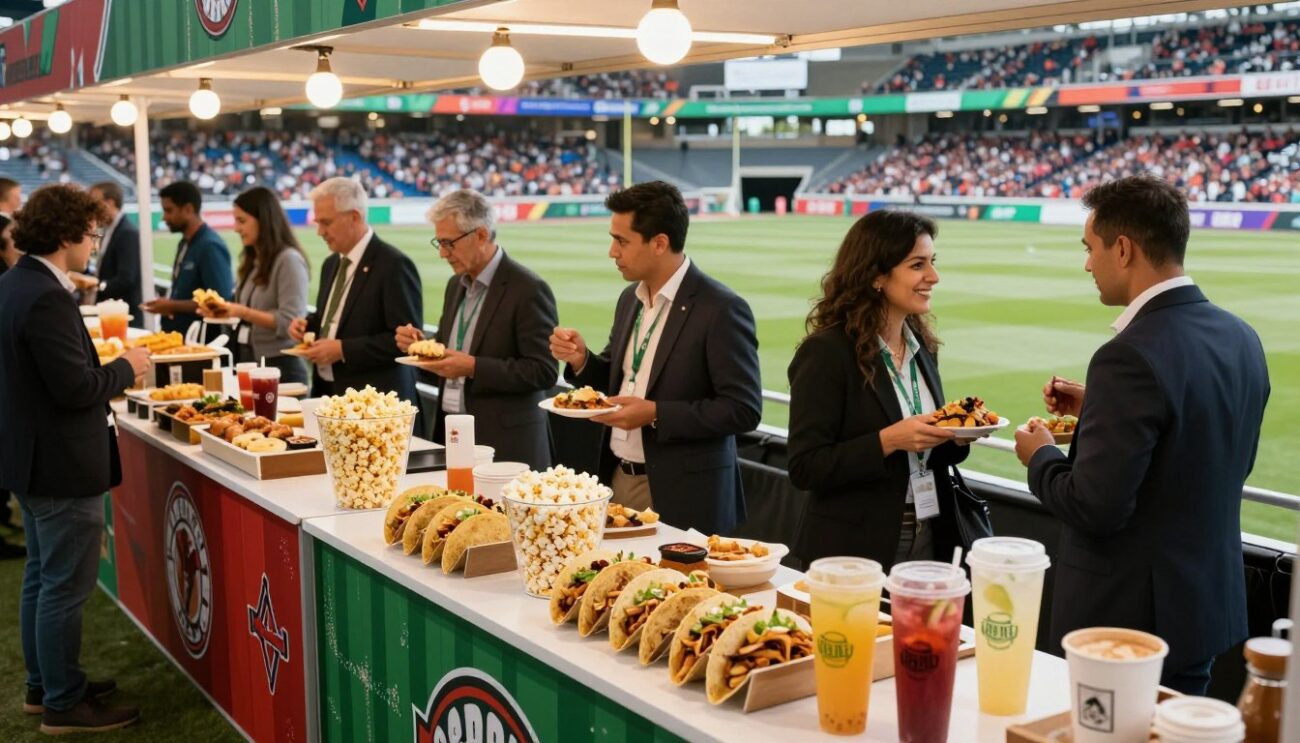
Major sporting events are a big boost for local economies. They attract thousands of fans who are passionate about the game. The experience these visitors have goes beyond just watching the game.
A well-thought-out concessions plan is key to this experience. It turns a simple need into a primary driver of fan happiness and a big source of income.
The old days of basic stands are over. Today, sports facility dining is all about technology and data. This change aims to make things faster and more profitable.
Top venues now see concessions as a major way to grow. It makes a game into a full-day, unforgettable experience. This approach makes a sports tourism destination more appealing.
To succeed, focus on a few key areas. Good concessions design, smart menu choices, and profitable partnerships are vital. This article will show you how to create a strategy that works for both fans and your bottom line.
Patron Flow and Queue Design
Efficient patron flow is more than just shortening lines. It’s a strategy to boost spending and improve the fan experience. Poorly designed concourses can cause frustration and lead to missed game action. This results in lost sales.
Smart concessions design turns this problem into an opportunity. It guides crowds smoothly to points of sale.
The science of queue psychology is key. The goal is to manage wait time perception and keep crowds moving. There are three main queue structures, each with its own benefits.
- Linear Queues: Separate lines for each register or window. This is simple but can cause unfair waits if one cashier is slow.
- Serpentine Queues: A single, winding line that feeds to multiple service points. This reduces the “fear of choosing the wrong line” and feels more fair, often reducing the perceived wait time.
- Virtual Queues: The future of concessions design. Fans order and pay via mobile app, then receive a notification when their order is ready for pickup. This eliminates physical lines altogether.
Technology drives modern flow solutions. Self-checkout kiosks let fans browse menus and pay without cashier interaction, speeding up transactions. Mobile order-ahead is a game-changer for halftime rushes, letting fans order from their seats and skip the line. The most advanced systems use frictionless “Just Walk Out” technology.
With this tech, fans simply grab items and walk out. Sensors and cameras track their selections and charge their account automatically. This revolutionizes staffing needs and can double or triple throughput during peak periods. The data generated is a goldmine for operations.
These systems provide detailed analytics like heat mapping of foot traffic and dwell time reports. Operators can see exactly where crowds congregate and where they avoid. This intelligence informs strategic concessions design. High-margin impulse items like premium desserts or branded merchandise can be placed in high-dwell zones.
Layouts can be redesigned to naturally funnel traffic past these high-profit displays. For example, placing a popular craft beer stand at the end of a primary walkway can capture fans as they head back to their seats. Major league stadiums using these data-driven approaches report significant increases in secondary spending.
Real-world success comes from blending these elements. A venue might use serpentine queues for traditional stands, mobile pickup zones for app orders, and a frictionless market for grab-and-go items. This multi-modal approach caters to different fan preferences and maximizes overall venue throughput. The result is a seamless experience where fans spend less time waiting and more time enjoying—and spending. Mastering patron flow is a foundational element of profitable concessions design.
Menus for Speed and Local Flavor
Speed and local flavor are key for a great sports tourism concessions strategy. The best menus are quick to serve and showcase the area’s taste. This mix meets fans’ need for fast service and their desire for a real experience.
Speed is critical during breaks. A simple menu is essential. Include easy-to-make items like hot dogs and nachos. These are quick to prepare and serve.
This method meets the high demand during busy times. It keeps service fast, even when it’s busiest.
Adding local flavors makes the experience memorable. Using local vendors adds authenticity. It makes fans feel connected to the place.
Imagine serving a Texas barbecue sandwich or a New England lobster roll. These dishes tell a story. They build loyalty and attract fans who want to try local foods.
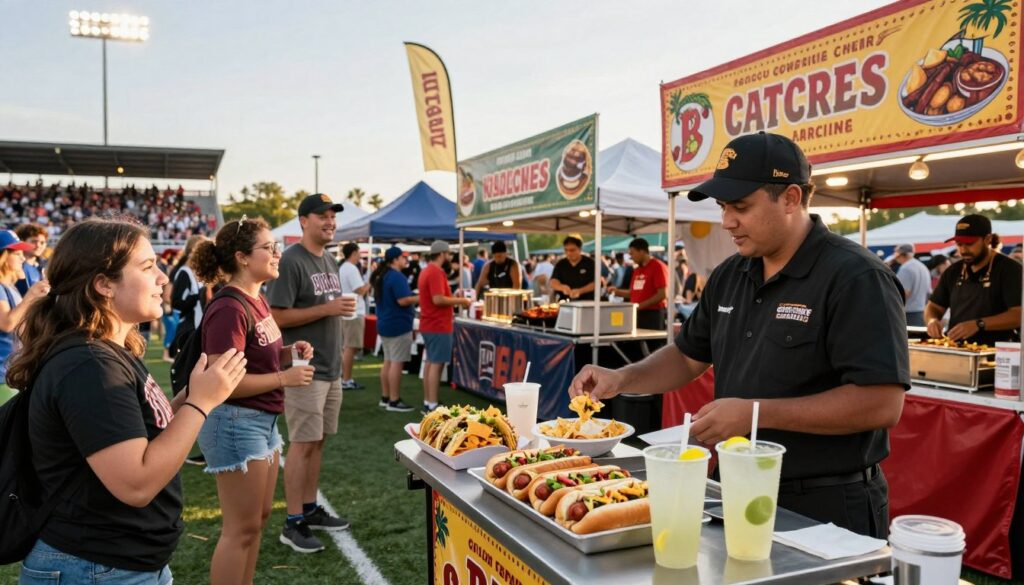
Using local ingredients strengthens this bond. It supports the community and offers fresher food. Fans are willing to pay more for these unique, local items.
Modern menus must also consider different diets. Include vegetarian, vegan, and gluten-free options. This is now a standard for inclusivity.
Offering a plant-based burger or gluten-free pizza is thoughtful. It makes sure every fan finds something they like. This approach turns dietary needs into a positive experience.
| Menu Focus | Example Items | Key Benefit |
|---|---|---|
| Speed-Optimized | Pre-wrapped burgers, bottled drinks, soft pretzels | Reduces transaction time, increases throughput |
| Local Flavor | Regional craft beer, city-famous chili, food truck tacos | Creates unique experience, boosts perceived value |
| Dietary-Inclusive | Vegan hot dogs, gluten-free buns, allergen-free snacks | Widens customer base, demonstrates modern awareness |
The best menu is a mix. It has fast, familiar items and local specialties. This way, it uses local vendors for authenticity while keeping service quick.
This approach makes dining more than just food. It offers a convenient and culturally rich experience. It boosts satisfaction and increases revenue per fan.
Portable vs. Permanent Stands
Scalability in sports tourism F&B often hinges on the clever mix of permanent and portable concession units. This choice defines your operational agility, capital investment, and ability to create unique fan experiences. Getting the balance right is a core strategy for venue managers.
The table below highlights the fundamental differences between these two infrastructure approaches:
| Feature | Permanent Stands | Portable Units (Kiosks, Carts, Pop-ups) |
|---|---|---|
| Infrastructure & Cost | High upfront build cost. Fixed plumbing, electrical, and gas. | Lower initial investment. Often self-contained or require simple hookups. |
| Flexibility & Placement | Fixed location. Difficult to modify or relocate. | High mobility. Can be deployed in high-traffic zones, fanzones, or parking lots. |
| Operational Capacity | Designed for high-volume, consistent menus. Larger storage and prep space. | Ideal for limited menus, specialty items, or seasonal offerings. Lower per-unit output. |
| Branding & Experience | Offers strong, year-round brand presence and a familiar anchor for fans. | Enables thematic, temporary, or experimental branding. Creates a festival-like atmosphere. |
Permanent stands are your operational anchors. They provide reliable utility access, which is key for complex kitchens. Their consistent location builds fan familiarity and loyalty. For core, high-demand items like burgers, pizzas, or draft beer, they are unmatched for speed and volume.
Portable units, on the other hand, are your tools for agility and experimentation. Their lower capital barrier allows you to test new food concepts or menu items with minimal risk. They can be rapidly deployed to relieve congestion at permanent locations or to serve underutilized areas of the venue.
Festival-style fanzones and in-seat delivery programs frequently rely on these mobile setups. They are perfect for creating temporary culinary districts that change with each event series.
Your strategy should mix both types. Use permanent stands for your core, high-volume offerings in primary concourses. Deploy portable kiosks and carts to capture secondary traffic flows, create buzz in tailgate areas, or offer premium treats in club sections. Consider seasonality—portable units can be stored during the off-season, reducing maintenance costs.
Critically, portable stands are the gateway for local vendors and chefs to participate in your events. A local barbecue pitmaster or artisanal ice cream maker can operate from a cart without the massive commitment of a full built-out kitchen. This directly enhances the local flavor discussed earlier, creating an authentic sense of place. Partnering with these local vendors through portable units diversifies your menu, supports the community, and offers fans unique culinary discoveries they can’t get elsewhere.
There is no one-size-fits-all answer. A major league stadium will rely heavily on permanent infrastructure but will use carts for novelties. A multi-use arena hosting a concert series might deploy a village of portable food trucks. Analyze your event calendar, fan demographics, and venue layout to build a dynamic, responsive concessions footprint that serves every patron perfectly.
POS Data for Planning
The secret to making more money at sports events is not guessing. It’s all about analyzing POS data precisely. A modern Point-of-Sale system is more than just a cash register. It’s the brain of your concessions operation.
Every sale gives valuable info to this system. This data shows what sells, when, and to whom. Moving from guessing to making decisions based on facts is key to better management and profits.
What data should you track? A good system captures important metrics.
| Data Point | What It Measures | Strategic Use for Planners |
|---|---|---|
| Sales Velocity | How quickly items sell during an event. | Helps spot top sellers and slow items for quick menu changes and inventory control. |
| Peak Selling Times | When sales really spike. | Helps plan labor, making sure you have enough staff before it gets busy. |
| Average Transaction Value (ATV) | The average spend per customer. | Shows chances to increase revenue with combo deals or upselling. |
| Popular Item Combinations | Items often bought together. | Helps create profitable meal deals and guides where to place items together. |
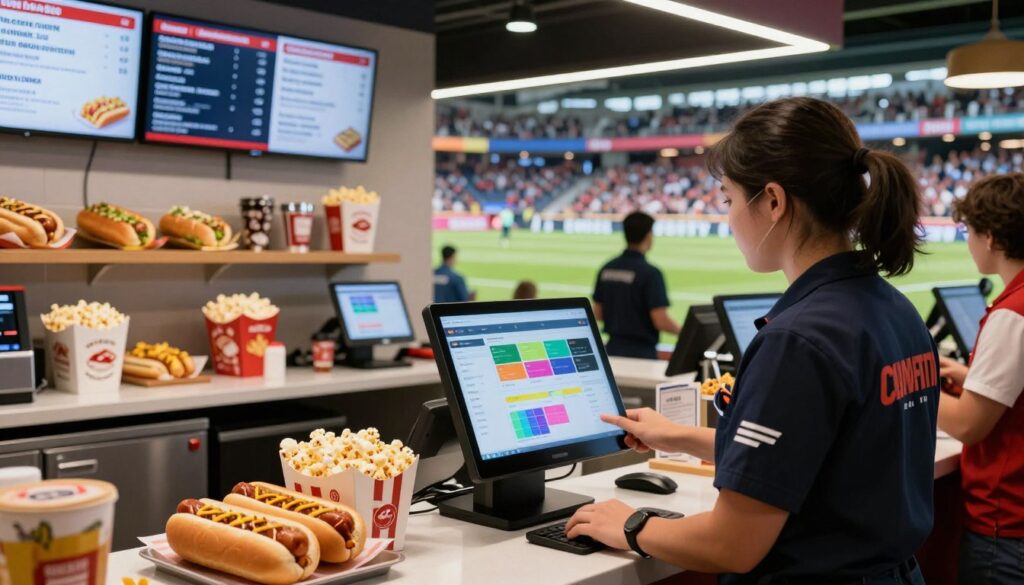
This data helps shape your menu. You can find and highlight high-margin items that fans love. At the same time, you can cut or reprice low-profit items.
Forecasting inventory becomes a science, not a guess. Your POS system’s historical data predicts what you’ll need for future events. This cuts down on waste and avoids stock-outs during key moments.
Tools that offer real-time data and heat maps are game-changers. They show where crowds are and how long they stay. This info is key for better space design, as noted in industry analysis. You can place stands in busy areas confirmed by data, not just guesses.
Labor costs are huge. POS data on peak times helps plan staff schedules that match demand. This avoids overstaffing during slow times and understaffing during busy ones. This is a big part of maximizing sports event revenue.
The goal is to cut waste and seize trends. By using POS data for planning, you make every decision with confidence. You stock what sells, staff when needed, and place stands where customers are. This data-driven approach turns your concessions into a profit powerhouse.
Alcohol Policies and Compliance
Alcohol sales are a big deal for sports venues. They bring in a lot of money but also come with big challenges. One mistake can lead to fines, lost licenses, or big legal problems.
Getting started involves local and state alcohol licenses. Rules change a lot from place to place. You need the right permits for your events and service model early on.
Training your staff is key. All servers should get a Responsible Beverage Service (RBS) certification. This teaches them to spot drunk people, check IDs, and handle tough situations.
Checking IDs is a must. Use strict methods at every sale point. Many places now use electronic ID scanners with the POS system. This makes it easy to keep track of everything.
Choosing how to serve alcohol is important. You can have a counter service for more control but it might slow things down. Or, you can use tech bars for faster service but you need to watch it closely.
Premium corporate packages often have open bars. This means you need to be extra careful to avoid too much drinking in a private area.
The table below compares the key operational models:
| Service Model | Speed Impact | Oversight & Compliance | Best For |
|---|---|---|---|
| Traditional Counter Service | Slower, depends on staff efficiency | High. Staff can visually assess each customer. | General admission areas, high-traffic locations. |
| Self-Serve Tech Bar | Very Fast. Patrons pour their own drinks. | Tech-dependent. Systems use RFID cards or wristbands with pre-set limits. | Premium clubs, areas seeking a modern experience. |
| Premium Open Bar Package | Instant service within the hosted area. | Must be carefully managed by dedicated staff to track consumption per guest. | Corporate suites, VIP hospitality tents. |
Modern POS technology is key for alcohol service. A good POS system does more than just take payments.
It can limit how much alcohol is served by setting drink limits. It also tracks sales in real-time, alerting you to any issues.
POS-generated reports are very helpful for audits. They show every sale, including who made it and what was sold. This helps protect your venue if someone sues.
It’s important to know all the rules. You can learn about common alcohol compliance mistakes to avoid big problems.
A good alcohol policy can turn a risk into a profit. It keeps fans safe and your venue legal.
Revenue Share Models
The financial deal between a venue and its concession partners is key. It turns strategy into profit. There are common models like fixed rent, a percentage-of-sales share, or a mix of both.
A fixed fee gives the venue predictable income. A pure revenue share aligns interests, as both gain from more sales. For concessionaires, this model shares risk but needs trust in sales tracking. A modern POS system is essential here.
Clear POS data ensures accurate reporting and builds trust. It’s important to agree on who pays for equipment and inventory. Terms for community or non-profit events must also be set early.
F&B is a scalable revenue stream. Premium experiences bring in high-margin income. A good financial model captures this value. It motivates performance and ensures a lasting, profitable partnership for everyone.
