
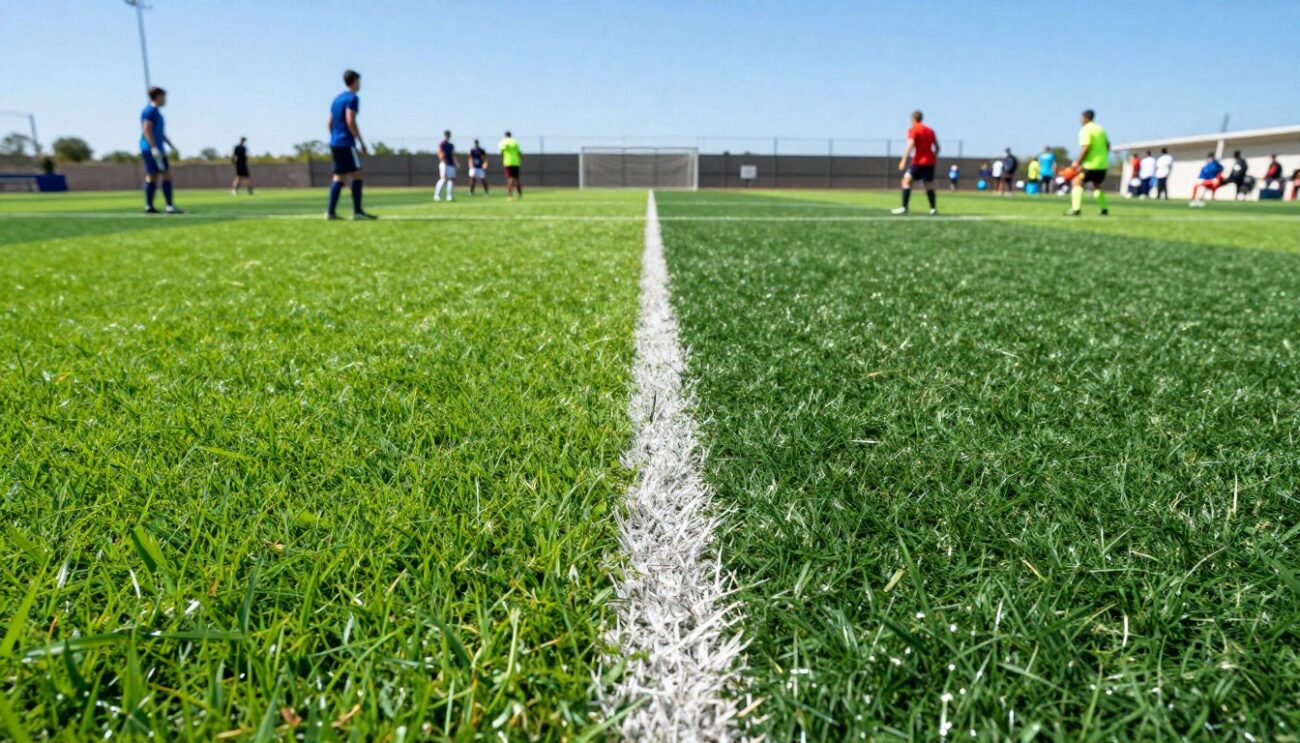
The foundation of any great game isn’t just skill or strategy. It starts from the ground up. Selecting the right playing surface is a critical decision that directly impacts athletic performance and long-term facility durability.
Different materials change how a ball bounces, how players move, and how safe they feel. Choices like hard courts, clay, or modular tiles each create a unique game dynamic. Your choice affects everything from player safety to how often you need repairs.
Sport-specific standards are vital for injury prevention. This includes proper shock absorption, often provided by specialized shock pads. The classic debate of turf vs grass highlights how material choice balances playability with upkeep.
This guide will walk you through the key factors. We’ll cover costs, weather resistance, and how to test materials. Understanding these elements helps you make an informed choice for your needs. For a detailed look at one popular sport, check out our pickleball surface comparison guide.
Lifecycle Costs and Maintenance
The real value of a surface is seen over its whole life, not just when you buy it. The cost of owning a sports facility includes three main parts: the initial setup, ongoing care, and replacement later on. Knowing all these costs is key to smart budgeting.
Many focus only on the upfront costs, but this can be misleading. A cheaper surface might need a lot more expensive care over time. On the other hand, spending more upfront can mean less money spent each year. It’s important to look at the long-term costs.
| Surface Type | Key Maintenance Tasks | Typical Frequency | Cost Impact |
|---|---|---|---|
| Hardwood (Indoor) | Refinishing, repainting, checking for warping | Repainting every 4-5 years | Moderate; high durability with proper hardwood specs |
| Acrylic Hard Court | Crack sealing, repainting, cleaning | Repainting every 4-5 years | Moderate; weather-dependent wear |
| Natural Clay | Daily brushing, watering, line marking | Daily/Weekly | High labor and water costs |
| Natural Grass | Daily mowing, fertilization, seasonal reseeding | Daily/Seasonal | Very high; requires dedicated staff |
| Composite Clay | Brushing, occasional watering | Weekly | Up to 40% reduced vs. natural clay |
| Polymeric | Occasional cleaning with mild detergent | As needed (seasonal) | Very low |
| 3G Synthetic Turf | Periodic brushing, infill top-ups, disinfection | Monthly/Annually | Low to moderate |
| PU (Polyurethane) | Basic cleaning, inspection for wear | As needed | Very low; high resistance to wear |
The table shows that maintenance needs vary a lot. For indoor places, knowing the hardwood specs is key for lasting well. The right type, finish, and base help avoid warping and damage. This cuts down on big repair costs.
Synthetic surfaces offer a different deal. Materials like polymeric and PU are made to last with little care. They resist cracks and fading, needing only occasional cleaning. But, 3G turf needs more work, like brushing, to keep it looking good. It also means no daily mowing or watering like with grass.
Choosing often means a trade-off. Natural surfaces like clay and grass give top play but cost a lot to run. Synthetic and modern composites offer good play with much less upkeep. For places that are always busy, this means less time off and more savings.
Managers should plan for 10 years with any surface. Include all costs: materials, labor, water, and equipment. Looking at the whole life shows the best choice, balancing needs with budget.
Weather and Climate Considerations
Choosing the right playing surface is more than just about sports. It’s about fighting against the weather. Temperature changes, heavy rain, and strong sun can greatly affect a court or field. Your local climate is key in picking a surface that works well and lasts long.
In the turf vs grass debate, natural grass has its limits. It does best with steady moisture and mild temperatures. In dry areas, it needs a lot of water to survive.
Clay courts are good for warm places because they keep moisture. But they’re not good in constant rain.
Artificial turf and modern polymeric surfaces are a better choice. They’re made for playing in any weather. They drain well and don’t fade from sunlight.
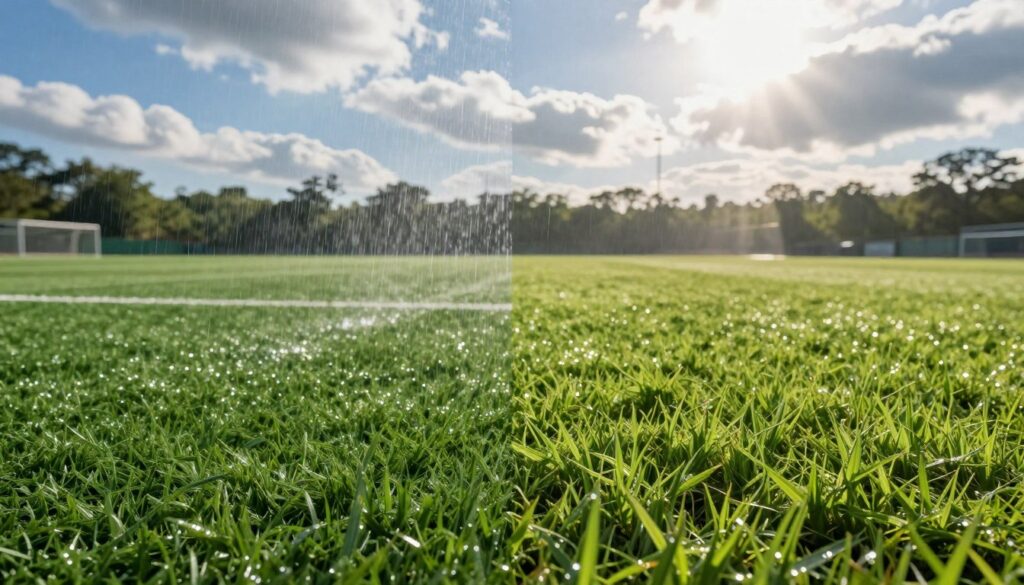
Different materials handle weather extremes differently. Hard courts, like acrylic, can crack in cold weather. Composite clay surfaces drain better and are better for places with changing wet and dry times.
Below is a table comparing how different surfaces handle climate challenges. It helps find the right surface for your area’s weather.
| Surface Type | Hot & Dry Climate | Cold Climate | Wet/Rainy Climate | Overall Weather Resistance |
|---|---|---|---|---|
| Natural Grass | Poor. Needs a lot of water, can dry out and die. | Poor. Goes dormant, can be damaged by frost. | Fair. Needs good drainage, can get muddy and soft. | Low. Depends a lot on care and climate control. |
| Artificial Turf (3G/Polymeric) | Excellent. UV-stable, doesn’t dry out, stays cool with infill. | Excellent. All-weather play, no cracking from frost. | Excellent. Drains well, playable soon after rain. | Very High. Made for consistent performance. |
| Clay Courts | Good. Keeps moisture, great for warm places. | Poor. Can freeze, hard to keep up. | Poor. Gets soggy, needs a long time to dry. | Moderate. Best in stable, warm, and dry places. |
| Hard Courts (Acrylic) | Good. Adaptable but can get very hot in sun. | Fair. Can crack in freezing weather. | Excellent. Drains water fast, dries quickly. | High. Performs well but be careful in cold. |
In harsh winters, artificial turf or all-weather polymeric surfaces are often the safest choice. In warm and dry areas, natural grass or clay can work with the right care. Always think about your area’s weather all year. The goal is a surface that’s functional, safe, and looks good all year.
Testing & Certification (Gmax, Ball Roll)
Facility managers need to check test data for Gmax and ball roll. These tests show how good a sports surface is. They turn opinions into facts that everyone can agree on.
Getting certified is key to avoiding legal issues and keeping athletes happy. Surfaces that pass these tests are safe and consistent.
Understanding Gmax: The Safety Gauge
Gmax shows how well a surface absorbs shock. It’s very important for sports like football and soccer. A lower Gmax means the surface is softer and safer.
Using shock pads under synthetic turf can lower Gmax. This helps prevent injuries by absorbing impact. It’s a big safety feature.
For indoor courts, rubber or EPDM systems also help. They are made to keep athletes safe by controlling Gmax.
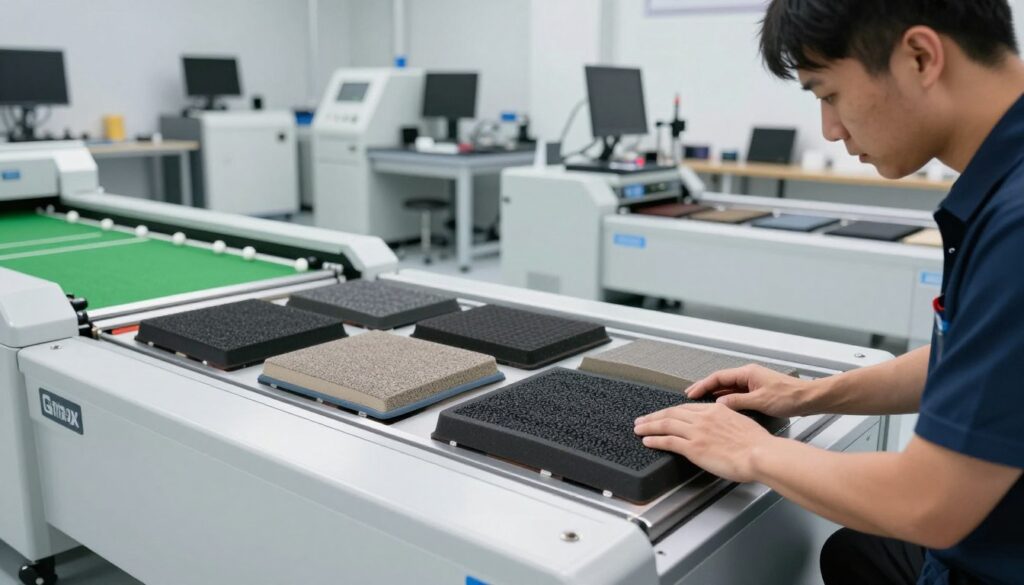
While safety is important, fair play is too. The ball roll test checks if a ball moves the same way on a surface. This is key for sports like soccer.
For hardwood courts, hardwood specs are very important. They affect how the ball bounces and rolls. A court made to these specs is consistent and fair.
This consistency helps athletes perform better. They know the surface will react the same way every time.
| Test Name | Primary Metric | Purpose | Common Standard |
|---|---|---|---|
| Gmax / Impact Attenuation | Gmax Value (lower is safer) | Measures surface hardness and shock absorption to prevent injury. | ASTM F1936 |
| Ball Roll | Roll Distance Consistency | Ensures uniform ball travel for fair play on turf fields. | FIFA Quality Concept, World Rugby |
| Shock Absorption | Percentage Reduction | Evaluates the cushioning effect of indoor sports floors. | EN 14904, ASTM F2772 |
| Surface Evenness (Planarity) | Deviation in mm/m | Checks for bumps or depressions that could cause trips or erratic ball bounce. | DIN 18032-2 |
The Certification Process and Verification
To get certified, surfaces are tested by labs. These labs use special equipment to check if the surface meets standards. A passing report proves it’s up to par.
For synthetic turf, testing the whole system is key. This includes the turf, infill, and shock pads. It makes sure everything works together right.
Don’t think one test at installation is enough. Surfaces can wear down. Regular professional artificial turf testing keeps them safe and compliant. This keeps athletes safe over time.
When looking at a new court, ask for test certificates. For wood floors, check the hardwood specs and the installer’s certification. This is better than just trusting what the salesperson says.
Vendor Comparison Criteria
Choosing the right vendor for your sports surface is as important as picking the surface material. A good partner ensures proper installation, long-term performance, and ongoing support. This framework helps you evaluate vendors based on proven criteria.
Focus on three core pillars: Product Quality & Safety, Expertise & Complete Support, and Sustainability & Long-Term Value. A top-tier vendor excels in all areas.
Quality and safety are the foundation. Look at the materials and systems a vendor offers. A knowledgeable provider will help you choose between turf vs grass based on your sport, budget, and usage. They should recommend integrated shock pads for high-impact sports to meet safety standards like Gmax.
Expertise and support make a product a high-performing asset. Look for certified installation teams with a portfolio of successful projects. Companies like Nova Sport emphasize this hands-on expertise. Ask for case studies showing how they solved specific challenges for facilities similar to yours.
| Evaluation Criteria | Why It Matters | Key Questions to Ask | Real-World Indicator |
|---|---|---|---|
| Product Portfolio & Safety Focus | Determines if they have the right solution for your specific sport and risk profile. | “Can you provide a comparative analysis of turf vs grass systems for my needs?” “How do you integrate shock pads into your designs?” | Willingness to provide third-party test data (e.g., Gmax, HIC) for their systems. |
| Installation Expertise & Warranty | Poor installation voids performance guarantees and shortens surface life. | “Are your installers factory-trained? What is the structure of your warranty (parts, labor, prorated)?” | Long-term (8+ year) warranties that cover both materials and workmanship. |
| Customer Support & Case Studies | Shows their commitment after the sale and proves a track record of success. | “Can you share contact info for 2-3 recent clients? What is your typical response time for maintenance queries?” | Detailed case studies with before/after data, not just promotional testimonials. |
| Eco-Friendly Solutions & Lifecycle Knowledge | Impresents operational costs, environmental impact, and future resale value. | “What sustainable materials or recycling programs do you offer? Can you model 10-year lifecycle costs?” | Partnerships with recycling centers or use of bio-based materials. |
Sustainability and value are key. Leading vendors offer eco-friendly solutions, like recyclable turf or water-saving base materials. They should provide a clear analysis of total lifecycle costs, not just the initial price tag.
Your final decision should balance all these factors. The cheapest bid often lacks the support or safety features needed for a durable, reliable field. A true partner provides complete support from design through the surface’s entire life.
Before signing a contract, make a final checklist. Use these questions in your last meetings.
- Can you walk us through a recent, similar project from design to completion?
- How do your proposed shock pad and surface system work together to protect athletes?
- What is your process for handling a warranty claim or performance issue?
Maintenance Schedule Template
Keeping your playing surface in top shape is key to protecting your investment. A regular maintenance schedule helps avoid expensive repairs and keeps your facility running smoothly for years.
Daily upkeep varies by surface type. Clay courts need regular brushing and watering. Artificial 3G turf should be brushed to keep fibers upright. Polymeric and acrylic courts require sweeping to keep them clean.
Weekly and monthly inspections are essential. For hard courts, look for cracks that need fixing. On synthetic grass, check the infill and add more as needed. Indoor wood courts need a check on the hardwood specs for wear.
Deep cleaning and inspections are a must every year. Resurface acrylic courts, re-level infill on turf, and seal cracks on composite clay. Always follow the manufacturer’s guidelines for your specific surface.
Customize this template based on your facility’s use and local climate. A busy gym needs more frequent checks than a community court. Sticking to a maintenance plan ensures your surface performs at its best, keeps players safe, and adds value over time.
