

Lending Expansion Reshapes Access to Capital in Chicago Neighborhoods
Small business lending activity across Chicago has strengthened in 2026, driven by increased participation from Community Development Financial Institutions (CDFIs). These lenders, which focus on underserved communities, have expanded financing flows into neighborhoods such as Bronzeville, Englewood, Austin, and Pilsen, where traditional bank lending has historically been limited.
Recent updates from the U.S. Treasury’s CDFI Fund and Illinois-based lending coalitions indicate rising loan approvals for microenterprises, retail startups, and service-based businesses. The trend reflects continued demand for flexible capital structures, particularly among minority-owned firms and first-time entrepreneurs.
The growth in CDFI lending aligns with broader federal efforts to increase financial inclusion through targeted capital programs and localized lending networks.
External reference: The Federal Reserve Bank of Chicago continues to track small business credit conditions across the Midwest, highlighting how alternative lending institutions play a growing role in local economic stability.
Chicago Fed Small Business Credit Research
Community Development Financial Institutions Expand Credit Access Across South and West Side Chicago
CDFIs in Illinois have increased lending activity through both public and private funding channels, with a noticeable rise in approvals for small business startups and expansion projects in historically underserved areas.

Organizations such as IFF (formerly Illinois Facilities Fund) and Chicago Community Loan Fund (CCLF) have continued issuing financing for neighborhood-based enterprises, including grocery stores, childcare centers, restaurants, and local manufacturing operations.
These institutions often structure loans differently from traditional banks, focusing on cash flow potential and community impact rather than strict credit score thresholds. This approach has opened pathways for entrepreneurs who previously faced barriers in securing capital.
Economic development offices in Cook County report that local lending activity has a direct correlation with job creation in retail corridors and commercial redevelopment zones.
Internal reference for related economic coverage:
Midwest Business Growth Trends
Federal Capital Programs Strengthen Lending Capacity Across Illinois
CDFI growth in Chicago has been supported by federal capital injections distributed through the CDFI Fund, administered by the U.S. Department of the Treasury. The program provides financial assistance awards and technical support to certified lending institutions operating in underserved markets.
In recent funding cycles, Illinois-based CDFIs have received allocations aimed at expanding loan portfolios and reducing capital constraints. These funds allow lenders to increase credit availability for entrepreneurs seeking expansion financing, equipment purchases, and commercial leasing support.
The U.S. Small Business Administration (SBA) also plays a parallel role through microloan programs and guarantees that complement CDFI lending activity.
External reference: The SBA outlines ongoing programs that support small business financing, including microloans and community-based lending initiatives.
SBA Small Business Funding Programs
This layered financing structure has created a hybrid credit ecosystem in Chicago, combining federal support with localized lending expertise.
Neighborhood-Level Business Growth Driven by Targeted Lending
Chicago’s lending expansion is having a visible impact at the neighborhood level, particularly in commercial corridors that have experienced long-term underinvestment.
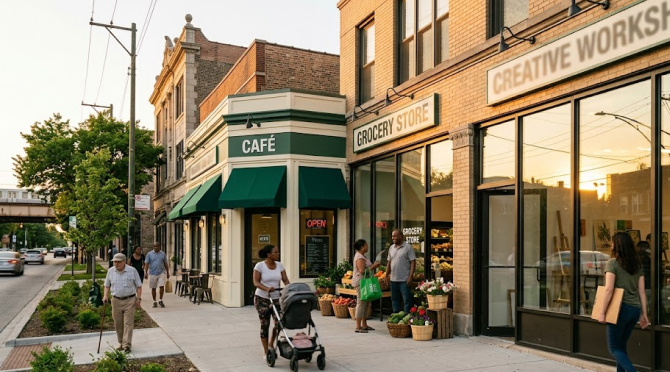
Bronzeville continues to see new restaurant openings and retail rehabilitation projects supported by flexible CDFI financing. In Pilsen, small manufacturing and creative businesses are accessing equipment loans that support production scaling. Englewood’s commercial redevelopment efforts are increasingly tied to community-led financing initiatives that prioritize long-term business stability.
These changes reflect a shift in how capital is deployed across urban markets, with a stronger focus on localized economic participation.
| Neighborhood | Lending Activity Focus | Business Impact |
|---|---|---|
| Bronzeville | Retail and food service | Increased storefront revitalization |
| Pilsen | Creative manufacturing | Expansion of small production businesses |
| Englewood | Community retail and services | Job creation and commercial redevelopment |
| Austin | Mixed-use small business growth | Improved access to startup financing |
These patterns indicate that lending is increasingly tied to geographic equity goals rather than purely financial return metrics.
Small Business Demand for Flexible Financing Continues to Grow
Entrepreneurs in Chicago are increasingly seeking financing structures that differ from traditional bank loans. CDFIs provide options that include lower down payment requirements, extended repayment timelines, and technical assistance programs that support business planning.
This model has proven particularly effective for early-stage businesses that lack long credit histories or collateral.

The Opportunity Finance Network (OFN) reports continued national growth in CDFI lending activity, with urban centers like Chicago representing a significant share of total loan distribution volume.
External reference: OFN provides national data on community lending trends and financial inclusion strategies across the United States.
Opportunity Finance Network Reports
In Chicago, this demand reflects broader structural shifts in entrepreneurship, where small businesses rely on a combination of public, private, and nonprofit financial institutions to support growth.
Employment and Local Investment Effects Across Commercial Districts
The expansion of small business lending has direct implications for employment patterns across Chicago. New business formation and expansion projects often lead to increased hiring in retail, logistics, food service, and professional services.
Local chambers of commerce have reported stronger commercial activity in corridors supported by CDFI-backed development projects. These developments often include storefront rehabilitation, equipment upgrades, and new lease activity.
The Illinois Department of Commerce and Economic Opportunity continues to track small business performance indicators, linking access to capital with measurable improvements in job creation and neighborhood investment.
External reference: The Illinois DCEO provides data on state-level economic development programs and small business support initiatives.
Illinois Small Business Development Resources
Structural Shifts in Urban Lending and Capital Distribution
Chicago’s lending environment reflects broader changes in how capital is distributed across urban economies. Traditional banking institutions remain central, yet CDFIs have expanded their role as primary financing partners in communities where credit access has been historically limited.
This dual-lending structure has created a more layered financial system where business owners often combine multiple funding sources to complete startup or expansion plans.
Financial analysts tracking Midwest urban development note that this model supports both economic resilience and localized business growth, particularly in districts undergoing long-term redevelopment.
The continued expansion of CDFI lending activity in Chicago signals a sustained shift in how small business ecosystems are financed, with stronger alignment between capital access and community development priorities.
