
Florida’s Dual Tourism Engines Show Sustained Growth Across 2026 Summer Season
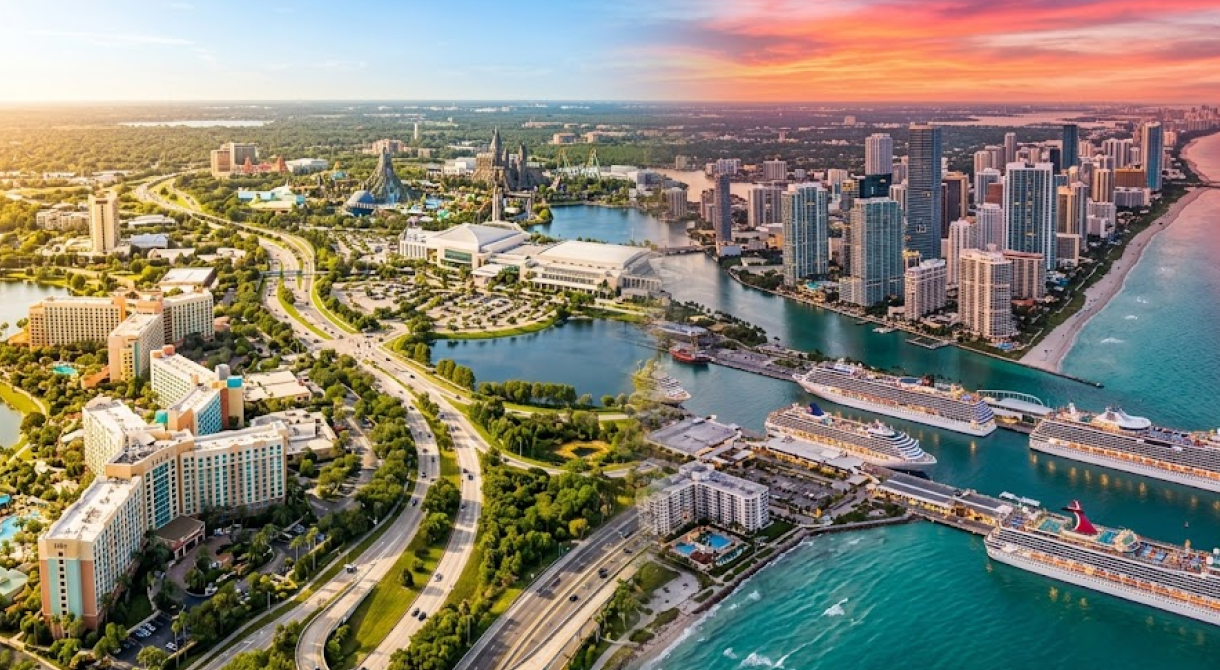
Miami and Orlando continue to function as Florida’s strongest tourism corridors, with 2026 summer travel data showing sustained visitor volume across both regions. Reporting from Miami-Dade County tourism authorities, Orange County officials, and statewide hospitality tracking groups indicates that hotel occupancy, air arrivals, and cruise activity remain elevated compared with the previous year.
Orlando’s performance is anchored by theme park attendance and convention travel, while Miami benefits from international arrivals and cruise operations. Together, these two corridors form a concentrated economic engine that influences Florida’s hospitality, transportation, and retail sectors.
The Florida Department of Economic Opportunity continues to identify tourism as one of the state’s most significant employment drivers, with strong seasonal patterns reinforcing demand for services across both cities.
External reference: The U.S. Travel Association reports that U.S. domestic leisure travel continues to outpace other segments of the tourism economy, with Florida consistently ranking among the top destinations for both domestic and international travelers.
U.S. Travel Industry Data
Orlando Tourism Strength Driven by Theme Parks and Convention Activity
Orlando remains the most visited inland tourism destination in the United States, with summer 2026 data showing sustained high occupancy across resort zones such as Lake Buena Vista, International Drive, and Kissimmee.
Major attractions continue to anchor demand. Walt Disney World Resort and Universal Orlando Resort report strong seasonal attendance, supported by expanded entertainment offerings and high-volume ticket demand during peak summer travel periods.
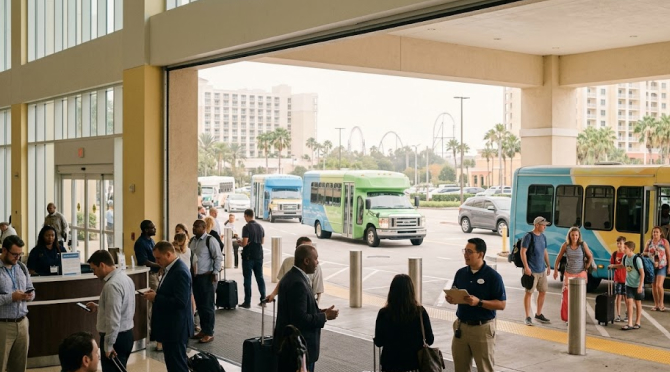
Convention activity also plays a key role in stabilizing midweek occupancy rates. The Orange County Convention Center, one of the largest facilities of its kind in the U.S., continues to host national trade shows and corporate events that contribute to hotel demand outside weekend peaks.
Transportation flow through Orlando International Airport (MCO) reflects this sustained activity, with consistent domestic arrivals from cities including Atlanta, Chicago, Dallas, and New York.
Internal reference for broader Florida business coverage:
Florida Economic Growth Insights
Miami Tourism Corridor Benefits from International Travel and Cruise Expansion
Miami’s tourism economy is shaped by international connectivity and cruise infrastructure. Summer 2026 data shows continued strength in inbound travel at Miami International Airport (MIA), with strong passenger flow from Latin America and Europe.
Neighborhoods such as Miami Beach, Brickell, and Downtown Miami continue to experience high hotel occupancy driven by luxury tourism, business travel, and seasonal visitors.
The cruise industry remains a central pillar of Miami’s tourism identity. The Port of Miami, often described as the world’s leading cruise hub, continues to report strong passenger throughput supported by operators including Royal Caribbean Group and Carnival Corporation.
External reference: The PortMiami official authority tracks cruise and cargo activity, highlighting its role as a global gateway for tourism and trade.
PortMiami Cruise Data
Cruise-linked tourism extends economic activity beyond the port itself, influencing transportation services, retail spending, and short-term accommodation demand across Miami-Dade County.
Hotel Occupancy and Pricing Trends Reflect Strong Seasonal Pressure
Hotel performance across both Orlando and Miami indicates sustained pricing pressure during peak summer travel windows. Resort properties in Orlando report strong occupancy tied to family travel, while Miami’s coastal hotels maintain premium pricing driven by international demand and beachfront location value.
Industry tracking from hospitality analytics firms shows that booking windows remain shorter than pre-2020 averages, with travelers increasingly making last-minute reservations tied to airfare fluctuations and promotional pricing.
| Corridor | Primary Demand Driver | 2026 Summer Trend |
|---|---|---|
| Orlando | Theme parks and conventions | High occupancy across resort zones |
| Miami | International travel and cruises | Premium pricing in coastal districts |
| Central Florida | Family leisure travel | Strong weekend demand |
| South Florida | Business + luxury tourism | Stable high-end occupancy |
The American Hotel & Lodging Association (AHLA) continues to report that Florida remains one of the most active hospitality markets in the United States, with Orlando and Miami representing two of its strongest demand centers.
AHLA Hospitality Industry Report
Airport Traffic Growth Strengthens Regional Connectivity
Air travel data from both major airports shows sustained passenger movement throughout June and July 2026. Orlando International Airport (MCO) continues to rank among the busiest airports in the country for domestic leisure travel, while Miami International Airport (MIA) remains a key international gateway.
Low-cost carriers such as Southwest Airlines and JetBlue Airways support Orlando’s domestic travel volume, while Miami benefits from long-haul international carriers including LATAM Airlines, Iberia, and British Airways.
This dual-airport structure strengthens Florida’s tourism resilience by distributing demand across both domestic and international segments.
Transportation infrastructure planning in both regions continues to focus on improving passenger flow, ground transportation efficiency, and airport-adjacent development projects that support tourism growth.
Employment and Service Sector Activity Tied to Tourism Expansion
Strong tourism demand directly influences employment conditions in hospitality, transportation, and service industries across Miami and Orlando. Hotels, restaurants, and entertainment venues report elevated hiring needs during peak summer months.
In Orlando, staffing demand is concentrated in theme park operations, hospitality services, and transportation logistics. Miami shows stronger demand in luxury hospitality, cruise services, and international visitor support roles.
The U.S. Bureau of Labor Statistics (BLS) continues to track hospitality employment trends as a key indicator of regional economic health, particularly in tourism-heavy states such as Florida.
BLS Employment Data
Labor market conditions reflect a competitive hiring environment, with employers offering wage adjustments and expanded seasonal benefits to attract workers during peak demand periods.
Infrastructure Pressure and Urban Planning Adjustments in Tourism Zones
Sustained visitor volume in both corridors has placed pressure on transportation networks and urban infrastructure systems. In Orlando, congestion near International Drive and resort access roads continues to shape transportation planning decisions.
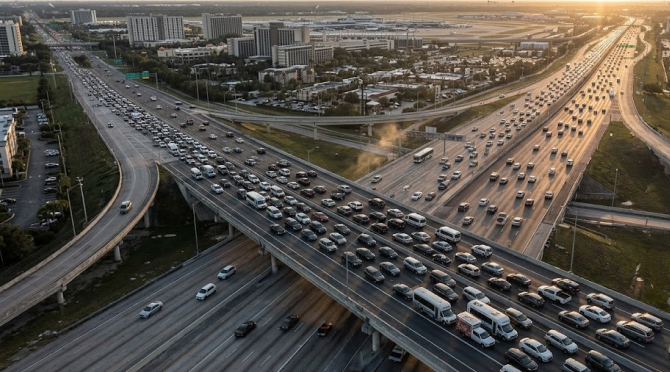
Miami faces similar pressure along Collins Avenue, Downtown Miami corridors, and airport access routes, where peak travel periods create recurring congestion challenges.
Local governments continue to prioritize infrastructure investments that improve mobility for both residents and visitors, including road expansions, transit improvements, and pedestrian access enhancements in high-density tourism zones.
State-level tourism authorities continue to emphasize infrastructure resilience as a key factor in maintaining Florida’s competitive position in global travel markets.
External reference: Visit Florida, the state’s official tourism marketing organization, highlights infrastructure and accessibility as central to sustaining long-term tourism growth.
Visit Florida Tourism Strategy
Tourism Spending Patterns Reinforce Florida’s Economic Structure
Tourism spending in Miami and Orlando continues to drive economic activity across multiple sectors, including retail, dining, transportation, and entertainment. Visitor spending circulates through local economies, supporting both large employers and small businesses.
Orlando benefits from concentrated spending around theme parks and resort districts, while Miami sees broader distribution across luxury hospitality, nightlife, retail districts, and cruise-related spending.
Florida’s tourism economy remains highly responsive to national economic conditions, airline pricing trends, and global travel flows. However, 2026 summer data indicates that both Miami and Orlando continue to outperform many comparable U.S. tourism markets in terms of sustained visitor demand.
Local business activity across both corridors reflects strong alignment between tourism inflows and service sector expansion, reinforcing the structural importance of Florida’s visitor economy within the state’s broader economic framework.
