
Public Transit Performance Reflects Uneven Recovery Across Chicago’s Mobility Network
The Chicago Transit Authority (CTA) enters 2026 facing persistent pressure from uneven ridership recovery patterns and structural budget constraints across its rail and bus systems. Data discussions from the Regional Transportation Authority (RTA) and Illinois transportation analysts indicate that while commuter activity has stabilized in parts of Chicago, total ridership remains below pre-2020 levels across key corridors.
The most visible gaps continue along the Red Line, Blue Line, and Brown Line, where weekday commuter demand has not fully returned to historical norms. Bus routes serving South and West Side neighborhoods show more stable usage, driven by residents who rely on transit for daily mobility rather than hybrid work schedules.
The CTA’s financial position reflects this imbalance. Farebox recovery remains under pressure, while operating costs continue rising due to labor agreements, infrastructure maintenance needs, and energy expenses tied to rail electrification systems.
External reference: The APTA Transit Ridership Data continues to track national transit recovery trends, showing that large urban systems still face uneven ridership normalization after pandemic-era disruptions.
Rail Ridership Recovery Remains Concentrated in Core Commuter Corridors
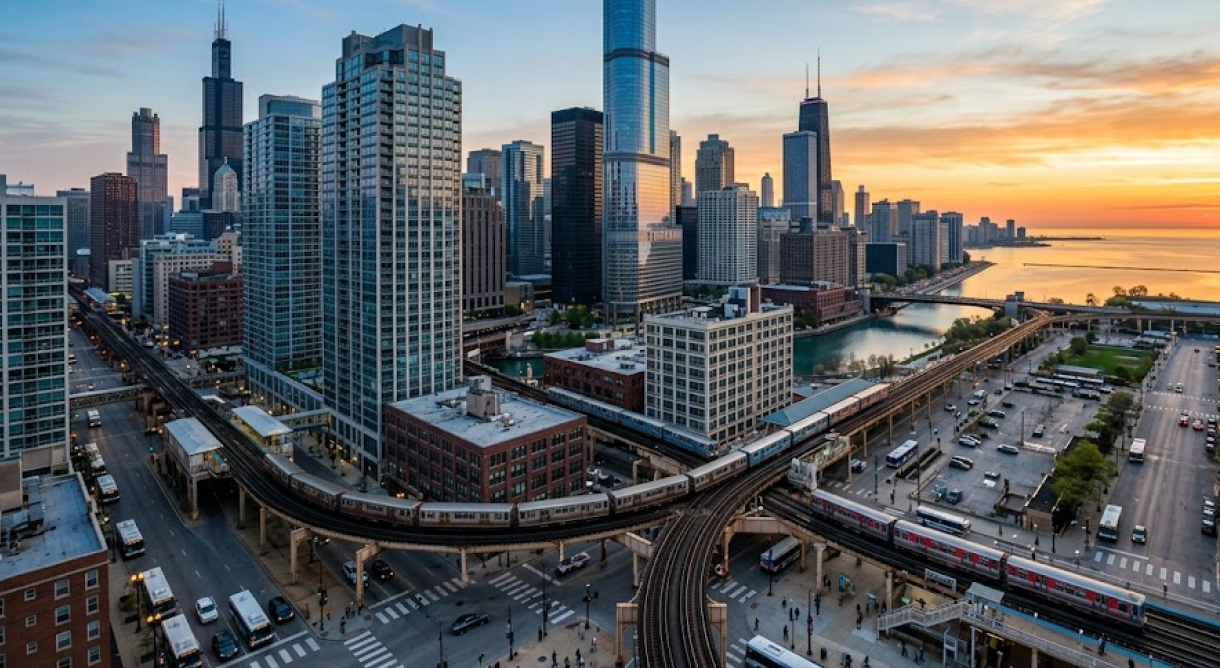
CTA rail performance in 2026 shows a clear split between commuter-heavy corridors and discretionary travel routes. Lines serving downtown Chicago’s Loop business district show stronger weekday recovery, while off-peak and weekend ridership remains inconsistent.

Stations such as Clark/Lake, Jackson, and Washington/Wells continue to experience higher throughput due to their proximity to financial services, government offices, and major employment hubs. In contrast, outer-branch stations on the Blue Line’s O’Hare extension and portions of the Green Line reflect slower recovery tied to reduced office occupancy and travel pattern changes.
The CTA Annual Ridership Report (2026 preliminary estimates) indicates that rail recovery is influenced heavily by hybrid work arrangements, with commuter peaks compressed into fewer weekday hours.
Internal reference for broader urban infrastructure analysis:
These shifts have forced operational adjustments, including train frequency optimization and targeted service reallocations during off-peak hours.
Bus Network Stability Contrasts With Rail System Volatility
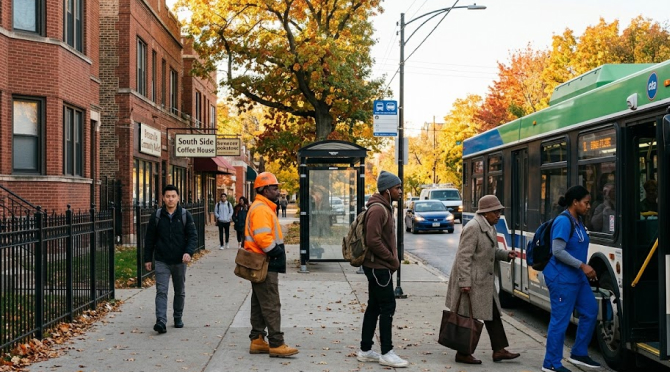
Unlike rail operations, Chicago’s bus network has demonstrated more stable ridership performance. Many bus routes continue to serve essential workers, students, and residents in neighborhoods where car ownership rates remain lower than the city average.
The South Side corridors, including routes through Englewood, Chatham, and Bronzeville, show consistent demand patterns that have remained relatively stable compared with rail services. West Side routes through Austin and Garfield Park also maintain steady usage tied to employment access and local commercial activity.
This divergence between bus and rail systems reflects broader socioeconomic and geographic differences in transit dependency across Chicago.
| Transit Mode | 2026 Ridership Trend | Key Influencing Factors |
|---|---|---|
| Rail System | Uneven recovery | Hybrid work, downtown concentration |
| Bus Network | Stable usage | Essential travel demand |
| Express Routes | Moderate recovery | Commuter-focused corridors |
| Airport Rail (Blue Line O’Hare) | Partial recovery | Air travel normalization |
External reference: The U.S. Department of Transportation continues to emphasize the role of public transit in supporting workforce mobility in major metropolitan areas, particularly where economic activity remains centralized.
Budget Pressure Intensifies as Operating Costs Outpace Fare Revenue
CTA’s financial structure in 2026 reflects a widening gap between operating costs and fare revenue. Labor agreements negotiated in prior years continue to shape wage and benefit structures, while inflationary pressures affect maintenance, energy consumption, and procurement of rail components.
The agency relies on a combination of fare revenue, state subsidies, and federal transit funding. However, the balance between these sources has become increasingly sensitive to ridership fluctuations and political budget negotiations in Illinois.
The Illinois General Assembly transportation budget discussions have included ongoing debates about long-term funding mechanisms for the CTA and broader regional transit systems under the Regional Transportation Authority umbrella.
External reference: The Brookings Institution continues to publish research on urban transit financing, highlighting structural funding gaps across major U.S. cities.
This funding pressure directly influences service planning decisions, including route frequency, station maintenance timelines, and capital improvement project scheduling.
Workforce Shifts and Hybrid Employment Reshape Transit Demand Patterns
Chicago’s transit system is closely tied to employment geography. The rise of hybrid work arrangements continues to reshape peak travel demand, particularly in downtown-centric systems like the CTA.
Pre-2020 commuting patterns concentrated demand into morning and evening peaks. In 2026, those peaks remain present but less pronounced, with more distributed travel across midday and flexible work schedules.
Corporate office occupancy in the Chicago Loop, West Loop, and River North continues to influence weekday rail performance. Buildings with higher return-to-office rates correlate directly with stronger CTA ridership on nearby stations.
This shift has created operational challenges for transit planners, who must balance service efficiency with unpredictable demand cycles.
The Chicago Metropolitan Agency for Planning (CMAP) continues to study long-term workforce mobility trends and their impact on regional transportation systems.
Infrastructure Investment Needs Shape Long-Term CTA Planning
CTA infrastructure continues to require substantial long-term investment, particularly in aging rail corridors, signal systems, and station modernization projects.
Key focus areas include modernization of Red Line stations, accessibility upgrades across elevated stations, and signal system improvements aimed at increasing train frequency reliability.
Federal funding support through programs administered by the Federal Transit Administration (FTA) remains a critical component of capital improvement planning.
External reference: The FTA provides oversight and funding mechanisms for transit modernization projects across major U.S. cities, including Chicago’s rail and bus systems.
Federal Transit Administration Programs
These investments are directly linked to long-term ridership recovery strategies, as service reliability and station accessibility remain key factors influencing commuter behavior.
Urban Mobility Pressure and Regional Economic Dependence on Transit
Chicago’s economic structure continues to rely heavily on public transit connectivity. Workforce access to downtown employment centers, healthcare institutions, and educational campuses depends on CTA rail and bus integration.
Budget pressure and ridership variability introduce uncertainty into this system, particularly during periods of economic transition or workforce restructuring.
Transit-dependent populations remain concentrated in South and West Side neighborhoods, where bus service plays a critical role in daily mobility. This dependence reinforces the importance of maintaining consistent service levels even during financial constraints.
The CTA’s 2026 position reflects a broader national pattern where large urban transit systems must adapt to structural changes in commuting behavior while maintaining financial sustainability under constrained funding environments.
The evolving relationship between ridership recovery and budget stability continues to shape operational decisions, infrastructure investment priorities, and long-term planning strategies across Chicago’s transit network.
