

Domestic Travel Demand Reshapes Regional Spending Patterns Across the United States
Summer 2026 travel behavior across the United States shows a clear shift toward shorter-distance vacations, with more Americans prioritizing regional destinations over long-haul domestic or international trips. Data from AAA travel forecasts and industry monitoring groups indicates that travel volume remains strong, but spending patterns are increasingly concentrated within driving distance of home markets.
The Independence Day 2026 travel period recorded more than 72 million Americans traveling nationwide, a figure that aligns with continued demand for leisure mobility even as inflation and airfare costs influence destination selection. Many households are choosing destinations within their own state or neighboring regions, supporting tourism corridors in areas such as Lake Tahoe (California/Nevada), Asheville (North Carolina), Branson (Missouri), and Sedona (Arizona).
This shift is reshaping how local economies capture tourism revenue, with small businesses, hospitality operators, and regional attractions benefiting from more frequent but shorter travel cycles.
External reference: The U.S. Domestic Travel Trends reports that domestic leisure travel remains the largest segment of the U.S. travel economy, with spending patterns increasingly concentrated in regional markets rather than international outbound travel.
Regional Destinations Outperform Traditional Long-Haul Vacation Markets
Travel patterns in 2026 highlight a structural adjustment in consumer behavior, where convenience and cost efficiency influence destination choice more heavily than distance or exclusivity. Regional destinations within a 3–6 hour driving radius of major population centers are experiencing stronger occupancy rates compared with long-haul vacation hubs.
Cities such as Nashville, Tennessee; San Antonio, Texas; and Denver, Colorado continue to benefit from steady inflows of regional visitors, particularly during holiday weekends and school vacation periods.
Hospitality operators in these regions report higher weekend occupancy variability, driven by short booking windows and spontaneous travel decisions. This pattern contrasts with pre-pandemic travel cycles, where vacation planning often occurred months in advance.
The AHLA Hotel Industry Outlook notes that regional leisure travel has become a stabilizing force for hotel revenue performance, particularly in mid-tier and suburban markets where pricing remains more accessible than major coastal cities.
Local Economies Capture Increased Visitor Spending Through Shorter Trips
Short-distance vacations are generating a measurable impact on local economies, particularly in hospitality, dining, retail, and recreation sectors. Unlike long-haul travel, regional tourism tends to concentrate spending within smaller geographic zones, increasing per-visit economic density for local businesses.
Tourism boards in states such as Colorado, Tennessee, and Wisconsin report stronger performance in state parks, lakeside destinations, and mountain towns, where outdoor recreation and low-cost travel options remain attractive.
Shorter trips often lead to more frequent travel cycles, with households taking multiple regional vacations rather than a single extended trip. This pattern spreads economic activity across multiple weekends rather than concentrating it into one seasonal peak Regional Business Growth Trend.
This shift benefits small and mid-sized enterprises, including independent hotels, family-owned restaurants, and local tour operators, which often depend heavily on seasonal tourism cycles.
Travel Cost Sensitivity Drives Decision Making Across U.S. Households
Consumer travel behavior in 2026 continues to reflect sensitivity to transportation and lodging costs. Airline pricing volatility, fuel expenses, and accommodation rates in major tourist hubs have influenced a measurable increase in road-based travel.
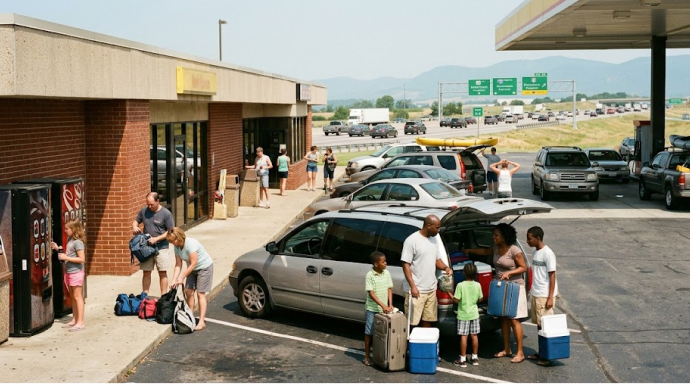
AAA travel monitoring data shows that road trips remain the dominant mode of summer travel in the United States, particularly for families and multi-person households seeking cost control.
External reference: The BTS Travel Data tracks national travel and transportation trends, including passenger volume shifts between air, rail, and automobile travel modes across U.S. regions.
This transportation preference reinforces the economic strength of destinations located near interstate highways and regional tourism corridors, where accessibility reduces overall trip costs.
State and Regional Tourism Agencies Adjust Marketing Strategies
State tourism organizations are adapting promotional strategies to align with shorter-distance travel behavior. Marketing campaigns increasingly emphasize “stay local” and “discover nearby destinations” messaging, targeting residents within driving range of regional attractions.

For example, Travel Texas, Visit Florida, and California Visit industry programs continue to highlight intrastate travel routes, promoting lesser-known destinations alongside established tourism hubs.
This approach supports smaller communities that benefit from redistributed visitor traffic, particularly towns located near national parks, lakes, and cultural heritage sites.
External reference: The State Tourism Development Programs highlights regional tourism marketing as a key driver of economic resilience for local travel economies across the United States.
These strategies reflect a broader shift away from international marketing dependence toward intrastate and regional travel ecosystems.
Hospitality Employment Trends Strengthen in Regional Markets
The increase in closer-to-home vacations has direct implications for employment in hospitality and service industries. Regional destinations experiencing higher visitor frequency are expanding seasonal staffing, particularly in lodging, food service, and recreation sectors.
In mountain towns, coastal communities, and lakefront destinations, employers report stronger demand for short-term labor during peak weekends and holiday periods.
The BLS Employment Data continues to track hospitality employment as a key indicator of tourism-driven economic activity, with regional markets showing uneven but generally positive growth trends.
These labor patterns reinforce the decentralized nature of current tourism demand, where multiple smaller markets absorb visitor flows rather than a few dominant destinations capturing most seasonal spending.
Transportation Infrastructure and Accessibility Shape Destination Choice
Accessibility continues to play a central role in determining vacation destinations. Interstate highway systems, regional airports, and rail connectivity influence how quickly travelers can reach leisure destinations without significant planning barriers.
Regions with strong infrastructure connectivity—such as Southern California mountain routes, Southeast lake regions, and Midwest recreational corridors—continue to outperform more remote or less accessible destinations.
State-level transportation agencies are increasingly factoring tourism flow into infrastructure planning, recognizing the economic importance of weekend and short-trip travel cycles.
The U.S. Department of Transportation (DOT) continues to emphasize mobility improvements and infrastructure investment as key components of regional economic development strategy.
U.S. Transportation Policy Updates
Economic Redistribution Effects Across U.S. Travel Markets
The shift toward closer-to-home vacations is redistributing tourism revenue across a wider range of destinations. Instead of concentrating spending in major national tourist hubs, economic activity is increasingly distributed across regional and local markets.
This redistribution supports smaller economies that historically relied on seasonal or niche tourism demand. It also reduces pressure on over-saturated destinations while strengthening mid-tier travel markets.
Regional tourism economies are becoming more resilient through diversification of visitor sources, with domestic travelers replacing some of the volatility associated with international travel fluctuations.
As travel behavior continues to evolve in 2026, regional destinations remain positioned as key beneficiaries of sustained domestic mobility trends, supported by affordability, accessibility, and flexible travel planning patterns.
