
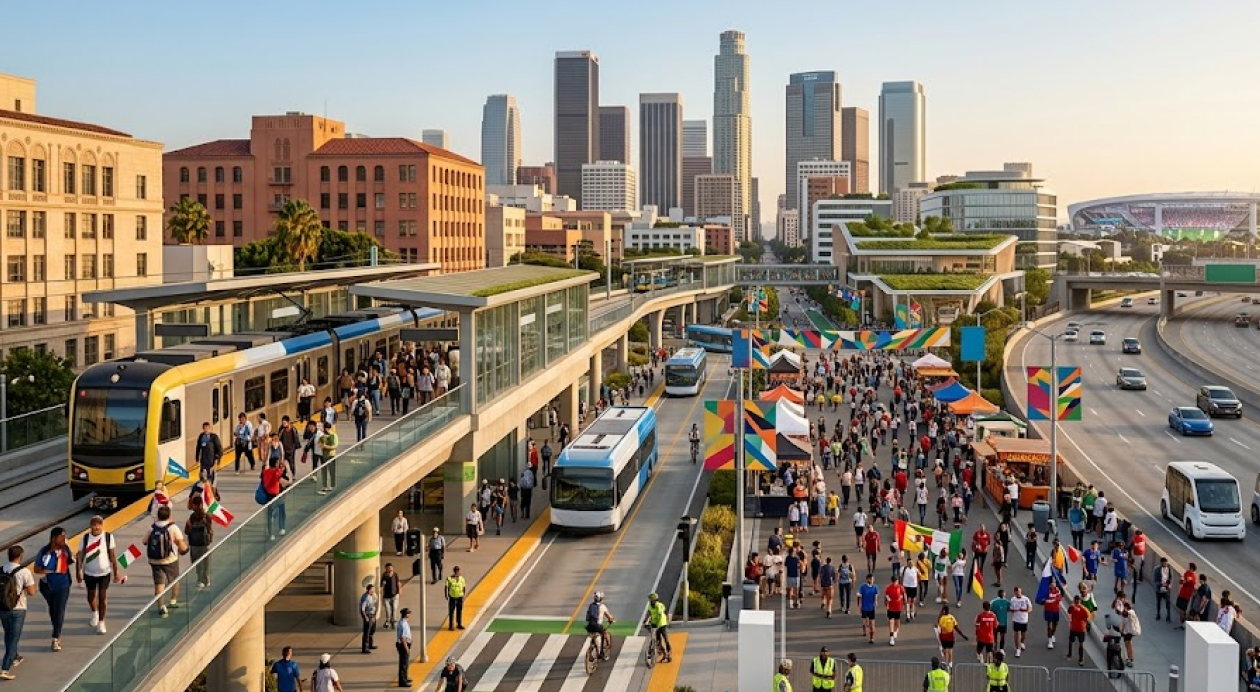
Los Angeles has spent decades defining itself as one of America’s most automobile-dependent metropolitan regions. Yet during the FIFA World Cup 2026, the city began demonstrating something very different: that one of the world’s largest sporting events can successfully move hundreds of thousands of visitors using public transportation, enhanced shuttle systems, and pedestrian-focused planning instead of private vehicles.
The World Cup is serving as more than an international soccer tournament. For Los Angeles officials, transportation agencies, and LA28 organizers, it has become the largest operational test before the 2028 Olympic and Paralympic Games. Every transit trip, shuttle route, fan festival, and station improvement is providing valuable data that will shape what organizers have repeatedly described as a “transit-first” or “car-free” Olympic experience.
Unlike previous Olympic hosts that relied heavily on new venue construction, Los Angeles is attempting to build its legacy around mobility, sustainability, and existing infrastructure. The strategy aligns with broader trends in sports tourism, where successful host cities increasingly measure long-term value by transportation improvements, environmental outcomes, and community benefits rather than temporary construction projects.
Why Los Angeles Is Planning A Car-Free Olympics
The phrase “car-free Olympics” does not mean automobiles will disappear from Los Angeles during the 2028 Games. Instead, it reflects a transportation strategy in which spectators will not park at competition venues and will instead rely on Metro rail, regional transit systems, park-and-ride services, walking, cycling, and dedicated shuttle networks.
This approach addresses several long-standing challenges facing Southern California.
First, Olympic attendance is expected to generate millions of additional trips throughout the region. Building enough parking to accommodate those visitors would be financially impractical and environmentally counterproductive.
Second, Los Angeles already possesses an expanding transit network capable of supporting major events when paired with temporary transportation solutions.
According to the official LA28 transportation guidance, spectators will primarily access venues through public transportation, park-and-ride facilities, walking, cycling, and dedicated shuttle services instead of private vehicle parking.
Mayor Karen Bass has also emphasized that the Games represent an opportunity to accelerate investments that benefit residents long after international visitors return home. Likewise, LA28 Chief Executive Officer Reynold Hoover has described the event as an opportunity to create lasting economic, environmental, and community benefits through sustainable planning.
The FIFA World Cup Became The Ultimate Transportation Test
Hosting eight FIFA World Cup matches in the Los Angeles region gave transportation planners an unprecedented opportunity to evaluate systems under real-world conditions.
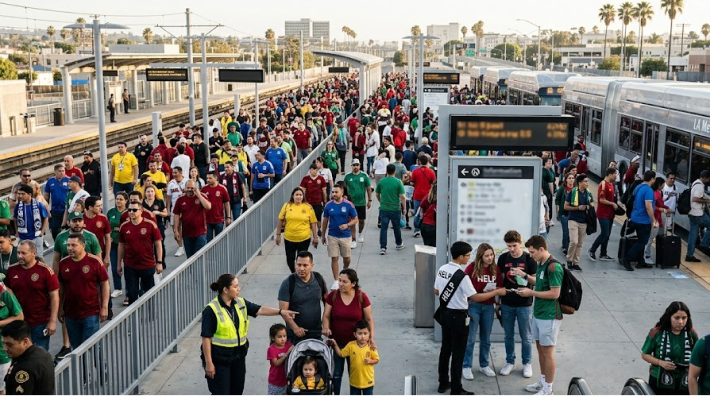
The largest challenge centered on SoFi Stadium in Inglewood. While the venue is one of the world’s premier sports facilities, it is not directly connected to Metro rail. Rather than encouraging driving, LA Metro implemented an extensive network of enhanced shuttle services linking major rail stations, transit centers, airports, and regional transportation hubs directly to the stadium.
The strategy demonstrated how existing transit infrastructure can be expanded without building entirely new rail lines before the Olympics.
According to Metro, enhanced World Cup transportation included direct service from 15 pickup locations across Los Angeles and Orange counties. Regional partners such as Metrolink, Amtrak Pacific Surfliner, FlixBus, Greyhound, and Uber coordinated operations to simplify travel throughout Southern California. The program represented one of the largest integrated transportation efforts ever organized for a sporting event in the region.
| World Cup Transportation Initiative | Olympic Legacy Value |
|---|---|
| Enhanced shuttle network | Blueprint for Olympic venue access |
| Regional transit partnerships | Better multi-agency coordination |
| Park-and-ride locations | Reduced downtown congestion |
| Unified visitor transportation | Improved sports tourism experience |
Metro’s official World Cup transportation program demonstrates how temporary mobility solutions can complement permanent infrastructure while reducing dependence on private automobiles. World Cup transit planning became a practical demonstration of how major sporting events can reshape travel behavior.
Early Results Suggest Changing Travel Habits
The operational data collected during the World Cup has provided encouraging signs for transportation officials.
During the Spain vs. Austria match on July 2, 2026, approximately 50,000 passenger trips were recorded on Metro rail lines serving the event, while more than 30,000 shuttle rides transported fans between transit hubs and SoFi Stadium. Those numbers exceeded expectations for a city long associated with automobile travel.
Equally significant was the public response.
Many riders reported returning to Metro after years of avoiding public transportation, while international visitors experienced Los Angeles through a transit network that has expanded dramatically over the past several decades.
Metro officials also used the World Cup to showcase improvements that extended beyond transportation capacity.
Initiatives included:
- Expanded wayfinding and multilingual visitor information.
- Easier digital fare payment options.
- Additional security personnel and station ambassadors.
- Fan activations connected directly to major transit hubs.
Officials reported that overall crime across the Metro system had declined by 13.6% through March 2026, supporting broader efforts to improve rider confidence before the Olympic Games.
The World Cup therefore became both a transportation exercise and a public perception campaign, encouraging residents to reconsider transit as a practical option for large-scale events.
Building A Transit Legacy Beyond The Tournament
Los Angeles is not treating the FIFA World Cup as an isolated success. Instead, every operational lesson is feeding directly into preparations for LA28.
Metro estimates that Olympic competition could generate approximately one million additional daily trips, requiring an expanded Games Enhanced Transit System that combines rail, buses, temporary shuttle fleets, and dedicated mobility hubs.
The agency is preparing one of the largest transportation operations ever attempted in the United States, including the temporary use of thousands of additional buses from partner agencies while continuing long-term investments in zero-emission vehicles and expanded transit infrastructure.
These preparations reinforce a broader trend that many communities are embracing: major sporting events increasingly become catalysts for transportation innovation rather than simply celebrations of athletic competition.
As explored in Richland Chamber’s coverage of urban sports development, investments made for international tournaments often produce lasting improvements in infrastructure, accessibility, and regional competitiveness that extend well beyond the closing ceremony.
The Infrastructure Push Behind The 2028 Olympic Transportation Strategy
The FIFA World Cup is only one stage of Los Angeles’ larger transportation transformation. The city is using the momentum created by global sporting events to accelerate projects already identified as essential for regional mobility.
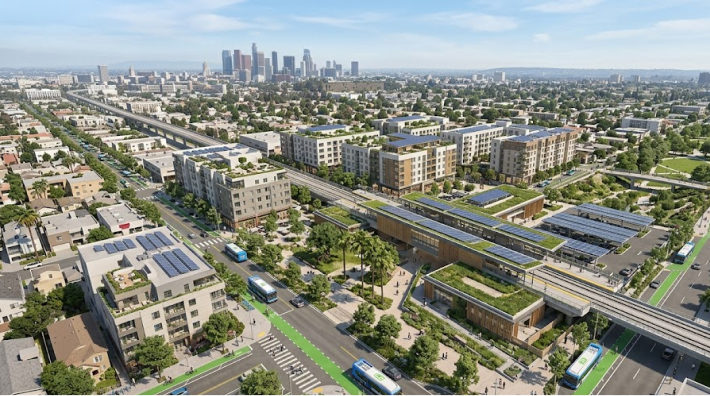
A central component of this strategy is Metro’s Twenty-Eight by ’28 Initiative, a program created to complete 28 major transportation projects before the start of the Olympic and Paralympic Games. The initiative includes rail extensions, station improvements, bus infrastructure, active transportation projects, and mobility upgrades designed to improve connections throughout Los Angeles County.
Projects included in the program represent some of the largest transportation investments in Southern California history. Among them are the Airport Metro Connector, which connects Los Angeles International Airport with the regional rail network, the Purple (D Line) Extension, which expands subway service toward West Los Angeles, and improvements to the Regional Connector, which simplified downtown rail connections.
According to Los Angeles Metro’s transportation projects overview, the goal is not simply to move visitors during the Games but to create a transportation system that provides long-term benefits for residents, workers, and businesses throughout the region.
This approach represents a major shift from previous Olympic models. Instead of creating isolated Olympic infrastructure that becomes underused after the event, Los Angeles is prioritizing projects integrated into everyday community life.
| Major Transportation Investment | Long-Term Regional Impact |
|---|---|
| Purple Line Extension | Faster connections between downtown, central Los Angeles, and Westside communities |
| Airport Metro Connector | Improved airport accessibility for residents and visitors |
| Regional Connector | More efficient rail transfers across Los Angeles County |
| Zero-emission bus expansion | Lower emissions and improved public transportation sustainability |
The economic importance of these improvements extends beyond transportation itself. Better mobility can influence where businesses invest, how visitors explore the region, and whether communities can participate in tourism opportunities created by international events.
Sustainability Goals Shape The Future Of Sports Transportation
The Los Angeles approach also reflects a broader transformation in how cities measure the success of major sporting events. Environmental performance has become a central factor in planning decisions.
The LA28 Olympic and Paralympic Games are being organized around the concept of using existing venues and reducing unnecessary construction. This model lowers costs while reducing the environmental footprint associated with large-scale events.
Transportation represents one of the most significant areas where sustainability goals can be achieved. Reducing the number of private vehicles traveling to venues directly impacts emissions, congestion, and neighborhood disruption.
Los Angeles has committed to expanding zero-emission transportation options as part of its broader climate strategy. Metro continues transitioning toward a cleaner bus fleet while increasing rail capacity and improving connections between communities.
The relationship between sports and sustainability is becoming increasingly important for host cities. The International Olympic Committee has emphasized that future Games should focus on climate responsibility, legacy planning, and reducing environmental impacts through its Olympic sustainability framework.
For Los Angeles, the World Cup provides a real-world demonstration of whether sustainable transportation concepts can work at metropolitan scale.
Economic Opportunities Created Through Sports Mobility
Transportation improvements connected to major sporting events often create economic benefits beyond the venues themselves.
When visitors can move easily between airports, hotels, restaurants, entertainment districts, and community attractions, more neighborhoods can participate in tourism spending. This is particularly important for Los Angeles because the region’s sports economy extends far beyond a single stadium.
The World Cup has created opportunities for businesses throughout areas such as Inglewood, downtown Los Angeles, Santa Monica, Pasadena, and surrounding communities. Fan events, cultural celebrations, restaurants, and hospitality businesses benefit when visitors have convenient ways to explore different parts of the region.
Sports tourism organizations increasingly recognize that the value of major events depends on visitor circulation. A fan who attends a match and immediately leaves the area produces limited economic impact. A visitor who uses public transportation to explore restaurants, attractions, and local businesses creates a broader regional benefit.
This connection between events and local economic growth mirrors trends seen in other U.S. sports destinations. Communities investing in facilities, transportation, and event strategies are positioning themselves to attract tournaments and visitors throughout the year.
Richland Chamber has highlighted similar principles through its research on sports tourism growth, showing how well-planned sporting events can support local businesses, strengthen community identity, and create recurring economic activity.
Community Benefits Will Determine The Real Olympic Legacy
The ultimate measure of Los Angeles’ strategy will not be the number of visitors transported during the FIFA World Cup or Olympic Games. It will be whether residents experience meaningful improvements after the events end.
Transportation access directly affects economic opportunity. Reliable transit allows workers to reach jobs, students to access education, and residents to participate in cultural and recreational activities across the region.
Communities located near improved transit corridors may experience new investment, increased accessibility, and stronger connections to employment centers. However, city officials and planners will need to ensure that development remains inclusive and that long-term benefits reach diverse neighborhoods throughout Los Angeles County.
The Olympics provide a global spotlight, but the most important outcomes will happen after the cameras leave.
Successful sports infrastructure planning requires balancing international visibility with local priorities:
- Creating transportation systems residents use every day.
- Supporting businesses beyond official event zones.
- Expanding access to recreation and community facilities.
- Maintaining sustainability commitments after competition ends.
Los Angeles’ experience could influence how future U.S. host cities approach major events. Cities preparing for tournaments such as the FIFA World Cup, Olympic Games, and other international competitions are increasingly studying how temporary event demands can accelerate permanent improvements.
A New Model For American Sports Cities
Los Angeles is attempting to redefine what a successful sports-hosting strategy looks like in the United States. Instead of measuring success only through stadium attendance, visitor numbers, or international attention, the city is focusing on mobility, sustainability, and long-term urban value.
The FIFA World Cup 2026 is providing a critical rehearsal. It allows transportation officials to analyze crowd movement, improve communication systems, evaluate shuttle operations, and identify challenges before millions of visitors arrive for LA28.
The lessons learned will extend beyond Southern California. Other host cities are watching how Los Angeles balances global sporting demand with environmental responsibility and community needs.
The future of sports tourism will increasingly depend on whether cities can transform major events into lasting investments. For Los Angeles, the challenge is not simply delivering successful tournaments. It is proving that a region historically defined by highways and car culture can build a more connected, accessible, and sustainable future.
The World Cup may last only a few weeks, and the Olympics only a few months, but the transportation decisions made during this period could influence how millions of people experience Los Angeles for decades.
A successful legacy will be measured through daily commutes, neighborhood connections, cleaner transportation, and a city that remains more accessible long after the final medal is awarded.
