
For decades, the success of major sporting events was measured primarily through attendance figures, television ratings, and ticket revenue. While those metrics remain important, the FIFA World Cup 2026 demonstrated that the true economic story often unfolds beyond the stadium. In Philadelphia, one of the tournament’s host cities, the hospitality industry emerged as one of the clearest indicators of long-term economic impact, offering a compelling example of how sports tourism is evolving.
According to the Philadelphia Convention and Visitors Bureau (PHLCVB), Center City hotels achieved extraordinary results during the World Cup match period. Hotel revenue increased by 50.3%, Revenue Per Available Room (RevPAR) rose 52.4%, and the Average Daily Rate (ADR) climbed 47.5% compared with typical performance levels. Those figures reflected not only high occupancy but also visitors’ willingness to extend their stays and spend more throughout the city.
These numbers suggest that successful sports tourism is no longer defined solely by how many spectators attend a match. Instead, it is increasingly measured by how effectively a destination converts sporting events into longer visitor stays, stronger hospitality performance, and sustained economic activity across multiple industries.
Philadelphia’s experience offers valuable lessons for communities seeking to maximize the benefits of hosting global sporting events.
Why Hotel Performance Has Become A New Tourism Benchmark
Hotels provide one of the most comprehensive indicators of tourism success because they reflect several visitor behaviors simultaneously. Occupancy rates reveal how many travelers choose to stay in a destination, while ADR measures the market’s pricing power and RevPAR combines both metrics to evaluate overall hotel performance.
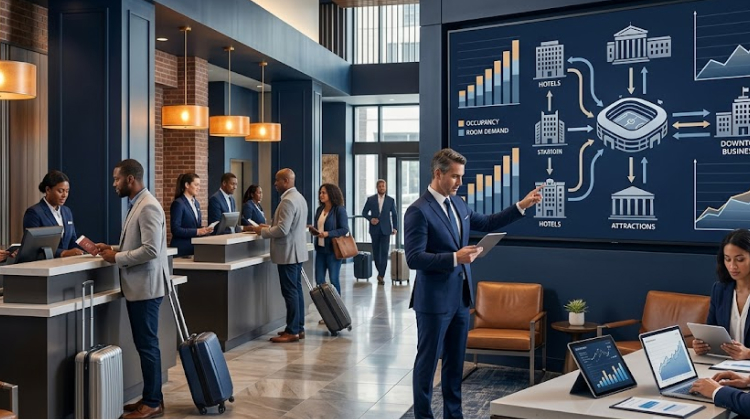
During the FIFA World Cup, Philadelphia excelled across all three indicators.
Rather than experiencing a brief surge limited to match days, many visitors planned extended trips that included historic attractions, museums, restaurants, waterfront districts, and neighboring destinations. This pattern generated additional nights of accommodation, increasing revenue for hotels throughout Center City.
The Philadelphia Convention and Visitors Bureau noted that many international travelers treated the tournament as part of a broader vacation rather than a single sporting event. This behavior amplified the tournament’s economic impact because visitor spending expanded well beyond ticket purchases.
The broader tourism industry has increasingly recognized hotel performance as one of the strongest measures of destination success. According to the American Hotel & Lodging Association, lodging demand often serves as an early indicator of visitor confidence, business activity, and long-term travel trends.
Unlike attendance figures, hotel metrics capture how deeply visitors engage with a destination. Longer stays typically translate into greater spending on dining, transportation, entertainment, retail, and cultural experiences.
| Hotel Performance Indicator | Why It Matters For Sports Tourism |
|---|---|
| Occupancy Rate | Measures visitor demand for overnight stays |
| Average Daily Rate (ADR) | Reflects visitor willingness to spend |
| Revenue Per Available Room (RevPAR) | Combines occupancy and pricing into a comprehensive performance metric |
| Length of Stay | Indicates broader tourism engagement beyond event attendance |
These indicators provide local leaders with a clearer understanding of whether sporting events generate temporary crowds or lasting tourism value.
Philadelphia Demonstrated The Power Of Extended Visitor Stays
One of the most significant outcomes of Philadelphia’s World Cup performance was the length of time many visitors remained in the region.
Instead of arriving only for a match and departing immediately afterward, domestic and international travelers explored multiple neighborhoods, visited historic landmarks such as Independence Hall and the Liberty Bell, experienced the city’s renowned culinary scene, and traveled throughout southeastern Pennsylvania.
This pattern transformed a sporting event into a broader tourism experience.
Every additional night spent in the city created new opportunities for local businesses. Hotels benefited directly through increased room demand, while restaurants, attractions, transportation providers, retailers, and entertainment venues experienced higher visitor spending.
The World Cup therefore functioned as a gateway to Philadelphia rather than the sole attraction.
This approach aligns with broader travel trends identified by the U.S. Travel Association, which has emphasized that destinations generating immersive visitor experiences are more likely to encourage repeat visitation and stronger economic returns.
Rather than competing solely as an event venue, Philadelphia positioned itself as a complete destination capable of delivering cultural, historical, and recreational experiences alongside world-class sporting events.
Hospitality Success Extended Beyond Luxury Hotels
Although headline statistics often focus on major downtown hotels, the economic impact extended throughout Philadelphia’s hospitality ecosystem.
Boutique hotels, independent accommodations, restaurants, neighborhood cafes, rideshare services, entertainment venues, and local retailers all benefited from the increased visitor presence.
Hospitality employees became ambassadors for the city.
Front desk staff offered recommendations for neighborhood attractions. Restaurant servers introduced international guests to regional cuisine. Transportation workers helped visitors navigate unfamiliar transit systems. These everyday interactions influenced how international travelers perceived Philadelphia as a destination.
Sports tourism increasingly depends on these personal experiences.
Visitors remember efficient transportation, welcoming service, vibrant neighborhoods, and authentic local culture just as much as the competition itself. Those impressions influence whether travelers return in the future or recommend the destination to others.
Richland Chamber has explored similar ideas through its analysis of visitor experience strategies, highlighting how hospitality and community engagement shape long-term tourism outcomes more effectively than attendance figures alone.
Why Visitor Spending Creates Broader Economic Benefits
Hotel performance represents only the beginning of the economic story.
Visitors staying multiple nights distribute spending across a much wider range of industries than day-trippers attending a single event.
A family visiting Philadelphia for four or five days might purchase hotel accommodations, dine at local restaurants, visit museums, use public transportation, shop in neighborhood business districts, and attend additional cultural events.
This spending pattern creates a multiplier effect that supports employment throughout the local economy.
The World Cup illustrated how hospitality serves as the foundation for broader tourism development. Strong hotel demand generates additional opportunities for restaurants, retailers, cultural institutions, entertainment venues, and transportation providers.
Rather than concentrating economic benefits within stadium operations, Philadelphia demonstrated how sports tourism can strengthen entire commercial districts when visitors remain engaged with the destination beyond the competition.
Sports Tourism Is Becoming An Economic Development Strategy
Philadelphia’s record hotel performance reflects a broader transformation taking place across American sports tourism.
Communities are increasingly recognizing that major sporting events should not be evaluated solely by attendance or media exposure. Instead, they are using tourism indicators such as hotel revenue, visitor spending, business participation, and repeat travel potential to measure success.
This approach encourages cities to invest not only in sporting venues but also in transportation, hospitality, public spaces, destination marketing, and cultural attractions.
The result is a more resilient tourism economy that continues generating benefits long after the final whistle.
Philadelphia’s experience demonstrates that the strongest legacy of a global sporting event may not be found inside the stadium. It may be measured by the hotels that welcomed visitors, the businesses that served them, and the communities that transformed a tournament into an enduring tourism opportunity.
Local Businesses Became Part Of Philadelphia’s World Cup Tourism Strategy
The hotel industry’s success during the FIFA World Cup created a foundation for broader economic activity throughout Philadelphia. When visitors extend their stays, the benefits spread beyond accommodations and into the businesses that define the character of a destination.
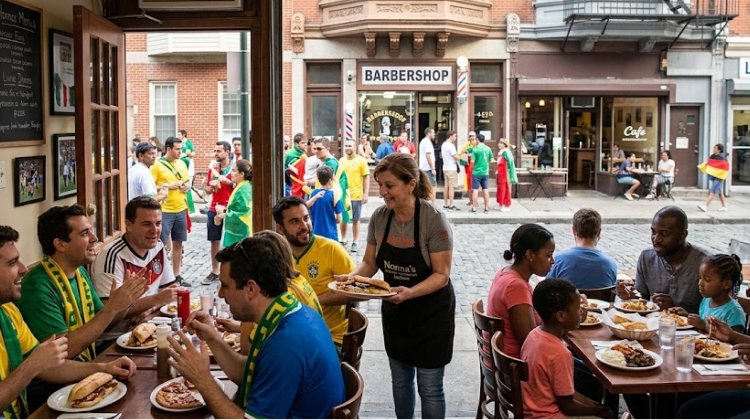
Restaurants, entertainment venues, retailers, and cultural institutions became important contributors to the visitor experience. International fans who arrived for matches often explored neighborhoods, discovered local businesses, and participated in activities that were unrelated to the tournament itself.
This economic distribution is one of the reasons cities pursue major sporting events. The objective is not simply to fill stadium seats but to create a network of visitor spending that supports multiple sectors.
Philadelphia’s existing tourism assets provided a significant advantage. The city’s historic districts, food culture, museums, and walkable neighborhoods allowed visitors to create complete travel experiences around World Cup matches.
For local businesses, the tournament represented an opportunity to reach new audiences. International visitors who experienced Philadelphia’s restaurants, shops, and attractions became potential future customers and destination advocates.
This relationship between sports and local commerce is becoming increasingly important as cities evaluate the long-term value of hosting global events.
Transportation And Accessibility Strengthened The Visitor Experience
Another factor behind Philadelphia’s tourism success was the city’s ability to connect visitors with different parts of the region.
Major sporting events create complex transportation challenges. Thousands of visitors must move between airports, hotels, stadiums, entertainment areas, and cultural attractions while maintaining a positive experience.
Philadelphia benefited from existing transportation infrastructure, including regional rail connections, subway services, pedestrian-friendly downtown areas, and proximity between major attractions.
Accessibility played a major role in encouraging visitors to explore beyond the match venue.
A traveler staying in Center City could easily visit historical landmarks, restaurants, shopping areas, and entertainment districts without needing a private vehicle. This increased the number of businesses capable of benefiting from World Cup-related tourism.
The connection between mobility and tourism success is becoming a major focus for future host cities. Transportation is no longer viewed only as an operational necessity; it has become part of the hospitality experience.
A visitor’s perception of a city can be shaped by how easily they move through it. Efficient transportation creates confidence, encourages exploration, and increases economic activity throughout the region.
Lessons Philadelphia Provides For Future Host Cities
Philadelphia’s World Cup performance offers several lessons for communities preparing for future sporting events.
The first lesson is that preparation must extend beyond the stadium. Successful host cities build complete visitor ecosystems that include accommodations, transportation, attractions, and community participation.
The second lesson is that tourism success requires collaboration between different industries. Hotels, restaurants, government agencies, tourism organizations, and local businesses must operate as part of a shared strategy.
The third lesson is that long-term planning creates greater value than short-term event preparation.
| Sports Tourism Strategy | Long-Term Benefit |
|---|---|
| Investing in hospitality capacity | Supports future tourism growth |
| Promoting local businesses | Spreads economic benefits across communities |
| Improving transportation | Enhances daily quality of life for residents |
| Creating memorable visitor experiences | Increases repeat tourism potential |
Philadelphia’s experience shows that major sporting events can become platforms for economic development when communities focus on the complete visitor journey.
The Future Of Sports Tourism Will Be Measured Beyond Attendance
The traditional measurement of sporting events has focused on attendance numbers, television audiences, and immediate revenue. Philadelphia’s World Cup results demonstrate why that approach is changing.
A stadium filled with spectators represents only one moment in the economic cycle.
The larger impact comes from everything surrounding the event:
- Visitors staying in hotels.
- Businesses welcoming international customers.
- Residents engaging with global audiences.
- Infrastructure improvements supporting future growth.
These factors determine whether a sporting event creates lasting value.
Future host cities will increasingly analyze tourism performance metrics alongside event statistics. Hotel revenue, visitor satisfaction, economic distribution, and repeat visitation will become essential indicators of success.
Philadelphia’s results provide a strong example of this transition.
The city did not simply host matches. It created an environment where visitors could experience the destination, support local businesses, and generate economic activity across the region.
Philadelphia’s World Cup Legacy Extends Beyond 2026
The long-term value of Philadelphia’s World Cup success will depend on how effectively the city maintains momentum after the tournament.
Destination marketing organizations can continue promoting the city to international audiences who discovered Philadelphia during the event. Businesses can maintain relationships with visitors who experienced the city for the first time. Tourism leaders can use the event’s global exposure to attract future conferences, competitions, and cultural events.
This is the true opportunity behind sports tourism.
A successful event creates a global introduction between a destination and millions of potential future visitors.
Philadelphia’s record hotel performance demonstrates that the strongest sports tourism strategies are built around creating reasons for people to stay longer, explore further, and return again.
The future of major sporting events in America will not be determined only by the number of fans who enter a stadium. It will be determined by how effectively communities transform those visitors into long-term partners in tourism growth.
