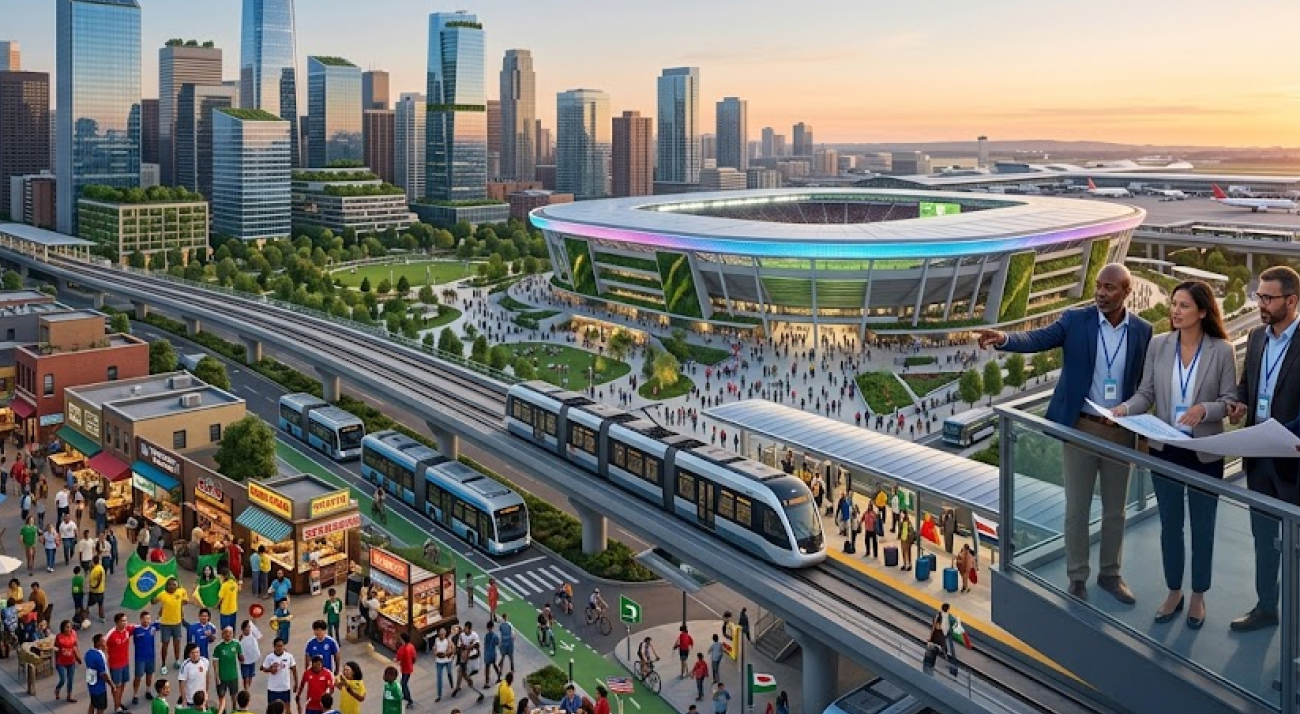
The FIFA World Cup 2026 represented a milestone for American sports tourism. Hosted across 11 U.S. cities alongside Canada and Mexico, the tournament generated record attendance, unprecedented international media exposure, and an estimated $20 billion in economic activity, according to an analysis by Bank of America. The scale of the event has already prompted discussions among sports executives, economists, and industry analysts about whether the United States could once again become a World Cup host in 2038.
Although FIFA has not opened the official bidding process for the 2038 FIFA World Cup, and no host nation has been selected, several observers have pointed to the commercial success of the 2026 tournament as evidence that the United States would remain a strong candidate if it decided to pursue another bid.
The conversation is about more than soccer.
A future World Cup would represent another opportunity to accelerate infrastructure investment, strengthen destination marketing, expand sports tourism, and attract millions of international visitors. The experience gained during 2026 has demonstrated that the United States possesses many of the assets required to organize one of the world’s largest sporting events with relatively limited new construction compared with previous tournaments.
Whether America ultimately submits another bid remains uncertain, but the factors influencing that possibility already provide valuable insights into the future of global sports tourism.
Why The 2026 FIFA World Cup Changed The Conversation
Historically, FIFA has preferred rotating the World Cup among different regions of the world to encourage global development of the sport. However, the commercial performance of the 2026 tournament has renewed discussion about the long-term role of the United States within FIFA’s event strategy.
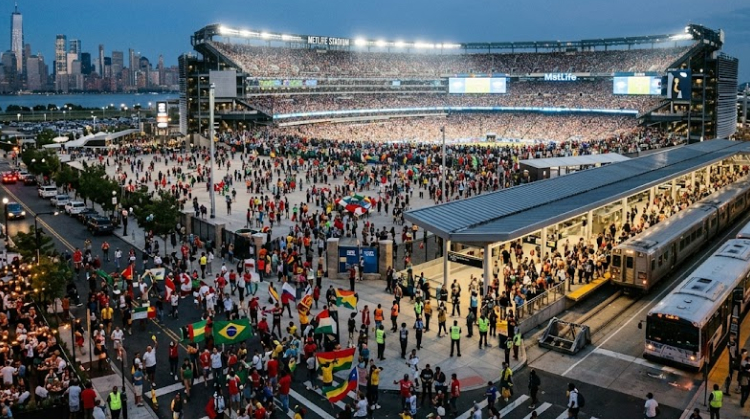
The tournament delivered impressive economic and operational results across multiple host markets.
Cities including Philadelphia, Kansas City, Boston, Los Angeles, and the San Francisco Bay Area reported significant increases in hotel demand, restaurant activity, transportation usage, and visitor spending. International fans frequently extended their trips beyond match days, creating tourism benefits that reached neighborhoods far from the stadiums.
These outcomes reinforced the idea that the World Cup can serve as a national tourism platform rather than simply a sporting competition.
According to FIFA, the expanded 48-team format also demonstrated that large, geographically diverse countries can successfully coordinate transportation, venue operations, hospitality, and security on an unprecedented scale. Additional information about the tournament’s organization and legacy initiatives is available through the official FIFA World Cup legacy program.
The success of these operations has naturally led industry observers to ask whether the United States could repeat that achievement in the future.
Existing Infrastructure Gives America A Competitive Advantage
One of America’s greatest advantages is that much of the infrastructure required for another World Cup already exists.
Unlike many previous host nations, the United States did not need to construct dozens of new stadiums specifically for FIFA 2026. Most matches were played in modern NFL venues that already possessed large seating capacities, advanced technology, transportation access, and hospitality facilities.
This significantly reduced capital investment while allowing host communities to focus on visitor experience rather than large-scale venue construction.
Beyond stadiums, the country benefits from an extensive network of international airports, interstate highways, commuter rail systems, convention centers, hotels, and entertainment districts capable of supporting millions of visitors.
| Existing Asset | Advantage For A Future World Cup |
|---|---|
| NFL and MLS stadiums | World-class venues requiring minimal structural upgrades |
| International airports | Direct connections to major global markets |
| Hospitality infrastructure | Large hotel inventory across multiple metropolitan areas |
| Public transportation | Established systems in major host cities |
| Convention and tourism districts | Capacity to support fan festivals and business events |
This existing infrastructure reduces both financial risk and preparation time.
Instead of investing billions in new facilities, future organizing committees could focus resources on transportation improvements, sustainability initiatives, digital services, accessibility, and visitor engagement.
That model aligns with FIFA’s increasing emphasis on creating long-term community benefits rather than building venues with limited post-tournament use.
Commercial Success Has Strengthened America’s Position
The financial performance of FIFA World Cup 2026 also strengthened perceptions of the United States as one of the world’s most valuable sports markets.
Corporate sponsorship reached record levels, while international broadcasters benefited from favorable television schedules and strong global audiences. Host cities welcomed millions of visitors whose spending supported hotels, restaurants, retailers, entertainment venues, and transportation providers.
The tournament’s commercial appeal extended beyond soccer.
Global companies used the World Cup to launch marketing campaigns, expand customer engagement, and strengthen relationships with American consumers. Local businesses benefited from increased international exposure, while destination marketing organizations gained opportunities to showcase their communities to audiences across every continent.
The broader tourism sector has recognized this opportunity as well. According to the U.S. Travel Association, major international events help strengthen destination awareness, increase future visitation, and support long-term economic development by introducing American communities to first-time international travelers.
Rather than creating a temporary surge in tourism, events of this scale often establish relationships that continue generating travel demand for years.
Sports Tourism Has Become A National Economic Strategy
One of the most important developments following the 2026 tournament is the growing recognition that sports tourism can support national economic priorities.
Major sporting events no longer operate independently from broader development strategies.
Cities increasingly coordinate investments across hospitality, transportation, public safety, technology, and cultural programming to maximize visitor spending and improve quality of life for residents. These improvements continue serving communities long after the final match has been played.
This integrated approach explains why discussions about a potential 2038 World Cup extend beyond the sports industry.
Economic development organizations, tourism agencies, chambers of commerce, and regional planning authorities all recognize the opportunity to leverage global sporting events as catalysts for investment, workforce development, international branding, and business attraction.
Richland Chamber has highlighted similar trends through its coverage of sports tourism economic growth, examining how communities transform international sporting events into long-term opportunities for local businesses and regional development.
Experience Has Become One Of America’s Strongest Assets
Perhaps the greatest advantage the United States would bring to a future bid is experience.
Organizing a tournament involving 48 national teams, millions of visitors, and dozens of matches across multiple time zones required unprecedented collaboration between federal agencies, state governments, local organizing committees, transportation providers, tourism organizations, and private businesses.
Those partnerships created operational knowledge that cannot easily be replicated.
Host cities developed expertise in crowd management, international visitor services, multilingual communications, hospitality coordination, transportation planning, volunteer management, and large-scale security operations.
Rather than starting from the beginning, a future organizing committee could build upon proven systems, established relationships, and practical lessons learned during FIFA World Cup 2026.
That accumulated experience may ultimately become one of the most valuable legacies of the tournament—and one of the strongest arguments supporting the possibility of another American World Cup in the decades ahead.
The Challenges Behind A Potential 2038 World Cup Bid
While the United States has many advantages, hosting another FIFA World Cup would not be automatic. A successful 2038 bid would require overcoming several strategic, political, and operational challenges.
One of the biggest considerations is FIFA’s traditional approach to geographic rotation. Since the World Cup has expanded into a global event involving multiple continents, FIFA must balance commercial opportunities with the goal of maintaining worldwide representation.
The United States, Canada, and Mexico will already host the 2026 tournament, while future editions are scheduled for different regions. The FIFA World Cup 2030 will be hosted across Morocco, Portugal, and Spain with opening matches in South America, while the 2034 tournament has been awarded to Saudi Arabia.
A possible U.S. return in 2038 would therefore depend on FIFA’s long-term strategy and whether another North American tournament aligns with the organization’s priorities.
Beyond FIFA considerations, domestic challenges would also need to be addressed.
A second World Cup within 12 years would require cities and governments to demonstrate continued public support, sustainable investment plans, and clear evidence that hosting responsibilities create measurable benefits for residents.
The focus would likely shift away from building venues and toward improving systems that directly influence everyday life, including transportation reliability, affordable accommodations, accessibility, and environmental sustainability.
Sustainability Could Define America’s Next World Cup Strategy
If the United States pursued another World Cup, sustainability would likely become one of the central themes.
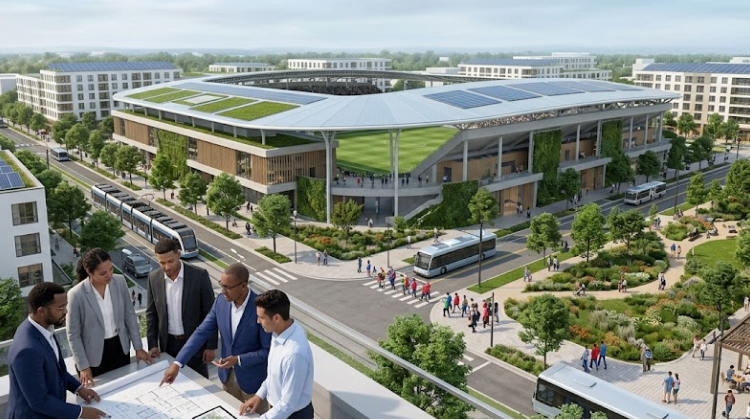
The global sports industry has increasingly moved toward reducing environmental impact, and future tournaments will be evaluated not only by economic performance but also by their long-term contribution to host communities.
The 2026 tournament introduced several sustainability initiatives, including efforts focused on public transportation, waste reduction, energy efficiency, and responsible venue management. A 2038 bid would likely need to demonstrate even stronger commitments.
| Future World Cup Priority | Potential Long-Term Community Benefit |
|---|---|
| Expanded public transportation | Better mobility for residents and visitors |
| Renewable energy investments | Reduced operational emissions |
| Sustainable stadium operations | Lower long-term facility costs |
| Regional tourism planning | More balanced economic development |
The opportunity would be to transform a future tournament from a short-term event into a decade-long development strategy.
For example, investments made ahead of a 2038 tournament could improve transportation networks, pedestrian areas, public spaces, and digital infrastructure that residents continue using every day.
This approach reflects a broader shift in how cities evaluate mega-events. The question is no longer simply, “How much money does the event generate?” Instead, communities increasingly ask, “What improvements remain after the event ends?”
A Second World Cup Could Expand America’s Sports Tourism Market
The potential economic impact of another World Cup would extend far beyond match attendance.
The United States has experienced significant growth in international tourism connected to sporting events, and another FIFA tournament could strengthen the country’s position as a global destination for major competitions.
The benefits would include:
- Increased international visitor arrivals.
- Additional demand for hotels and restaurants.
- Greater exposure for smaller tourism markets.
- More opportunities for cultural exchange.
- New business relationships with global companies.
The National Travel and Tourism Office has emphasized the importance of international visitors to the U.S. economy, highlighting how global travel supports businesses, communities, and employment across the country.
A 2038 World Cup could build upon the visitor relationships created in 2026. International fans who experienced American cities for the first time may return for future vacations, conferences, sporting events, and business opportunities.
This repeat visitation effect represents one of the most valuable outcomes of hosting global events.
The strongest legacy of a World Cup is often not the tournament itself but the future travel decisions influenced by the experience.
Cities Could Use Another World Cup To Strengthen Regional Cooperation
One important lesson from FIFA World Cup 2026 was that successful host cities did not operate in isolation.
The most effective strategies involved cooperation between neighboring communities, transportation agencies, tourism organizations, and business groups.
A future World Cup could expand this regional approach.
Instead of focusing only on the stadium city, communities could develop larger tourism corridors connecting airports, hotels, attractions, restaurants, cultural districts, and nearby destinations.
For example, a visitor attending a match in one metropolitan area could be encouraged to explore surrounding regions through coordinated transportation and tourism campaigns.
This model creates a wider economic footprint and allows smaller communities to benefit from international attention.
The future of sports tourism will likely depend less on individual venues and more on how effectively entire regions work together.
What A 2038 World Cup Could Mean For America’s Global Position
A second FIFA World Cup in the United States would represent more than another sporting competition.
It would reinforce America’s position as one of the world’s largest destinations for international events, entertainment, and tourism.
The country already hosts some of the world’s most commercially successful sporting properties, including the NFL, NBA, MLB, NHL, MLS, and major college athletics competitions. Adding another World Cup would strengthen the connection between American sports culture and global audiences.
However, the greatest opportunity would come from applying the lessons learned in 2026.
A future tournament could focus on creating smarter transportation networks, stronger local business participation, improved visitor experiences, and more sustainable infrastructure.
The goal would not simply be repeating the success of 2026. It would be creating a more advanced model for how mega sporting events can benefit communities.
The Next Generation Of Mega Events Will Be Measured By Legacy
The possibility of another FIFA World Cup in America reflects a larger transformation in the sports industry.
Major events are increasingly judged by what they leave behind.
Economic impact, tourism growth, infrastructure improvements, community participation, and international reputation have become essential measurements of success.
The United States has demonstrated that it can host a global tournament at an extraordinary scale. The remaining question is whether another World Cup would create enough additional value to justify returning so soon.
If FIFA and American stakeholders decide to pursue a 2038 bid, the strongest argument will likely not be stadium capacity or commercial revenue alone.
The deciding factor will be whether another tournament can continue the broader legacy created in 2026: stronger communities, improved infrastructure, deeper international connections, and a more competitive American sports tourism economy.
