
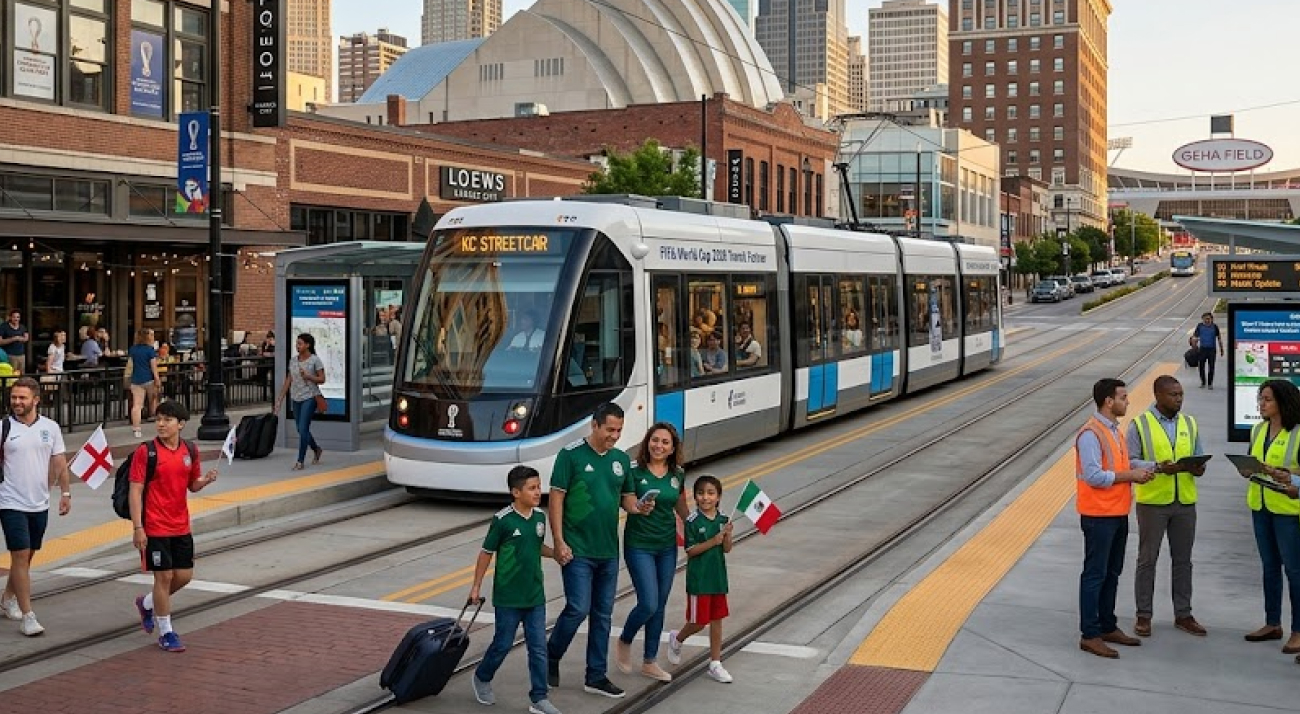
When Kansas City was selected as one of the 11 U.S. host cities for the FIFA World Cup 2026, the challenge extended far beyond preparing GEHA Field at Arrowhead Stadium for international matches. The city needed to prove that its transportation network could handle one of the largest global sporting events ever hosted in North America while creating benefits that would continue long after the final whistle.
The results positioned Kansas City as one of the strongest examples of how transportation can become a defining part of a sports event legacy.
During the FIFA World Cup period, Kansas City’s public transportation system experienced unprecedented demand. The KC Streetcar recorded 698,705 riders in June 2026, marking the highest monthly ridership total in the system’s history and representing a dramatic increase compared with previous years. At the same time, Kansas City International Airport (KCI) reached record passenger activity, including its busiest outbound screening day on July 12, 2026, when the Transportation Security Administration (TSA) processed 24,266 travelers.
These numbers demonstrate a broader shift in how American cities approach major sporting events. Transportation is no longer viewed as a temporary service required to move fans from hotels to stadiums. Instead, it is becoming a strategic investment connected to tourism growth, economic development, sustainability, and long-term urban planning.
Kansas City’s experience offers valuable lessons for future hosts of international competitions, including the Los Angeles 2028 Olympic Games, future FIFA tournaments, and other large-scale sporting events across the United States.
Kansas City’s World Cup Preparation Put Transportation At The Center Of Planning
Mega sporting events create transportation challenges unlike almost any other type of public gathering.
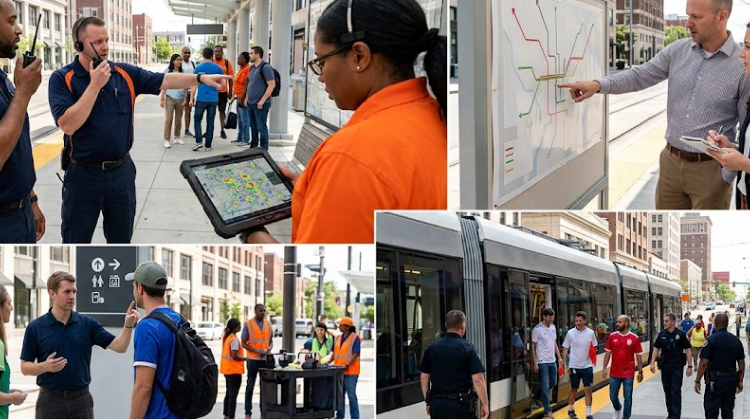
A typical professional sports game may require moving tens of thousands of spectators within a few hours. A global tournament such as the FIFA World Cup requires cities to manage millions of visitor movements across airports, hotels, entertainment districts, fan zones, restaurants, and cultural attractions.
Kansas City approached this challenge by focusing on connectivity rather than simply expanding road capacity.
The city relied on a combination of:
- The KC Streetcar system connecting downtown destinations.
- RideKC bus services supporting regional mobility.
- The newly modernized Kansas City International Airport.
- Pedestrian improvements throughout major visitor areas.
- Coordination between transportation agencies, tourism organizations, and local government.
This approach reflected a growing trend among successful host cities: using major sporting events as a catalyst to improve everyday mobility.
According to the Federal Transit Administration, investments in public transportation contribute to stronger communities by improving access to jobs, supporting economic development, and creating more efficient transportation networks.
For Kansas City, the World Cup created a deadline that accelerated transportation coordination and demonstrated how existing infrastructure could support international demand when properly planned and managed.
Airport Growth Showed The Scale Of International Demand
Public transit was only one part of Kansas City’s transportation success.
The city’s airport infrastructure also played a significant role in welcoming international visitors. The opening of the new Kansas City International Airport terminal in 2023 became one of the most important infrastructure improvements completed before the World Cup.
The $1.5 billion terminal project replaced outdated facilities with a modern passenger experience featuring expanded gates, improved security areas, and stronger international travel capabilities.
That investment became particularly valuable as Kansas City welcomed visitors from around the world.
The record passenger numbers at KCI highlighted how transportation systems operate as interconnected networks. A successful sporting event depends on airports, highways, public transit, hotels, and pedestrian infrastructure working together.
A city cannot create a positive visitor experience if one part of the transportation chain fails.
The Kansas City model demonstrated that airport modernization and urban transit improvements can complement each other when developed as part of a broader mobility strategy.
The relationship between transportation infrastructure and tourism growth has become increasingly important as cities compete for international events. Research from the American Public Transportation Association has consistently shown that transit investments support economic activity by connecting visitors, workers, and businesses.
Mayor Quinton Lucas Sees World Cup Transportation As A Long-Term Asset
Kansas City Mayor Quinton Lucas has emphasized that the city’s World Cup preparations should create benefits extending beyond the tournament itself.
Rather than viewing transportation improvements as temporary event requirements, city officials have focused on how these systems can support residents for decades.
This perspective represents a significant change in how communities measure the success of major sporting events.
Historically, host cities often evaluated tournaments through attendance numbers, television exposure, and short-term visitor spending. Today, many leaders are paying closer attention to infrastructure improvements and whether those investments improve daily life.
Kansas City’s transportation achievements provide a strong example of this approach.
The increased use of the KC Streetcar demonstrated demand for accessible mobility options, while airport improvements strengthened the city’s position as an international destination.
The city now has measurable evidence that transportation investments can influence tourism, downtown activity, and future economic development.
Sports Infrastructure Is Expanding Beyond Stadiums
The Kansas City experience reflects a larger transformation in American sports infrastructure planning.
For decades, stadium construction dominated discussions about hosting major sporting events. Cities competed to build larger venues, improve seating capacity, and create entertainment districts around arenas.
However, recent mega-events have shown that successful hosting depends on a much broader ecosystem.
Modern sports infrastructure includes:
- Transportation networks.
- Digital visitor services.
- Hospitality capacity.
- Sustainable urban design.
- Public spaces.
- Community accessibility.
Kansas City’s World Cup preparation showed that transportation can become one of the most valuable components of that ecosystem.
The ability to move visitors efficiently influences every other part of the event experience, from hotel occupancy to restaurant spending and neighborhood activity.
The city’s results suggest that future host communities may increasingly prioritize mobility investments as part of their long-term economic development strategies rather than treating them as event-specific expenses.
Record KC Streetcar Ridership Demonstrated The Power Of Accessible Transit
The strongest symbol of Kansas City’s transportation success was the performance of the KC Streetcar.
Opened in 2016, the two-mile downtown route initially focused on connecting the River Market, Power & Light District, and Union Station areas. Over time, it became an important part of downtown development, helping attract investment around transit-accessible neighborhoods.
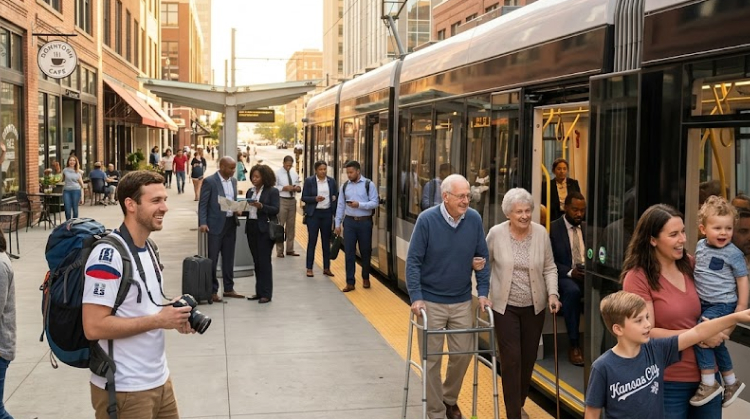
During the World Cup, the streetcar became a critical mobility option for residents and visitors.
The June 2026 ridership figure of 698,705 passengers showed that travelers were willing to choose public transportation when the system provided convenience, reliability, and direct connections to destinations.
The success also challenged a common assumption in many American cities that visitors attending major sporting events will primarily rely on personal vehicles or rideshare services.
Kansas City’s experience suggested that even cities with traditionally car-oriented transportation cultures can shift travel behavior when public transit is simple and strategically connected.
| Transportation Metric | FIFA World Cup 2026 Impact |
|---|---|
| KC Streetcar monthly ridership | 698,705 riders in June 2026, highest month in system history |
| Kansas City International Airport | Record outbound passenger screening day on July 12, 2026 |
| Visitor mobility strategy | Combined streetcar, buses, airport operations, and pedestrian connections |
The implications extend beyond Kansas City.
Other American cities preparing for future mega-events may now examine whether existing transit systems can be improved rather than relying exclusively on expensive temporary transportation solutions.
Future Host Cities Could Follow Kansas City’s Transportation Strategy
Kansas City’s World Cup experience provides a practical example for cities preparing to host future international sporting events. The lesson is not simply that transit systems need more capacity during major tournaments. The larger takeaway is that transportation infrastructure must be planned as a long-term community asset.
Future hosts are increasingly expected to answer difficult questions before receiving international events:
- Will residents benefit from the infrastructure after the tournament ends?
- Can visitors move efficiently without increasing congestion?
- Will transportation improvements support economic growth?
- Can investments serve both tourism and everyday mobility needs?
Kansas City’s approach suggests that successful sports infrastructure begins with integrating event planning into broader urban development strategies.
Instead of creating isolated solutions designed only for tournament days, cities can build transportation networks that strengthen neighborhoods, improve accessibility, and encourage investment.
This strategy aligns with the growing focus on sustainable development within major sporting events. The International Olympic Committee has emphasized that future Olympic and international sporting projects should prioritize lasting community benefits, responsible infrastructure, and long-term value.
Kansas City’s experience demonstrates how transportation can become one of the most visible examples of that philosophy.
The Economic Impact Of Transit-Oriented Sports Tourism
Transportation improvements create economic benefits that extend far beyond moving visitors between locations.
When fans can easily access downtown areas, restaurants, entertainment districts, and cultural attractions, tourism spending becomes distributed throughout the community.
This creates opportunities for businesses that may not be located directly near a stadium but benefit from increased visitor activity.
Kansas City’s downtown districts, including the River Market, Power & Light District, and Crossroads Arts District, benefited from increased visitor movement during the World Cup period because public transportation helped connect these areas into the overall event experience.
The economic impact of transit accessibility can be measured through several areas:
| Area Of Impact | Transportation Contribution |
|---|---|
| Tourism | Visitors can explore more destinations during their stay |
| Local businesses | Increased pedestrian activity creates additional customer opportunities |
| Workforce mobility | Employees gain easier access to hospitality and event jobs |
| Urban development | Transit corridors attract investment and redevelopment |
This model represents a shift away from viewing sporting events as isolated entertainment experiences.
Instead, successful events increasingly function as economic development strategies that connect tourism, infrastructure, and community growth.
Richland Chamber has previously analyzed how sports tourism growth influences local economies, and Kansas City’s World Cup experience reinforces the importance of infrastructure decisions in maximizing those benefits.
Kansas City’s Experience Could Influence Olympic Transportation Planning
The timing of Kansas City’s transportation success is especially significant because American cities are preparing for another major international sporting event: the Los Angeles 2028 Olympic and Paralympic Games.
Los Angeles faces transportation challenges on a much larger scale due to its population size, geographic spread, and historically heavy dependence on automobiles.
The city has already invested billions into expanding rail connections, improving bus services, and increasing transportation options ahead of the Olympics.
Kansas City’s example provides an important lesson: major sporting events create opportunities to accelerate transportation improvements, but the strongest results come when those investments align with long-term urban goals.
For Los Angeles, the objective is not simply moving spectators during the Olympic Games. The larger challenge is creating a transportation network that improves mobility for millions of residents after the event concludes.
This same principle applies to future host cities across the country.
Whether preparing for a World Cup, Olympics, Super Bowl, or international championship, communities increasingly recognize that transportation systems represent part of the event legacy.
Public Transit Could Become A Requirement For Future Mega Events
The success of Kansas City’s transit strategy may influence how governing organizations evaluate future host cities.
International sporting events require destinations capable of handling massive visitor volumes while maintaining a positive experience for residents.
Cities that rely exclusively on private vehicles face increasing challenges:
- Traffic congestion.
- Parking limitations.
- Higher transportation emissions.
- Reduced visitor flexibility.
- Increased operational costs.
Public transit offers a different approach by moving larger numbers of people through existing urban corridors while supporting environmental and economic goals.
The FIFA World Cup 2026 demonstrated that visitors will use public transportation when systems are convenient, safe, and connected to major destinations.
That finding could encourage more cities to prioritize transit expansion before competing for future events.
Transportation may become one of the most important factors in determining whether a city is considered prepared for global competition.
The Future Of Sports Infrastructure Will Be Built Around Connectivity
Kansas City’s World Cup transportation success represents a broader transformation in how America approaches sports infrastructure.
The stadium is no longer the only symbol of a city’s ability to host major events.
A successful host city requires an interconnected system that includes:
- Reliable transportation.
- Modern airports.
- Visitor-friendly public spaces.
- Strong hospitality networks.
- Community-focused development.
Kansas City showed that transportation can become a competitive advantage rather than simply an operational challenge.
The record-breaking KC Streetcar ridership numbers provided measurable proof that well-designed public transit can support international tourism while creating lasting value for residents.
As more American cities compete for major sporting events, transportation planning will likely move closer to the center of those discussions.
The next generation of sports infrastructure will not be defined only by stadium capacity or event attendance. It will be measured by how effectively cities connect people, support businesses, and create improvements that remain valuable long after the final match.
Kansas City’s World Cup experience demonstrates that the future of sporting events depends as much on mobility as competition itself.
