
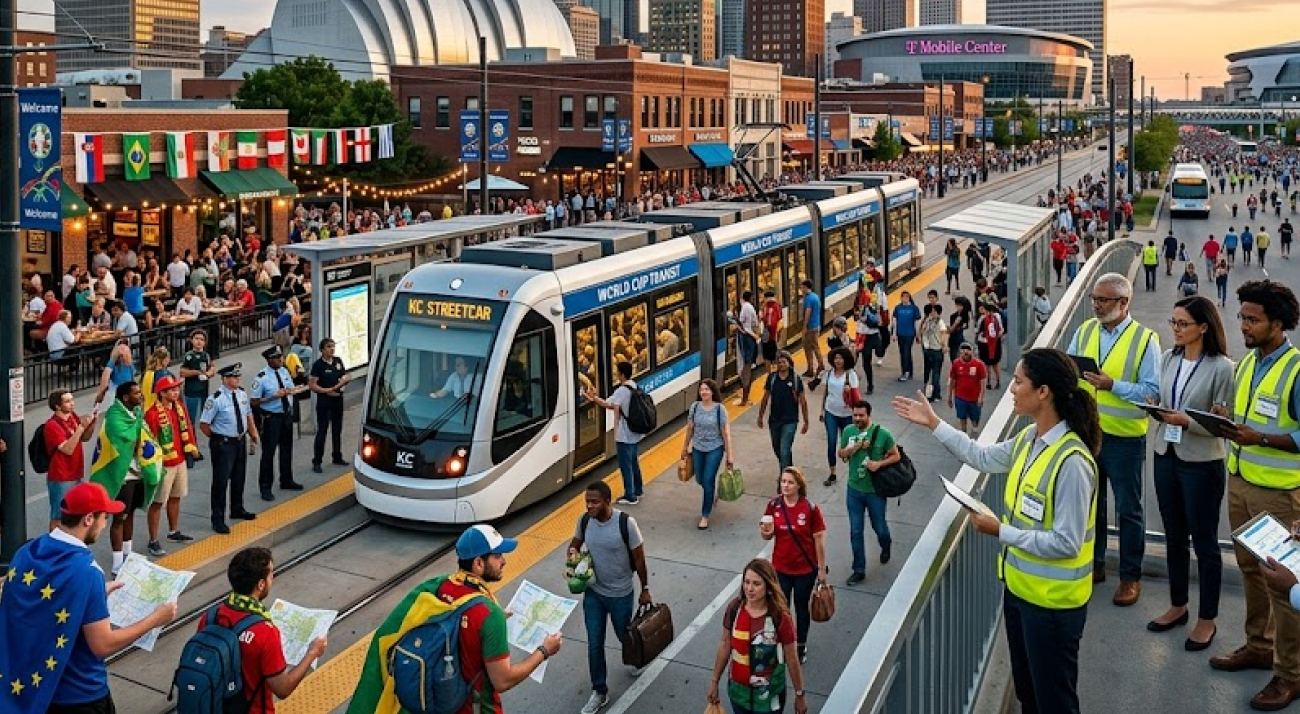
When Kansas City was selected as one of the host cities for the FIFA World Cup 2026, transportation planners understood that moving hundreds of thousands of visitors efficiently would be just as important as hosting successful matches. During the tournament, that planning translated into record-breaking public transit usage, offering a compelling example of how investments in mobility can become one of the most valuable legacies of a mega sporting event.
According to data released by the Kansas City Streetcar Authority, the KC Streetcar carried 698,705 passengers during June 2026, the highest monthly ridership in its history and more than four times the total recorded during June 2025. At the same time, Kansas City International Airport (KCI) experienced its busiest outbound travel day ever on July 12, when the Transportation Security Administration (TSA) screened 24,266 passengers, reflecting the extraordinary travel demand generated by the tournament.
City leaders view these numbers as more than temporary records. Mayor Quinton Lucas has emphasized that the World Cup demonstrated the value of public transportation investments and reinforced the importance of expanding mobility options that continue benefiting residents long after international visitors return home.
Kansas City’s experience is increasingly being studied as a blueprint for how transportation infrastructure can strengthen tourism, improve urban accessibility, and support long-term economic development.
World Cup Demand Tested Kansas City’s Transportation Network
Unlike many sporting events concentrated inside a single venue, the FIFA World Cup required transportation systems capable of connecting airports, hotels, entertainment districts, fan festivals, and match venues throughout the metropolitan area.
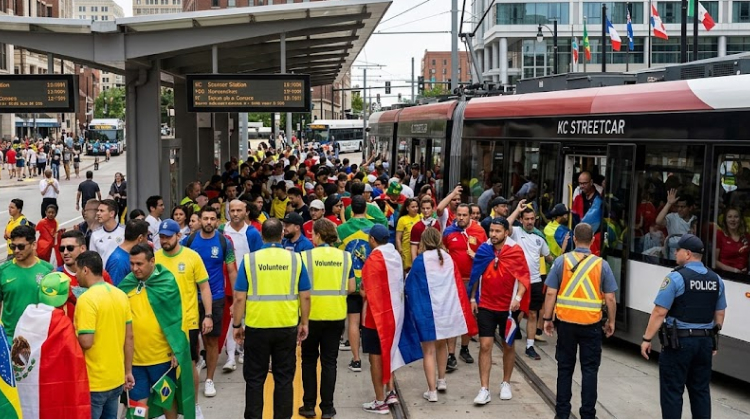
Kansas City entered the tournament with several advantages, including the fare-free KC Streetcar, an expanding RideKC bus network, and the recently modernized Kansas City International Airport. Together, these assets formed an integrated transportation system that allowed visitors to move efficiently across the city.
The numbers highlight the scale of that success.
During June 2026:
- 698,705 riders used the KC Streetcar, establishing a new all-time monthly record.
- The previous June ridership total was exceeded by more than four times.
- KCI Airport recorded its busiest outbound screening day in history after the tournament concluded.
These figures demonstrate that transportation became one of the defining operational successes of Kansas City’s World Cup experience rather than merely a supporting service.
Additional information about transportation planning for FIFA tournaments is available through the FIFA World Cup host city resources.
The KC Streetcar Became More Than A Transit Service
Before the World Cup, the KC Streetcar was already recognized as an important component of downtown mobility. During the tournament, however, it evolved into one of the city’s most visible public assets.
Operating fare-free, the streetcar connected hotels, restaurants, entertainment districts, and fan gathering areas while reducing pressure on road networks and parking facilities.
For international visitors unfamiliar with Kansas City, the simplicity of the system became one of its greatest advantages.
Rather than navigating unfamiliar highways or relying exclusively on rental vehicles, visitors could move comfortably between key destinations using public transportation designed around major event activity.
This ease of movement improved the overall visitor experience while encouraging spending across multiple neighborhoods rather than concentrating economic activity in isolated districts.
The success of the streetcar also strengthened public support for future transportation expansion.
Local leaders have argued that investments initially accelerated by preparations for global events can continue delivering value through improved commuting options, increased downtown accessibility, and stronger economic connections.
The broader relationship between transportation and destination competitiveness has also been highlighted by the American Public Transportation Association, which notes that reliable transit systems play a critical role in supporting tourism, workforce mobility, and sustainable urban growth.
Mayor Quinton Lucas Sees Transportation As Part Of The City’s Legacy
Kansas City officials have consistently described transportation as one of the tournament’s most important long-term achievements.
Mayor Quinton Lucas has pointed to record transit ridership as evidence that residents and visitors alike will embrace public transportation when systems are convenient, reliable, and integrated into major community events.
Rather than viewing the World Cup as an isolated success, city leadership has encouraged planners to use the experience when evaluating future infrastructure priorities.
The conversation has shifted from preparing for one tournament to creating a transportation network capable of supporting continued population growth, increased tourism, conventions, concerts, and future sporting events.
That perspective reflects an important change in urban planning.
Transportation investments are increasingly measured not only by construction costs but also by their contribution to economic competitiveness, environmental sustainability, and quality of life.
Record Ridership Produced Broader Economic Benefits
Efficient transportation systems influence far more than travel times.
When visitors can move easily between hotels, restaurants, museums, retail districts, and entertainment venues, local businesses experience broader economic participation.
Instead of remaining near stadiums before and after matches, visitors become more likely to explore surrounding neighborhoods, extending tourism spending across the metropolitan area.
| Transportation Achievement | Long-Term Community Value |
|---|---|
| Record KC Streetcar ridership | Demonstrated demand for expanded public transit |
| Historic passenger volumes at KCI Airport | Reinforced Kansas City’s role as an international destination |
| Better downtown mobility | Increased access to restaurants, hotels, and attractions |
| Integrated visitor transportation | Stronger tourism experience and local business activity |
This broader distribution of economic activity has become one of the defining characteristics of successful mega sporting events.
Richland Chamber recently examined how Houston’s World Cup strategy is using FIFA success to pursue future international tournaments. Kansas City’s transportation achievements illustrate another side of that legacy, showing how mobility investments can become lasting economic assets rather than temporary event infrastructure.
By demonstrating that modern public transportation can successfully accommodate unprecedented visitor demand, Kansas City has positioned itself as an important case study for cities preparing to host future international sporting events. The lessons learned during FIFA World Cup 2026 extend beyond record ridership figures, offering practical insights into how transportation planning can strengthen tourism, support local businesses, and create lasting benefits for residents.
Other Host Cities Are Studying Kansas City’s Transit Model
Kansas City’s transportation success has attracted attention because it addressed one of the greatest operational challenges facing every major sporting event: moving large numbers of people safely and efficiently without overwhelming existing infrastructure.
Future hosts of international competitions—including FIFA tournaments, NCAA championships, Super Bowls, and Olympic events—are increasingly recognizing that transportation systems influence nearly every aspect of the visitor experience.
Reliable mobility affects:
- Hotel selection.
- Restaurant visitation.
- Attendance at cultural attractions.
- Workforce accessibility.
- Public safety operations.
The World Cup demonstrated that transportation should no longer be viewed as a supporting service operating behind the scenes. Instead, it has become one of the primary components shaping how visitors evaluate a destination.
Cities preparing for future events are likely to examine Kansas City’s experience when planning transit investments that balance resident needs with the demands of large-scale tourism.
Additional guidance on integrated transportation planning is available through the Federal Transit Administration, which supports mobility strategies designed to strengthen economic development and community accessibility.
Public Transit Can Become A Long-Term Economic Investment
One of the most significant lessons from Kansas City’s World Cup experience is that transportation infrastructure creates value well beyond tournament operations.
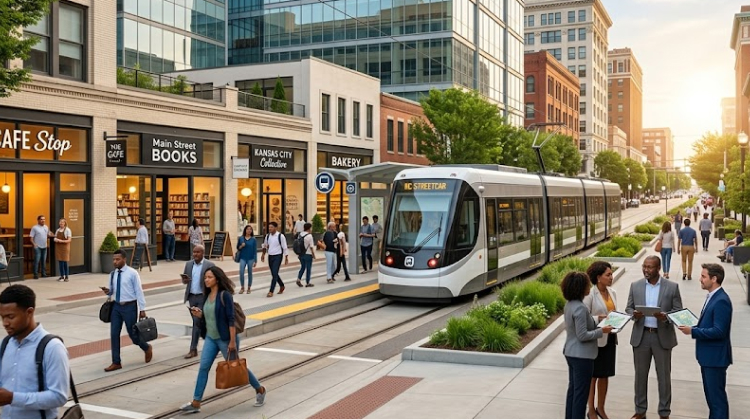
Unlike temporary event facilities, transit improvements continue serving residents every day after international visitors depart.
Expanded public transportation can help communities:
- Reduce traffic congestion.
- Improve downtown accessibility.
- Support workforce mobility.
- Encourage private investment near transit corridors.
- Increase tourism without proportionally increasing road congestion.
These benefits make transportation one of the few World Cup-related investments capable of producing measurable returns over multiple decades.
Rather than evaluating projects solely through construction costs, city planners increasingly examine their broader influence on business development, housing, environmental sustainability, and quality of life.
Kansas City’s record ridership demonstrates that public demand can rise dramatically when transportation systems are convenient, visible, and integrated into everyday destinations.
Transportation Is Becoming A Competitive Advantage For Sports Tourism
International sporting events have become increasingly competitive among host cities.
Modern tournaments require destinations capable of accommodating millions of visitor movements while maintaining positive experiences for residents.
Transportation plays a central role in that equation.
Visitors who can travel easily between airports, hotels, entertainment districts, stadiums, and cultural attractions are more likely to extend their stays and explore additional parts of the city.
That behavior produces wider economic benefits than simply concentrating activity near competition venues.
Transportation efficiency also influences destination reputation.
Positive visitor experiences frequently generate repeat travel, business investment, convention bookings, and favorable international media coverage.
Kansas City’s World Cup operations illustrated how mobility contributes directly to destination branding.
Instead of becoming known only for successful matches, the city earned recognition for demonstrating that effective transportation planning can enhance nearly every aspect of a global sporting event.
Collaboration Helped Deliver Record Results
Kansas City’s transportation achievements were not the result of one organization working independently.
The World Cup required extensive coordination among multiple public and private partners, including:
- Kansas City Streetcar Authority
- RideKC
- Kansas City Area Transportation Authority (KCATA)
- Kansas City International Airport
- Local governments in Missouri and Kansas
- Public safety agencies
- Tourism organizations
- Private businesses
This collaborative approach ensured transportation planning aligned with visitor expectations while supporting local operations throughout the tournament.
| Collaborative Partner | Primary Contribution |
|---|---|
| KC Streetcar Authority | Downtown mobility and fare-free transit |
| KCATA / RideKC | Regional bus service and multimodal connections |
| Kansas City International Airport | International and domestic passenger operations |
| Local governments | Infrastructure coordination and public services |
| Tourism organizations | Visitor information and destination management |
This integrated planning model demonstrates that transportation success depends as much on institutional cooperation as physical infrastructure.
Communities seeking to host future international sporting events may find that partnerships established before the tournament become one of the event’s most valuable long-term legacies.
Kansas City’s Experience May Influence Future Infrastructure Decisions
Transportation investments traditionally require years of planning, funding, and public discussion.
Major sporting events often accelerate those conversations by providing clear deadlines and measurable objectives.
Kansas City’s World Cup experience showed how those accelerated investments can produce lasting benefits that extend far beyond the tournament itself.
Rather than building infrastructure solely for visitors, planners created improvements that continue serving residents, commuters, businesses, and future travelers.
That distinction has become increasingly important in evaluating the legacy of mega-events.
Cities are moving away from projects designed exclusively for short-term spectacle and toward investments that strengthen long-term economic competitiveness.
Kansas City’s record-breaking transit performance provides measurable evidence supporting that strategy.
The city demonstrated that convenient public transportation is not merely an operational necessity—it is a competitive advantage capable of improving tourism, supporting downtown development, reducing congestion, and enhancing community accessibility.
Mobility Is Becoming Part Of Every Successful Sporting Event Legacy
Kansas City’s World Cup transportation achievements illustrate how the definition of a successful mega-event continues to evolve.
Attendance records and television audiences remain important, but communities increasingly evaluate tournaments through the improvements they leave behind.
Public transportation has emerged as one of the most enduring forms of that legacy.
By investing in integrated mobility systems before FIFA World Cup 2026, Kansas City improved visitor experiences while creating infrastructure that residents will continue using for years.
As more cities compete to host international sporting events, transportation planning is likely to become one of the first areas evaluated rather than one of the last.
Kansas City’s record transit ridership demonstrates that effective mobility is no longer simply about moving crowds efficiently. It has become a catalyst for tourism growth, economic resilience, sustainable urban development, and stronger regional connectivity. For future host cities, that lesson may prove just as valuable as anything that happened on the field.
