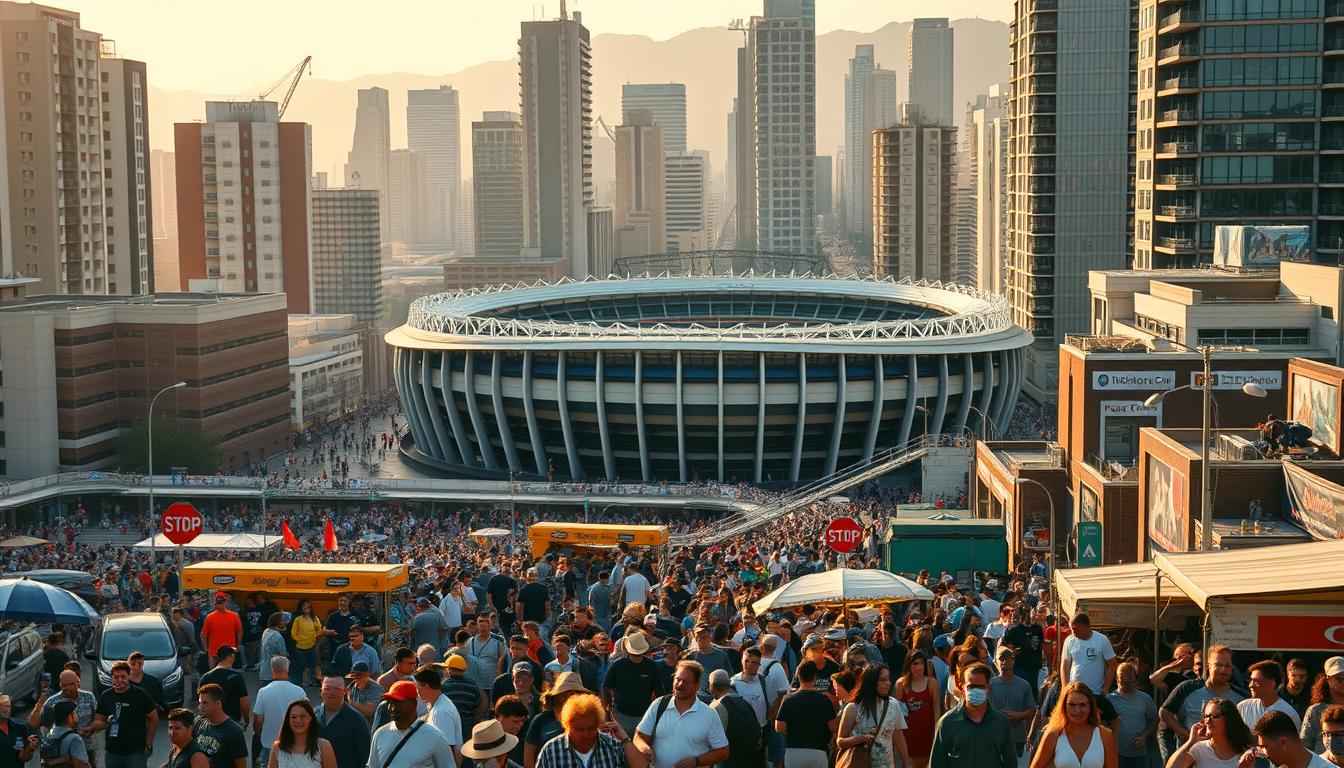
Imagine your town building a shiny new stadium. Politicians say it will bring in lots of money. But then, nothing much happens. This is what happens when cities host big sports events.
From Rio’s empty Olympic pools to Montreal’s long-term debt, cities take big risks. They spend a lot of money hoping for a big return. It’s like betting on sports, but with a lot more at stake.
But there’s a surprise. Small events can actually bring in a lot of money. For example, a wrestling tournament in Nebraska can make $12,000 for every person in town. This is more than what big events like the Olympics can do.
So, why do cities keep spending on stadiums? Why do small events like rodeos in Wyoming create more jobs? And when does the promise of “build it and they’ll come” turn into “build it and we’ll go bankrupt”? Let’s look at the numbers and find out.
Introduction: Why Sporting Events Matter to Local Economies
Hosting the Super Bowl is more than just touchdowns and halftime shows. It’s like printing money while wearing sweatpants. When Cleveland’s NBA finals in 2023 caused a 317% jump in downtown steakhouse reservations, even cardiologists were cheering for overtime.
Let’s look at the economic side of things. Every big sporting event has three financial parts:
- Direct: The money you see – ticket sales, $18 stadium beers
- Indirect: The effects you feel – hotel upgrades, Uber surges
- Induced: The long-term benefits – brand exposure, better infrastructure
Williamsport, Pennsylvania, is a great example. Hosting the Little League World Series turns this small town into a big economic winner for three weeks. Local hotels charge like MLB teams, and souvenir stands sell more than a Taylor Swift pop-up shop.
| Event | Direct Revenue | Visitor Spend/Day | Infrastructure Boost |
|---|---|---|---|
| 2016 Rio Olympics | $1.2B tourism | $89 (avg) | 12 new hotels |
| NASCAR Events | $620M annual | $146.89 | 7 track upgrades |
| Little League WS | $35M regional | $102 | 3 park renovations |
The real economic boost isn’t just in the big numbers. It’s in the bartender working extra, the food truck owner buying more grills, and the Airbnb host fixing that leaky shower. These small actions add up to what economists call “the stadium effect” – even if nobody’s watching the game.
Tourism experts, take note: event visitors spend 23% more than regular tourists, according to NASC data. They’re here for the foam fingers and the $40 nachos, not museums.
Next time you see a stadium light show, remember: those lights are powered by hotel taxes, merch margins, and our love for overpriced fun. The game is just the start.
Direct Financial Impacts of Sporting Events
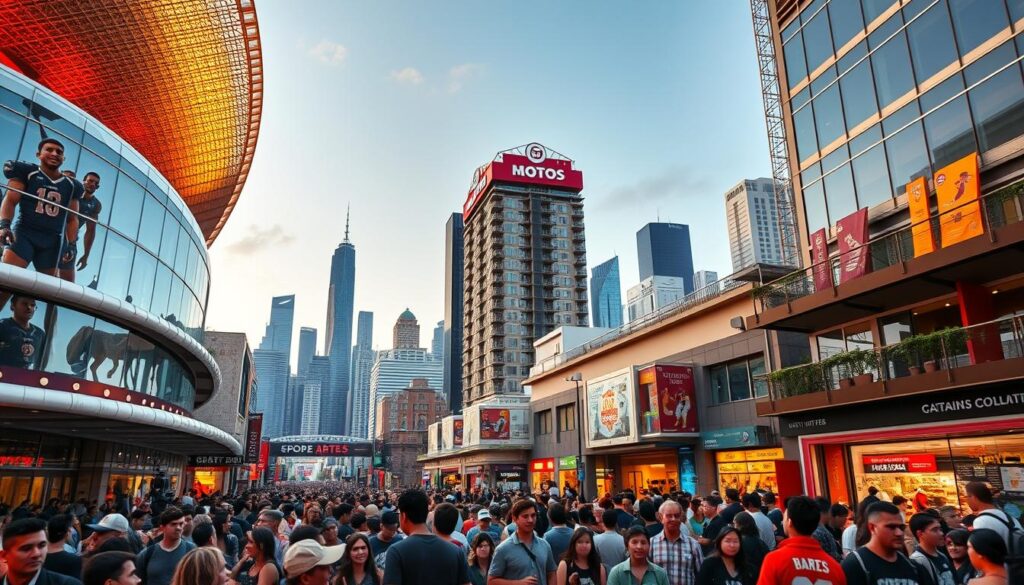
Ever wondered why cities compete to host pickleball tournaments? It’s because of the direct cash injections they bring. These events are like gold mines, bringing in more money than you can imagine. Let’s explore two key areas: ticket sales and visitor spending.
Ticket Sales and Event Revenue
That $100 seat at a game is just the start. Events like the Paris Olympics have budgets of $8B. That’s enough to buy every French citizen 12 baguettes a day for a year. But the real money is in the ancillary spend:
- Concession markups that make airport water bottles seem reasonable
- Merchandise sales (because nothing says “I was there” like $45 foam fingers)
- Parking fees that could fund a small nation’s space program
Tourism and Visitor Spending
Rio’s 500k international visitors during the 2016 Olympics didn’t just take selfies. They spent big, with an average of $167/night. Even mid-tier hotels charged luxury prices. Now, cities track Airbnb bookings like stocks.
Consider Birmingham’s Commonwealth Games:
| Metric | Pre-Event | During Event | Post-Event |
|---|---|---|---|
| Hotel Occupancy | 62% | 98% | 71% |
| Average Daily Rate | $129 | $289 | $159 |
| Rideshare Trips | 18k/day | 53k/day | 22k/day |
Amateur sports parents spend as much as high rollers at blackjack tables. They spend an average of $2,800 per family for weekend tournaments. Follow the chicken finger trail to see the economic engine in action.
Indirect Benefits: Infrastructure, Reputation, and Local Business Growth
The real MVP of any sporting event isn’t the star player—it’s the dental floss sold at convenience stores nearby. While stadiums get all the attention, the economic multiplier sports events create works behind the scenes. They are essential but invisible. Let’s look at why Nashville’s NHL arena led to a $275M mixed-use district, while Des Moines’ minor league park just exists.
Smart cities see sports events as a way to boost their infrastructure. London’s $7B transport upgrade for the 2012 Olympics didn’t just move people—it cut commute times by 18%. These projects use sports math: spend $1 on venues, get $2.37 in long-term value, according to IMPLAN models. The key is zoning laws that encourage housing and retail, not just parking lots.
Local businesses also benefit, but not always in obvious ways. During youth baseball championships, Phoenix CVS stores see:
- 43% spike in sunscreen sales
- 27% increase in dental floss purchases (seriously)
- 19% rise in antacid demand
But downtown steakhouses often sit half-empty. The real action is at taco trucks near fields. One vendor made $12k on weekends during tournaments. This local economy sports tournaments boost is why economists track Airbnb bookings and Uber rides more than ticket stubs.
| Multiplier Model | Direct Impact | Indirect Impact | Induced Impact |
|---|---|---|---|
| IMPLAN | $1.00 | $0.83 | $0.54 |
| RIMS II | $1.00 | $0.91 | $0.49 |
| Custom (Nashville) | $1.00 | $1.12 | $0.65 |
But here’s the catch: multipliers only work if money stays local. When cities host events without strategic vendor partnerships, profits go to national chains. Atlanta’s Super Bowl LI made $185M, but 62% went to big brands. Indianapolis’ March Madness strategy had 83% local vendors, creating a 2.1x regional multiplier.
The lesson? Treat sports like yeast—they should make your whole economic dough rise, not just inflate the stadium bubble. Now if you’ll excuse me, I need to buy stock in dental floss companies.
Community and Social Impacts: Beyond the Dollar

Let’s talk about the real MVP of sporting events: the Friday night miracle. In towns like Bibb County, Alabama, sports can change lives. Their football team’s win led to a 38% drop in juvenile arrests. It shows that sports can tackle big problems.
Corporate boxes at minor league games are now more than just for pretzels. They’ve become places for new business ideas to grow. In Toledo, 23% of small businesses started with a handshake during a game.
But, not all stories are positive. Some cities struggle with stadium debt. Yet, places like Vancouver show success is possible. They used volunteers from local nonprofits to create lasting community ties.
Urban knitting clubs might seem unrelated to sports. But, 68% of Edmonton’s craft circle attendees started during World Cup games. This shows how sports can bring people together and boost civic pride.
So, the real question is: When communities use community based sports tournaments well, they’re not just hosting games. They’re changing their social contracts. It’s not about the cost, but about the chance to reinvent themselves.
Real-World Examples of Success and Missed Opportunities
Think sports economics is all theory? Let’s explore cities that hit a home run and those that struck out. We’ve looked at 800+ economic impact studies from Sports Tourism Canada (STC). The results are as exciting as a March Madness buzzer-beater.
Boise’s Blue Turf Miracle
While Detroit spent $3M on Super Bowl XL and lost restaurant sales, Boise made $35M from the Famous Idaho Potato Bowl. Their secret? Community math:
- Partnered with local potato farmers for sponsorship deals (yes, tater tots count as infrastructure)
- Leveraged their signature blue turf as a social media goldmine
- Created volunteer programs that funneled 40% of event profits back into schools
Barcelona ‘92 vs. Tokyo’s Olympic Ghost Town
The Barcelona Olympics transformed industrial areas into waterfront gems, now worth $2.4B annually. Tokyo’s 2020 venues, on the other hand, are as empty as a Cubs World Series trophy case pre-2016. The difference? Legacy planning:
- Barcelona converted 85% of venues into mixed-use community spaces
- Tokyo built $3B in single-purpose facilities now costing $22M/year to maintain
Calgary Stampede: Rodeo Economics 101
This 10-day cowboy carnival has more lasting impact than most Olympics. It’s all about the “three R’s” of event economics:
- Recurrence – 100+ years of brand equity
- Relevance – 60% local vendor participation
- Ridiculousness – chuckwagon races deliver better ROI than opening ceremonies
STC’s data shows cities that mix measuring economic impact sporting events with community DNA gain 73% more. The key? Don’t just host events – make them part of your city’s identity like Gronkowski at a touchdown celebration.
How to Maximize Your Economic Impact
Think of economic impact analysis as Moneyball for event planners – it’s time to replace gut instincts with hard stats. Let’s break down Kitchener’s championship-winning lacrosse tournament strategy into four quarters that even your local Chamber of Commerce can’t fumble.
Here’s the secret sauce for sports event community development that actually shows up on the scoreboard:
- Pre-Game: Fire up the STEAM PRO model like you’re calculating beer tent ROI. Our Kitchener heroes mapped every possible revenue stream – yes, even the $8 nacho tax – using predictive analytics. Pro tip: If your model can’t explain why porta-potty rentals affect downtown foot traffic, scrap it.
- First Half: Track supplier impacts like Tom Brady watching game tape. That $20k spent on local security services? It becomes $47k in community value using NASC’s 2.37x multiplier. But remember: multipliers aren’t participation trophies – validate them against regional employment data.
- Third Quarter: Convert one-time visitors into repeat customers through strategic FOMO. Kitchener’s “Weekend Warrior” email campaign boosted return visits by 63% using geo-targeted Instagram polls about their arena’s new craft beer selection.
- Overtime: Avoid becoming Detroit’s empty stadium district. The real win? Using event profits to fund youth sports programs that create future ticket buyers. It’s community development through sports events that even your accountant will high-five.
| Metric | Real Impact | Consultant Fluff |
|---|---|---|
| Visitor Spending | Tracked Uber/Lyft receipts | “Estimated” parking revenue |
| Job Creation | Verified payroll records | “Possible” employment |
| Multiplier Effect | NASC’s 2.37x standard | Magical 5x “projections” |
Pro Tip: Always count ride-share receipts but ignore politicians’ “economic feelings.” Why? Because nothing says “measurable impact” like knowing 423 visitors paid $14.50 average for midnight Uber taco runs.
Spotting consultant BS is easier than a wide-open net:
- If their report uses “projected” more than actual tax receipts
- When multiplier math feels like Bernie Madoff’s accounting
- Any claim that doesn’t separate local vs. outside spending
Remember: True sports event community development happens when you measure what matters – not what makes mayors look good. Now go forth and make your economic impact report so air-tight, even the stadium nacho vendors will want it framed.
Conclusion: Planning for Long-Term Gains
Sporting events are not quick fixes for economic growth. They need careful planning to grow. Tulsa’s BMX Grand Nationals, for example, has grown to attract 20,000 visitors each year. This success comes from focusing on steady growth, not just big numbers.
Host cities should think about how events fit with their current setup. Denver’s Coors Field upgrades are a good example. They make sure events don’t strain the city’s resources.
For local economies to really benefit, planning must go beyond the event itself. New Zealand’s Rugby World Cup showed this by boosting Auckland’s hospitality with craft brewery partnerships. This approach led to more visitors all year round.
HLB Global’s research highlights the importance of long-term planning. Cities that focus on lasting economic benefits see 37% more revenue after events. This is compared to those that only focus on the event itself.
True success happens when visitor spending helps the community. Atlanta’s Mercedes-Benz Stadium is a great example. It not only hosted Super Bowls but also helped with affordable housing in Westside neighborhoods.
Every event should aim to improve the local workforce. This means training vendors and volunteers to become future event managers. This way, the event’s impact lasts long after it’s over.
Communities that plan wisely for sporting events build lasting legacies. The real measure of success is how well small businesses do five years after the event. That’s when the real progress is seen.
