

When FIFA World Cup 2026 arrived in the United States, much of the national attention focused on the 11 official American host cities. Stadiums in places like Dallas, Houston, Kansas City, and Los Angeles welcomed millions of spectators, while local governments invested heavily in transportation, hospitality, and public events.
Yet one of the tournament’s most interesting economic stories unfolded in a city that never hosted a single match.
Austin, Texas, located roughly three hours from Dallas and Houston, experienced a measurable increase in tourism, downtown activity, and hospitality spending despite remaining outside FIFA’s official host city network. Restaurants, hotels, entertainment venues, and sports bars benefited from international visitors who either used Austin as a travel base or extended their trips to experience one of America’s fastest-growing cultural destinations.
According to reporting from Axios Austin, downtown Austin recorded an average of more than 140,000 daily out-of-market visitors during the tournament period, representing approximately a 9% increase compared to the same period the previous year. The data illustrated that major sporting events can generate substantial regional economic benefits extending well beyond official venues.
Austin’s experience offers an important lesson for economic development organizations: cities do not always need to host the main event to participate in its economic opportunities.
Regional Tourism Became A Powerful Economic Driver
The World Cup demonstrated that modern tourism operates on a regional scale rather than being confined to individual host cities.
International visitors rarely travel thousands of miles for only a single match. Many extend their vacations before or after sporting events, exploring nearby destinations that offer cultural attractions, nightlife, outdoor recreation, and culinary experiences.
Austin fit naturally into those travel patterns.
Already recognized internationally for its live music scene, technology industry, food culture, and outdoor amenities, the city became an attractive destination for visitors attending matches elsewhere in Texas.
Some travelers chose Austin because hotel availability and pricing differed from official host cities, while others added the city to broader travel itineraries that included Dallas, Houston, San Antonio, and the Texas Hill Country.
This regional movement of visitors created opportunities across multiple industries.
Rather than competing directly with host cities, Austin complemented the overall Texas tourism experience.
According to the Axios Austin tourism analysis, downtown businesses experienced stronger-than-normal visitor activity during the tournament, illustrating how neighboring communities can benefit from mega-events through strategic positioning rather than direct hosting.
Downtown Businesses Captured New International Customers
One of the strongest indicators of Austin’s World Cup impact was increased activity throughout its downtown commercial districts.
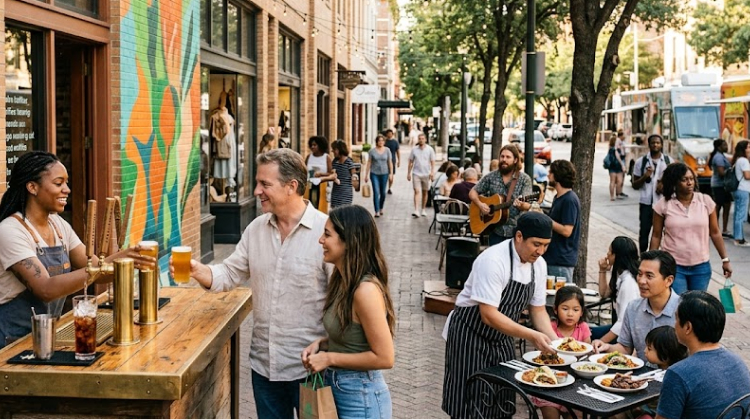
Restaurants welcomed visitors looking for local dining experiences before continuing their journeys across Texas.
Sports bars became gathering places where international supporters watched matches from across the tournament schedule.
Retail businesses benefited from additional pedestrian traffic generated by visitors exploring the city’s entertainment districts.
Hotels experienced increased demand from travelers choosing Austin as part of multi-city itineraries.
Unlike traditional tourism peaks tied to festivals or conferences, the World Cup attracted visitors from dozens of countries simultaneously, exposing local businesses to an unusually diverse customer base.
| Downtown Sector | World Cup-Related Impact |
|---|---|
| Restaurants | Increased international dining activity |
| Hotels | Higher occupancy from regional travelers |
| Entertainment Venues | Larger crowds during match days |
| Retail Shops | Increased pedestrian traffic |
| Sports Bars | Elevated customer demand throughout the tournament |
The economic significance extends beyond individual businesses.
Every visitor spending money at restaurants, hotels, transportation providers, and entertainment venues contributes to broader local economic activity through employment, tax revenue, and supplier demand.
Research published by the U.S. Travel Association continues to demonstrate that visitor spending supports thousands of businesses across hospitality, retail, transportation, and professional services, making tourism one of the country’s most interconnected economic sectors.
Austin’s Existing Strengths Positioned The City For Success
Austin’s ability to benefit from the World Cup was not accidental.
The city already possessed many characteristics that international travelers seek when planning extended vacations.
Its reputation as the “Live Music Capital of the World,” combined with acclaimed restaurants, outdoor recreation around Lady Bird Lake, vibrant nightlife on Sixth Street and Rainey Street, and a growing luxury hotel market, created a destination capable of attracting visitors regardless of official tournament activities.
The city’s expanding convention and tourism infrastructure also played an important role.
Organizations such as Visit Austin have spent years promoting the city internationally, positioning it as both a leisure and business destination. The World Cup simply amplified that existing visibility.
This highlights an important principle in destination marketing.
Mega-events rarely create tourism economies from scratch.
Instead, they accelerate demand for destinations that have already invested in attractions, hospitality, transportation, and visitor experiences.
Austin’s preparation occurred long before FIFA announced its tournament schedule.
Years of investment in downtown redevelopment, entertainment districts, convention facilities, and hospitality infrastructure allowed local businesses to capitalize when international visitors arrived.
Sports Bars And Entertainment Districts Became Community Gathering Places
Although Austin lacked an official FIFA stadium, the tournament still created vibrant public experiences throughout the city.
Sports bars, breweries, rooftop venues, and entertainment districts organized watch parties that attracted both residents and international visitors.
These gatherings generated sustained economic activity because fans returned repeatedly throughout the month-long tournament instead of only attending one event.
Restaurants extended operating hours.
Hospitality workers welcomed new customers from across the world.
Live music venues blended Austin’s signature cultural identity with international soccer celebrations.
This combination helped create memorable visitor experiences while reinforcing the city’s reputation as one of America’s premier entertainment destinations.
For many travelers, the atmosphere surrounding the matches became just as valuable as attending the games themselves.
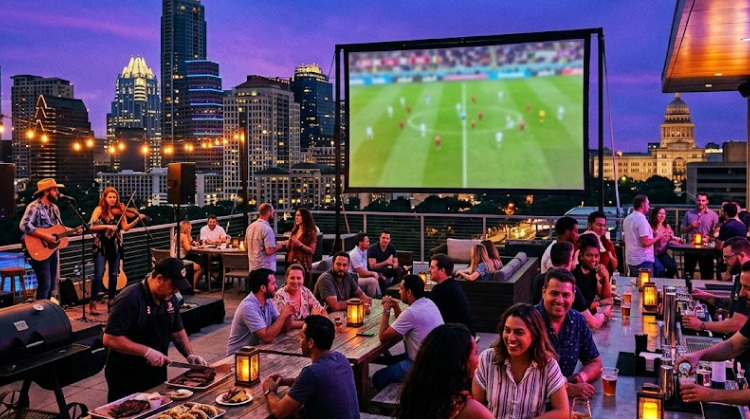
That distinction is increasingly important for communities seeking to benefit from global sporting events.
The visitor economy depends not only on competition venues but also on authentic local experiences that encourage travelers to explore neighborhoods, interact with businesses, and remain in a destination longer.
Secondary Cities Are Becoming Essential Parts Of Major Sporting Events
Austin’s experience reflects a broader change in how international sporting events influence regional economies.
Historically, host cities captured most of the attention because they contained the stadiums, official fan zones, and tournament infrastructure. Today, improvements in transportation, digital travel planning, and destination marketing allow nearby communities to participate in the visitor economy even without hosting competitions.
For international travelers, visiting multiple destinations during a single trip has become increasingly common.
A visitor attending a match in Dallas may spend several days exploring Austin before flying home.
Another fan traveling to Houston could include the Texas Hill Country, San Antonio, or Austin as part of a longer vacation itinerary.
This regional movement distributes tourism spending across a much larger geographic area.
Hotels, restaurants, museums, entertainment venues, transportation providers, and retail businesses all benefit when visitors choose to extend their stays beyond official host cities.
Austin demonstrated that a strong destination brand can position a city to capture these opportunities without assuming the financial obligations associated with hosting matches.
Destination Marketing Helped Turn Interest Into Visitor Spending
Austin’s success was also the result of years of coordinated destination marketing.
Organizations such as Visit Austin, downtown business associations, hospitality groups, and local tourism partners have consistently promoted the city as one of America’s leading destinations for live music, culinary experiences, outdoor recreation, and cultural events.
The World Cup provided global visibility, but local organizations converted that attention into measurable economic activity.
Visitors arriving in Texas already knew Austin’s reputation.
Many intentionally added the city to their travel plans because it offered experiences that complemented the tournament rather than duplicated it.
This strategy highlights an increasingly important concept in tourism development: cities no longer compete solely for visitors; they compete to become essential stops within larger travel experiences.
According to the U.S. Travel and Tourism Office, international visitors generate billions of dollars annually through accommodations, food services, transportation, shopping, entertainment, and cultural attractions, making destination marketing an important component of long-term economic development.
Austin’s World Cup experience illustrates how strong branding allows communities to benefit even when they are not official event hosts.
Downtown Revitalization Extended Beyond Traditional Tourism
Austin’s increased visitor activity also reinforced ongoing efforts to strengthen its downtown economy.
Like many American cities, Austin has worked to encourage more activity within its urban core by investing in mixed-use development, pedestrian-friendly districts, public spaces, and entertainment venues.
The World Cup accelerated these efforts by introducing new customers to local businesses.
Restaurants gained exposure to international diners.
Retail shops welcomed visitors from multiple continents.
Hotels attracted travelers extending their Texas vacations.
Entertainment venues introduced Austin’s music culture to entirely new audiences.
These outcomes demonstrate that downtown revitalization is most effective when supported by diverse economic drivers rather than relying on a single industry.
Major sporting events can contribute to that diversification by attracting visitors who spend money across multiple sectors simultaneously.
Austin’s experience reinforces the idea that tourism should be viewed as part of a comprehensive economic development strategy rather than a standalone industry.
Regional Collaboration Is Becoming More Valuable Than Competition
One of the most important lessons from the World Cup is that neighboring cities often benefit more through collaboration than competition.
Texas offered visitors an interconnected network of destinations.
Dallas delivered matches.
Houston hosted international fans.
Austin provided entertainment, hospitality, and cultural experiences.
San Antonio contributed historical attractions and regional tourism opportunities.
Together, these cities created a travel experience that encouraged visitors to spend additional time—and money—throughout the state.
Rather than competing for every traveler, communities benefited from complementary strengths.
This regional approach is increasingly relevant as cities prepare for future international events, including the Los Angeles 2028 Olympic and Paralympic Games, NCAA championships, and other global competitions.
Economic development organizations are recognizing that transportation connections, cooperative marketing campaigns, and shared visitor experiences can generate greater long-term value than isolated promotional efforts.
Austin’s World Cup business boom serves as an example of how secondary cities can become essential partners within a larger tourism ecosystem.
Austin’s Experience Offers A New Perspective On Mega-Event Success
The World Cup demonstrated that economic success is not determined solely by the number of matches a city hosts.
Austin welcomed no official FIFA games, yet still experienced stronger downtown visitation, increased hospitality demand, and broader international exposure because it had already built a destination capable of attracting travelers.
Its established tourism assets, vibrant downtown districts, internationally recognized music scene, and expanding hospitality industry positioned local businesses to capture spending generated by one of the world’s largest sporting events.
For economic development leaders across the United States, this represents an important shift in thinking.
Future mega-events will continue to create opportunities not only for official host cities but also for neighboring communities that invest in quality visitor experiences, transportation connectivity, and strong destination branding.
Austin’s story shows that regional tourism can produce meaningful economic outcomes without the enormous costs associated with building stadiums or hosting international matches.
As more cities seek sustainable strategies for downtown revitalization, the lessons from Austin suggest that collaboration, cultural identity, and long-term investment in the visitor economy may become just as valuable as hosting the event itself.
