
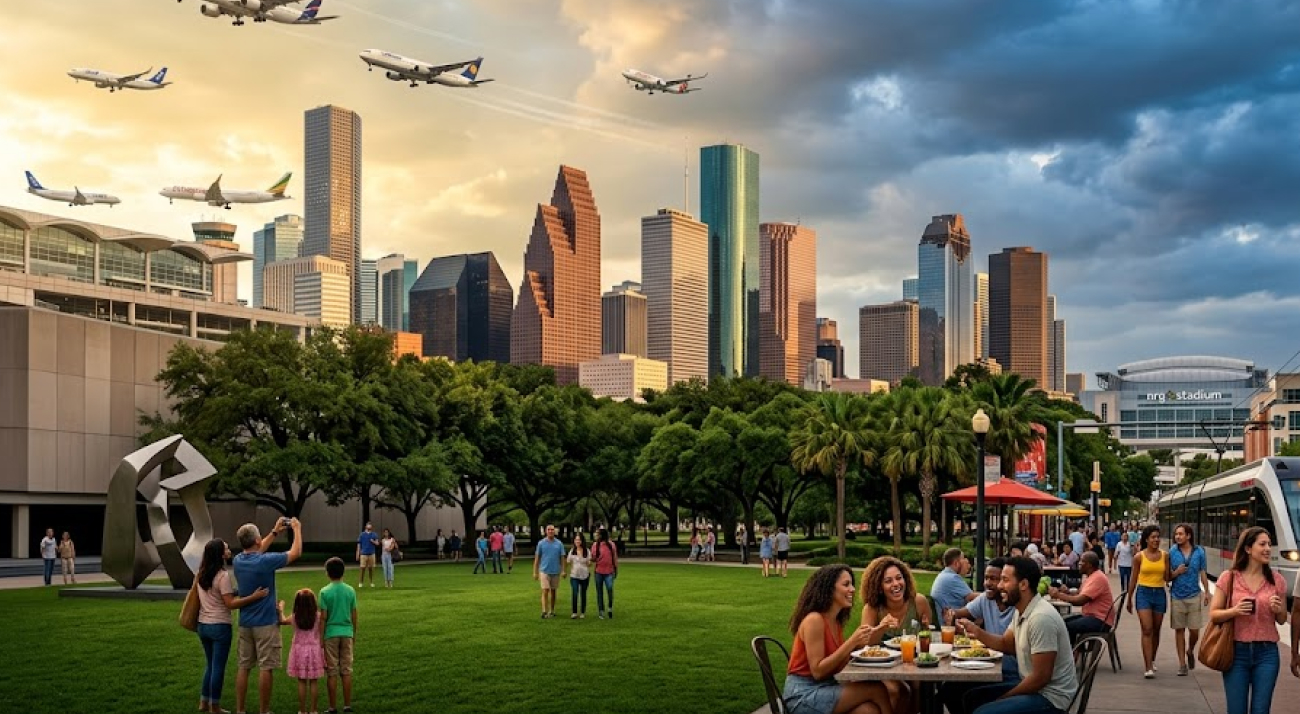
Houston entered the FIFA World Cup 2026 as one of America’s most internationally connected cities, but the tournament gave the Texas metropolis something it had struggled to manufacture through traditional destination marketing: sustained global attention tied directly to the visitor experience.
The city hosted seven World Cup matches at NRG Stadium, while its airport system, hotels, restaurants, attractions, transportation providers, and entertainment districts absorbed visitors arriving from around the world. The scale was significant. Houston’s two major airports processed roughly 4.5 million passengers during the tournament period, according to recent local reporting, giving the city an unusually large international audience at precisely the moment when perceptions of the destination were being formed.
The economic opportunity matters, but the more consequential question is what those visitors thought about Houston after leaving.
For years, Houston’s international identity has been shaped by energy, aerospace, medicine, and its enormous corporate economy. Those industries give the city global relevance, but they do not necessarily translate into a strong leisure-tourism identity. The World Cup offered an opportunity to add another dimension: Houston as a destination for international travelers.
That distinction could become one of the tournament’s most valuable legacies.
Houston Used The World Cup To Showcase A Different City
Houston did not need to reinvent itself for the World Cup. It needed to make the characteristics that already existed more visible.
The city has one of the most diverse populations in the United States, an internationally recognized food scene, major museums, professional sports franchises, large entertainment venues, and one of the country’s most important international airport systems.
The tournament connected those assets to visitors who might previously have known Houston primarily as the home of the NASA Johnson Space Center or as an energy capital.
For international fans, the experience was broader.
Visitors could attend a match at NRG Stadium, eat Vietnamese food in Midtown, explore the Museum District, visit the Houston Zoo, experience the city’s Hispanic cultural districts, and then return to a hotel connected to one of the nation’s largest business centers.
That variety matters because modern destination reputation is increasingly created through cumulative experiences rather than a single landmark.
The Houston World Cup program was designed around that broader experience, linking matches with fan activities, transportation, hospitality, and citywide programming.
Houston therefore had an opportunity that many cities pursuing tourism growth spend years trying to create: a concentrated period in which millions of travelers had a reason to experience the city firsthand.
International Visitors Became The Most Important Audience
The tournament’s international dimension was particularly important for Houston because the city already has deep connections with Latin America, Asia, Europe, Africa, and the Middle East.
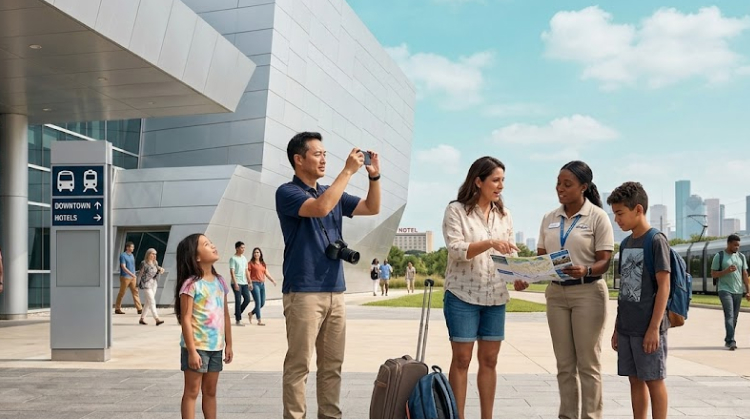
That existing diversity helped Houston create an environment where international supporters could find familiar languages, foods, cultural communities, and commercial services while also experiencing something new.
This is an important distinction between attracting tourists and retaining them as future visitors.
A traveler who simply attends a match may leave with memories of the stadium. A traveler who spends several days in the city develops a more complicated impression of the destination.
Hotels become part of that impression.
Restaurants become part of it.
Transit systems become part of it.
Local residents become part of it.
So do airport employees, retail workers, attractions, neighborhoods, and public spaces.
The World Cup effectively turned Houston into a large-scale visitor experience laboratory.
Recent reporting indicated that Houston welcomed substantial numbers of international travelers during the tournament, while local tourism officials emphasized the opportunity to convert that exposure into future visitation.
The U.S. Travel Association’s research supports the broader economic logic behind this strategy: international visitors distribute spending across lodging, food services, transportation, recreation, and retail rather than concentrating economic activity in a single venue.
For Houston, that means the World Cup’s most valuable visitors may have been those who stayed beyond match day.
Airport Traffic Became A Strategic Tourism Asset
Houston’s airport infrastructure gave the city an advantage that was difficult for less-connected destinations to replicate.
George Bush Intercontinental Airport (IAH) is one of the largest international gateways in the United States, while William P. Hobby Airport provides additional commercial capacity and Southwest Airlines connectivity.
During the World Cup, that infrastructure became part of Houston’s tourism strategy.
Approximately 4.5 million passengers moved through Houston’s airports during the tournament period, according to recent reporting. That figure is important because airports are not simply transportation facilities during a mega-event. They are the first and last physical impression many international visitors have of a city.
For Houston, every arriving traveler represented a potential customer for hotels, restaurants, attractions, transportation providers, and retailers.
| Tourism Touchpoint | Why It Matters For Houston’s Image |
|---|---|
| International Airports | First and last impression of the destination |
| Hotels | Hospitality quality and visitor comfort |
| Restaurants | Cultural identity and local spending |
| Attractions | Reasons to extend a stay |
| Public Transportation | Ease of moving around the city |
| Neighborhoods | Authentic experience beyond the stadium |
That creates an important economic-development connection.
Airport investment can support tourism even when travelers are not flying into Houston specifically for leisure. Business travelers can become future vacationers. Sports fans can become repeat visitors. International supporters can recommend the city to family and friends.
The World Cup gave Houston an unusually large pool of potential future visitors to influence.
The Hospitality Industry Became Part Of The City’s Branding Strategy
Houston’s hotels faced an unusual challenge during the tournament: accommodating visitors who were not necessarily familiar with the city while competing with other destinations for their attention.
That made hospitality quality especially important.
A visitor who encounters efficient airport services, knowledgeable hotel employees, accessible restaurants, and easy transportation is more likely to leave with a favorable perception.
The opposite is also true.
Mega-events create concentrated moments when weaknesses in urban systems become highly visible.
Houston therefore had to perform as a destination, not simply as a World Cup venue.
This is where the economic impact of sports tourism becomes more complicated than ticket revenue.
A successful tournament can increase hotel demand for several weeks, but a successful destination strategy attempts to turn that temporary demand into long-term tourism.
Houston’s challenge now is converting World Cup memories into future bookings.
That could mean international visitors returning for business conferences, family vacations, sporting events, cruises from nearby Gulf destinations, or cultural tourism.
The opportunity is particularly significant because Houston already possesses a large convention and business-travel economy.
A traveler who discovers Houston through soccer may eventually return for a completely different reason.
The World Cup Put Houston’s Cultural Diversity On The Global Stage
Perhaps Houston’s strongest tourism asset was also one of its most difficult to package: its diversity.
The city is home to large communities representing countries from across Latin America, Asia, Africa, Europe, and the Middle East.
The World Cup created an unusually natural environment for those communities to become part of Houston’s visitor experience.
International supporters did not have to search for global culture. They encountered it throughout the city.
Restaurants offered regional cuisines.
Neighborhood businesses served visitors in multiple languages.
Fans gathered around national teams.
Cultural organizations organized events.
Local residents interacted with travelers who shared their heritage.
This gave Houston something traditional tourism campaigns cannot easily manufacture: authenticity.
A city can build a new attraction, redesign a convention district, or launch an advertising campaign, but it cannot quickly create decades of multicultural communities and businesses.
The World Cup allowed Houston to present those existing assets to an international audience at scale.
From World Cup Exposure To Long-Term Tourism Growth
The central challenge for Houston now is turning a temporary surge in international attention into a durable tourism pipeline.
Mega-events create an unusual marketing advantage because visitors arrive with a specific reason to be in a city. The destination then has a limited window to convince them that the city itself is worth remembering.
Houston has several advantages in that conversion process. The city already has international air connections, a large hotel inventory, a sophisticated restaurant industry, major museums, professional sports, medical tourism, and a substantial convention economy.
That means World Cup visitors do not have to discover Houston from scratch. They are being introduced to an established destination with multiple reasons to return.
This is particularly important for international tourism because repeat visitation can produce greater long-term value than a single event-driven trip. A visitor who returns for a vacation, business conference, sporting event, or family visit represents a continuing economic relationship between Houston and that travel market.
The U.S. Department of Commerce tourism data highlights how international travel supports transportation, accommodations, food services, entertainment, and retail throughout the American economy.
Houston’s opportunity is to keep those spending categories connected after the World Cup ends.
Local Businesses Could Become Houston’s Strongest Tourism Ambassadors
The city’s restaurants, retailers, cultural institutions, and neighborhood businesses may ultimately determine whether the World Cup produces a lasting change in Houston’s image.
Visitors remember experiences more readily than marketing slogans.
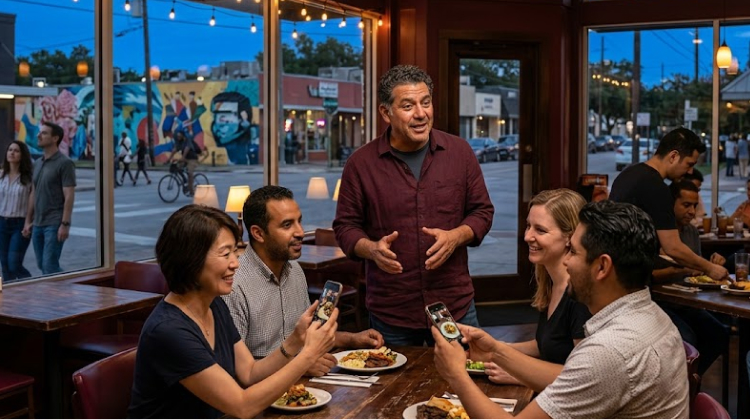
A family from Mexico may remember discovering a Houston restaurant that reminded them of home. A supporter from England may remember spending an evening in a neighborhood bar with local fans. A traveler from Japan may remember visiting Space Center Houston or walking through the Museum District.
Those experiences become informal destination marketing.
This creates an opportunity for Houston to build tourism around its existing commercial districts rather than concentrating future development around major event venues.
The approach also distributes economic benefits more broadly.
Hotels and stadium-related businesses receive immediate World Cup demand, but neighborhood restaurants, independent retailers, cultural organizations, and entertainment venues can continue benefiting if visitors return.
The Visit Houston destination resources already promote many of these experiences, from museums and performing arts to neighborhoods, restaurants, outdoor activities, and major attractions.
The next stage is making sure World Cup visitors remain aware of those experiences long after they leave Texas.
Houston’s Global Image Could Shift Beyond Energy And Space
Houston’s international reputation has historically been built around a handful of powerful industries.
Energy is perhaps the most recognizable.
NASA and the Johnson Space Center provide another major association.
The Texas Medical Center gives the city an extraordinary healthcare identity.
Those industries are valuable, but they do not necessarily make Houston the first choice for an international leisure traveler.
The World Cup offered an opportunity to add another layer to that identity.
Houston can increasingly be presented as a city where international culture, food, sports, entertainment, science, medicine, and business intersect.
That positioning is more difficult to replicate than a conventional tourism slogan because it reflects the city’s actual economic and demographic structure.
The World Cup essentially gave Houston a global stage on which to demonstrate that identity.
The challenge is maintaining the momentum.
If international visitors leave Houston believing the city is more interesting, welcoming, diverse, and entertaining than they expected, destination marketers have a powerful foundation for future campaigns.
Transportation Will Determine How Much Of The Boom Remains
Houston’s size creates both an opportunity and a challenge.
The city has extensive transportation infrastructure, but its geography means visitors can encounter significant distances between airports, hotels, attractions, entertainment districts, and sports venues.
The World Cup provided an important test of the city’s ability to move international visitors efficiently.
That experience can inform future investment.
Major sporting events increasingly require cities to think about transportation as part of the tourism product rather than simply as infrastructure supporting the event.
A visitor does not separate the airport from the vacation experience.
If an airport connection is smooth, that becomes part of a positive impression. If transportation is confusing or unreliable, it becomes part of the negative impression.
For Houston, future tourism planning should therefore connect airport capacity, transit, pedestrian infrastructure, rideshare operations, hotel districts, and major attractions into one visitor strategy.
This is especially important as the city prepares to host future international sporting and entertainment events.
The World Cup Could Strengthen Houston’s Convention Economy
There is another potential benefit that extends beyond traditional leisure tourism.
International sports visitors can become business visitors.
Someone who discovers Houston during the World Cup may later return for a medical conference, energy convention, technology event, academic meeting, or corporate gathering.
Houston already possesses the economic infrastructure necessary to support this crossover.
The city is home to major corporations, research institutions, hospitals, universities, and convention facilities. Its international airport network also makes it accessible to business travelers from numerous global markets.
This creates an opportunity to connect sports tourism with the city’s broader business economy.
Instead of treating the World Cup as a standalone tourism campaign, Houston can use it as an introduction to the wider economic ecosystem.
That could be particularly valuable for attracting international conferences and corporate visitors who may previously have overlooked the city as a leisure destination.
The Next Measure Of Success Will Be Repeat Visitors
The most important test of Houston’s World Cup tourism strategy will not be how many people entered NRG Stadium.
It will be what happens after those visitors return home.
Did they recommend Houston to friends?
Did they return for another vacation?
Did they choose Houston for a future business trip?
Did they spend additional money in local neighborhoods?
Did international media coverage change how potential travelers perceive the city?
Those questions provide a more meaningful measurement of destination success.
| Short-Term World Cup Result | Potential Long-Term Tourism Value |
|---|---|
| International visitor arrivals | Repeat international visitation |
| Hotel demand | Future leisure and business stays |
| Restaurant spending | Stronger destination reputation |
| Fan events | Greater cultural tourism |
| Airport activity | Expanded international travel markets |
| Global media exposure | Stronger destination branding |
This approach also changes how Houston should evaluate future mega-events.
The economic impact of a tournament should not be measured only through attendance, temporary employment, or hotel occupancy. Cities should also examine changes in international awareness, repeat visitation, visitor spending patterns, business relationships, and destination reputation.
Houston now has a rare opportunity to track those outcomes over several years.
Houston’s World Cup Legacy Will Depend On What Happens Next
The FIFA World Cup gave Houston something difficult to purchase through conventional advertising: millions of opportunities for people to experience the city firsthand.
The tournament placed Houston’s hotels, restaurants, airports, attractions, neighborhoods, cultural communities, and public infrastructure in front of an international audience.
The city’s success therefore cannot be reduced to the number of matches hosted at NRG Stadium.
The larger story is whether Houston can convert tournament exposure into a stronger and more diversified global identity.
Its advantages are substantial. The city has international connectivity, a multicultural population, a powerful hospitality sector, major attractions, and economic industries capable of generating both leisure and business travel.
The World Cup connected those assets to an audience that may never have considered Houston a vacation destination.
That creates a new opportunity for city leaders, tourism organizations, and businesses: build on the experience while it is still fresh.
If Houston can turn first-time World Cup visitors into repeat travelers, conference attendees, business partners, and ambassadors for the city, the tournament’s greatest economic contribution may occur years after the final match.
That is how a temporary sporting event becomes a long-term tourism asset.
