
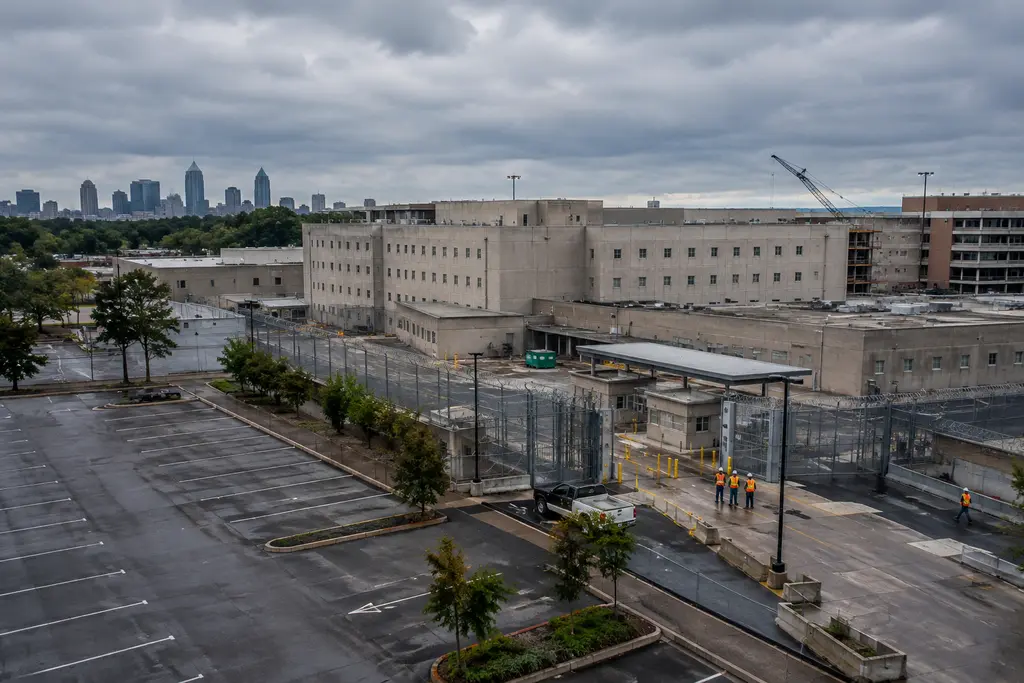
The Detention Center Sale approved for Atlanta has moved from proposal to authorized city action, with major facility questions still tied to final terms. Mayor Andre Dickens agreed on September 8, 2026, to sell the Atlanta City Detention Center to Fulton County for $68 million after lowering an earlier $80 million asking price, according to AJC reporting. For people who use or work around the facility, the issue is practical: who controls bed space, where city detainees are processed, how staff are treated, and how families, attorneys, service providers, and courts adjust to a county-run site.
The Atlanta City Council’s October 19, 2026 vote, described in the research record as an 8–7 authorization, did not close every operating question. It allowed the sale process to move forward while final terms remained unsettled. That distinction matters because facility users need more than a sale price. They need clear rules for intake, visiting, medical coordination, staffing, transportation, records, and the city’s continuing use of space inside the building.
What The Detention Center Sale Changed
Why The Detention Center Sale Matters For Users
The Atlanta City Detention Center has already been part of Fulton County’s jail capacity strategy. Since 2022, Fulton County has leased up to 700 beds in the facility to reduce crowding pressure at the Rice Street jail, with that lease agreement set to expire on December 8, 2026, according to CBS Atlanta. The sale would take that temporary capacity arrangement and shift it toward county ownership, subject to completed terms.
For local users, this is not just a change in paperwork. A facility that moves from city ownership to county ownership can change which agency sets day-to-day procedures, who answers operational questions, and how people move between arrest, intake, court appearances, detention housing, and release. The research record says the sale is expected to transfer roughly 1,300 beds to Fulton County, giving the county more capacity as it works through jail crowding issues.
That makes the Detention Center Sale one of Atlanta’s most direct facility decisions of 2026. It affects city government budgets, county detention planning, public safety operations, corrections employees, and people whose family members or clients may be held at the downtown site.
Capacity And Intake
The most immediate facility question is how bed space will be divided after the sale. The research notes say one unresolved condition involves Atlanta retaining one floor for people arrested by the city, along with intake and administrative operations. Until that is finalized, residents and legal service providers should treat future operating rules as unsettled rather than fixed.
The location and control of intake space matter because they shape the first hours after arrest. Intake determines where records are created, how medical needs are flagged, how court processing starts, and how families or attorneys identify where someone has been taken. If the city keeps a dedicated floor, Atlanta may maintain some direct operating presence. If terms change, users may need to rely more heavily on Fulton County systems.
Facility Impacts From The Detention Center Sale
Corrections Staff And Operations
The Detention Center Sale also raises employment and continuity questions for the 182 city corrections staffers identified in the research record. One unresolved issue is whether Fulton County will hire displaced city workers or provide other employment protections. For facility users, staffing is not an internal matter only. Experienced staff know booking routines, security posts, building systems, detainee movement, and communication patterns with attorneys, courts, and families.
The facility itself is large and specialized. The research notes describe the Atlanta City Detention Center as a 471,000-square-foot, 17-story building built in 1995 and last renovated in 1999. A building of that size requires steady staffing, maintenance planning, medical coordination, and clear responsibility for costs. If ownership changes faster than operating details are communicated, users may face confusion about who handles a given request.
Atlanta officials project the city could save $18 million to $20 million annually in operating expenses by no longer managing the full facility, according to the research record. That is a significant budget claim, but it should be measured against final sale terms, retained city space, staffing outcomes, and any continuing obligations Atlanta keeps after the transfer.
Costs, Staffing, And Public Oversight
Budget Effects For City And County
For Atlanta taxpayers, the city’s stated savings estimate is one of the clearest fiscal arguments for the sale. For Fulton County taxpayers, the question is different: whether buying an existing detention facility is less costly or faster than building new capacity while also addressing conditions at Rice Street. The research record says Fulton County’s interest is tied to its need to comply with a federal consent decree requiring major improvements at the Rice Street jail.
The sale price alone does not answer whether the policy will work. County operating costs, staffing costs, medical care, food service, transportation, maintenance, and building upgrades will determine the long-term public cost. The research notes also refer to lease-related terms involving per-detainee costs for housing, food, staffing, and medical care, with a possible duration of up to 50 years. Because the final agreement was not included in full in the provided research, those terms should be watched closely rather than treated as settled.
Public oversight will need to follow the money after the transfer. Residents can ask whether savings on the city side are offset by county costs, whether staff transitions protect services, and whether final terms spell out who handles complaints, inspections, records, and facility maintenance.
Community Concerns
Advocacy organizations and human rights groups opposed the sale in the research record, arguing that it expands Fulton County’s incarceration footprint and risks extending problems associated with the Rice Street jail. They also urged investment in diversion and mental health services rather than added detention capacity. Those objections should be evaluated alongside the county’s stated need for capacity and compliance with the federal consent decree.
A practical civic review can hold both points at once. Fulton County has documented pressure at Rice Street, according to the research record, and an existing detention facility may appear faster than new construction. At the same time, more beds do not answer every public safety or public health issue. The final agreement should show how conditions, services, accountability, and alternatives to detention will be handled.
Civic Questions Still Open

What Residents Can Track
The next civic step is not attendance at a past vote; that vote already occurred on October 19, 2026. The next practical step is tracking the final intergovernmental agreement, county acceptance steps, staffing plans, and operating policies before and after transfer. Residents, attorneys, families, service providers, and neighborhood groups should look for written answers rather than informal assurances.
- Will Atlanta retain one floor, and what functions will remain there?
- Will Fulton County hire Atlanta corrections staff, and under what terms?
- How will detainee location information be shared with families and attorneys?
- Who will handle medical care, food service, transportation, and records?
- What public reporting will show costs, staffing levels, and facility conditions?
These are facility questions, but they are also civic engagement questions. Public buildings operate best when residents can see who is responsible, what standards apply, and how to raise concerns. For those interested in understanding how public facility decisions are approached in similar contexts, the website of St. Joseph Detroit offers insight into related community considerations.
Atlanta Users After The Detention Center Sale
The most useful way to judge Atlanta’s facility decision is by how clearly it serves the people who must interact with the building. That includes detainees, families, defense attorneys, prosecutors, judges, court staff, corrections officers, medical providers, transportation teams, and residents who want public spending to be accountable.
As of November 1, 2026, the sale had been authorized by the City Council, but key terms remained unresolved in the research record. That means local users should expect a transition period rather than an instant operating change. The safest public message from both governments would be plain, dated guidance: where city arrestees are taken, which agency answers questions, how staff changes will occur, and how facility conditions will be reported.
If Atlanta and Fulton County provide those details in writing, the transfer may reduce confusion for people who already face stressful facility interactions. If they do not, the sale could leave residents with a larger problem: a major public facility changing hands without clear operating rules for the people most affected by it.
