
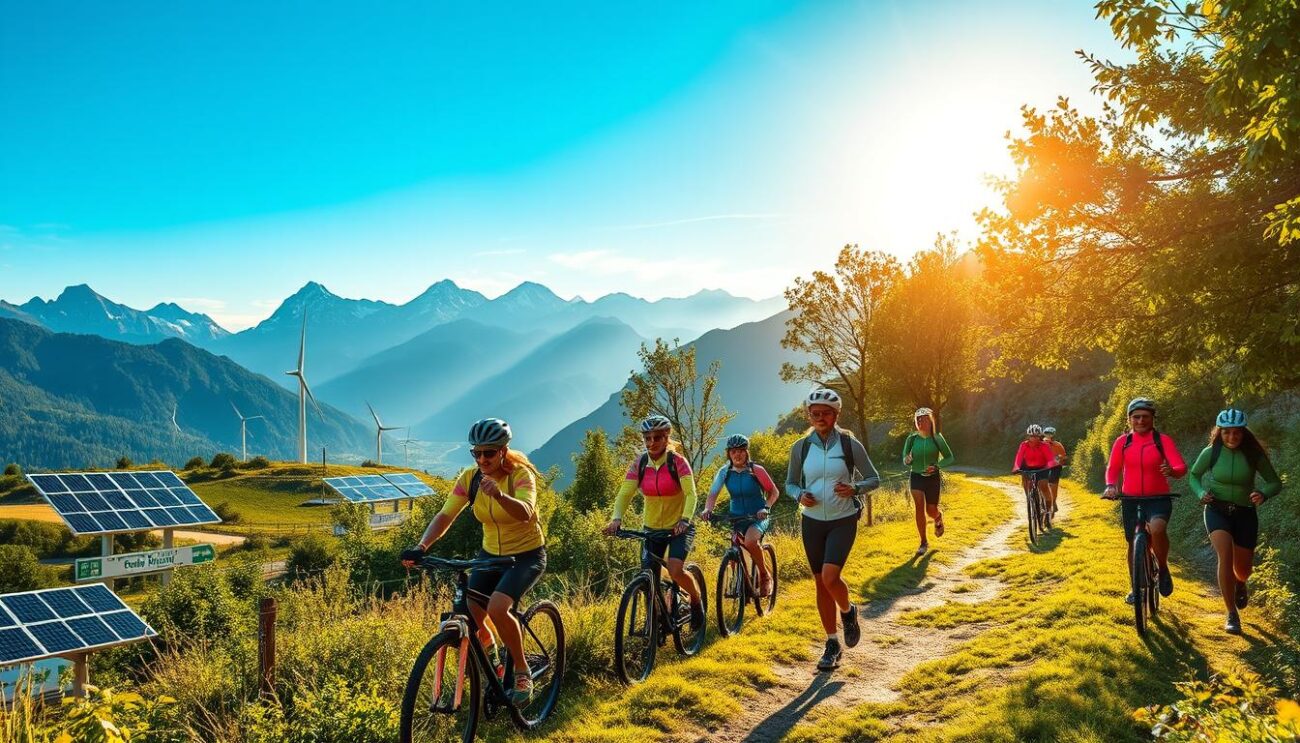
The travel world is changing in a big way. Big sports events and places are now focusing on being green. This change is more than just saving the planet.
It’s about making things better for athletes, fans, and local people. Eco-conscious practices are changing how these events are run. It’s a top-to-bottom change.
Now, we see efforts to reduce waste, save water, and use clean energy. These steps cut down the harm big events can cause. At the same time, they make the experience better for everyone.
Green sports travel is growing fast. It brings economic benefits, helping local areas. It’s not just good for the planet; it’s good for business. Learn more about maximizing sports tourism value here.
This change is about more than just being green. It’s about making people’s lives better too. As we’ve seen, wellness and sustainability go hand in. The next parts will show you how this is happening in real life.
Why Sustainability Matters in Sports Tourism
Integrating eco-friendly principles in sports tourism is now a key strategy. Big events attract thousands, leaving big environmental and social marks. It’s vital to tackle these impacts for the industry’s future.
Sustainable actions help fight climate change by cutting down carbon emissions. Travel, stadium energy use, and concession waste all add to the carbon footprint. Green steps like renewable energy and waste management greatly reduce this.
Protecting nature is another big win. Sports venues use lots of water and land. Eco-friendly management keeps parks and waterways healthy for athletes and fans to come.
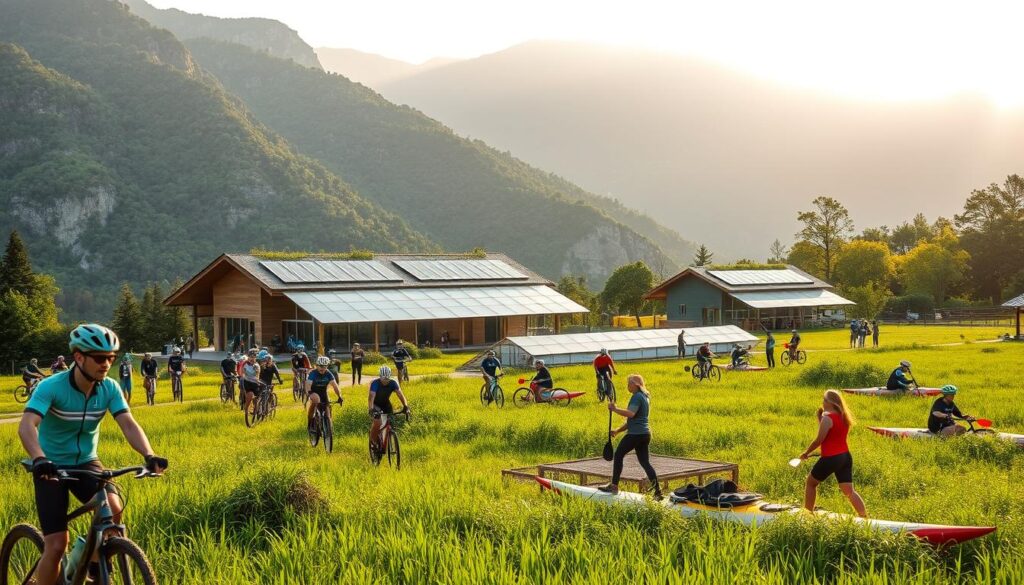
Sustainable sports tourism also has a big social impact. It builds stronger community bonds and boosts public health. Events that focus on sustainability often feature local vendors and cultural events, making the experience richer and boosting civic pride.
Green practices also boost local economies. They create jobs in recycling, energy, and sustainable building. Spending on local goods keeps money in the community, helping it grow stronger.
Real examples show these benefits. The NHL’s NHL Green initiative works on water and carbon projects linked to games. It shows how sports can help fix environmental damage from tourism.
The NFL’s Super Bowl Green Sustainability Initiative sets a high standard for big events. It aims for zero waste, uses green energy, and supports local businesses. This shows even huge events can be done responsibly, leaving a good mark.
The table below shows the three main parts of sustainability in sports tourism and their real results:
| Pillar | Core Benefit | Key Action | Sports Tourism Example |
|---|---|---|---|
| Environmental | Reduces carbon footprint and saves resources | Uses renewable energy and cuts waste | NHL Green’s water restoration projects |
| Social | Strengthens community and improves health | Uses local vendors and cultural events | Community fairs at marathon expos |
| Economic | Boosts local economy and creates jobs | Supports local businesses and green projects | NFL Super Bowl Green’s local mandate |
These benefits make a strong case for change. Sports tourism that ignores sustainability risks harming the places it visits. Embracing eco-friendly practices is a wise choice for a better future for everyone.
Integrating Eco-Friendly Practices
To lessen environmental harm, event planners must make sustainability a key part of their work. They need to focus on four main areas: where events are held, how people get there, what is left behind, and who is involved.
Choosing the right venue is a big first step. Picking places with green credentials, like LEED-certified stadiums, cuts down on resource use. The “Run H2O Ride” event in Indonesia chose routes through community trails and ended at a local water treatment plant. This avoided harming sensitive areas and used existing spaces.
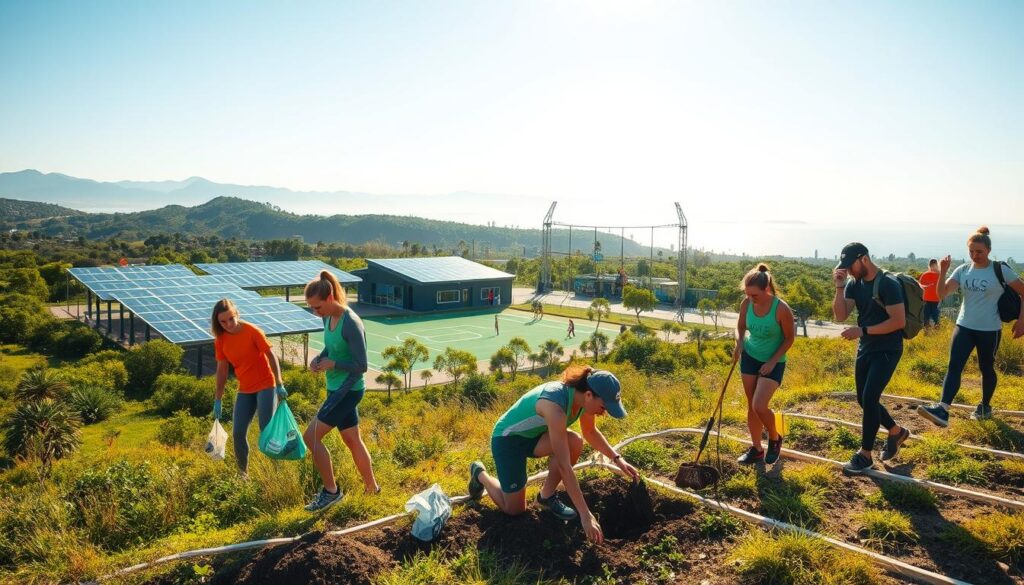
Transportation is a big source of carbon emissions. Good planning can help lower emissions. Organizers can get group rates on public transit, offer shuttle buses, and make it safe for cyclists and walkers. For the “Run H2O Ride,” they encouraged carpooling and partnered with a local ride-sharing app. This cut down on vehicle emissions near the event.
Having a solid waste management plan is essential. The goal is to send as little waste to landfills as possible. This means setting up recycling and compost bins and training staff and volunteers. The Indonesian event diverted 70% of waste by using reusable or compostable items and sorting team. This approach reduces the long-term harm of event waste.
True sustainability involves the local community as partners, not just spectators. This means buying food and merchandise from local vendors, hiring locals, and giving to environmental projects. “Run H2O Ride” worked with village cooperatives for supplies and funded a river clean-up. This builds support and ensures the event’s benefits last beyond its time.
The table below shows how these practices together make sports tourism greener.
| Practice | Actionable Strategy | Environmental Impact Benefit |
|---|---|---|
| Venue Selection | Use existing, certified facilities; avoid ecologically sensitive areas. | Preserves natural habitats, reduces land disturbance and construction waste. |
| Transportation Planning | Promote public transit, shuttles, carpooling, and active travel. | Lowers carbon emissions and reduces local air pollution. |
| Waste Management | Implement a “zero-waste” plan with composting and recycling stations. | Diverts waste from landfills, conserves resources, and prevents pollution. |
| Community Engagement | Source locally, hire locally, and invest in community projects. | Strengthens local economy and fosters long-term stewardship of natural resources. |
These strategies together create a strong framework. They turn a sports tourism event into a force for good. The success of “Run H2O Ride” shows that careful planning is both possible and effective.
Engaging Fans and Participants
Sports organizations are finding that their biggest ally in promoting sustainability is their fans. These fans are a powerful force for change. By engaging them, sports can turn spectators into active supporters of green initiatives.
Teaching fans is the first step. Teams use signs, apps, and emails to share important messages. Fans learn about recycling, carbon offsetting, and saving water. This knowledge helps them make eco-friendly choices.
Getting fans involved in local projects is key. Teams organize clean-up events and gardening projects on game days. These activities spread the positive impact beyond the stadium. They create a sense of community and pride among fans.
Using games and rewards motivates fans to act. They can earn points for using public transport, bringing reusable cups, or recycling. These points can unlock cool rewards or discounts. It makes being green fun and rewarding.
The table below shows main ways to engage fans in sustainability:
| Engagement Type | Primary Method | Example Organization | Key Benefit |
|---|---|---|---|
| Digital Education | Interactive apps & social media | NBA Green | Raises awareness at scale |
| Reward Incentives | Loyalty points for green actions | Seattle Mariners | Boosts repeat participation |
| Community Volunteering | Post-event clean-up crews | MLB Players Alliance | Strengthens local ties |
| Green Challenges | Team-based competitions | NCAA School Programs | Fosters friendly rivalry for a cause |
Social media campaigns also play a big role. Hashtags and content from fans create online eco-communities. This keeps the conversation going even after the game is over.
In the end, sustainability in sports tourism depends on this partnership. When fans are informed, involved, and rewarded, they can make a big difference. The stadium becomes a place where fans learn about taking care of the environment.
Measuring and Promoting Sustainability Initiatives
Data and storytelling are key to making sustainability initiatives shine. Just having an eco-friendly plan isn’t enough. You need to show its success to get people involved and see results.
Measuring your efforts gives your program credibility. It turns vague promises into solid facts. By tracking progress, you can always get better and show you’re accountable.
Good metrics cover three main areas:
- Environmental Impact: Count carbon emissions, waste reduction, and water savings. These numbers prove your green efforts.
- Economic Benefits: Follow local spending, job creation, and cost savings. These show your program’s economic value.
- Social Outcomes: Track volunteer hours, community funds raised, and feedback from attendees and locals. These show your social impact.
Having this data is key for promoting your work. An eco-friendly sports tourism program that doesn’t share its achievements misses a big chance to attract more people.
To market your initiatives well, mix transparency with inspiration. Publish yearly sustainability reports and get eco-certifications for your venues and events. Work with environmental groups to add credibility to your efforts.
Studies show that sustainable sports tourism can boost a destination’s economy. This data is vital for shaping future trends and policies.
To appeal to eco-conscious travelers, your marketing must be genuine. Share real stories and data in your ads. Highlight the local projects your events support. Make it simple for people to choose eco-friendly travel options.
In the end, measuring and promoting your work creates a positive cycle. Good metrics tell a story you can be proud of. Effective promotion brings more supporters, which funds better projects, leading to even stronger results. This is how sustainable sports tourism becomes a common expectation.
Creating a Culture of Green Tourism
Creating a sustainable future for sports tourism is more than just projects. It needs a big change in culture. We aim to make eco-friendly choices in every step, from planning events to how fans travel.
This shift comes from strong policies and working together. The NFL, NBA, cities, and big sponsors must share goals. By setting common standards for waste, energy, and materials, we can lessen our impact on the environment.
Success over time depends on always getting better. Reports from groups like the Green Sports Alliance help us see how we’re doing. By tracking our progress, we show that going green helps local economies and saves nature.
The lasting impact of sports tourism is about making a difference. Every event is a chance to show leadership. By choosing eco-friendly options, we ensure the sports we love will have a healthy planet for fans to come.
