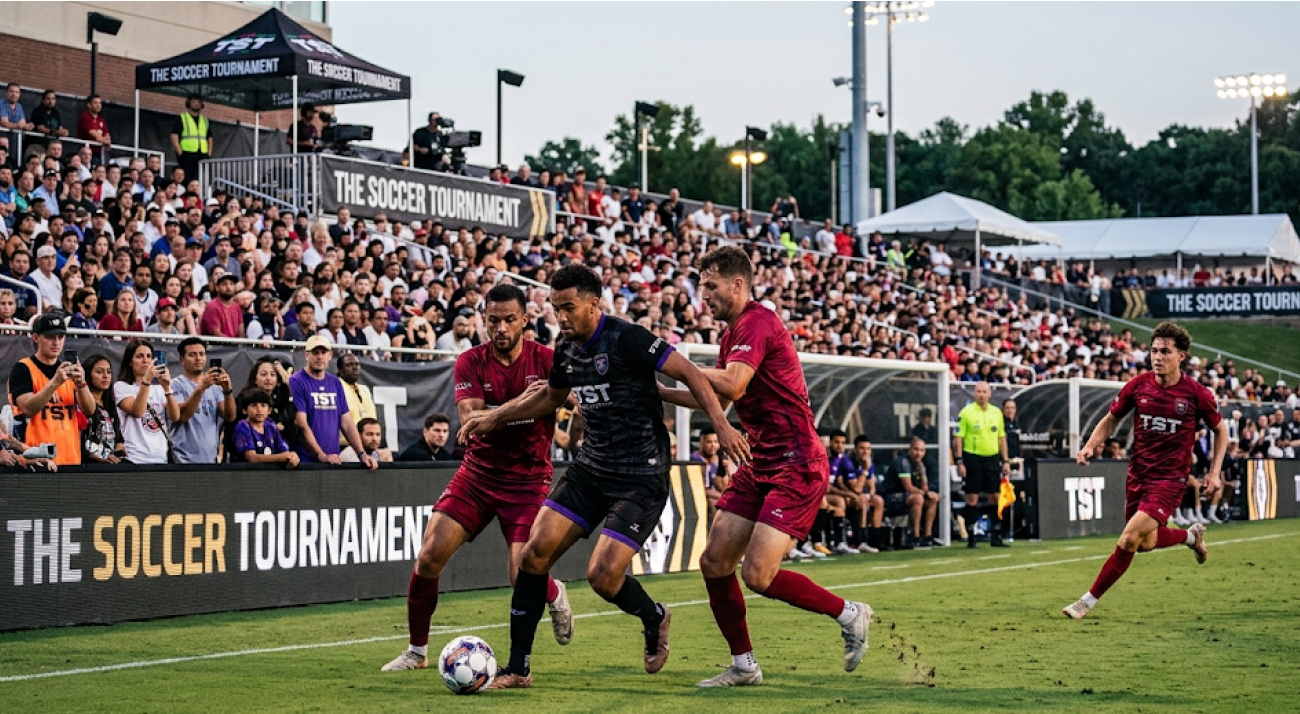
Greater Raleigh’s growing sports tourism business has produced another significant result. The Soccer Tournament (TST), a six-day professional 7-on-7 soccer competition held at WakeMed Soccer Park in Cary, North Carolina, generated an estimated $16.2 million in direct economic impact in 2026, a 10% increase over the previous year’s $14.7 million.
The figures gained renewed attention on November 4, 2026, when Sports Destination Management named TST a 2026 Champion of Economic Impact in Sports Tourism in the large-market category. The recognition places the Cary event among a group of major sporting competitions credited with generating substantial visitor spending and hotel demand across the United States.
The tournament’s 2026 edition attracted 57,942 attendees, including an estimated 34,488 visitors from outside Wake County. Of those visitors, 23,304 were overnight guests. The six-day competition generated approximately 22,385 hotel room nights and more than $607,000 in direct local tax revenue, according to the Greater Raleigh Convention and Visitors Bureau.
For the Town of Cary, Greater Raleigh Sports Alliance, hotels, restaurants, and other local businesses, the results demonstrate how a recurring sporting event can become a significant component of a destination’s economic development strategy. The next opportunity is already on the calendar: TST is scheduled to return to Cary from June 8–14, 2027, under a long-term agreement that keeps the event in the community through 2029.
TST’s Fourth Year Produced A Record $16.2 Million Impact
The Soccer Tournament began in Cary in 2023 and has developed into a major event on the region’s sports tourism calendar. Its fourth edition, held May 27 through June 1, 2026, delivered the strongest attendance and economic results in the competition’s history.
According to the Greater Raleigh Convention and Visitors Bureau, the tournament’s estimated direct economic impact rose from $14.7 million in 2025 to $16.2 million in 2026. That represents a year-over-year increase of approximately 10.2%.
The event featured 76 teams, more than 2,000 athletes, and 159 matches. Players representing 27 countries traveled to Cary, while teams represented 14 nations. The competition also introduced three $1 million winner-take-all championships across men’s, women’s, and mixed divisions.
The attendance figure of 57,942 was particularly important because it represented a 12% increase over the previous year. The audience included local residents as well as traveling supporters whose spending contributed to the area’s hospitality and retail businesses.
Cary Mayor Harold Weinbrecht described the tournament’s growth as a benefit for both the community and its business sector. TST founder and CEO Jon Mugar also credited local partners for helping the competition expand during its first four years in North Carolina.
The results were subsequently recognized by Sports Destination Management, whose November 4 announcement identified TST and the Greater Raleigh Sports Alliance as the large-market champion associated with the $16.2 million impact.
The award reinforces the value of recurring events in destination marketing. A tournament that returns annually gives organizers, hotels, restaurants, and local authorities an opportunity to build on previous performance instead of recruiting an entirely new event every season.
Sources: Town of Cary’s 2026 TST results and Sports Destination Management’s 2026 economic-impact awards.
More Than 22,000 Hotel Room Nights Show The Value Of Overnight Visitors
The $16.2 million figure tells only part of the story. The tournament’s visitor composition helps explain why TST has become an important event for the Greater Raleigh hospitality market.
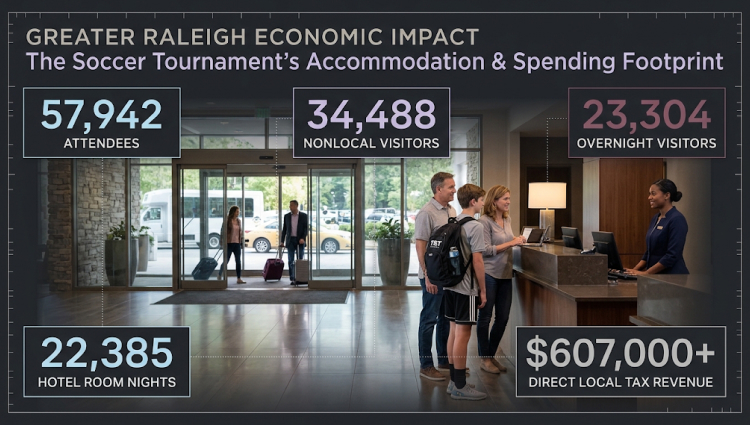
Of the 57,942 attendees, approximately 34,488 came from outside Wake County. That means nearly 60% of the reported attendance came from beyond the county’s local population. An estimated 23,304 attendees were overnight visitors, and the event generated 22,385 hotel room nights.
Those figures matter because overnight visitors generally create more opportunities for local spending than spectators who attend an event and return home the same day.
Hotel guests may purchase meals, use transportation services, visit attractions, shop at local businesses, and extend their stays around the competition schedule. Teams also travel with coaches, staff, and supporters, increasing demand beyond the athletes themselves.
The 22,385 room nights provide a measurable indication of the tournament’s accommodation demand. They also give hotels a basis for evaluating how a recurring event contributes to room occupancy during its six-day schedule.
The tournament generated more than $607,000 in direct local tax revenue, according to the visitor bureau’s estimate. This is a separate measure from the $16.2 million direct economic impact. The two figures should not be treated as interchangeable: one represents estimated economic activity, while the other measures direct local tax collections attributed to the event.
For local governments and economic development organizations, that distinction is essential. A major sporting event can generate significant visitor spending, but the public financial return depends on the taxes collected, the public resources used to support the event, and the broader costs associated with hosting it.
Even with those considerations, TST’s room-night and visitor figures demonstrate why destinations compete for events that attract travelers from outside their immediate markets.
The Cary Cup Adds A Youth Sports Tourism Revenue Stream
TST is not the only soccer competition contributing to Cary’s visitor economy. The Cary Cup, a youth tournament developed in coordination with the professional event, generated an estimated $1.48 million in direct economic impact in 2026.
The tournament welcomed approximately 10,000 attendees, including 4,019 visitors from outside Wake County. More than 2,500 were overnight visitors, and the event generated nearly $58,000 in direct local tax revenue.
Launched in 2025, The Cary Cup uses TST’s 7-on-7 format and Target Score Time competition structure. Its matches take place at parks in Cary, Apex, and Holly Springs, with finalists advancing to WakeMed Soccer Park during the professional tournament.
The 2026 edition expanded its boys’ and girls’ age divisions and added a dedicated Cary Cup Night at TST. Championship matches were also scheduled during TST’s Sunday semifinals, giving youth participants a connection to the larger professional event.
This combination creates a broader tourism opportunity. Professional tournaments attract soccer fans and established players, while youth competitions bring families who may travel with multiple relatives and stay for several nights.
The two events also create opportunities to distribute activity across multiple communities in western Wake County. Hotels, restaurants, and businesses in Cary, Apex, and Holly Springs can benefit from visitors attending matches at different venues.
Together, the professional tournament and youth competition represent approximately $17.68 million in estimated direct economic impact, based on their separately reported 2026 figures. This combined figure should be viewed as the sum of two event estimates rather than a separate audited regional economic-impact study.
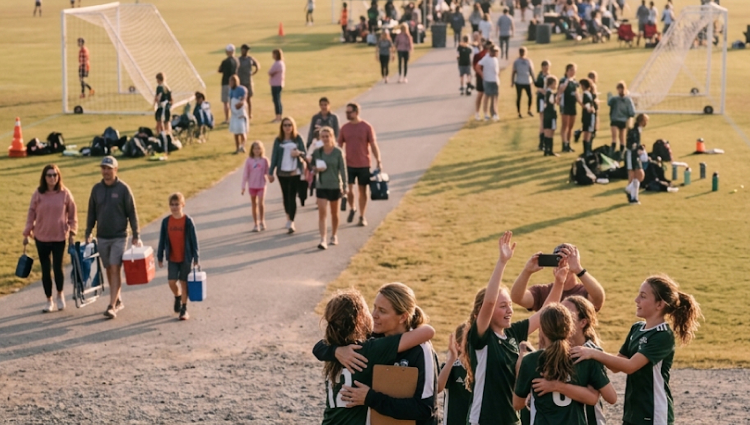
Greater Raleigh Sports Alliance Executive Director Scott Dupree has emphasized the importance of overnight visitation generated by these competitions. The traveling families and spectators support hotels, restaurants, retail businesses, and other services beyond the sports facilities themselves.
Source: Visit Raleigh’s TST and Cary Cup economic-impact announcement.
WakeMed Soccer Park Gives Cary A Competitive Hosting Advantage
The tournament’s growth is connected to the availability of established sports infrastructure. WakeMed Soccer Park, located in Cary, provides a dedicated venue for professional and amateur soccer competitions and has hosted TST since the event’s first year in 2023.
The facility is part of Cary’s broader sports and recreation infrastructure. The 158-acre park has an established history of hosting major soccer competitions, providing a setting for events that require multiple matches, spectator accommodations, and a concentrated competition schedule.
For event organizers, venue quality is only one part of the hosting decision. Access to hotels, restaurants, transportation, airport connections, and experienced local event partners also influences whether a destination can support a tournament of this scale.
Greater Raleigh’s sports tourism structure brings several organizations into the same strategy. The Town of Cary provides the municipal hosting environment, the Greater Raleigh Sports Alliance works on sports-event recruitment and partnerships, and the Greater Raleigh Convention and Visitors Bureau evaluates visitor activity and economic impact.
That coordination helps connect the venue with the broader regional visitor economy. Rather than treating TST as an isolated sports competition, the partners can promote the event as a reason to visit the area, reserve hotel rooms, and spend money across multiple communities.
The model also gives Cary an opportunity to build a recognizable identity around soccer. Each successful edition creates a stronger history for future negotiations with organizers, sponsors, teams, and other event partners.
The importance of that consistency is reflected in the long-term agreement keeping TST in Cary through 2029.
North Carolina’s $6.8 Million Grant Supports A Longer-Term Event Strategy
TST’s continued presence in Cary is supported by a state-level incentive agreement. Announced in October 2025, the long-term partnership between Cary and TST received support through the North Carolina Department of Commerce’s Major Events, Games, and Attractions (MEGA) Fund.
The agreement provides reimbursement for qualifying in-state expenses of up to $6.8 million over its duration. It is intended to support the tournament’s continued presence in Cary and recognize the visitor spending and economic activity associated with major events.
North Carolina Commerce Secretary Lee Lilley described the MEGA Fund as a tool for competing for events that bring visitors and spending into communities across the state.
The arrangement reflects a broader economic development approach. Public incentives can help destinations secure events that might otherwise move to another market, but the financial case depends on the economic activity generated and the costs associated with the public commitment.
In TST’s case, the 2026 results offer an early performance indicator under the longer-term agreement. The tournament generated an estimated $16.2 million in direct economic impact, attracted more than 57,000 attendees, and produced over 22,000 hotel room nights.
However, the $6.8 million grant ceiling should not be interpreted as an annual payment or as a direct subsidy of that amount for the 2026 edition. It represents the maximum reimbursement for qualifying expenses over the agreement’s duration.
The arrangement gives Cary and its partners a longer planning horizon. Organizers can develop future editions, sponsors can plan around a recurring event, and local businesses can prepare for a predictable period of visitor demand.
Source: Town of Cary’s announcement of the TST long-term agreement and 2026 results.
Global Viewership Extends TST’s Value Beyond Wake County
The tournament’s reach is not limited to visitors who attend matches in person. Its broadcast and streaming audiences provide an additional platform for promoting Cary and Greater Raleigh to soccer fans around the world.
TST’s 2026 semifinal broadcast on NBC averaged approximately 433,000 viewers, making it the most-watched match in the tournament’s history. Its YouTube coverage generated 35.5 million impressions and reached more than 1 million unique viewers.
The event also attracted international digital audiences. Viewers watched matches from more than 180 countries, while the men’s championship game alone attracted 145,592 viewers outside the United States on TST’s YouTube channel.
These figures create a different kind of destination value. A visitor who attends the tournament contributes directly to local spending, but a viewer watching from another country may become familiar with Cary and consider traveling there for a future event.
The exposure also gives sponsors a broader audience than the stadium attendance figure alone would suggest. That can strengthen the tournament’s commercial appeal and help organizers attract partners interested in reaching soccer fans across different markets.
The global audience is especially relevant because TST combines professional competition with entertainment and recognizable personalities. Its 2026 event featured teams and participants associated with prominent soccer figures and entertainment brands, helping differentiate it from a conventional tournament format.
The challenge for Cary and its partners is converting that visibility into future visitation, event partnerships, and continued demand for local businesses.
TST’s 2027 Return Will Test The Sustainability Of The Model
The next edition of The Soccer Tournament is scheduled for June 8–14, 2027, at WakeMed Soccer Park in Cary. The seven-day event window provides another opportunity to build on the attendance, visitor spending, and media exposure achieved in 2026.
The 2027 tournament will be an important test of whether TST can sustain its growth after four years in the market. The 2026 results establish a strong benchmark: $16.2 million in estimated direct economic impact, 57,942 attendees, 22,385 room nights, and more than $607,000 in direct local tax revenue.
The Cary Cup also gives the region another avenue for expanding its sports tourism activity. By connecting youth competition with the professional tournament, Cary can attract traveling families and create a more extensive event calendar across nearby communities.
For local businesses, the value of this model will depend on repeat visitation and the distribution of visitor spending. Hotels may benefit from room demand, restaurants from tournament crowds, and retailers from families spending time outside the competition schedule. The longer-term benefits will depend on how effectively those businesses capture the activity.
Richland Chamber’s reporting on Richland’s IRONMAN 70.3 visitor spending offers another example of how an endurance event can create economic activity beyond the competition itself. Both cases show why destinations evaluate sports tourism through visitor origins, overnight stays, local spending, and the strength of partnerships supporting the event.
Greater Raleigh’s $16.2 million result demonstrates that a recurring soccer tournament can become a meaningful part of a regional visitor economy. The next measure of success will be whether Cary and its partners can maintain that momentum, attract new visitors, and turn a successful annual competition into a durable economic asset through 2029.
