
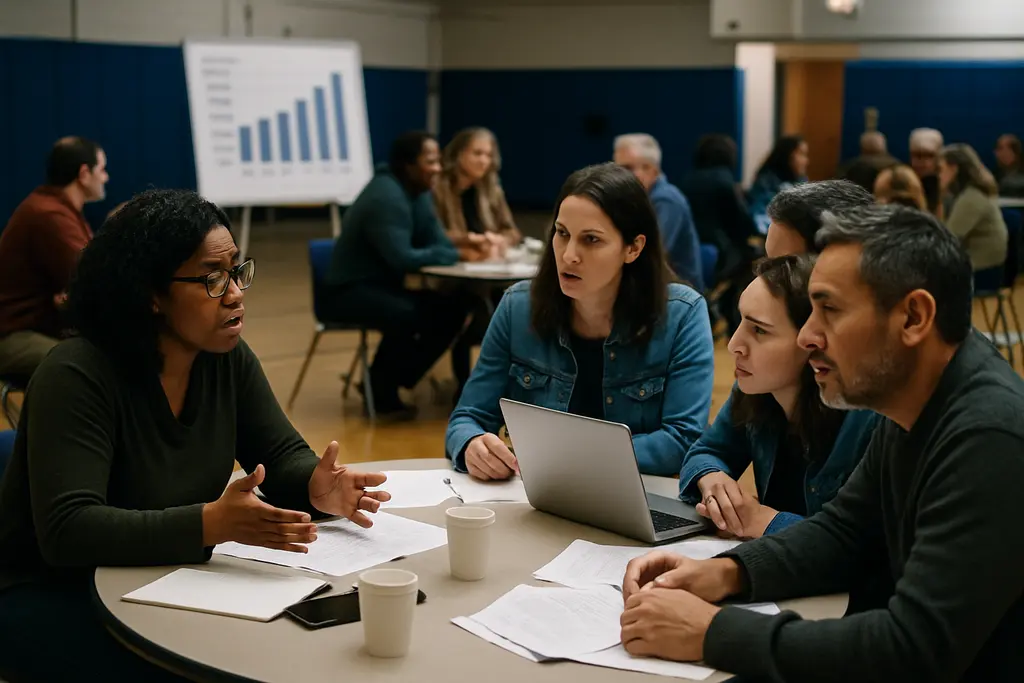
The Richland Budget Forum discussion did not happen as one single verified countywide event in 2026. Instead, the available record shows several related public steps: Richland One budget-input sessions in February, a Richland One public hearing on June 9, 2026, Richland County budget hearings and work sessions in May, and a separate Richland School District facilities process in Washington state. For residents, parents, school employees, and business owners, the practical issue is the same: budget priorities become clearer when public meetings, written notices, and official budget calendars are read together.
That matters because school budgets affect far more than classroom line items. Staffing, student support positions, maintenance schedules, facility needs, tax decisions, and county-level service planning all shape the cost of living and the strength of the local workforce. The 2026 record gives Richland-area stakeholders a useful model for how to track the next round of education-related budget decisions without relying on rumor or late notice.
Richland Budget Forum Record Was Spread Across Meetings
Richland Budget Forum Input Came Before Hearings
The Richland Budget Forum record began before the formal June hearing. According to Richland One’s budget-input announcement described in the research materials, the district held stakeholder budget-input sessions for the general fund budget on February 9, 2026, at Heyward Gibbes Middle School and on February 23, 2026, at Hand Middle School. The same district announcement identified students, parents, staff, and community members as participants.
Those February sessions were significant because they came before the budget was presented through the public-hearing process. Early input is often where residents can raise operational priorities before final numbers narrow the discussion. In school finance, that can include employee pay, student services, classroom staffing, building conditions, transportation, and program support.
A published legal notice for Richland One’s June 9, 2026, public hearing stated that the hearing concerned the district’s 2026-2027 general operating budget. The same notice listed the 2025-2026 general fund operating budget at $425,398,762 and proposed minimum revenues and expenditures for 2026-2027 at $426,490,844, a 0.3% increase. Because that notice was part of the public-hearing record described in the research materials, it should be treated as a budget notice rather than a complete explanation of every priority behind the spending plan.
What The Numbers Did And Did Not Say
The 0.3% change in the Richland One figures gave residents a starting point, not the full civic answer. A small increase can still include difficult internal decisions if costs rise in salaries, benefits, utilities, transportation, maintenance, or mandated services. The available research does not provide a full line-item breakdown from the Richland One hearing, so any claim about winners and losers inside that budget would go beyond the record.
That is why stakeholders should separate confirmed figures from interpretation. The confirmed points from the research are the hearing date, the location at the Stevenson Administration Building in Columbia, the budget comparison, and the earlier input-session dates. The open question is how the district weighed public comments against fixed costs, staffing requests, and program needs.
County Budget Steps Set The Civic Calendar
Richland County Held Its Own Budget Hearing
Education priorities also sit within a broader county budget calendar. Richland County scheduled a public hearing on its FY 2026-2027 operating budget for May 21, 2026, in Council Chambers at 2020 Hampton Street in Columbia, according to the research materials. The county’s fiscal year runs from July 1 to June 30, and its FY 2027 timeline included First Reading, Second Reading, Third Reading, and the May 21 public hearing, as shown on the county’s official budget page.
The county process is not the same as a school district budget process, but the calendars matter to many of the same households and employers. County spending decisions can affect public facilities, public safety, transportation-related needs, millage discussions, and other services that influence school communities. For a parent or business owner trying to understand the full cost environment, it is not enough to follow only a school board meeting or only a county council meeting.
Work Sessions Showed Where Decisions Were Grouped
The Richland County FY 2027 work sessions described in the research materials covered several budget areas: General Fund and Millage Agencies on May 12, 2026; Special Revenue, Capital Improvement Plan, and Debt on May 7, 2026; and Grants and Enterprise, along with a strategic review, on May 5, 2026. Those categories help residents understand where questions should be directed.
For example, a concern about ongoing staffing belongs in a different discussion than a concern about buildings or long-term debt. A concern about grant-supported services may require different follow-up than a concern about recurring local revenue. The Richland Budget Forum conversation is strongest when residents match their comments to the correct budget stage and agency.
For residents eager to benchmark their local civic coverage with other community-focused efforts, County Watchers offers a valuable perspective on public decisions and emphasizes local accountability.
Facilities Planning Added Another Budget Lens
A Separate Richland District Focused On Buildings
The research record also includes Richland School District in Washington state, which should not be confused with Richland County, South Carolina. That district’s Community Facilities Task Force included parents, staff, students, and community members. At its fifth meeting on August 12, 2026, the group reached unanimous agreement on a draft list of facility priority recommendations, according to the district’s official facilities planning page.
That draft list totaled approximately $114 million and focused on needs described in the research materials as safety improvements, modernization, replacement of aging portables, and relocation of the transportation facility. The final report was due by September 22, 2026. Because today is September 7, 2026, that final report had not yet reached its due date based on the research provided.
Why Facilities Belong In Budget Priority Talks
Although the Washington state district is outside Richland County, South Carolina, its facilities process shows a budget lesson that applies locally: buildings create long-term financial pressure. A school system can hold spending steady in one year and still face large future costs if roofs, classrooms, transportation yards, or temporary buildings need replacement.
For Richland County stakeholders, that point is practical. A budget hearing focused only on annual operating figures may not show the condition of school buildings, deferred maintenance, or future capital needs. A facilities task force, capital improvement plan, or bond discussion may answer questions that a general fund hearing does not.
One related local write-up on clear educational budget priorities made a similar point about tracking official steps rather than assuming a forum occurred without verification. That same caution applies here: residents should ask which agency held the meeting, what budget was under review, and whether the event was for input, hearing, recommendation, or final action.
Stakeholder Priorities Need Public Tracking
Community Requests Repeated Across Budget Talks
The research also notes that Richland School District Two public input meetings in March 2025 included community requests for higher salaries for district employees and more positions, including social workers. That point is useful because it shows that stakeholder concerns were not limited to one district or one budget date.
Still, those requests should be read carefully. The available research identifies the types of requests raised, but it does not provide a complete record of district action, cost estimates, or final allocations tied to those comments. For civic purposes, the next step after public input is always document review: proposed budget, revised budget, board agenda, adopted budget, and any staffing schedule made public by the district.
A Practical Checklist For The Next Cycle
The Richland Budget Forum lesson from 2026 is that residents need to track several public records at once. A single meeting rarely gives the full picture. The strongest civic follow-up is specific, dated, and tied to a public document.
- Confirm whether the meeting is a listening session, public hearing, work session, board vote, or county council reading.
- Ask whether the issue is operating budget, capital planning, debt, grants, staffing, or facilities.
- Use exact dates, locations, and agency names when submitting comments.
- Request the document that shows how public input was reflected, deferred, or rejected.
- Track both school district calendars and county budget calendars, since families and employers are affected by both.
That approach helps keep the conversation fair. School officials can respond to specific questions. County officials can point to the correct budget category. Residents can compare public statements with adopted documents rather than relying on summaries passed around after meetings.
Richland Budget Forum Priorities For Public Follow-Up
What Stakeholders Can Still Learn From 2026
The Richland Budget Forum record from 2026 shows a community trying to connect school needs with public finance. Richland One’s February input sessions created an early channel for students, parents, staff, and community members. The June 9 hearing placed proposed operating figures before the public. Richland County’s May budget process gave residents another place to watch spending categories, readings, and hearings. The separate Washington state facilities process showed how task-force work can frame long-term building needs before final recommendations are issued.
The most useful public follow-up is not simply asking whether education received enough money. A sharper question is: which priority was named, which budget document addressed it, what amount was assigned, and what public body had authority to act? That is how residents can turn forum comments into trackable civic questions.
For Richland-area families, educators, employers, and community groups, the next budget cycle should begin before the hearing notice appears. The 2026 events showed that input sessions, work sessions, public hearings, and final readings are separate steps. People who enter the process early have more time to ask for records, compare figures, and press for plain explanations of tradeoffs that affect classrooms, employees, facilities, and taxpayers.
