
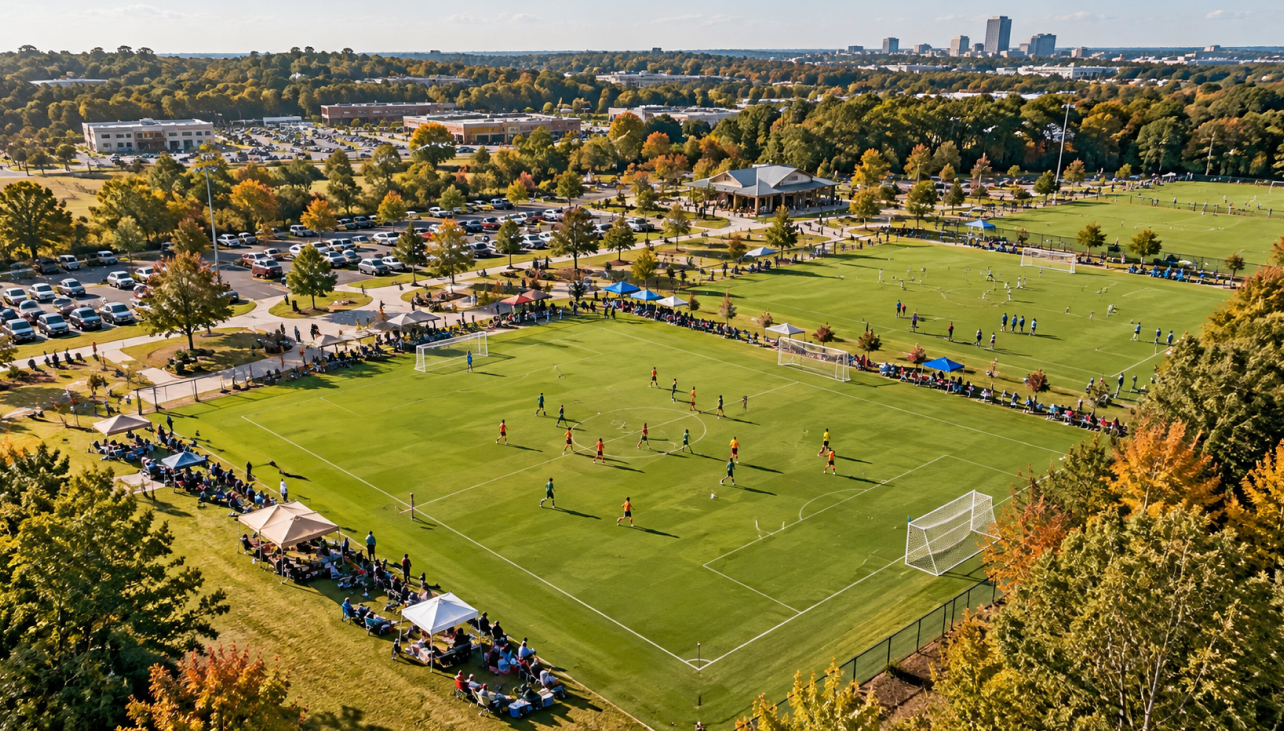
Richland County, South Carolina, is taking a closer look at whether youth sports tournaments, recreational events and outdoor tourism could become stronger drivers of local economic development. On October 8, 2026, the county released a request for proposals for a Sports and Recreation Tourism Strategic Study, signaling an effort to evaluate how existing recreational assets could attract more visitors, generate business activity and support long-term investment.
The growing interest in youth sports tourism also reflects how American sports have developed into a broader economic ecosystem, connecting athletic competitions, hospitality businesses, digital media, and specialized sports services. While Richland County is evaluating how visiting teams and families could support hotels, restaurants, and recreational facilities, other segments of the sports industry focus on information and consumer decision-making. Resources such as Why sharp bettors pick Heritage Sports illustrate how specialized sports platforms serve audiences beyond traditional event attendance. Although sportsbook services operate in a separate, regulated market, their presence highlights the diversity of commercial activities associated with sports and the importance of distinguishing direct tourism revenue from other forms of sports-related economic activity.
The initiative, identified as solicitation RC-821-P-26, seeks qualified consultants to assess the county’s opportunities in sports tourism, indoor and outdoor recreation, and leisure travel. Proposals are due November 6, 2026, at 3 p.m. Eastern Time.
According to the official South Carolina procurement announcement, the study is intended to help Richland County understand how sports and recreation can contribute to economic development.
The timing is significant for the Columbia metropolitan area, where visitor spending already supports a substantial network of hotels, restaurants, attractions and service businesses.
Experience Columbia SC reported that the broader Columbia region welcomed 17.4 million visitors in 2025, generating approximately $1.9 billion in direct visitor spending and $3 billion in total economic impact.
Those figures represent the wider regional tourism economy, not sports tourism alone. Nevertheless, they demonstrate the commercial scale of an industry that Richland County hopes to develop more strategically.
Youth sports tournaments could become an important part of that effort.
Unlike professional sporting events that depend on major stadiums and nationally recognized teams, youth tournaments can generate recurring visitor demand through weekend competitions, regional championships and multi-day events.
Families traveling with young athletes frequently require accommodations, meals, transportation and other services. Those expenditures create opportunities for local businesses beyond the athletic facilities hosting the competitions.
However, converting tournament activity into measurable economic growth requires more than attracting additional teams.
Richland County must determine which facilities can accommodate larger events, whether local hotels have sufficient capacity, how tournament schedules affect existing residents and whether new investments would deliver sustainable returns.
The proposed study offers an opportunity to answer those questions before committing public resources to major sports tourism projects.
What Richland County’s October 2026 Sports Tourism Study Will Examine
Richland County’s procurement initiative is broader than a conventional sports facility assessment.
The county is seeking a strategic evaluation of its ability to attract and capitalize on sports, recreation and leisure tourism while supporting economic development.
The request for proposals identifies several interconnected priorities, including market research, competitive positioning, destination development, infrastructure planning and opportunities to increase visitor spending.
It also calls for examining the county’s existing recreational resources.
These include parks, trails, waterways, athletic facilities, natural attractions and established community events.
The objective is to understand how those assets could contribute to a more coordinated tourism economy rather than treating each facility or activity as an isolated opportunity.
The solicitation also emphasizes the relationship between tourism development and business recruitment.
A successful tournament destination requires more than fields and courts. It depends on lodging, restaurants, retail services, transportation access, event operations and other businesses capable of supporting visiting participants.
Richland County wants consultants to identify where those supporting industries already exist and where additional investment may be necessary.
The study’s competitive analysis is particularly important because Columbia operates within a broader regional tourism market.
Youth tournament organizers can choose among destinations throughout South Carolina and neighboring states.
Richland County must therefore determine what would make its facilities, location and visitor experience attractive compared with competing communities.
The Richland County procurement opportunity identifies the strategic study as a planning exercise. It does not establish a final construction program or guarantee that specific sports facilities will receive funding.
That distinction matters for residents and business owners evaluating the initiative.
The immediate development is a request for professional analysis, not approval of a new tournament complex.
Why Youth Sports Tournaments Could Support Richland County’s Economy
Youth sports tourism has a distinctive economic structure.
A professional sporting event may attract thousands of spectators for a single evening. A regional youth tournament can bring athletes, coaches and families into a community for an entire weekend.
That creates multiple opportunities for visitor spending.
Families arriving on Friday may stay through Sunday, purchase meals throughout the weekend and visit local stores between games.
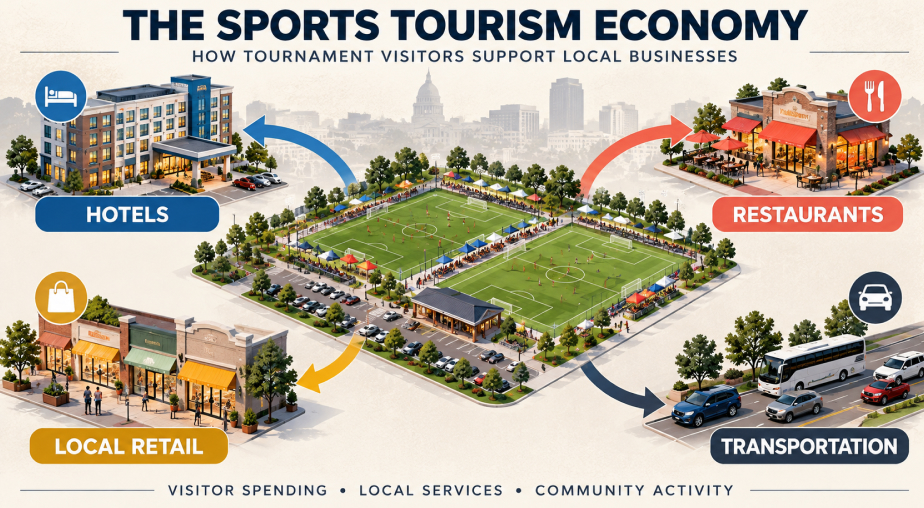
Tournament organizers may also require field maintenance, event staffing, medical support, security, equipment suppliers and transportation services.
The economic value of these activities depends on how many participants travel from outside the region and how much of their spending remains within the local economy.
A tournament dominated by local teams will generally generate less new visitor spending than one attracting families from several states.
Similarly, an event that fills hotel rooms during an otherwise quiet weekend may provide a stronger incremental benefit than one scheduled during an already busy tourism period.
For Richland County, this suggests that event selection could be just as important as event volume.
A well-designed sports tourism strategy would distinguish between tournaments that primarily serve local recreation needs and those capable of attracting meaningful outside spending.
Both types of events can provide community benefits, but their economic development roles differ.
Youth tournaments also offer opportunities to distribute visitor activity across the calendar.
Soccer, baseball, softball, basketball, volleyball and other sports operate on different competitive schedules.
A coordinated event calendar could help local businesses maintain demand beyond traditional tourism peaks.
However, the county would need to evaluate the availability of suitable facilities, tournament organizers and supporting services before projecting the benefits of such an approach.
The strongest economic development opportunity may come from building a reliable schedule of recurring events rather than depending on a small number of unusually large tournaments.
Columbia’s $3 Billion Tourism Economy Provides An Important Starting Point
Richland County’s strategic study arrives after another substantial year for tourism across the Columbia region.
On August 11, 2026, Experience Columbia SC released its latest economic impact findings, reporting that visitor activity generated $3 billion in total economic impact during 2025.
The report, prepared by Tourism Economics, measured visitor activity across Richland County, the City of Columbia and parts of Lexington County.
The results provide useful context for evaluating the potential contribution of sports and recreation tourism.
| Columbia Region Tourism Indicator | 2025 Result |
|---|---|
| Total visitors | 17.4 million |
| Direct visitor spending | $1.9 billion |
| Total economic impact | $3.0 billion |
| Jobs supported | 23,731 |
| Food and beverage spending | $594 million |
| State and local tax revenue | $153 million |
Source: Experience Columbia SC, August 11, 2026. Figures cover the Columbia regional tourism economy and should not be interpreted as Richland County-only or sports-tourism-only results.
Food and beverage spending accounted for approximately 31% of total visitor expenditures, making it the largest reported spending category.
That detail is especially relevant to youth sports tourism.
Families attending weekend tournaments may eat multiple meals away from home, purchase groceries and visit restaurants between games.
The potential beneficiaries therefore include independent restaurants, cafes, convenience stores and other businesses that may not directly participate in organizing sporting events.
The regional tourism study also reported that visitor activity supported 23,731 jobs in 2025.
These positions span industries connected to hospitality, transportation, entertainment and other visitor-facing services.
The 2025 Columbia tourism economic impact report provides a baseline for understanding the region’s existing visitor economy.
For the proposed sports tourism strategy, however, a separate measurement framework will be essential.
The county should not assume that a fixed percentage of the region’s $3 billion tourism economy can automatically be attributed to tournaments or recreational events.
Instead, the study will need to identify the actual contribution of existing sports tourism activity and estimate how much additional spending realistic development scenarios could generate.
That distinction will help decision-makers avoid overstating the potential return on future investments.
Existing Sports Facilities Could Be More Valuable Than New Construction
One of the most important questions facing Richland County is whether its existing recreational infrastructure can support additional tournament activity without requiring expensive new construction.
The county already has access to a range of parks, athletic facilities, outdoor recreation areas and community amenities.
The strategic study should help determine which of these assets could accommodate larger competitions, which require upgrades and which are better suited to serving local residents.
For youth soccer, baseball and softball tournaments, organizers typically consider the number of usable fields, playing-surface quality, lighting, parking, restrooms and access to emergency services.
Indoor basketball and volleyball competitions present different requirements, including court availability, spectator seating, climate control and suitable spaces for teams between games.
A facility that works well for weekly community recreation may not automatically meet the operational demands of a regional tournament.
That distinction is important when evaluating capital improvements.
Adding lighting, improving drainage or renovating existing courts may sometimes offer a more economical path to attracting events than constructing an entirely new complex.
However, the county would need to compare renovation costs, maintenance requirements, projected bookings and long-term facility use before identifying the best option.
Investments should also serve residents when tournaments are not taking place.
A facility that supports youth leagues, school activities and community recreation throughout the year can provide broader public value than one designed primarily for occasional outside events.
This dual-purpose approach could help Richland County balance economic development objectives with community recreation needs.
What The 2024 Manchester United–Liverpool Match Reveals About Sports Tourism
Columbia already has experience hosting a major sporting event that generated measurable visitor activity.
On August 3, 2024, Manchester United and Liverpool played an international soccer friendly at Williams-Brice Stadium, the home of University of South Carolina football.
The match attracted 77,559 spectators and generated an estimated $13.1 million in economic impact, according to Experience Columbia SC’s 2024–25 annual report.
The event also produced notable hotel demand.
Regional hotel occupancy reached 91.3% on the night of August 3, compared with the corresponding Saturday in the previous year.
Experience Columbia SC reported a $275,000 destination investment associated with the event and a positive return under its reported methodology.
These results provide evidence that major sporting events can influence visitor activity across the Columbia region.
However, a one-time international soccer exhibition differs considerably from a recurring youth tournament.
The Manchester United–Liverpool match benefited from internationally recognized clubs, substantial spectator interest and a large university stadium.
Youth tournaments generally attract smaller audiences, require different facilities and generate spending through teams and accompanying families rather than tens of thousands of ticket buyers.
The comparison is therefore useful for understanding the importance of event coordination, not for predicting equivalent economic returns.
For Richland County, the more practical lesson concerns collaboration.
The 2024 event involved partnerships among Experience Columbia SC Sports, the University of South Carolina and event organizers.
Youth tournament development would similarly require coordination among venue operators, sports organizations, hospitality businesses and public agencies.
Richland County could build on this regional experience while developing an event strategy appropriate to the scale and requirements of amateur sports.
Hotels, Restaurants And Small Businesses Could Capture The Benefits
The commercial potential of sports tourism depends heavily on whether visitor spending reaches local businesses.
Hotels are among the most obvious beneficiaries because traveling teams often require overnight accommodations.
Restaurants, however, may receive spending from a wider group that includes athletes, coaches, parents, siblings and tournament staff.
The Columbia region’s 2025 tourism data provides an indication of the importance of food and beverage purchases within the broader visitor economy.

Visitors spent $594 million on food and beverages, making the category the region’s largest reported visitor spending segment.
For tournament organizers, this creates an opportunity to connect event schedules with nearby dining districts and independent businesses.
A youth soccer competition held across several fields may generate restaurant demand during lunch breaks and after the final matches.
An indoor basketball tournament could create similar opportunities for nearby retailers, cafes and service providers.
Yet the benefits will not necessarily be distributed evenly.
Businesses located near tournament venues may experience increased traffic, while those farther away may receive little additional demand.
A strategic plan should therefore consider how visitors move between athletic facilities, hotels and commercial areas.
Transportation access, parking availability and clear visitor information can influence whether families explore the wider community.
Local chambers and business organizations can also help coordinate participation.
For example, Richland Chamber’s reporting on convention economic impact examines how event-related spending can support hotels, restaurants and other businesses while emphasizing the importance of measuring actual returns.
The same principle applies to youth tournaments.
The objective should not be simply to attract visitors, but to understand how much additional economic activity those visitors generate and whether the benefits justify the costs.
Regional Competition Will Shape Richland County’s Opportunities
Richland County will not be developing its sports tourism strategy in isolation.
Tournament organizers already have access to destinations throughout South Carolina and the broader Southeast.
Competition for events depends on several factors, including facility quality, travel convenience, hotel availability, tournament costs and the overall experience offered to participating families.
The Columbia region has geographic advantages worth examining.
Its central South Carolina location provides access to Interstate 20, Interstate 26 and Interstate 77, connecting the area with major population centers and transportation corridors.
Columbia Metropolitan Airport also provides air service for travelers, although many youth sports tournaments depend primarily on regional automobile travel.
These connections could help attract teams from other parts of South Carolina, North Carolina and Georgia.
However, transportation access alone does not establish competitive superiority.
Organizers may prioritize destinations offering multiple fields in one location, predictable scheduling, affordable accommodations and dependable event management.
Richland County’s study should compare these practical requirements against the capabilities of competing destinations.
A meaningful assessment would identify the types of events the county can realistically attract, rather than treating every tournament category as equally achievable.
For example, an existing outdoor facility might be competitive for regional weekend competitions but unsuitable for a large national championship.
Recognizing those differences would allow officials to focus investment on opportunities supported by demonstrated demand.
Measuring Sports Tourism Returns Without Overstating The Numbers
Sports tourism projects frequently attract attention because of large economic impact estimates.
Those figures can be useful, but they require careful interpretation.
Direct visitor spending represents purchases made by visitors at businesses such as hotels, restaurants and retailers.
Total economic impact may also include indirect activity generated through suppliers and induced activity associated with household spending.
These measures are related but not interchangeable.
A $10 million economic impact estimate does not mean a county government receives $10 million in revenue.
Likewise, projected visitor spending does not represent profit for participating businesses.
For Richland County, a credible sports tourism evaluation should distinguish between gross economic activity and the additional benefits created by attracting visitors who otherwise would not have traveled to the area.
The study should also account for public expenses.
Tournament hosting may require facility maintenance, traffic management, sanitation, security, marketing and other operational services.
Infrastructure investments can create long-term obligations through repairs, staffing and replacement costs.
These expenses should be considered alongside anticipated hotel demand and business activity.
A useful performance framework would measure:
- Visitor activity: Out-of-area participants, overnight stays, hotel room nights and direct visitor spending.
- Public and business returns: Event-related costs, relevant tax revenue, local supplier participation and incremental economic activity.
These measures could help the county compare different tournament types and facility investments.
They would also provide residents with a clearer understanding of how public resources are being used.
The central question is not whether sports tourism generates spending. It is whether a particular investment creates enough additional economic and community value to justify its costs.
Outdoor Recreation Could Expand The Strategy Beyond Youth Tournaments
Although youth sports tournaments provide a compelling economic development opportunity, Richland County’s proposed study includes a broader range of recreational activities.
The procurement scope specifically identifies outdoor recreation, trails, greenways, waterways, fishing, cycling, running events and equestrian activities among the potential opportunities to examine.
This wider approach matters because different recreational activities attract different visitor groups and operate on different schedules.
Running events may draw participants for a weekend, while cycling routes and outdoor recreation amenities can support independent visitors throughout the year.
Water-based recreation and trail systems may also encourage travelers to explore areas beyond established tourism districts.
Richland County has access to natural resources associated with the Congaree River, Broad River and surrounding Midlands landscape.
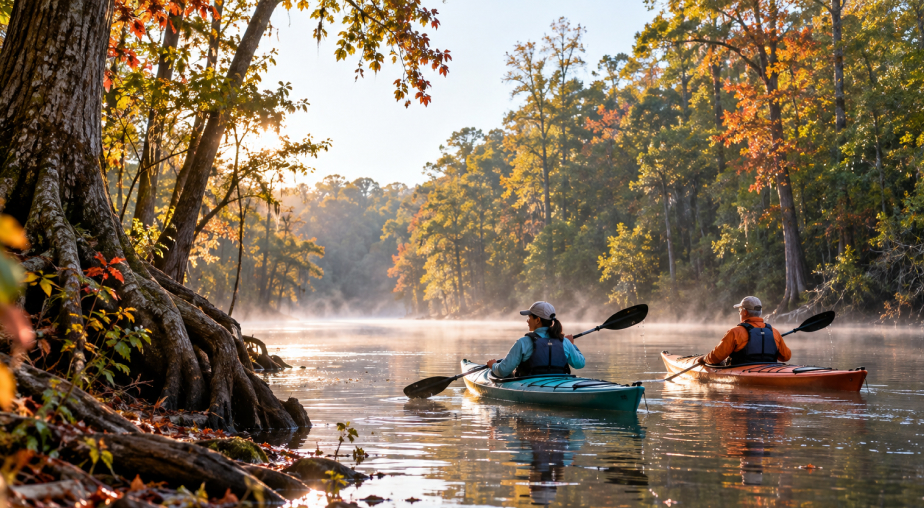
Nearby Congaree National Park, located primarily in Richland County, is another significant recreational asset, although federal park management and conservation requirements must remain distinct from county tourism planning.
The National Park Service’s Congaree National Park information provides authoritative guidance about the park’s recreational opportunities and protected environment.
The challenge for county planners is identifying which recreational activities can generate sustainable visitor demand without compromising environmental resources or displacing existing community use.
Not every outdoor attraction needs to become a major commercial destination.
Some facilities may provide greater value through conservation, public access and resident recreation.
A balanced strategy should recognize these differences and evaluate tourism development alongside environmental stewardship.
The November 6 Proposal Deadline Is The Next Milestone
Richland County’s Sports and Recreation Tourism Strategic Study remains in the procurement stage.
The official solicitation was published October 8, 2026, and proposals are due November 6 at 3 p.m. Eastern Time.
The procurement documents also identify October 27 as the deadline for submitting questions about the project.
These dates establish the immediate timeline for interested consulting firms.
They do not establish when the study will be completed or when any recommended projects might receive approval.
A report on the county’s October 6 Strategic Planning Ad Hoc Committee meeting indicated that officials anticipated potential scheduling challenges for completing planning assessments before the end of 2026.
That reinforces the importance of distinguishing the procurement process from the eventual implementation of recommendations.
Once a consultant is selected, the county will still need to evaluate the findings, consider funding options and determine which proposals warrant further development.
Potential recommendations could involve facility improvements, tournament recruitment, destination marketing partnerships or support for existing recreation businesses.
However, none of those outcomes should be treated as approved investments before the county completes its evaluation.
For local businesses, the period ahead provides an opportunity to identify the information that would make the study more useful.
Hotel operators can contribute insight into seasonal occupancy patterns.
Restaurant owners can explain how event weekends influence staffing and sales.
Sports organizations can identify facility limitations and tournament scheduling challenges.
Residents can raise concerns about traffic, maintenance, affordability and access to public recreation.
Including these perspectives would help ensure that economic development recommendations reflect conditions across the community rather than relying exclusively on visitor projections.
What A Successful Sports Tourism Strategy Would Mean For Richland County
The strongest outcome from Richland County’s initiative would be a practical investment strategy supported by reliable evidence.
A successful study should identify which sports and recreation markets offer realistic opportunities, which existing facilities can support additional events and where infrastructure improvements would create measurable value.
It should also explain how tourism growth could benefit local businesses without placing disproportionate costs on residents.
Youth tournaments are an attractive starting point because they can generate recurring travel demand and connect athletic participation with hospitality spending.
Yet their economic potential depends on tournament size, visitor origin, length of stay, facility costs and the county’s ability to attract repeat events.
The Columbia region’s existing tourism economy provides an encouraging foundation.
With 17.4 million visitors and $1.9 billion in direct visitor spending reported for 2025, the area already has an established hospitality market and experience hosting major events.
The challenge is determining how sports and recreation can contribute additional value within that economy.
Richland County’s October 2026 study could provide the evidence needed to make those decisions more effectively.
If officials can connect realistic tournament opportunities with existing recreational assets, local business participation and transparent financial evaluation, sports tourism could become a more deliberate component of regional economic development.
The next important step is the November 6 procurement deadline. The more consequential decisions will come when the county receives the study’s findings and determines which opportunities deserve investment.
