

Stockton Safety Investment moved from planning into approved city action across several fronts in 2026, with the Stockton City Council approving a $1.05 billion fiscal year 2026-27 budget on June 9, 2026, along with public safety, road safety, labor, and facility-related spending decisions that affect residents, workers, visitors, and neighborhood businesses. The budget covered the period from July 1, 2026, through June 30, 2027, and Stocktonia reported that expenditures were about 7% higher than the prior year, with projected revenue near $973 million and capital projects largely funded from prior-year fund balances rather than new borrowing Stocktonia budget report.
From a sports tourism and facilities perspective, the key issue is not only how much Stockton approved. It is how these investments shape the city’s ability to host activity safely, maintain public confidence, and support daily civic life. Roads, police and fire staffing, flood protection, libraries, utilities, and city facilities all influence whether people feel comfortable gathering, commuting, opening businesses, attending events, or using public spaces.
Budget Actions Behind Stockton Safety Investment
Stockton Safety Investment In The General Fund
The fiscal structure approved on June 9, 2026, put public safety at the center of Stockton’s General Fund. According to the research record, the General Fund was set at about $344.5 million for both revenues and expenditures. Police and fire together accounted for about 77% of that fund, with police at roughly 55% and fire at about 22%. Across all funds, police spending was projected near $202.2 million, while fire spending was projected near $101.6 million.
For Stockton Safety Investment, that share matters because the General Fund is where many day-to-day service expectations meet council policy. Public safety staffing, emergency response, prevention work, and facility readiness all affect the way residents experience the city. For hotels, restaurants, youth sports operators, park users, and event organizers, consistent police and fire capacity can influence whether Stockton is seen as ready for larger gatherings or safer neighborhood activity.
Capital Projects And Facility Priorities
The same budget framework included more than $1.58 billion in planned capital project spending over five years, according to the research materials. Those projects span transportation, utilities, facilities, police, fire, libraries, and other citywide needs. That mix is important because public safety is not limited to emergency response. It also includes whether streets are designed to reduce crashes, whether buildings remain usable, whether drainage systems hold up, and whether public spaces are accessible.
For civic leaders, the practical question is sequencing. A five-year capital plan can signal priorities, but residents usually judge progress by visible improvements: safer intersections, repaired corridors, better emergency facilities, and fewer disruptions during storms or high-traffic events. Business owners tend to make a similar assessment. They need to know whether customers, employees, suppliers, and visitors can move through Stockton reliably.
Public Safety Tools And Oversight
Drone Deployment And Council Scrutiny
On April 1, 2026, the City Council voted 7-0 to expand Stockton’s contract with Flock Safety by $3.15 million, according to the research materials. The action added a Drone as First Responder platform and extended the contract through April 14, 2031, bringing the potential five-year value above $5.4 million. The plan described six docked drones across Stockton, covering more than 75% of the city, with estimated response times from 30 seconds to four minutes after 911 calls.
That approval sits at the intersection of response speed and public trust. Live video before officers arrive may help emergency personnel assess scenes faster. It also raises questions residents often bring to council chambers: where drones fly, how footage is retained, how deployment is reviewed, and how the city evaluates results. Civic engagement should not stop after a contract vote. It should include public reporting that residents can understand.
Equipment, Staffing, And Community Trust
Other public safety actions in 2026 included approval of more than $2 million in additional military-type equipment for the police department as part of the annual equipment review, according to the research materials. Listed acquisitions included a replacement Lenco BearCat armored vehicle at about $530,000, a Rook armored vehicle at about $478,640, a mobile command center vehicle near $2 million, and a Bomb Squad truck near $300,000. The research materials also noted that Stockton police used drones 1,236 times in 2025, compared with 1,059 uses in 2024 and 642 in 2023.
Public safety labor decisions also shaped the city’s cost picture. On July 8, 2026, long-term labor contracts were approved for public safety employees, covering July 1, 2025, through June 30, 2028, according to the research materials. The agreements included pay increases, a one-time payment of $2,500, and salary step changes, with an estimated additional city cost of about $17.5 million in fiscal year 2025-26.
For residents, these figures should be discussed in plain civic terms. Tools, vehicles, technology, and labor contracts are not abstract line items. They influence response capacity, department retention, city expenses, and public expectations. A stronger community process would connect each investment to measurable outcomes, such as response times, training, maintenance costs, complaint review, and neighborhood-level service data.
Road And Flood Protection Projects
Street Safety As Everyday Infrastructure
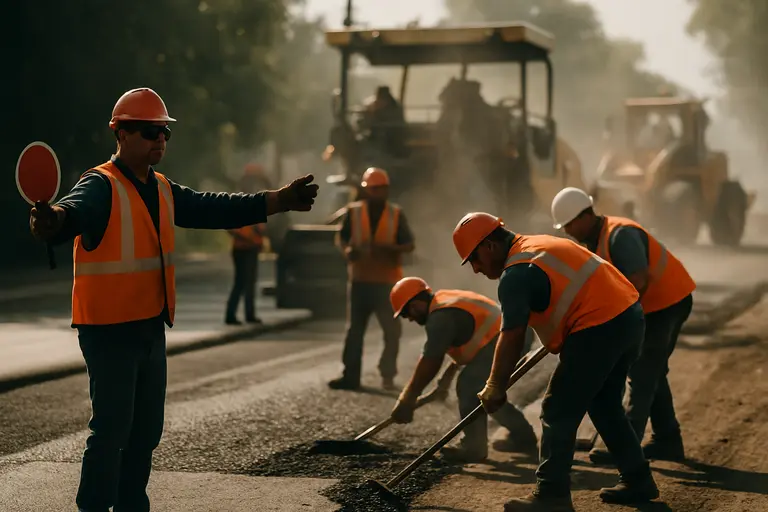
Road safety decisions approved in 2026 added another layer to Stockton’s facility agenda. On June 23, 2026, the City Council authorized a Citywide Systemic Road Safety Devices project with a construction contract valued at $377,976, according to the research materials. Funding included about $87,797 from the Public Facilities Fee Air Quality fund and about $152,470 from Highway Safety Improvement Program funds.
On July 21, 2026, the city also approved design contracts for safety work, according to the research materials. One covered Systemic Intersection Safety Improvements in Districts 2, 3, and 4, with a design services contract of $277,219.06. Another supported a roundabout at Feather River Drive and Driftwood Place in District 1, with about $487,000 appropriated, including a design contract near $361,772.
These projects may not draw the same attention as police technology or major levee work, but they are central to daily quality of life. Intersection improvements and roundabouts can affect school commutes, delivery routes, emergency access, and trips to parks or sports facilities. For event organizers and local businesses, street design can determine whether a venue feels connected to surrounding neighborhoods or isolated by difficult crossings and traffic stress.
Tenmile Slough And Regional Resilience
The Tenmile Slough levee project adds a regional infrastructure dimension to Stockton’s facility planning. The project broke ground on April 18, 2025, and is part of the $1.95 billion Lower San Joaquin River Project. The Governor’s Office reported that, once completed, the project would improve flood protection for about 122,000 residents and $28.7 billion in property along the San Joaquin River in North and Central Stockton Governor’s Office announcement.
Flood protection is often discussed as engineering, but it also shapes community identity and local economics. A city that reduces flood risk is better positioned to protect homes, businesses, public buildings, parks, and transportation corridors. For sports and event activity, flood resilience affects field conditions, access roads, insurance confidence, and the ability to keep civic facilities operating after major weather events.
- Residents are affected through emergency response, street safety, flood protection, and General Fund service choices.
- Businesses are affected through transportation reliability, public confidence, and facility access.
- Community organizations are affected through the condition of libraries, parks, public buildings, and streets used for gatherings.
- City officials are accountable for reporting costs, timelines, outcomes, and tradeoffs in public meetings.
Residents tracking similar county and city issues across the region can compare civic coverage through the County Watchers website, especially where infrastructure decisions cross city lines or affect shared public systems.
What Stockton Safety Investment Means For Civic Identity
The value of Stockton Safety Investment will be tested less by press releases and more by results residents can see. The June 9, 2026, budget approval created a large spending framework. The April 1, 2026, drone contract expansion raised questions about speed, privacy, and review. The June 23 and July 21 road safety actions pointed to practical street-level improvements. The Tenmile Slough work connected Stockton to long-term flood protection for neighborhoods and property along the San Joaquin River.
For Stockton, these decisions should be viewed as one connected facilities strategy. A city’s identity is built through the reliability of its public spaces, the safety of its streets, the readiness of emergency services, and the condition of infrastructure that supports daily life. If council members, department leaders, businesses, and residents keep asking for clear performance data, the investment can become more than a budget category. It can become a civic compact: public dollars tied to safer movement, stronger facilities, and more confidence in Stockton’s shared future.
