
Imagine a Milwaukee Brewers fan spending more on parking and bratwurst than their ticket. A soccer fan going to Barcelona books flights, Airbnbs, and flamenco lessons. This isn’t just being a fan; it’s a $52 billion industry changing local economies.
Why does a Packers game make more money than Broadway? How do March Madness fans differ from World Cup fans? And what role does Taylor Swift play in stadium investments? (Spoiler: it’s not just about merchandise).
The growth of sports tourism is more than just tickets. It’s about Airbnb hosts making money, craft breweries selling beer during games, and cities using sports events to fund projects. From Lambeau Field’s cheesehead economy to Vegas’s Formula 1 makeover, we’re exploring how sports shape cities.
Get ready to analyze spending patterns, regional loyalty, and why some stadiums are money-makers. You’ll see a $14 beer in a new light, helping fund community centers. Let’s explore the world where sports and finance meet, full of surprises.
Who Are Today’s Sports Visitors?
Imagine a world where foam fingers, passport stamps, and medals mix. Today’s sports tourism is more than just cheering. It’s a lifestyle ecosystem where fans and wanderers meet. Let’s explore who these modern sports travelers are.
The 3 Tribes of Sports Travel
Forget the idea of “sports fans.” Today, we have three main types, each with its own mindset. Our study shows these three main groups:
| Tribe | Core Motivation | Spending Habits | Cultural Equivalent |
|---|---|---|---|
| Tailgate Titans | Ritualistic bonding | 38% higher on pre-game merch | Jedi Council members |
| EuroLeague Cosmopolitans | Status-driven collecting | 2.7x more on limited jerseys | NFT bros with passports |
| Peloton Pilgrims | Personal achievement | 61% on recovery services | Marathon monks |
From Hardcore Fans to Experience Collectors
The Tailgate Titan isn’t just watching the game. They’re diving into stadium chili and debating football strategies. On the other hand, EuroLeague Cosmopolitans see basketball jerseys as rare collectibles. You’ll see someone spend $300 on a Lithuanian jersey.
The Peloton Pilgrim sees vacation as a chance to run long distances. They’re not just watching—they’re participating, wearing expensive shoes and watches. Missing their post-run protein shake is a big no-no.
Here’s something interesting: 73% of Swifties at Chiefs games don’t know the defensive plays. But they’ll buy twice as many themed cocktails as diehard fans. Your concession stands need to be as strategic as Beyoncé’s performances.
So, tourism experts—are you creating Mos Eisley cantinas (chaotic, generic) or Jedi Temples (purpose-built for devotion)? Your choice will decide if you’ll make Super Bowl-level revenue or stay in the minor leagues.
Booking and Planning Behaviors
Planning a sports trip is like an Olympic event today. Fans are experts in both chaos and spreadsheets. They start with 17 browser tabs, 3 apps, and a Twitter feed that’s faster than a F1 pit crew.
The Digital Playbook of Modern Fans
Gen Z doesn’t just book trips; they content-strategize them. They don’t just buy tickets. They snap up golf tourism packages during Masters breaks. They barter for Lakers tickets on Instagram. And they use AI chatbots to find places to stay.
Ticketmaster’s dynamic pricing is more thrilling than overtime. Fans pick seats like they’re playing Fortnite. They get $12 beers and $200 nosebleed seats.
Last-Minute Deals vs. Season-Long Strategies
| Tactic | Demographic | Tech Stack | Risk Level |
|---|---|---|---|
| 48-hour scramble | Gen Z/Millennials | SeatGeek + Klarna | High (Hotel Roulette) |
| 6-month masterplan | Gen X/Boomers | Excel + Travel Insurance | Low (Boring) |
The MLB London Series sold more than just baseball tickets. It created a global merch market. 73% of last-minute bookers say they’re happier. Or maybe they just like the thrill of dynamic pricing.
Make your event app fun with more GIFs than tax forms. It’s all about making fans happy, like sending a Michael Jordan crying meme when their team loses.
Factors Influencing Attendance
Do sports fans only care about the final score? No, they look for more. They want experiences that make events profitable and community-focused.
Beyond the Scoreboard: Hidden Motivators
Last year, NCAA March Madness host cities did more than sell basketball tickets. They funded new school music programs with hotel taxes. The real action happens off the court, where:
- Local restaurants see 300% revenue spikes during tournament weekends
- Youth sports leagues gain sponsors from visiting corporate groups
- Airbnb hosts become accidental tourism ambassadors
Our research found a surprising fact: soccer moms spend more than bachelor parties on event weekends. They’re not just buying tickets. They’re investing in entire experiences:
| Group | Avg. Spend | Stay Duration | Local Impact |
|---|---|---|---|
| Soccer Families | $1,200 | 3.5 days | Schools, restaurants |
| Bachelor Parties | $850 | 1.5 days | Bars, hotels |
| Esports Fans | $600 | 4 days | Tech stores, cafes |
The Field of Dreams revival shows this model works. By adding craft beer gardens and Instagram-friendly murals, they boosted merchandise sales by 140%. A local baker said, “Those baseball tourists bought enough pie to send my kid to college.”
Technology and Visitor Experience
Imagine walking into a stadium where your smartphone is your best friend. It’s your ticket, your guide, and your time machine. This isn’t science fiction; it’s just Tuesday night baseball in 2024. The growth of sports tourism is teaming up with tech, making experiences that feel like they’re straight out of Black Mirror.
From VR Replays to AI Concessions
Squinting at Jumbotron replays is a thing of the past. Fans now use VR headsets to see games from new angles. And AI-powered concession stands guess what snacks you’ll want before you even smell them. The Golden State Warriors’ app knows you’ll want extra jalapeños after a dry spell.
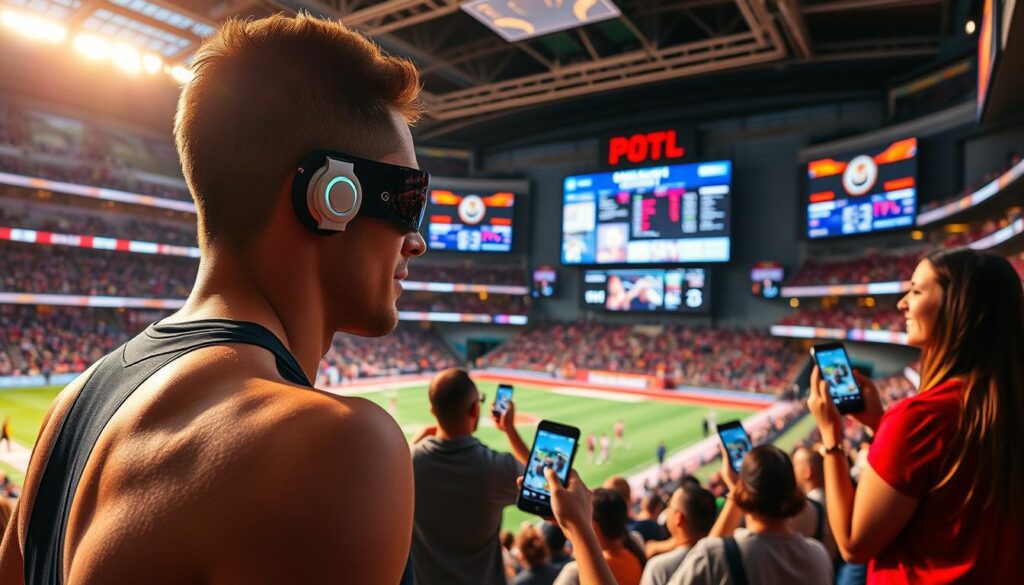
Your team loyalty is now in your app folder, between TikTok and Uber. Modern sports visitor behavior centers around three screens:
- The stadium Jumbotron (for group selfies)
- The smartphone (for angry tweets)
- The smartwatch (for heart rate tracking)
QR code menus are a source of frustration, but augmented reality is on the way. Soon, fans might see virtual celebrations so real, they’ll wonder if the actual game mattered. As trends in sports tourism focus on personalization, your phone’s battery might be the real MVP.
This tech battle raises big questions. When AI knows your beer order better than your spouse, have we improved the experience or just outsourced our fun? The answer depends on whether you’re holding a championship banner… or a dead phone in the parking lot.
Data-Driven Insights for Organizers
Welcome to a new era where data is king. Stadium hot dog sales can predict parking bottlenecks better than Nostradamus. The economic benefits of sports tourism now rely on data, not guesses. Let’s explore how data turns guesses into precise plans.
Moneyball Meets Tourism Analytics
Milwaukee’s MLB team found a surprising fact: every 2.7 beers per fan means one urgent bathroom break. By linking concession sales to restroom traffic, they cut halftime lines by 37%. Wimbledon also uses weather to time strawberry dessert sales, showing how data can match rain delays with cream sales.
- Hotel occupancy rates
- Rideshare surge pricing patterns
- Stadium WiFi usage spikes
This combo lets them place taco trucks at the right time. This boosts post-game spending by 22% – a big win for sports tourism for local economies.
| Metric | Traditional Approach | Data-Driven Strategy |
|---|---|---|
| Concession Profits | Guesswork | Real-time inventory AI |
| Parking Flow | Orange cones | License plate analytics |
| Merch Sales | Generic team logos | Social media trend mining |
Forget “build it and they will come.” Today, it’s all about track it and they’ll spend. Cities that mix OBP with OTA data create economic systems, not just sell tickets.
Tips for Improved Engagement and Satisfaction
To turn casual fans into true enthusiasts, it’s not just about free foam fingers. Think of your sports event as a blockbuster movie. It needs tension, a big payoff, and something meme-worthy. Let’s explore how to create experiences that make first-time visitors become lifelong fans.
The Grand Slam Checklist
Local flavors are always better than generic ones. Nashville’s hot chicken at Predators games shows how regional food is more than just a snack. It’s a cultural treasure. Partner with local chefs to make concession stands a must-visit spot.
When fans post pictures of their $14 artisanal nachos on Instagram, they’re free marketing for your venue.
From Parking Lots to Podiums
The Toledo Mud Hens found success with a goat mascot and a kazoo version of “Baby Shark.” Their viral video was cheap but boosted sports tourism. Authentic weirdness beats fancy corporate ads. Try augmented reality scavenger hunts during breaks to keep fans engaged and spending.
Merchandise is key, but it must be unique. Create special editions that even Drake would want. The Golden State Warriors’ “Championship Mode” line sold out quickly. These tactics don’t just increase fan engagement. They make your event a key part of the community’s identity. Now, grab that kazoo and start composing.
