
Richland Infrastructure Initiatives are moving from planning documents into visible choices about sewer capacity, road access, stormwater control, greenways, and industrial corridors across Richland County. As of October 15, 2026, the main civic issue is not whether infrastructure work matters, but how residents, businesses, county staff, and elected officials track which projects reduce daily problems and which projects prepare the county for growth that has not fully arrived.
The clearest pattern is that water, wastewater, stormwater, and transportation projects are being treated as economic development tools, not only maintenance work. That matters for households waiting on drainage fixes, for employers watching freight routes, for neighborhoods asking for sidewalks and lighting, and for taxpayers evaluating how public money is assigned.
Richland Infrastructure Initiatives And What Changed
Richland Infrastructure Initiatives In Water Systems
State infrastructure funding has placed water and wastewater work near the center of Richland County planning. In FY 2023, the South Carolina Infrastructure Investment Program awarded more than 200 grants statewide, using $1.4 billion in ARPA funds for water, wastewater, and stormwater projects, according to the South Carolina Rural Infrastructure Authority annual report state infrastructure report. The same report identified the Lower Crane Creek Equalization Storage project in Richland County, with a construction period listed from October 2024 through June 2025.
That project was designed to reduce frequent sanitary sewer overflows in northern Richland County through a large storage tank and pump station. The practical impact is local: fewer overflow events can support water quality goals, improve reliability for nearby residents, and create more predictable conditions for residential and industrial growth. These Richland Infrastructure Initiatives show why sewer work is often tied to housing capacity and business recruitment, even when the project itself is underground and easy to miss from the road.
What Residents Can Measure
For residents, the public value of a sewer or stormwater project should be judged by service reliability, fewer disruptions, clearer reporting, and the degree to which the work reduces repeated complaints. For county leaders, the same projects become part of a capacity conversation: where growth can be served, where development may strain systems, and where future budgets may need to reinforce older infrastructure.
Transportation Projects And Daily Access
Road Work Connects Growth Areas
The transportation side of the county’s work is more visible because residents see lane closures, paving crews, greenway work, and intersection changes. Research materials for this article identify multiple Penny Tax Program projects listed as in construction as of October 15, 2026, including Atlas Road Widening Phase 1A, Blythewood Road Widening, Broad River Road Widening, Pineview Road Widening, Crane Creek Greenway, Saluda Riverway Greenway Phase 2, and neighborhood improvement work in Decker/Woodfield and Trenholm/New Castle areas.
The Penny Tax Program, funded by a 1% local sales tax, has a maximum revenue cap of $1.07 billion over 22 years, with research materials indicating that the cap was projected to be reached by late 2026. That timing raises a policy question for Richland County: once the cap is reached, residents will need clear project status reporting, closeout information, and a plain explanation of which commitments remain under contract or still need funding decisions.
Blythewood Interchange Timing Matters
One transportation project with countywide implications is the Community Road realignment and new interchange on I-77 in Blythewood. Research notes cite a South Carolina Department of Transportation update stating that Community Road is being realigned, two left-turn lanes are being built on the northbound off ramp to US 21, relocated US 21, Farrow Road, and the bridge over Norfolk Southern Railroad were expected to open by November 30, 2026, Community Road was expected to reopen by March 31, 2027, and the full interchange, bridges, and roadway were expected to open by June 1, 2027.
Those dates matter for commuters, freight movement, emergency response, and nearby land planning. A new interchange can shift traffic patterns and create development pressure. It can also reduce bottlenecks if the road network and nearby access points are managed carefully. Residents should watch not only ribbon-cutting dates, but also turning movements, signal timing, drainage performance, and access for local roads once the project is fully open.
For related local coverage, our previous reporting on county infrastructure work has tracked how road, stormwater, and public works decisions connect to civic oversight.
Equity, Grants, And Unincorporated Areas
CDBG Priorities Are A Civic Checkpoint
Infrastructure planning is also an equity issue, especially in unincorporated areas where residents may depend on county action for sidewalks, lighting, drainage, and public facilities. Richland County’s Community Development Block Grant program for the 2022–2026 plan years prioritizes projects benefiting low-to-moderate income residents in unincorporated areas, and eligible infrastructure includes sidewalks, lighting, water systems, and public buildings, according to the county’s CDBG program page.
That makes the grant process an important place for civic engagement. If residents want safer walking routes, better lighting, or water-related improvements, the grant cycle can be as important as a road-widening plan. The projects may be smaller than a major interchange, but the neighborhood effect can be direct.
Public Input Should Be Specific
Residents can help make infrastructure feedback more useful by naming the location, describing the recurring problem, noting safety effects, and asking which funding source could apply. A comment such as a sidewalk is needed on a specific road segment near a school, bus stop, or senior housing site gives staff more usable information than a general request for better infrastructure.
- Ask which department owns the project: Public Works, Transportation, utilities, planning, or grants.
- Request the project phase: study, design, right-of-way, bid, construction, or closeout.
- Track dates from official agendas, department updates, and public meetings.
- Ask how low-to-moderate income benefit is measured for grant-funded work.
- Report repeated drainage, sidewalk, lighting, or access issues with photos and dates when possible.
Economic Planning Along The I-77 Corridor
Industrial Growth Depends On Public Systems
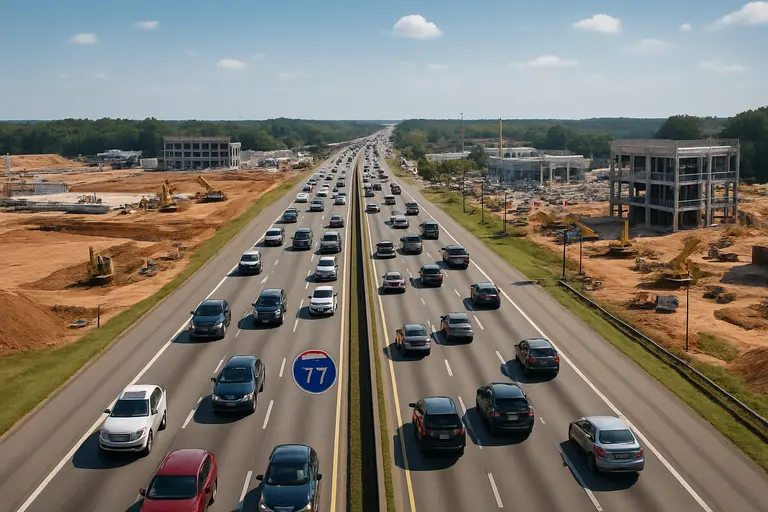
Infrastructure and industrial recruitment are closely linked along the I-77 corridor. Research materials state that on June 2, 2026, Richland County Council approved expanding the boundary of the I-77 Corridor Regional Industrial Park, jointly with Fairfield County, through a public infrastructure credit agreement with DeBartolo Development, LLC, for Project Gregg Street. The stated intent was to promote industrial growth and infrastructure investment in that corridor.
For residents, the key issue is accountability. Industrial park agreements can support tax-base growth and job-site readiness, but public benefits should be tracked against public costs. That means residents and business groups should look for meeting records, project terms, road and utility needs, and follow-up reporting on whether promised infrastructure work happens on schedule.
Job Estimates Need Careful Reading
The research packet also cites an ACEC-SC and University of South Carolina study estimating that infrastructure investments in Richland County between FY 2021 and FY 2027 are expected to produce about 2,576 jobs annually and $3.705 billion in cumulative economic output over seven years. The same research notes state that environmental services agencies, including water and wastewater infrastructure, account for more than 98% of the economic output from infrastructure investment in the county, with transportation and broadband together under 2%.
Those figures point to a practical lesson: not every visible project drives the largest economic effect. A widened road may be easier to understand than sewer capacity, but water and wastewater systems can determine whether housing, industry, and public facilities can function. Regional business readers can also gain insights from chamber-related updates on Trinity Chamber, a related site in the same network.
Richland Infrastructure Initiatives And Civic Planning
What County Residents Should Watch Next
The next test for Richland Infrastructure Initiatives is public follow-through. Richland County residents should watch whether projects that were listed as under construction on October 15, 2026, move into completion, whether the Penny Tax revenue cap changes reporting needs, whether CDBG-funded work reaches unincorporated communities with documented need, and whether I-77 corridor investments produce clear public benefits.
Infrastructure planning can feel technical, but the civic questions are direct. Who benefits first? Which neighborhoods still wait? Which projects reduce safety risks? Which investments support small businesses and employers? Which public documents show spending, schedules, and results?
Richland County’s infrastructure work now sits at the intersection of quality of life and economic planning. Residents do not need to be engineers to participate. They need dates, locations, official records, and persistence in asking how each project improves daily life in the communities it is meant to serve.
