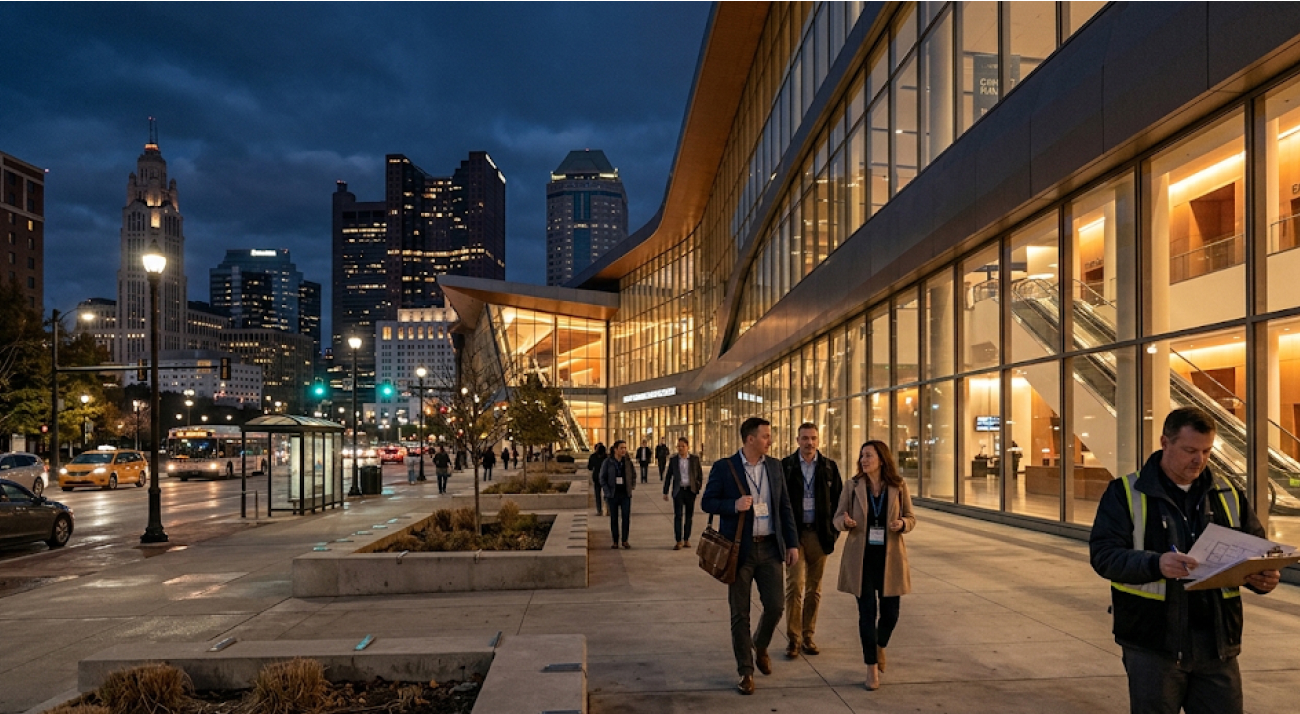
Columbus, Ohio, is preparing to make a series of decisions that could shape its downtown visitor economy for the next two decades. The Franklin County Convention Facilities Authority (FCCFA) has launched a comprehensive master-planning process covering the Greater Columbus Convention Center, Hilton Columbus Downtown, Nationwide Arena, six parking facilities, and authority-owned development sites. The effort comes as a facility assessment identifies approximately $190 million in long-term improvement needs at the convention center, creating a financial and strategic question for one of the region’s most important tourism assets.
On September 25, 2026, the FCCFA announced that Seattle-based LMN Architects would lead the planning process, with support from Columbus-based MKSK and AECOM. The authority expects the process to take approximately 12 months and include input from public agencies, hospitality businesses, community representatives, developers, and other stakeholders. An October 15 report by Axios brought renewed attention to the $190 million estimate and the broader planning effort.
The initiative is larger than a repair program. Columbus must determine how its convention facilities, arena, hotel, parking infrastructure, and surrounding properties can function as a connected downtown destination. The decisions will influence future event capacity, visitor spending, maintenance costs, transportation access, and opportunities for private development.
For local businesses and economic development leaders, the central question is whether Columbus can convert its existing infrastructure into a stronger, more competitive visitor economy without committing public resources to projects that lack a clear financial case.
The $190 Million Estimate Is Only One Part Of The Challenge
The reported $190 million in convention center improvement needs provides a starting point for the authority’s planning process. The estimate comes from a facility condition assessment commissioned in 2025, which examined the building’s long-term capital requirements. According to the FCCFA, the identified needs include essential infrastructure such as roofing, mechanical systems, and back-of-house operations.
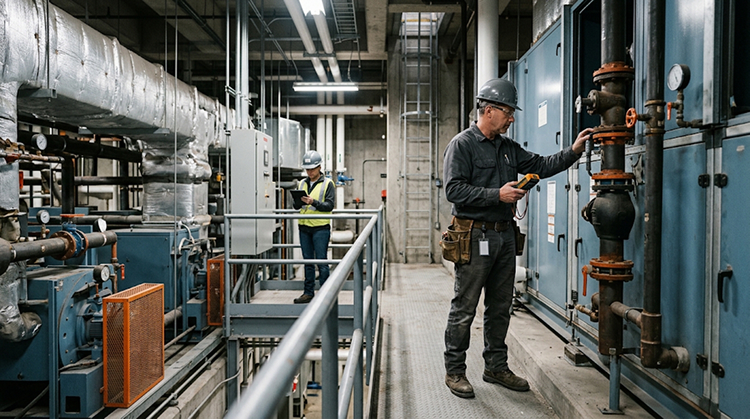
These investments may not produce dramatic architectural changes, but they are fundamental to a convention center’s ability to operate reliably. Aging heating, ventilation, and air-conditioning equipment can affect guest comfort and operating efficiency. Roof problems can expose interior facilities to damage, while outdated support areas can complicate event setup and servicing.
The Greater Columbus Convention Center opened in 1980 and has expanded several times, most recently through a major expansion and renovation completed in 2017. The facility now encompasses approximately 1.8 million square feet, giving Columbus substantial capacity for exhibitions, meetings, trade shows, and large gatherings.
The authority has already been investing in its facilities. In March 2025, the FCCFA described a capital improvement program totaling nearly $164 million over five years across its properties, including the convention center and Nationwide Arena. Projects included HVAC replacements, roof repairs, and improvements to guest amenities.
The new master plan will need to distinguish immediate maintenance requirements from larger redevelopment opportunities. The $190 million estimate should not be interpreted as an approved construction budget or a final price for the wider downtown campus.
The FCCFA’s planning announcement explains that future recommendations will be shaped by operational needs, market conditions, financial feasibility, and stakeholder input.
Columbus Is Planning A Connected Downtown Campus
One of the most consequential aspects of the initiative is its campus-wide scope. The FCCFA owns and operates several facilities that serve different purposes but depend on overlapping visitor, transportation, and hospitality networks.
The Greater Columbus Convention Center attracts meetings and trade shows. Nationwide Arena hosts Columbus Blue Jackets hockey, concerts, and other large events. The Hilton Columbus Downtown accommodates convention attendees and other visitors, while the authority’s parking facilities support guests arriving by car.
Planning these assets independently could miss opportunities to improve how they work together. For example, changes to pedestrian routes, parking access, hotel capacity, or public gathering areas could affect the visitor experience across multiple properties. A more coordinated approach could also reveal opportunities to redevelop underused sites or improve connections with nearby downtown districts.
LMN Architects has experience working with the authority, including on the convention center expansion and studies involving the East Parking Lot and potential passenger rail connections. AECOM is supporting transportation planning, while MKSK is contributing landscape architecture and urban planning expertise.
The FCCFA’s master-planning background identifies connectivity, sustainability, guest experience, and future development as central questions. Potential hotel development, improvements to public spaces, and better links to transportation networks are areas for investigation—not approved construction commitments.
For downtown businesses, this distinction matters. A coordinated campus could help visitors move between meetings, restaurants, entertainment venues, and hotels without unnecessary friction. However, the value of those improvements will depend on actual visitor behavior, the cost of implementation, and whether the plan produces measurable gains over time.
Convention Demand Will Determine Which Investments Make Sense
A successful master plan must respond to the market rather than assume that every possible expansion will be worthwhile. Convention centers compete nationally for associations, corporate meetings, exhibitions, and trade shows. Organizers weigh available space, hotel rooms, transportation, accessibility, costs, and the quality of the surrounding destination.
Columbus has several advantages, including a large convention facility, an adjacent full-service hotel, an arena, and a downtown environment with restaurants and entertainment options. These assets give the city a foundation for attracting different kinds of events throughout the year.
Yet new infrastructure does not automatically produce more bookings. Expanding meeting space or adding hotel rooms can increase capacity, but the investment only makes financial sense if demand supports the additional operating and financing costs.
The master plan should therefore examine which event categories Columbus is best positioned to attract. Some conventions need large exhibition halls, while others prioritize flexible meeting rooms, ballrooms, breakout spaces, or access to nearby hotels. Better configuration and scheduling may sometimes deliver more value than a major expansion.
The authority’s planning team will need to compare current bookings, future demand, competing destinations, and the economics of proposed upgrades. It should also assess whether improvements could allow Columbus to host overlapping events or serve larger conventions that currently exceed the facility’s practical capacity.
Experience Columbus, the region’s destination marketing organization, will be an important stakeholder in connecting facility decisions to the meetings market. The broader objective is to ensure that capital spending supports actual demand rather than an abstract goal of building a larger convention campus.
Nationwide Arena Adds A Sports And Entertainment Dimension
The master plan also covers Nationwide Arena, extending its implications beyond the convention business. The downtown venue is home to the Columbus Blue Jackets and hosts concerts, special events, and other entertainment programming that attracts visitors from across Ohio and beyond.
Maintaining an arena involves substantial long-term capital requirements. Public records show that Columbus uses an admissions tax to help fund infrastructure investment at Nationwide Arena. In March 2026, Columbus City Council approved approximately $3.475 million from the Facility Stabilization Fund for arena improvements. A further ordinance passed in September authorized an estimated $870,000 in additional funding associated with 2026 admissions-tax proceeds.
These allocations illustrate how venue maintenance can depend on dedicated revenue streams. They also reinforce the importance of planning ahead: arena infrastructure must be maintained even in years when event schedules, operating costs, or economic conditions fluctuate.
The City of Columbus’ September 2026 ordinance identifies the additional $870,000 allocation for infrastructure investment at Nationwide Arena.
The master plan could help the authority coordinate the arena’s future needs with those of the convention center, hotel, and nearby properties. However, the two venues have different operating patterns and customer requirements. Their capital programs should be coordinated where that creates clear advantages, without assuming that a single development strategy will work equally well for both.
For Columbus, the broader opportunity lies in combining business meetings, sporting events, concerts, and hospitality into a more consistent downtown calendar.
Hotels And Parking Could Influence Future Development
Hotel availability and transportation access are essential parts of the convention economy. Event organizers need enough rooms within a convenient distance of meeting spaces, while visitors expect predictable access to venues and nearby attractions.
The Hilton Columbus Downtown already sits within the FCCFA campus, providing a direct connection between accommodation and convention activity. The master plan will examine whether additional hotel development or changes to existing facilities could strengthen that relationship.
Parking also deserves careful evaluation. The authority operates six parking facilities, and the location, condition, pricing, and accessibility of those assets influence how visitors arrive and move around downtown. Future planning could assess whether parking properties should remain in their current form, be modernized, or accommodate other uses where appropriate.
These decisions involve trade-offs. Additional hotel capacity could help attract conventions, but too much supply could place pressure on room rates and occupancy. Redeveloping parking land could create new commercial or public spaces, but the authority would need to account for replacement parking, construction costs, and changes in visitor travel patterns.
The planning process should also consider walking routes, public transit, rideshare access, and potential regional transportation connections. A visitor’s experience does not begin at the convention center entrance; it begins with the journey to Columbus and continues through the surrounding downtown environment.
By evaluating these elements together, the authority can identify projects that improve the visitor experience while supporting regional business growth. The strongest proposals will be those that solve clearly documented problems and offer benefits that can be measured after completion.
Public Investment Needs Clear Financial Benchmarks
A 20-year planning horizon creates an opportunity to establish more consistent standards for evaluating public assets. Instead of treating each repair or expansion as an isolated decision, the FCCFA can compare projects by urgency, expected operating savings, effect on event demand, and contribution to downtown activity.
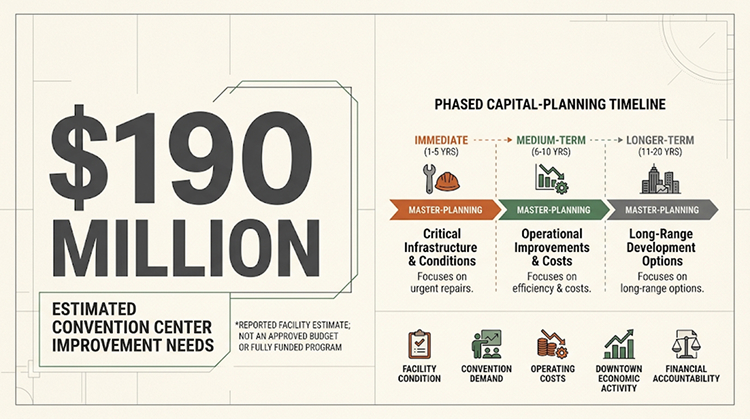
The first step is to separate mandatory infrastructure work from optional enhancements. Roof repairs, mechanical replacements, and critical building systems may be necessary to protect existing operations. Additional meeting space, new hotels, or redevelopment of parking sites require a different analysis because their benefits depend more heavily on future demand.
The authority should also account for the full cost of ownership. Construction budgets alone do not capture maintenance, utilities, staffing, financing, replacement cycles, or future renovations. A project that looks affordable at the construction stage may become a more substantial obligation over several decades.
A transparent evaluation framework could include several measures:
- Facility condition: the urgency of repairs, remaining useful life of major systems, and risks associated with delaying maintenance.
- Market performance: convention bookings, attendance, room nights, event size, and demand for additional space.
- Operating performance: energy use, maintenance expenses, staffing requirements, and annual facility costs.
- Downtown economic activity: visitor spending, local business participation, employment, and activity beyond the venue itself.
- Financial accountability: approved budgets, funding sources, project milestones, and performance reports after completion.
These indicators would help the authority explain why certain investments take priority and how results compare with initial expectations. They would also give residents and businesses a more useful basis for assessing the long-term value of public facilities.
Small Businesses Need To Benefit From The Visitor Economy
Large venues can generate substantial visitor traffic, but the distribution of that activity matters. Hotels, restaurants, retailers, transportation providers, caterers, and event contractors may all benefit from conventions and arena events. The extent of those benefits depends on where visitors spend money and how easily they can reach local businesses.
A campus plan that prioritizes convenient pedestrian routes and links to surrounding districts could help more visitors discover nearby restaurants and shops. Public spaces and a varied commercial mix may encourage attendees to arrive earlier, remain downtown after events, or return outside the convention calendar.
The authority and its partners can also work with local business organizations to communicate upcoming event schedules, identify supplier opportunities, and help smaller companies prepare for demand. Local procurement and workforce development can make the connection between large public facilities and the wider economy more tangible.
However, the plan should not assume that all visitor spending represents new economic activity. Some purchases may replace spending that would have occurred elsewhere in the region. Measuring the additional impact requires attention to visitor origins, spending patterns, employment, and changes in business performance.
Columbus can use the planning process to define how these outcomes will be measured. That would make the economic case for future investment more credible than relying on broad estimates of potential visitor spending alone.
The Next 12 Months Will Shape Columbus’ Long-Term Options
The FCCFA’s master-planning process is expected to take approximately 12 months, giving the authority time to evaluate facility conditions, market demand, transportation, redevelopment opportunities, and community priorities. The outcome is intended to be a roadmap for future decisions, not an automatic approval for every project under consideration.
That distinction is important because Columbus faces choices about timing as well as scale. Some repairs may need prompt attention, while larger expansions or property redevelopment could require additional studies, financing plans, public approvals, and private-sector participation.
The authority will also need to balance the needs of different users. Convention organizers require reliable facilities and flexible space. Sports and concert audiences need convenient access and an appealing event experience. Hotels and restaurants depend on visitor demand, while residents have an interest in responsible public spending and a downtown that remains accessible outside major events.
The most useful outcome would be a phased plan that identifies immediate infrastructure priorities, medium-term opportunities, and longer-term projects that should proceed only if market and financial conditions support them.
Columbus already has a substantial convention facility, a downtown arena, an adjacent hotel, and a network of parking assets. The next phase is about making those resources work more effectively together.
The $190 million convention center repair estimate has brought attention to the scale of the challenge, but the larger opportunity is strategic. If the FCCFA uses the next year to establish clear priorities, test demand assumptions, and define measurable performance standards, Columbus could strengthen its downtown visitor economy while making more disciplined decisions about public investment over the next 20 years.
