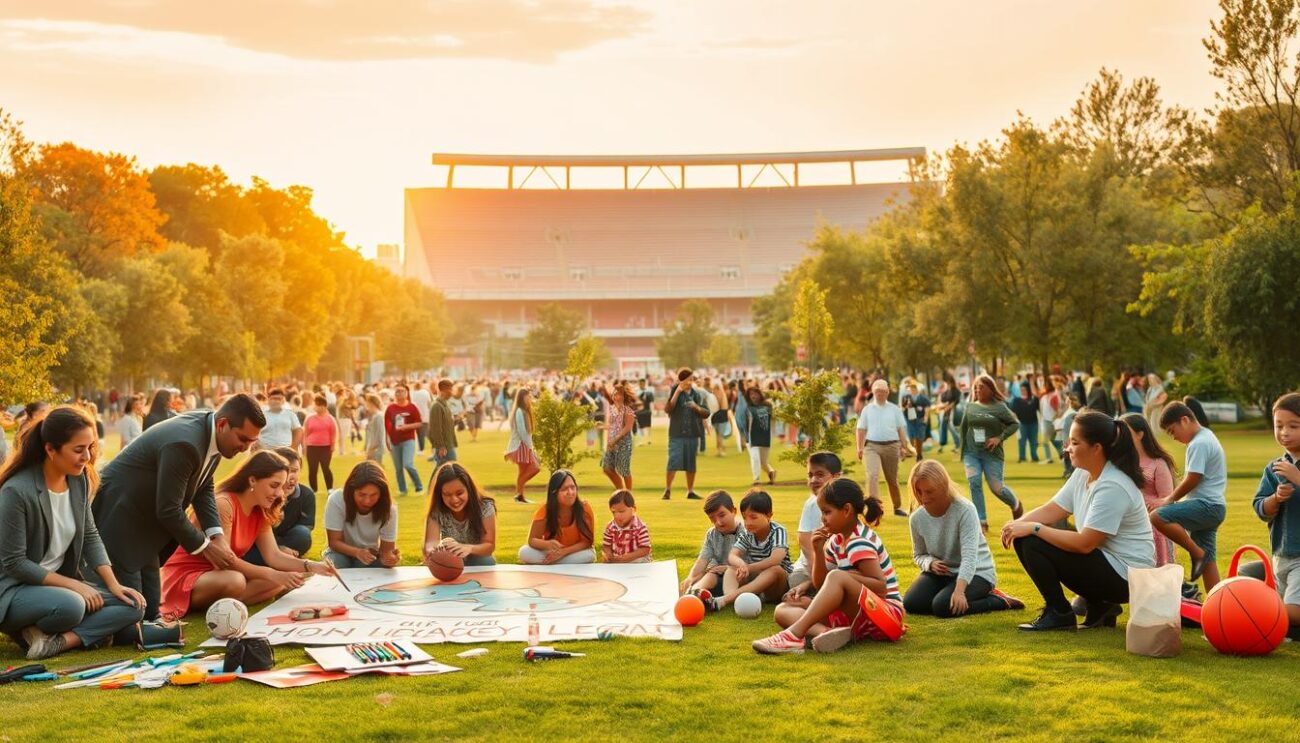
When a city hosts a major sports event, it’s just the start. The real success is the lasting impact it leaves. This lasting benefit is known as a community legacy.
It’s more than just a short-term economic gain. A true legacy brings social, cultural, and infrastructural changes to a region.
Gabby Turner of the Bay Area Host Committee (BAHC) says, “The true value of these events lies in their ability to leave a positive and lasting economic and community legacy.” Her team is already working on this for future events.
They plan to create jobs and improve local sports fields. They also host community events and free sports clinics. These actions build excitement and pride across nine counties.
This careful planning turns short-term events into lasting changes. It shows how big events can spark growth that lasts for years to come.
Planning and Implementing Legacy Projects
Sports events can be more than just memories. They can spark lasting changes in cities and communities. To make this happen, a careful plan is needed. This plan turns the excitement of the event into lasting benefits for everyone.
Legacy is about more than just what we see. It’s about the good and bad effects that last long after the event. This can be something as simple as a new stadium or as complex as a sense of pride in the community. The goal is to focus on the good and make sure the bad doesn’t last.
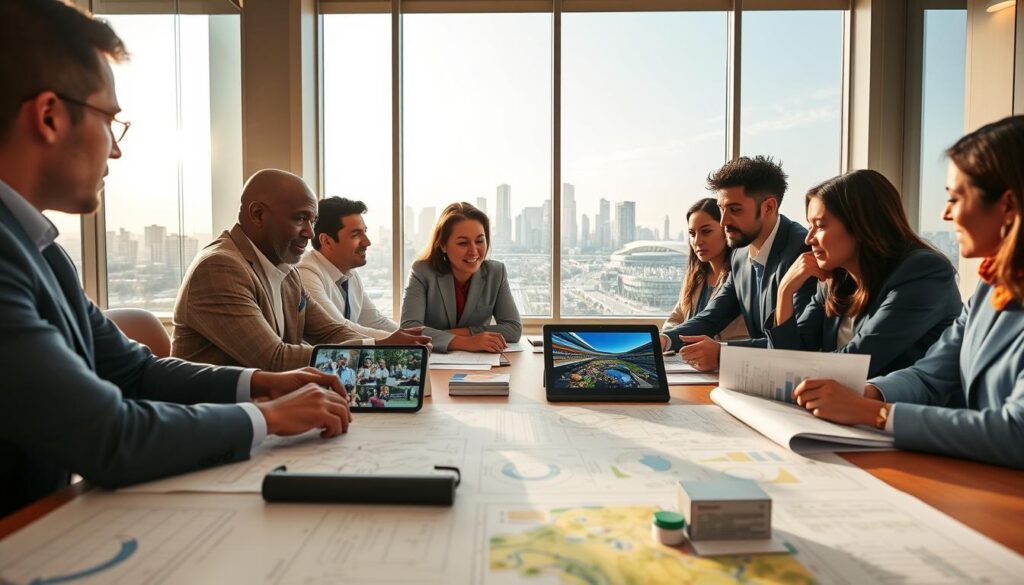
- Social Development: Programs that improve public health, education, and community cohesion.
- Economic Growth: Initiatives that boost tourism, create jobs, and stimulate local business long after the crowds leave.
- Infrastructure: Critical upgrades to transportation, housing, and public utilities that serve the population for decades.
- Sport Development: Facilities and programs that increase public participation in athletics and nurture future talent.
Building new infrastructure is often the biggest challenge. Projects like airport expansions and new metro lines need careful planning. The aim is to make sure these investments are useful for years to come, not just a waste of money.
Barcelona’s 1992 Olympics are a great example of success. The city used the event to improve its waterfront and transportation. These changes made the city better for everyone and boosted its appeal.
On the other hand, Athens 2004 shows what can go wrong. While the games brought some new infrastructure, there was no plan for what to do after. This left some venues unused and added to the city’s expenses. This shows that just building for the event is not enough.
Using the event as a tool for change is key. This means using the event’s momentum to speed up projects that already fit into the city’s plans. The event should help the community, not just be the focus.
Starting with clear goals is important. Planners need to think about how projects will help the community. Will a new train line make commutes easier? Can a stadium host local sports and events? Answering these questions helps ensure projects have a lasting purpose.
Staying within budget and making sure projects are used is critical. This requires careful planning and open decision-making. Working with financial experts and urban planners from the start is essential. They help balance dreams with what is practical and beneficial in the long run.
The key to success is looking ahead and planning for the future. Cities need to design with flexibility in mind and always think about how their actions will affect future generations. When done correctly, the legacy is not just buildings, but a stronger, more united community.
Engaging Community Stakeholders
Working with community stakeholders makes urban development better. It turns it into a team effort that meets real needs. For projects from big sports events, this teamwork is key. It connects big plans with real benefits for the community.
Ignoring this teamwork can lead to big problems. The 2016 Rio Olympics forced about 65,000 people to move. New roads and a big park came at a high cost to people’s lives. This shows that ignoring people’s needs can hurt a community.
But, there are good examples. The Bay Area Host Committee (BAHC) works well with local sports teams and groups like America SCORES. They make sure projects fit what the community really needs.
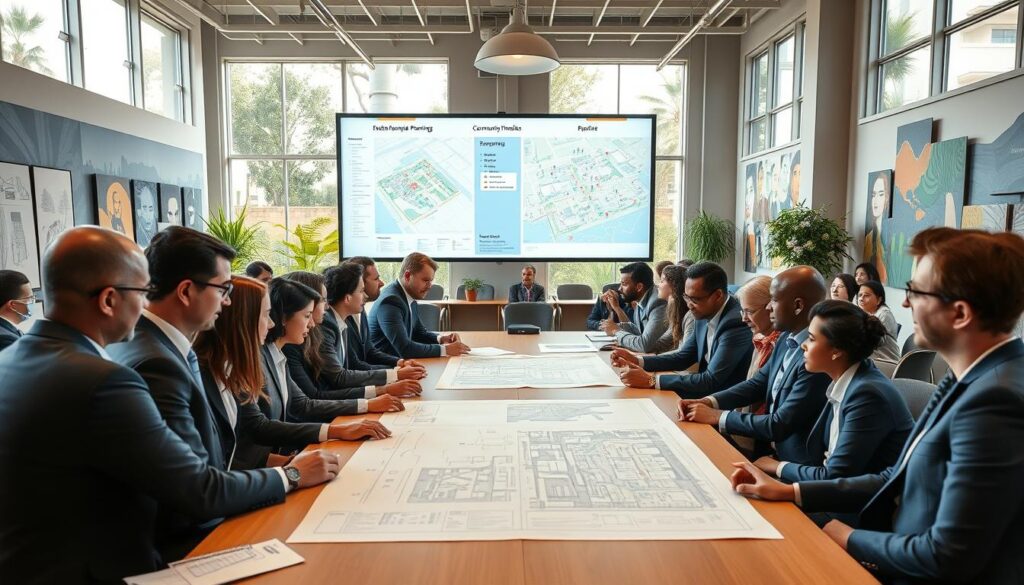
To really work together, we need a clear plan. Communities should be active, not just watching. Here’s how to make that happen:
- Prioritize Transparency from Day One: Share project details clearly and simply. This lets everyone join in.
- Integrate Community Input in Early Planning: Use meetings and surveys to hear from people. Their ideas should shape the project.
- Forge Equitable Partnerships: Work together, not just talk. Local groups should help manage the project. This ensures benefits stay in the community.
- Implement Safeguards Against Displacement: Make plans to keep housing affordable and small businesses open. This keeps the community balanced.
Doing this right makes new infrastructure a force for good. It’s not just about building things. It’s about making a community better for years to come. The goal is to create something people are proud of, not something they regret.
For more on how this works, check out our case studies of city transformations. These stories show the power of working together.
Funding and Supporting Legacy Initiatives
The BAHC’s Bridge to Work initiative has created over 500 jobs. It shows how funding can build a community legacy. This program works with local teams and nonprofits, proving that money should be used wisely.
Money is key to lasting changes like more jobs, tourism, and new investments. But, these gains can fade without ongoing support. Events may end, but ongoing needs like field upkeep and staff salaries remain.
Successful projects need a mix of funding sources. This approach spreads risk and ensures stability. The best models are:
- Public-Private Partnerships (PPPs): Governments and businesses work together. The public provides land or infrastructure, while private partners bring money and know-how. This model is great for big projects like venue renovations.
- Corporate Sponsorships: Companies fund programs that match their values. For example, a sports store might support youth clinics. Banks might fund financial literacy workshops. These partnerships offer mutual long-term benefits through community goodwill and brand association.
- Grants and Endowments: Foundations, sports bodies, and non-profits offer grants for specific goals. An endowment fund can provide ongoing income, supporting operations year after year.
| Funding Model | Key Characteristics | Ideal For | Potential Challenge |
|---|---|---|---|
| Public-Private Partnership (PPP) | Shared risk, pooled resources, long-term contractual agreement | Major infrastructure (stadiums, parks, training facilities) | Complex negotiations; requires strong oversight |
| Corporate Sponsorship | Brand-driven, marketing alignment, often program-specific | Youth sports clinics, equipment donations, named scholarships | Funding may be tied to marketing cycles, not permanent needs |
| Grants & Endowments | Mission-focused, can be restricted or unrestricted funds | Ongoing programming, staff salaries, research initiatives | Competitive application processes; reporting requirements |
Programs like Bridge to Work succeed by combining these models. They get initial funding from a corporate sponsor, use a non-profit for execution, and aim for results that attract ongoing grants. The focus on measurable outcomes—jobs filled, skills learned—makes the case for continued investment.
Accountability is key to lasting impact. Clear financial planning is essential. Communities must demand transparent budgets showing how funds benefit them. Is the money for a decade or just a season?
Strategic funding does more than pay bills. It builds a community legacy by ensuring sports clinics, playable fields, and job training. By securing diverse revenue and demanding fiscal responsibility, communities can transform short-term event energy into lasting, positive change.
Case Study: Long-Term Community Impact
The true measure of a major sports event is its lasting impact. Real-world examples show that careful planning is key. It determines if an event leaves a positive mark or creates lasting problems.
Barcelona’s 1992 Olympics changed the city’s waterfront and boosted tourism for years. South Africa’s 2010 FIFA World Cup built new stadiums but was criticized for neglecting social needs. The 2016 Rio Olympics had mixed results, with some urban renewal but also community displacement.
These examples teach us a valuable lesson. Success comes from projects that benefit residents long after the event. Current efforts, like intentional legacy planning for the 2026 FIFA World Cup and Super Bowl LX, aim to do better. They want to include community benefits in the infrastructure plan from the start.
A lasting community legacy needs careful planning. It combines physical upgrades with social programs and involves locals in decisions. It also secures funds for upkeep. This way, new infrastructure can help communities grow and stay strong for years to come.
