
What happens when a city swaps its construction gear for sports gear? We’re exploring urban glow-ups that outshine any TikTok makeover. From Barcelona’s Olympic magic to Atlanta’s Super Bowl show, we’re looking at how global spectacles change cities.
Barcelona turned industrial areas into beaches with the 1992 Games. That’s not just urban planning; it’s sports alchemy. London 2012 turned the East End into an athlete’s village. But does this metabolic makeover always pay off? Atlanta spent $400M on Super Bowl LIII – did it score or fumble?
We’re analyzing how hosting gigs change a city’s DNA. It’s not just about temporary venues; it’s about lasting economic benefits. Can a short game fund long-term transit upgrades? Does a brief athletic event justify years of tourism?
Stay with us as we cut through the PR and explore hard-hat economics. You’ll learn which cities turned stadium dreams into real Main Street successes – and which made empty promises.
Introduction: Setting the Stage
Imagine your city as the main character in a blockbuster movie. Instead of explosions, there are stadium roars. Hotel revenue is the treasure. Hosting major sporting events is more than just cheers. It’s a high-stakes economic game where cities can win big or lose everything.
The benefits of hosting sporting events are huge: global exposure, better infrastructure, and lots of tourism dollars. London’s 2012 Olympics brought in £760 million from visitors, turning the East End into a tech hub. But Tokyo showed that you can win without crowds, thanks to digital spectatorship.
But there’s a catch. Every success story has a flip side. Think about:
- 150,000 fans = 2,000 tons of nacho debris (ask Phoenix)
- Stadiums that turn into ghost towns fast
- “Legacy projects” that cost way too much
The real challenge is balancing sports events tourism impact with keeping the city running smoothly. It’s like planning Coachella while fixing your sewage system. Do it right, and you’re Barcelona 1992, reborn. Mess up, and you’re Rio 2016, with empty Olympic villages.
So, what makes a city a winner? It’s all about strategic surplus thinking. It’s not just about filling hotels. It’s about building infrastructure that lasts long after the event. Nobody wants their $3 billion stadium to be a parking lot.
Atlanta and the Olympics: Global Spotlight and Urban Renewal
When Atlanta won the 1996 Olympics, it was more than just about winning medals. It was about changing the city for the better. The city aimed to turn old neighborhoods into new ones through urban sports event success. But, the story’s outcome depends on who’s telling it.
The 1996 Legacy Playbook
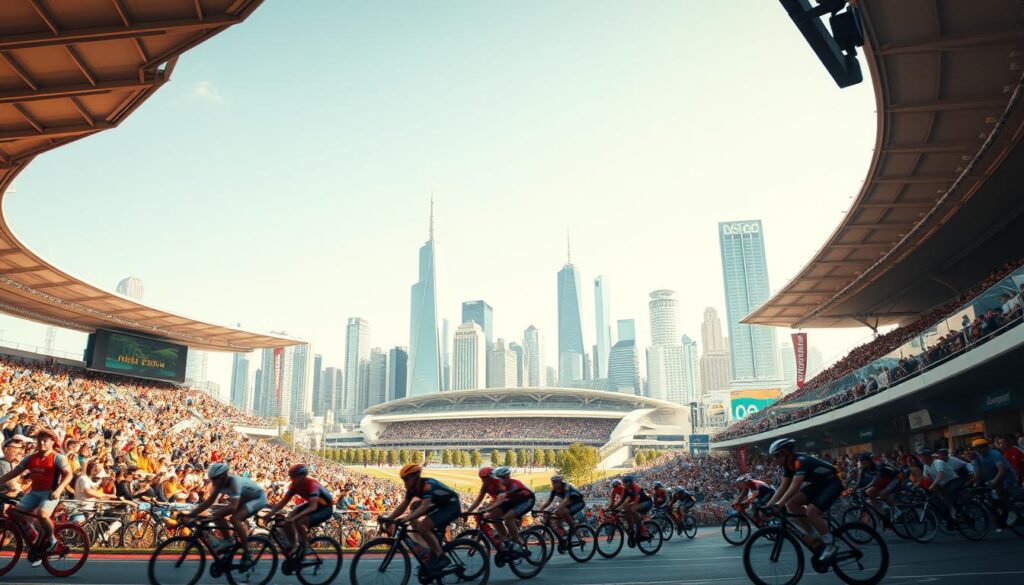
Atlanta’s Olympic plan was simple: get global attention, improve infrastructure, and revitalize neighborhoods. Today, the Mercedes-Benz Stadium is a symbol of success, hosting big events and showing off the city’s economic strength. Yet, the real challenge is keeping promises made during the Olympics.
Westside Neighborhoods – Progress vs. Promises
Just 10 minutes west of the stadium, the true story is told. In English Avenue, 40% of homes are owned by absentee landlords. Atlanta succeeded in building new venues but failed to deliver on affordable housing and supporting small businesses.
| Olympic Promise | 2023 Reality | Verdict |
|---|---|---|
| 20,000 new jobs | 9,800 sustained positions | ⬇️ 51% shortfall |
| Westside revitalization | 32% vacant lots | 🏚️ Blight persists |
| Affordable housing units | 1,200 built (4,500 promised) | 🎭 Understudy performance |
The lesson is clear: sports venues alone are not enough. Atlanta’s Westside shows what happens when cities focus too much on global fame and not enough on their people. It’s a warning for cities considering big sports projects over education and community needs.
London 2012: Tourism and Long-Term Gains
Did you know London pulled off an amazing trick? The 2012 Olympics didn’t just host Usain Bolt’s fast sprints. They created a £14.6 billion economic spell that’s giving back. Let’s look at how a once-bankrupt area became a tech hub and 70,000 volunteers changed civic engagement.
From East End Dereliction to Tech Hub
Stratford’s transformation is incredible. The Olympic Park’s post-games glow-up brought:
- A 560-acre innovation district with 4,500 tech jobs
- £2.8 billion in private sector investment
- Europe’s largest indoor food market
Tourism experts, take note: Hotel rates near the park are 82% during peak times. The economic multiplier sports events effect turned old factories into TikTok’s European HQ. It’s a big change from the rusty nails and broken dreams of the past.
The Volunteer Multiplier Effect
London’s 70,000 “Games Makers” are making a lasting impact. Here’s what they’ve achieved:
- 22% reported career advancements after volunteering
- Tourism businesses saw 37% higher customer satisfaction
- Local charities got 1.2 million more volunteer hours
These volunteers didn’t just help with directions. They became ambassadors for London’s service economy. When your bartender is an Olympic volunteer turned mixology champion, every drink is liquid marketing gold.
Small City Turnarounds: Example Cities in the US
America’s mid-sized cities are making their own comeback stories through sports event community development. They don’t need big budgets or global fame. Instead, they use smart strategies to boost their economies.
Milwaukee’s NBA Cinderella Story
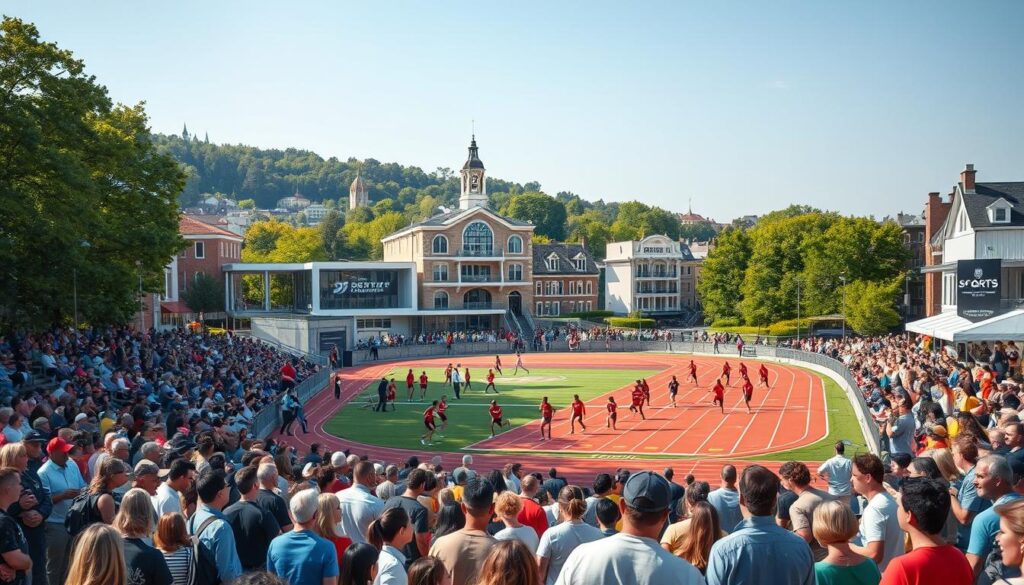
The Bucks’ 2021 championship win did more than just bring home rings. It also brought new life to downtown Milwaukee. The team’s playoff earnings helped create a 30-block entertainment district filled with breweries and startups.
Here’s a key fact: 82% of the construction workers for Fiserv Forum were local. This isn’t just about jobs; it’s about building a stronger community. Who needs Silicon Valley when you have Giannis?
Phoenix’s Food Waste End-Around
Phoenix didn’t just measure Super Bowl success by ticket sales. They tracked compost bins instead. In 2023, they diverted 90% of stadium waste, turning avocado skins and beer cups into park soil.
They also partnered with local schools. This turned game-day waste into free meals for students. It’s a genius way to reduce waste and help the community.
| City | Event | Economic Impact | Community Win |
|---|---|---|---|
| Milwaukee | NBA Finals | $57.6M direct revenue | 1,200+ local construction jobs |
| Phoenix | Super Bowl LVII | $22M tourism boost | 90% waste diversion rate |
Milwaukee and Phoenix show that you don’t need the Olympics to succeed. Milwaukee used basketball to revitalize its city. Phoenix turned stadium waste into a sustainability success story.
So, what’s the lesson for city planners? Focus on lasting benefits, not just temporary wins. A successful NBA playoff run can boost your economy more than any tax incentives. Just ask Milwaukee’s rooftop bar owners.
Lessons from Less Successful Events
Not every stadium story ends happily. For every success, there’s a big failure waiting. Let’s look at two examples where events left taxpayers with big losses.
Rio’s Olympic Ghost Towns
The 2016 Summer Games turned parts of Rio into a ghost town. Today, the Maracanã Stadium is almost empty. The Olympic Village apartments are empty too. The main mistakes were:
- 85% of athlete housing is empty now
- A $700 million velodrome is used for parking
- 12,000 families lost their homes for venues that were never used
Local officials thought tourists would flood in. But, people prefer watching sports on TV than traveling to Brazil.
Montreal’s Debt Stadium
The 1976 Olympics in Canada left a big debt. The “Big O” stadium, with its broken roof, cost $1.5 billion. Here are some key points:
| Metric | Montreal 1976 | Rio 2016 |
|---|---|---|
| Initial Budget | $120M | $2.8B |
| Final Cost | $1.5B | $13.2B |
| Debt Retirement | 2006 (30 years) | Ongoing |
| Functional Venues (2023) | 4/22 | 7/33 |
Montreal’s stadium shows the danger of big dreams without checks. Rio’s story teaches us to be honest about the real costs of sports events.
Key Metrics Used in Economic Impact Assessments
Hotel receipts and Uber surge pricing are like canaries in the economic coal mine for a city’s sports event ROI. Let’s explore the numbers behind the excitement.
The Hotel Revenue Litmus Test
Atlanta’s Super Bowl brought in $400 million in hotel revenue. It wasn’t just luck. It was the result of high demand and smart pricing:
- Premium pricing during peak demand windows
- 100% occupancy rates for 72+ hours
- Ancillary spending at nearby restaurants/bars
Smart cities keep an eye on these figures. They know hotel taxes help fund public services even after the event is over.
Multiplier Effect Math
The R(t)=R0+∫f(s)ds model is more than just math. It shows the domino effect of every dollar spent. Imagine this:
| City | Event | Direct Revenue | Multiplier | Total Impact |
|---|---|---|---|---|
| Atlanta | Super Bowl | $400M | 2.3x | $920M |
| Houston | Final Four | $180M | 1.8x | $324M |
| Phoenix | WM Open | $250M | 2.1x | $525M |
The multiplier is like a Black Friday shopping spree for local businesses. Workers spend their earnings, and Uber drivers upgrade their cars. The cycle continues.
But there’s a catch. These models only work if cities actually track secondary spending. Without it, it’s like trying to bake a cake without half the ingredients.
What Can Your City Learn?
Hosting big events is like playing Dark Souls, not Madden NFL on rookie mode. It’s a tough urban strategy. We need to stop relying on PowerPoint consultants. Let’s find ways to win big without losing public trust.
The Bid Book Balancing Act
Barcelona’s 1992 Olympics plan is a legend in urban strategy. It’s like LeBron James dominating for 30 years. They made venues into community based sports tournaments hubs, not just showpieces.
Qatar’s World Cup spent $220B on fancy stadiums. But it also left behind migrant worker graves. Paris 2024 shows how to do it right. They’re cleaning the Seine for swimming events and creating parks that will last long after the Olympics.
Smart cities ask, “How many problems can this solution solve?” instead of focusing on how shiny it looks.
Community Engagement Playoffs
LA’s handling of homeless issues near SoFi Stadium is a lesson. They didn’t ignore the problem. Instead, they:
- Turned shuttle lots into temporary homes
- Trained stadium workers for hotel jobs
- Used ticket tax for mental health services
This isn’t just being nice. It’s a smart way to manage crowds. Phoenix tried to ignore homeless issues during the Super Bowl. But it only made things worse.
The key is to engage with the community. Vancouver’s Olympic Village developers held design meetings at local hockey rinks. They offered free skate rentals and poutine. This approach got 82% community approval, even for projects that once sparked protests.
Conclusion
When the stadium lights dim, cities face their toughest opponent: time. Atlanta’s Centennial Park now thrives where parking lots once blighted downtown. London’s Stratford transformation proves sports event community development can turn industrial graveyards into innovation campuses. These case studies cities sports events reveal a universal truth – the real competition begins after the closing ceremony.
Barcelona didn’t become Europe’s fourth-most visited city through Olympic pixie dust. It took a decade of strategic investments in transit and public spaces to convert 1989’s bid into 1999’s tourism boom. London’s Olympic Park now houses more machine learning engineers than marathon runners, its former athletes’ village reborn as East Village’s tech-forward apartments.
The line between legacy and liability remains razor-thin. Rio’s decaying Olympic Park stands as a $12 billion cautionary tale, while Milwaukee’s Fiserv Forum district shows how arenas can spark walkable neighborhoods when paired with housing policies. Smart cities approach mega-events like draft picks – scrutinizing every contract clause before committing to 30-year stadium mortgages.
Urban planners eyeing sports economics must ask: Does this infrastructure serve citizens first or billionaire team owners? Can temporary tourist surges fund permanent childcare centers and bike lanes? The answer determines whether cities become champions of sustainable growth or cautionary stats in the next researcher’s PowerPoint.
As your town considers its playbook, remember this isn’t fantasy league. It’s about converting short-term adrenaline into generational infrastructure. Because in the stadium of urban development, the loudest cheers should come decades after the last ticket stub gets recycled.
