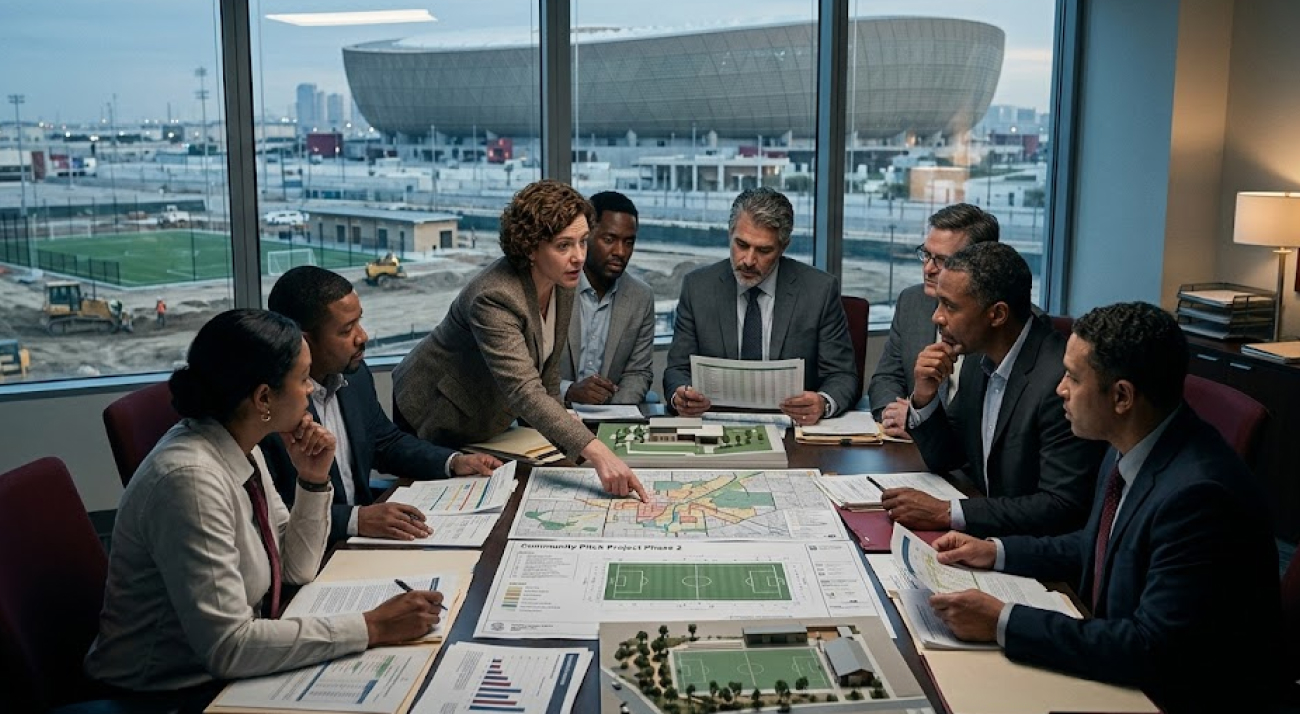
The FIFA World Cup 2026 produced billions of dollars in economic activity across the United States, but a relatively small financial dispute emerging after the tournament could have an outsized effect on how American cities negotiate with global sports organizations in the future.
Several U.S. host-city executives are seeking clarification over $1 million legacy contributions they say FIFA management had promised for each of the 11 American cities that hosted World Cup matches. According to recent reporting, the commitments were discussed after FIFA President Gianni Infantino announced a $1 million legacy contribution for each U.S. city hosting the 2025 FIFA Club World Cup. The money was intended for mini-pitches and social projects.
The distinction is important. FIFA publicly announced the $1 million contributions for the 2025 Club World Cup host cities, but the 2026 World Cup commitments reported by host-city executives were apparently communicated verbally rather than through a comparable public FIFA announcement. FIFA has not publicly confirmed the reported 2026 commitments.
That uncertainty is now becoming a case study in the risks cities face when negotiating with international sports organizations.
For future World Cups, Olympics, Super Bowls, and other global events, American host cities may become considerably more demanding about what constitutes a guaranteed legacy benefit.
The Dispute Began With A Public FIFA Commitment
The origins of the controversy can be traced to April 2025, when Infantino announced that FIFA would contribute $1 million to each of the 11 U.S. cities hosting the Club World Cup.

FIFA said the total $11 million commitment would support small community-focused pitches and other social projects designed to expand football participation in the United States. FIFA specifically described the initiative as a way to ensure that the tournament’s impact would continue after the competition ended.
The 2025 host cities included Atlanta, Charlotte, Cincinnati, Los Angeles, Miami, Nashville, New York/New Jersey, Orlando, Philadelphia, Seattle, and Washington, D.C.
The announcement established a precedent.
When preparations intensified for the 2026 World Cup, cities hosting the much larger tournament reportedly asked whether they would receive similar legacy contributions.
The 2026 tournament was substantially different in scale. It featured 48 teams, 16 host cities across the United States, Canada, and Mexico, and 104 matches. The United States alone hosted matches in 11 metropolitan areas.
According to four U.S. host-city executives cited in recent reporting, FIFA senior management repeatedly assured cities that comparable $1 million contributions would be made.
The problem is that those reported assurances have not translated into payments.
That creates a fundamental distinction between a publicly announced commitment and a reported verbal commitment.
Why The Difference Between Written And Verbal Promises Matters
For cities handling multimillion-dollar event budgets, the distinction is more than technical.
Public agencies and nonprofit host committees must prepare financial statements, approve budgets, close contracts, and determine which organization remains responsible for a project once an event ends.
A verbal promise creates uncertainty at almost every stage.
Should the expected $1 million be included as revenue?
Can a city begin planning a project around it?
Who receives the money if a temporary host committee is winding down?
Can the contribution be transferred directly to a nonprofit?
What happens if FIFA changes its position?
These questions become particularly difficult after the tournament because host committees are designed to organize an event rather than operate indefinitely.
Recent reporting indicates that some host-city organizations are already winding down, making the question of who would receive or administer any future payment more complicated.
This is where the controversy could influence future host-city agreements.
Cities are likely to look at the experience and conclude that legacy commitments need the same contractual precision as stadium operations, security responsibilities, transportation arrangements, and commercial obligations.
A $1 Million Payment Is Small Compared With The World Cup’s Scale
The amount at the center of the dispute can sound surprisingly small when compared with the financial scale of the World Cup.
The 2026 tournament involved enormous spending on transportation, security, hospitality, tourism promotion, venue operations, public spaces, and fan programming.
The United States hosted matches in 11 cities, including Atlanta, Boston, Dallas, Houston, Kansas City, Los Angeles, Miami, New York/New Jersey, Philadelphia, the San Francisco Bay Area, and Seattle.
Against that backdrop, $1 million per city represents only a fraction of the overall economic activity generated by the tournament.
But that is precisely why the dispute has become symbolic.
The value of the money is not primarily its size. It is what the funding represents.
FIFA originally described its $1 million Club World Cup contributions as investments in grassroots football and community facilities. A similar World Cup contribution would therefore connect an enormous international event with tangible projects that residents could use after the tournament.
A professional stadium may host tens of thousands of people for a handful of matches.
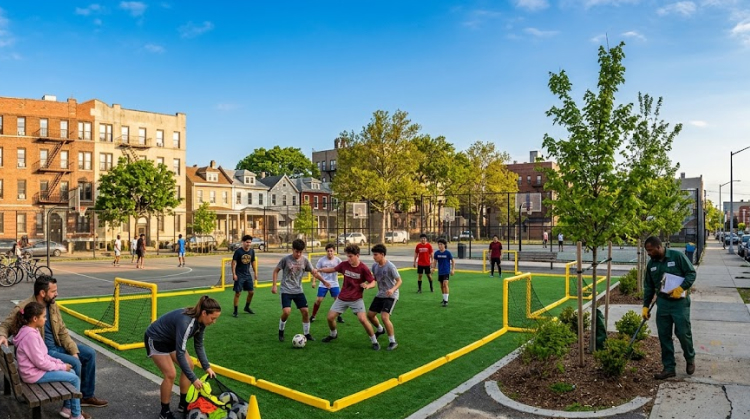
A neighborhood mini-pitch can serve children and families for years.
That makes the legacy commitment an important part of the broader argument that mega-events should leave something behind for host communities.
The FIFA Foundation’s community programs illustrate the broader philosophy behind using football infrastructure to expand participation and create social benefits.
Host Cities Are Beginning To Think Beyond Event-Day Economics
The dispute arrives at a moment when American cities are becoming more sophisticated about measuring the benefits of sports tourism.
For decades, the basic calculation was relatively simple: attract an event, fill hotels, generate restaurant spending, create temporary jobs, and promote the city to visitors.
The modern model is more complicated.
Cities increasingly want to know whether a major event creates repeat tourism, permanent infrastructure, youth participation, neighborhood investment, international recognition, and long-term business relationships.
That is why legacy commitments matter.
| Host-City Benefit | Short-Term Impact | Potential Long-Term Value |
|---|---|---|
| World Cup matches | Visitor spending | International destination recognition |
| Fan festivals | Large crowds | Stronger public-space programming |
| Hotel demand | Higher occupancy | Repeat tourism |
| Transportation investment | Event mobility | Improved regional connectivity |
| Legacy facilities | Community activity | Youth sports participation |
| International exposure | Global media attention | Future business and tourism opportunities |
A $1 million community contribution fits into that last stage of the equation.
It transforms the idea of legacy from a marketing statement into something residents can physically see.
The U.S. Host Cities Have Already Demonstrated Why Legacy Projects Matter
There are examples showing how relatively modest investments can create visible World Cup-related community assets.
In May 2026, the New York-New Jersey Host Committee, Airbnb, New York City Public Schools, and the U.S. Soccer Foundation broke ground on a new mini-pitch at P.S. 112 Bronxwood. The project was part of an Airbnb commitment of more than $1 million to build five soccer mini-pitches in the region.
The project demonstrates the type of legacy investment FIFA’s Club World Cup contribution was designed to support.
It also highlights why host cities care about the promised funding.
A mini-pitch is relatively inexpensive compared with a major stadium project, but it can be placed directly inside a neighborhood and used throughout the year.
That creates a much more visible relationship between an international sporting event and everyday community life.
Future Host Cities Could Demand Enforceable Legacy Commitments
The most important consequence of the FIFA legacy dispute may have little to do with the $1 million itself.
It could change the way American cities negotiate with international sports organizations.
The 2026 World Cup demonstrated that U.S. cities are willing to absorb enormous organizational responsibilities in exchange for the opportunity to host global sporting events. But that relationship depends on both sides delivering what they promised.
Future host committees could therefore insist that legacy contributions be written into formal agreements rather than communicated through meetings, presentations, or verbal assurances.
A stronger agreement could specify the amount of funding, payment date, recipient organization, eligible projects, reporting requirements, and consequences for nonpayment.
That would eliminate much of the ambiguity now surrounding the reported 2026 contributions.
It would also allow cities to plan projects before the tournament rather than waiting until after the event to determine whether promised funding will materialize.
Legacy Funding Could Become Part Of The Cost Of Hosting
International sports organizations have traditionally emphasized the prestige and economic opportunity associated with hosting major competitions.
But cities increasingly have their own leverage.
A World Cup cannot operate without airports, hotels, police departments, transit agencies, stadiums, restaurants, public spaces, volunteers, and municipal services.
The host city therefore provides much more than a location.
It becomes part of the tournament’s operating infrastructure.
That creates an opportunity for local governments to negotiate more aggressively.
Instead of simply asking how much economic activity an event could generate, officials could ask what the event organizer will contribute to the city’s long-term objectives.
For example, a future agreement might include:
- A guaranteed community-sports fund.
- Specific numbers of youth facilities or mini-pitches.
- Transit or public-space contributions.
- A post-event maintenance fund.
- Public reporting requirements.
- Clearly defined payment deadlines.
These provisions would turn the concept of legacy into an enforceable component of the host agreement.
The Olympics Could Become The Next Test
The lesson is particularly relevant to Los Angeles.
The city will host the 2028 Summer Olympics, making it one of the most important American markets for international sporting events over the next several years.
Los Angeles also has extensive experience with major sports infrastructure, including SoFi Stadium, BMO Stadium, the Los Angeles Memorial Coliseum, and a large regional transportation network.
The city therefore has an opportunity to apply lessons from the World Cup immediately.
The Olympics also provide a different model because much of the competition will be distributed across existing venues rather than concentrated in a single newly constructed Olympic complex.
That creates more opportunities for organizers to connect event investment with existing community infrastructure.
The LA28 official plans emphasize the use of existing and temporary venues, a model that can reduce the need for new permanent structures while potentially allowing more resources to be directed toward transportation, public spaces, recreation, and community programs.
For future host cities, the central question may become less about how many new buildings are constructed and more about what measurable improvements remain once the event is gone.
Cities Could Start Negotiating Legacy Benefits Before Winning A Bid
The FIFA situation also highlights a broader weakness in the traditional bidding process.
A city often spends years developing a bid around projections for tourism, economic impact, infrastructure, and international exposure.
But legacy discussions can remain comparatively vague.
That could change.
Future U.S. cities seeking major international events may begin defining their desired legacy package before submitting a final bid.
Instead of saying that an event will “benefit the community,” a bid could specify exactly what the city expects.
That might include:
Transportation: improvements to stations, pedestrian corridors, or regional connectivity.
Sports: youth pitches, recreation centers, coaching programs, and equipment.
Tourism: international marketing campaigns designed to continue after the tournament.
Public space: parks, plazas, streetscape improvements, and fan-zone infrastructure that can be reused.
Business development: programs connecting local businesses with international visitors and future investment.
This approach would make the bidding process more analytical.
A city would not simply compete on its stadium capacity or hotel inventory. It would compete on the quality of its proposed long-term legacy.
The Economic Argument For Legacy Investment Is Strong
The reason cities should care about these commitments is that mega-events can create an unusual concentration of visitor spending.
Hotels, restaurants, transportation companies, retailers, attractions, and entertainment businesses all benefit from international visitors.
But the economic impact can fade quickly once the event ends.
A legacy project operates differently.
A youth soccer facility remains available when there are no international visitors.
A renovated park continues attracting residents.
A transit improvement can serve commuters for decades.
An international marketing campaign can produce visitors long after the final match.
This is why the distinction between event impact and event legacy matters.
Event impact measures what happens during the competition.
Legacy measures what remains afterward.
The strongest host-city strategy should pursue both.
FIFA’s Own Club World Cup Commitment Created A Benchmark
The controversy surrounding the 2026 World Cup is particularly interesting because FIFA itself had already established a precedent for legacy contributions during the 2025 Club World Cup.
In April 2025, FIFA announced that each of the 11 U.S. Club World Cup host cities would receive $1 million, creating an $11 million total legacy commitment.
FIFA said the money would support social projects and community pitches.
That announcement created an obvious benchmark for cities preparing for the larger World Cup.
If a $1 million contribution was appropriate for each Club World Cup host city, local officials could reasonably expect similar conversations for the larger 2026 event.
The problem is that a precedent is not the same as a contract.
The FIFA Club World Cup legacy announcement provides a useful comparison because it shows the difference between a publicly announced funding program and the reported assurances surrounding the 2026 World Cup.
That distinction could influence how future cities approach negotiations.
Public Trust Could Become A Bigger Part Of Sports Tourism
There is another dimension to the dispute that is easy to overlook: public trust.
Residents often hear large economic-impact numbers associated with major sporting events.
They are told that hotels will benefit, restaurants will generate new revenue, international visitors will arrive, and cities will gain global exposure.
Those benefits can be real.
But residents also want to know whether the event provides something tangible for the people who live there.
A community soccer pitch is easy to understand.
A youth program is easy to measure.
A renovated park is visible.
A long-term transportation improvement can be experienced every day.
These projects help connect abstract economic statistics with ordinary residents.
That connection may become increasingly important as cities debate whether the benefits of hosting another mega-event justify the costs.
The Next Generation Of Host Deals Could Look Very Different
The 2026 World Cup may ultimately influence host-city agreements in ways that extend far beyond football.
Cities bidding for the Olympics, FIFA competitions, international athletics championships, Formula 1 races, and other major events could begin demanding stronger guarantees from event organizers.
A future contract might include a dedicated legacy escrow account.
Payments could be released according to predetermined milestones.
An independent organization could oversee project selection.
Host-city residents could receive public reports showing exactly how legacy money was distributed.
And projects could be identified before the opening ceremony rather than negotiated after the tournament.
These measures would reduce uncertainty and give local governments greater confidence that promised benefits will actually materialize.
The Real Issue Is Who Controls The Legacy
At its core, the dispute raises a simple question: Who gets to define what a World Cup leaves behind?
FIFA can promote the global tournament.
Host committees can organize matches and fan experiences.
Businesses can capitalize on visitor spending.
Governments can manage transportation and security.
But residents ultimately experience the legacy at the neighborhood level.
That means cities should have a meaningful role in deciding where legacy investment goes.
A community in Los Angeles may need something completely different from a neighborhood in Kansas City.
Houston’s priorities may differ from Boston’s.
Philadelphia may have different transportation or recreation needs than Seattle.
A one-size-fits-all legacy program therefore makes less sense than a framework that gives host cities flexibility while requiring measurable outcomes.
The $1 Million Dispute Could Become A Blueprint For Better Agreements
The reported FIFA legacy dispute is unlikely to determine the overall success or failure of the 2026 World Cup.
The tournament’s economic footprint is far too large for one funding commitment to define it.
But the issue could influence something more lasting: how cities negotiate the next generation of sporting events.
The lesson for American host cities is straightforward.
A legacy promise should be treated like any other financial obligation.
It should have a written commitment, a responsible party, a payment schedule, defined beneficiaries, transparent reporting, and measurable results.
For international sports organizations, the lesson is equally important.
If major tournaments are promoted as catalysts for community development, then the promised community investment needs to be clear enough for residents and governments to track.
The next time an American city considers hosting a global sporting event, the conversation may therefore begin with more than stadiums, hotel rooms, television exposure, and projected visitor spending.
Officials may also ask what remains after the visitors leave.
That question could make the $1 million legacy dispute one of the smallest financial issues associated with the 2026 World Cup—but one of the most consequential for the future of American sports hosting.
