
When you step into a big sports stadium, you see more than just signs. The signage itself is an invisible infrastructure that keeps the event moving. It guides the crowd and sets the mood for the fan experience.
This system makes every touchpoint memorable. Brand expression in modern venues has grown. It’s now about creating immersive experiences that connect fans deeply with their teams.
A good Branding & Wayfinding strategy is key. It mixes function with engagement smoothly. It guides people safely, cuts down confusion, and builds emotional bonds from parking to seats.
This approach also boosts sponsorships. It turns navigation into a way to make money and build loyalty. The aim is to make every sign part of a bigger, iconic story.
Pre-Event Mapping and Gate Plans
Effective pre-event mapping makes arriving at the venue smooth and fun. It’s where planning meets atmosphere. It ensures safety and builds excitement. The goal is to guide thousands of people easily from their cars to their seats.
First impressions are key. Exterior signs set the mood before you even get in. Large gate graphics and wraps act as giant welcome signs. They tell fans the event has started, even in the parking lot.
Pre-event mapping involves studying how people and cars move. Planners look at crowd patterns from parking to security. They find the best spots for entry gates and ticketing queues. This proactive planning prevents bottlenecks and reduces confusion. It’s the key to managing crowds well.
Temporary elements make blank spaces into branded zones. Entry arches, banners, and murals are powerful tools. They do more than just direct people. These elements create high-energy welcome sequences that build anticipation. For example, NYCFC’s CityFest used vibrant exterior wraps and themed entryways to convert stadium grounds into a festival plaza.
This approach is a perfect blend of wayfinding and placemaking. Wayfinding gives clear directions. Placemaking creates a memorable sense of place and theme. Together, they turn arrival logistics into an engaging first chapter of the fan journey.
| Element Type | Primary Function | Impact on Fan Experience | Example / Timing |
|---|---|---|---|
| Entry Gate Wraps & Graphics | Mark primary entry points; establish brand/theme. | Creates a strong, photogenic first impression; builds immediate excitement. | Large-scale team logos or event themes installed days before. |
| Temporary Entry Arches | Define a ceremonial passage into the event space. | Makes arrival feel special and immersive; a defined “start” to the experience. | Inflatable or constructed arches placed at key pedestrian pathways. |
| Overhead Directional Banners | Guide crowd flow from a distance; identify zones (e.g., “Gate A”, “Ride Share”). | Reduces anxiety and questions; allows fans to navigate confidently from afar. | Hung over walkways and plazas leading from parking to gates. |
| Plaza Murals & Ground Graphics | Activate waiting areas; provide photo opportunities. | Transforms idle queue time into social engagement; enhances placemaking. | Interactive sponsor activations or team history timelines in queue plazas. |
Every sign and structure has a dual purpose. It must guide and delight. A well-placed banner solves a wayfinding problem. A beautifully designed mural solves a placemaking challenge. The table above shows how different elements work together.
The result is a controlled yet thrilling arrival sequence. Fans know where to go. They also feel the event’s energy building with every step. This careful orchestration manages peak crowd flows during the busiest arrival windows. It turns possible frustration into part of the show.
In essence, pre-event mapping is the blueprint for a successful welcome. It uses exterior wayfinding for clarity and placemaking for emotion. By planning gate plans and exterior branding as one system, venues set the stage for an unforgettable experience from the very first moment.
Temporary vs. Permanent Sign Systems
Venues use two main sign systems. One is built to last, and the other is for quick changes. Permanent signs are part of the building’s design. Temporary signs add a personal touch and change with events.
Permanent signs are built into the venue. You see them in elevator directories and exit signs. They’re made from strong materials like metal and plastic. They last for years.
This system helps people find their way around. It’s important for daily use. The design is simple and fits with the building.
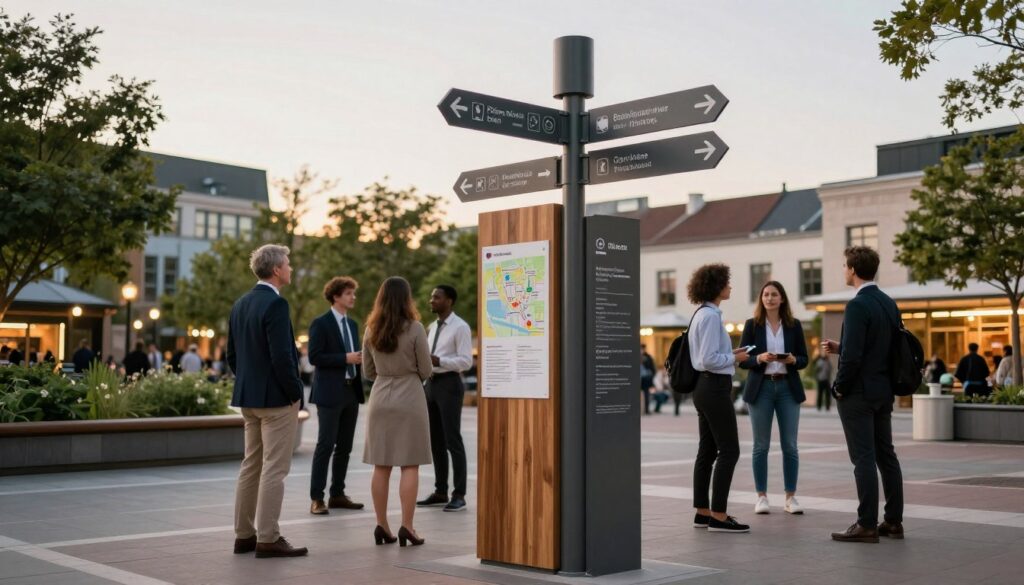
Temporary signs are for special events and quick changes. They include floor graphics and vinyl wraps. These can change a venue’s look in a day.
This flexibility is key for placemaking. It lets venues change for big events. Temporary signs add excitement and highlight sponsors. Learn more about these signs here.
Permanent signs use strong materials for long life. Temporary signs use easy-to-change materials. This affects planning and budget.
For big events, both systems are used. Permanent signs guide people. Temporary signs add event-specific details. This mix creates a unique experience.
| Feature | Permanent Sign Systems | Temporary Sign Systems |
|---|---|---|
| Primary Role | Core navigation and daily wayfinding | Event-specific branding and placemaking |
| Typical Materials | Metal, etched acrylic, laminated plastics | Adhesive vinyl, fabric banners, floor graphics |
| Installation & Lifespan | Fixed installation; lasts for years | Fast to install/remove; lasts for event duration |
| Design Focus | Clarity, durability, architectural integration | Visual impact, thematic relevance, sponsor visibility |
| Cost Consideration | Higher upfront cost, long-term asset | Lower per-unit cost, recurring operational expense |
Good temporary signage needs strong partnerships. Sponsors want to be seen during events. Learning to get good sponsorships is key.
The best venues use both systems well. Permanent signs guide, and temporary signs add excitement. This mix makes a venue memorable and easy to navigate.
Sponsor Inventory and Sightlines
Sponsor integration today is more than just hanging a banner. It’s about placemaking. The goal is to make partner identities part of the fan experience. This turns commercial messages into a welcome part of the event.
The process starts with a detailed sightline inventory. Venue managers check every path a fan might take. They find the best spots for visibility, from the moment guests arrive. Key areas include main concourses, stairways, escalators, and spots near the field.
Digital displays and ribbon boards offer great opportunities. This audit creates a list of sponsor signage options. Each option is chosen based on its visibility and how long fans will see it.
| Location Type | Visibility Score | Fan Dwell Time | Integration Ideas |
|---|---|---|---|
| Concourse Banner | High | Medium | Directional messaging to concessions or restrooms. |
| Digital Ribbon Board | Very High | Low (Moving) | Real-time stats, social media feeds, promo codes. |
| Stairway Wrap | Medium | Low (Transit) | Full graphic immersion with team/sponsor imagery. |
| Field-Level Signage | Extreme (TV Exposure) | N/A | Branded bench areas, on-deck circles, tunnel exits. |
| Concession Menu Branding | Targeted | High (Decision Point) | Co-branded meal deals or specialty items. |
The next step is to go beyond simple placement. True placemaking makes the sponsor a part of the experience. For example, a hydration station by a beverage company is a natural fit. A branded combo meal on the concession menu works well too.
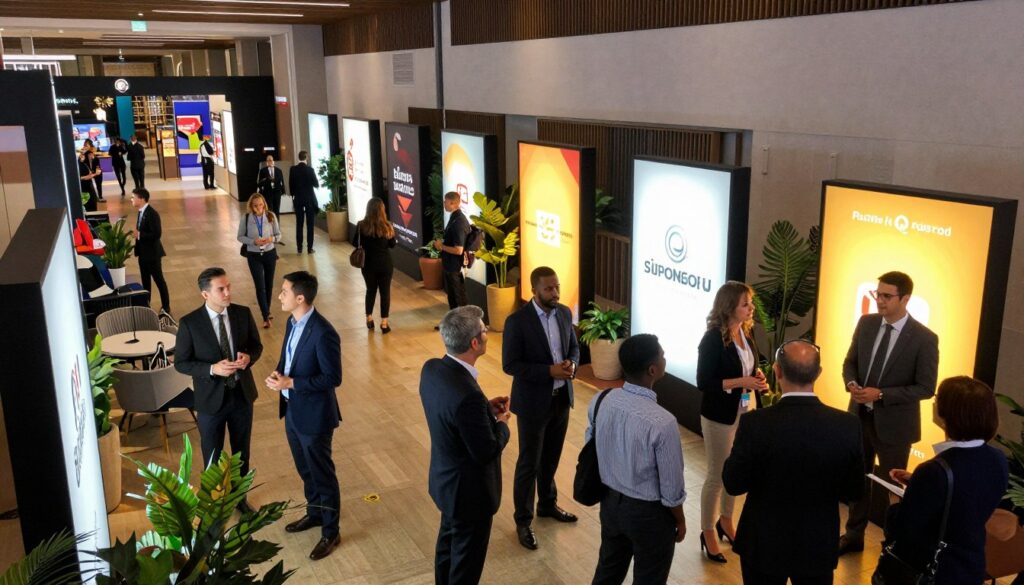
Immersive activations create deeper connections. Shuman Farms’ “Rooted Rivalry” tailgate event turned a parking lot into a branded space. Mitchell & Ness sets up pop-up shops where fans can buy exclusive gear. These experiences feel like perks, not ads.
This approach needs careful balance. The venue environment should feel cohesive, not cluttered with logos. Design teams ensure sponsor colors and messages match the venue’s look. The result is sponsor signage that adds value.
Fans appreciate useful information or enhanced experiences. When done well, placemaking makes sponsors memorable parts of the game day story. It builds positive associations for both the brand and the venue.
Accessibility and Multilingual Needs
Accessibility and support for many languages are key to fan happiness. A top venue makes everyone feel welcome. It needs a user-centered wayfinding approach for all.
Clear signs are vital for all fans. This includes visitors from other countries. Bright arrows and symbols help everyone, no matter their language.
For those with disabilities, following ADA rules is essential. Signs with Braille and raised letters are needed. They must also be easy to see for wheelchair users.
Multilingual needs require smart design. Icons for basic needs help a lot. Color-coded maps and short translations in common languages also help.
Inclusive design helps every fan. It makes events less stressful. Clear signs make moving around easier for everyone.
Technology is now a big help. Apps can guide fans in real-time. They can be in any language, making things clearer for all.
Adding sponsor signage carefully is important. Sponsor messages should not block paths or important signs. They should be easy to see and read.
The table below outlines key solutions for creating an inclusive environment:
| Signage Type | Primary Purpose | Key Features | Best Practices |
|---|---|---|---|
| ADA Tactile Signs | Accessibility Compliance | Raised text, Braille, non-glare finish | Install at consistent height (48-60 inches) on the latch side of doors. |
| Multilingual Directional | Overcoming Language Barriers | Universal symbols, color-coded arrows, key translations | Use pictograms first, support with top 3 languages of your audience. |
| Digital Wayfinding Apps | Real-Time Navigation | Turn-by-turn guidance, language settings, crowd updates | Promote app download before event; ensure strong venue Wi-Fi. |
| Sponsored Accessible Signs | Brand Integration | High-contrast sponsor logos, clear messaging, ADA-compliant placement | Audit sponsor panel locations to ensure they don’t obstruct wayfinding cues. |
A good plan uses signs, apps, and smart sponsor signage placement. This makes your venue easy to navigate and fun for everyone. It makes a basic need into a memorable part of the event.
Photo Spots and Social Moments
In today’s world, venues need to be shareable. Fans look for places to take photos. These spots help show off a stadium’s personality.
Photo spots draw people in. Big team logos or colorful walls are great for selfies. They help spread the word about events.
This approach is key to modern venue design. It makes areas like corridors and concourses interesting. Things like branded stairs or floor graphics encourage sharing.
Adding sponsor signs to these spots is smart. A 3D logo or interactive prop does two things. It improves the fan experience and promotes the sponsor.
Landmark signs can also be photo spots. A big mural or themed arch is a great meeting place. It makes fans feel closer to the venue.
Designing for social media is important. It turns fans into promoters. Sponsor signs in these spots help everyone get noticed.
