
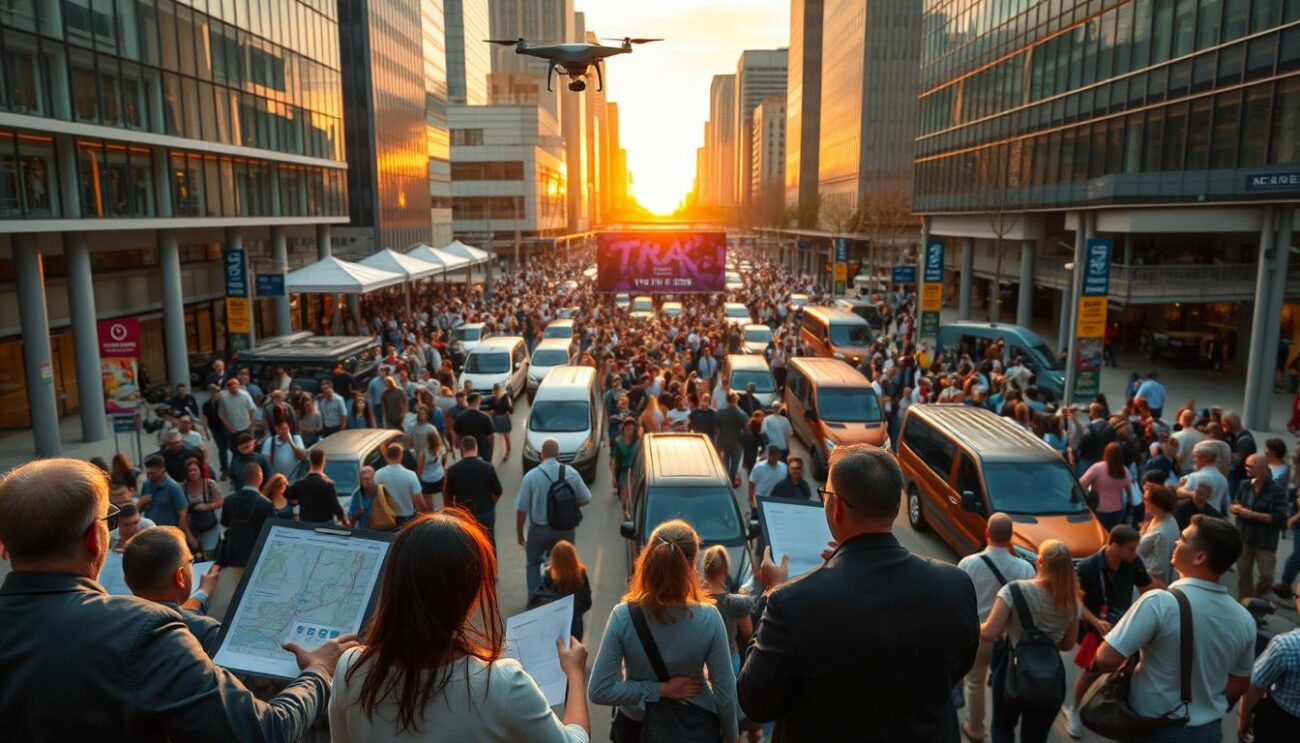
Imagine trying to predict the weather, but instead of rain, you’re forecasting a storm of people. This is the world of event logistics, where traffic flow is the only storm you can see. High traffic density near venues causes delays and creates a frustrating, security-compromising gridlock.
This isn’t about putting up more signs or hiring more staff. It’s about using predictive intelligence. By using advanced predictive models that analyze time of day and major events, we can anticipate the surge. It’s like meteorology for mobility, forecasting the “when” and “where” of the crowd.
The goal is to make a smooth, well-orchestrated arrival. It’s about turning the deluge of vehicles and people into a predictable, manageable wave. Hosting a major event successfully depends on mastering this first, critical challenge. The alternative is a gridlocked, frustrated crowd—a scenario no event planner wants to forecast.
Shuttle/HOV/ADA Plans
Planning shuttle systems is more than just moving people. It’s about changing lives. You’re not just moving bodies; you’re creating a community on wheels.
Think about the VIPs, athletes, and media. They need special transport lanes. These lanes are key for big events. Without them, you risk a PR disaster and a big mess.
But many planners forget about these shuttles. They’re not an afterthought. They’re the first impression of your event. Their routes and capacity can make or break the experience.
HOV lanes are also important. They help traffic flow better. At big events, they let shuttle buses carry more people, reducing traffic.
ADA compliance is critical. It’s not just about following rules. It’s about making sure everyone can get around easily. I’ve seen events where ADA access was lacking.
Real ADA planning means making sure everyone can board without help. The path should be easy to navigate. Your staff should know how to assist without making people feel helpless.
The best shuttle systems are like Swiss watches. They’re precise and reliable. They make sure everyone has a smooth journey, no matter their needs.
So, when you’re planning routes, remember you’re designing experiences. You’re building a better world. The best shuttles don’t just move people; they make them feel valued.
Temporary Traffic Control and Signage
The art of moving cars isn’t in manuals but in crowd psychology and algorithms. Today, traffic control is more than cones and barricades. It’s a city-scale ballet of vehicles and pedestrians.
It’s not about forcing cars to move. It’s about guiding them with intelligence and understanding human nature. This approach works with people, not against them.
Old signs like “Use All Lanes” are outdated. Now, we use dynamic, smart signage that changes in real-time. Imagine a sign that says, “Merge Left” but also shows how far it is.
This shift from command to suggestion is key. It’s where the psychological game is won.
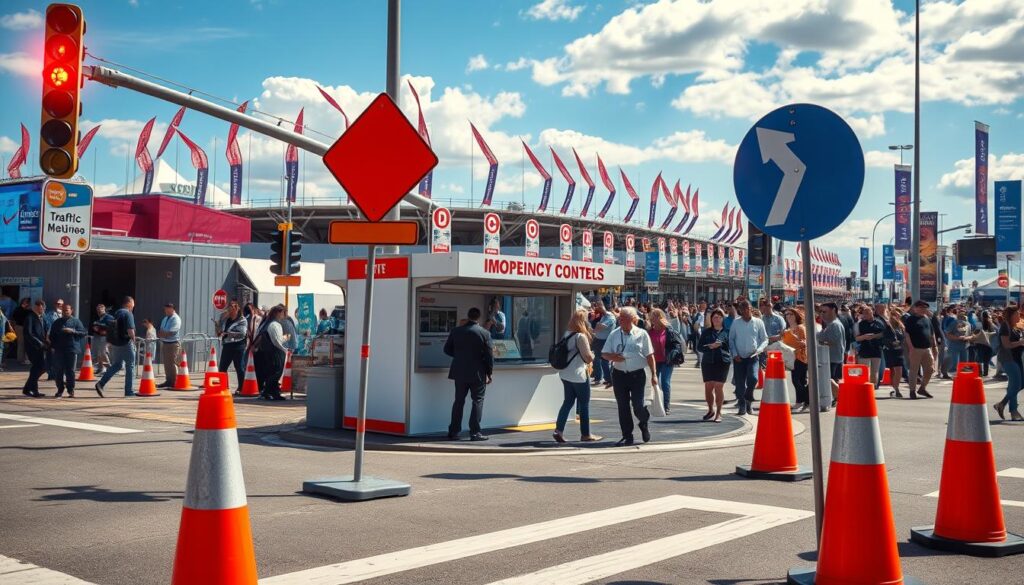
AI and smart signals play a big role. Traffic signals now adjust based on real-time data from AI. This means smoother traffic flow and less driver anxiety.
A smooth traffic flow is not just efficient. It also improves public mood.
Good communication is key. A confused driver is a hesitant driver. And a hesitant driver is a bottleneck. Clear signs help avoid frustration and encourage compliance.
The table below shows the difference between old and new traffic control methods:
| Control Method | Technology / Method | Key Advantage | Psychological Effect |
|---|---|---|---|
| Static Signage & Cones | Static signs, cones, barricades. | Simple, low-cost, easy to deploy. | Command & Control. Can cause confusion if not frequently updated. |
| Dynamic Message Signs (DMS) | Electronic signs with real-time updates. | Adapts to conditions (e.g., “Use All Lanes for Event Parking”). | Guidance & Information. Reduces driver anxiety by providing context. |
| AI-Powered Signal Control | AI analytics that adjust signal timing. | Dynamically prioritizes event traffic flow in real-time. | Anticipation & Flow. Creates a sense of “green wave” progress. |
| Portable Variable Lane Systems | Movable barriers/overhead lane signals. | Reversible lanes that adapt to peak direction traffic flow. | Adaptive Control. Maximizes road capacity dynamically. |
Using these strategies is based on industry best practices. Resources like the Work Zone Traffic Control Manual guide safe and effective traffic management.
The goal is to make event traffic flow seem effortless. When done right, it feels like a guiding hand, not a series of stops and starts. The feeling of smooth movement is key, even if it’s slow.
Park-and-Ride and Remote Lots
Forget counting spaces – true parking modeling is about predicting human behavior with mathematical precision. It’s the difference between being a traffic cop and being a urban psychologist with a spreadsheet.
Park-and-ride services aren’t just parking lots. They’re pressure valves for congested urban areas. Think of them as the diplomatic corps of event logistics, negotiating peace between thousands of vehicles and limited real estate.
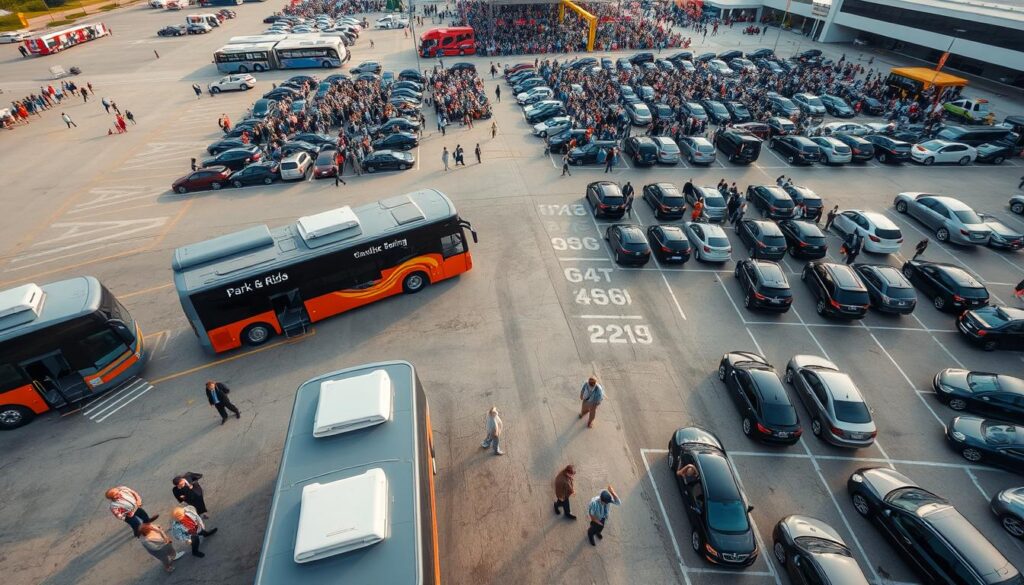
Remote lots with shuttle connections perform a magic trick. They make cars disappear from the venue’s immediate vicinity. This isn’t just convenient – it’s essential for managing large crowds without creating parking chaos that would make a Black Friday sale look organized.
The data tells a clear story. These services reduce congestion dramatically. They transform what could be a traffic nightmare into a streamlined procession. It’s like comparing a mosh pit to a well-rehearsed ballet.
So what does sophisticated parking modeling actually look like? It’s not just about having enough spaces. It’s about understanding the rhythm of arrival. When will the early birds show up? When will the last-minute crowd descend?
This predictive approach considers dozens of variables. Event type, weather forecasts, local traffic patterns, even the demographic profile of attendees. A tech conference crowd parks differently than a music festival crowd.
The best systems treat each vehicle like a data point in a complex algorithm. They’re not just storing cars. They’re orchestrating a symphony of metal and motion.
Let’s break down the options with some cold, hard analysis:
| Strategy Type | Primary Function | Congestion Impact | Best For Events |
|---|---|---|---|
| On-Site Parking | Immediate venue access | High – creates bottlenecks | Small gatherings, corporate events |
| Park-and-Ride Lots | Intermediate staging areas | Medium – redirects flow | Urban festivals, sports games |
| Remote Lots with Shuttles | Complete off-site management | Low – eliminates venue traffic | Major concerts, large conventions |
| Valet Services | Premium convenience | Variable – depends on execution | Galas, VIP experiences |
Notice how the congestion impact decreases as you move down the table? That’s not coincidence. It’s physics meeting logistics.
The remote lot approach is clever. It turns transportation into part of the experience. Those shuttle rides become mobile pre-parties or post-event debrief sessions. You’re not just moving people – you’re managing their emotional journey.
Effective parking modeling requires thinking three moves ahead. Where do people park? How do they get to the venue? What happens when everyone leaves at once? It’s chess with minivans.
Consider the psychological aspect too. A smooth parking experience creates positive first impressions. A chaotic one sets a negative tone that lingers. You’re not just managing vehicles – you’re managing expectations.
The financial math is equally compelling. Developing remote parking infrastructure often costs less than expanding venue parking. You’re using existing spaces more intelligently than paving new ones.
Here’s what separates good planning from great planning:
- Predictive capacity analysis – knowing not just how many, but when
- Dynamic shuttle scheduling – adjusting frequency based on real-time demand
- Integrated communication systems – keeping everyone informed every step of the way
- Contingency overflow plans – because something always goes differently than planned
Modern parking modeling tools use everything from historical data to weather APIs. They create simulations that would make a video game designer jealous. The goal? To make the complex look effortless.
Ultimately, park-and-ride and remote lots represent a fundamental shift. They acknowledge that the journey begins long before the venue gates. They understand that logistics isn’t about control – it’s about intelligent guidance.
The next time you attend a smoothly run event, look beyond the main stage. The real performance happened in those distant parking lots. That’s where the unsung heroes of event logistics worked their magic.
Post-Event Egress Strategies
You’ve managed the show, now it’s time to get everyone to leave. This is more than just moving people; it’s about crowd psychology and urban planning. The way people leave can make or break the event.
Arrival is like the first act, but leaving is the encore. Nobody loves waiting in traffic after a great event. But, they’ll remember the long wait.
To make leaving smooth, treat it as a final act. It’s not just about letting people go; it’s about doing it right.
Staggered exits are key. Don’t let everyone leave at once. Instead, create breaks in the crowd:
- Keep some people entertained with late-night activities or after-parties
- Time encore performances to space out departures
- Use announcements to guide people to the best exit times
Good planning can cut congestion by up to 60%. This means people can leave in 90 minutes instead of hours.
Having many transport hubs is important. A single exit point is like trying to drain a pool through a straw. You need exits all over:
- Set up specific zones for rideshares and personal vehicles
- Make clear paths to public transit
- Use shuttles to move people away from the venue
Shuttles play a big role after the event. They help manage the flow of people. Think of them as mobile buffers.
The way people leave can leave a lasting impression. An orderly exit makes the event memorable. A chaotic exit ruins it.
For more on managing crowds, check out our guide on clearing festival crowds safely and efficiently. These tips work for any size event.
Make sure your shuttles have a plan for after the event. Drivers need clear instructions, and attendees need to know where to go.
The goal is to make leaving as smooth as possible. When done well, nobody even remembers the exit. That’s the best compliment.
Community Communication Toolkit
Think your event plan is finished? Not without its central nervous system. All the traffic models, shuttle schedules, and signage in the world are just parts without the central nervous system that connects them: your community communication toolkit. This isn’t a megaphone for one-way alerts. It’s the two-way radio that transforms a logistical plan into a community experience.
Modern communication is a dialogue, not a monologue. It’s the real-time app alert that guides a driver to an open lot. The digital sign that adjusts its message for a shuttle’s delay. And the social media update that turns a frustration into a moment of “they’ve got this handled.” This proactive flow of information is the secret to crowd management. It transforms attendee anxiety into confidence, turning a passive crowd into a cooperative community.
This toolkit is the vital interface of your entire operation. It’s where intelligent parking modeling data gets translated into actionable, human-friendly information. This final piece doesn’t just communicate your plan—it creates a two-way street of information. Ensuring your meticulously crafted logistics are experienced not as a rigid system, but as a smooth, well-informed journey for everyone.
