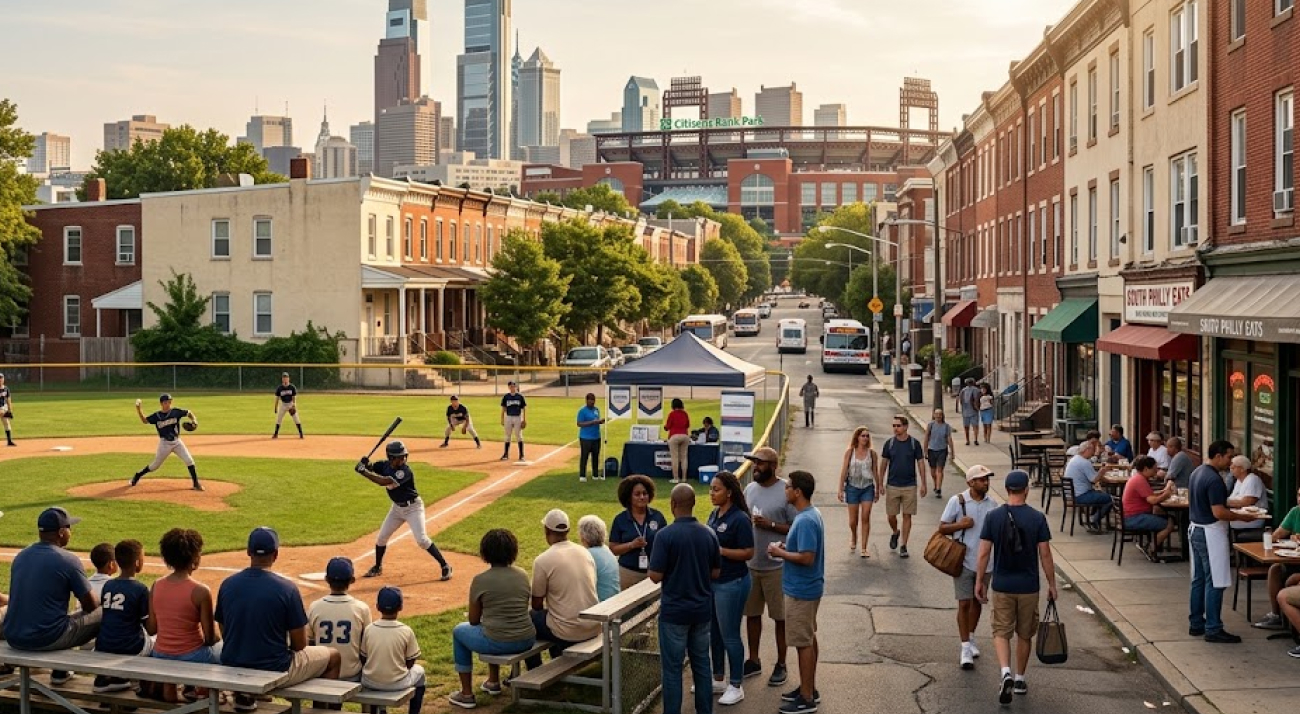
Philadelphia’s 2026 MLB All-Star Week was designed to celebrate baseball, but its most consequential contribution to the city may happen long after the final pitch. Major League Baseball and Phillies Charities announced more than $5.5 million in All-Star Legacy projects supporting youth baseball and softball, veterans, education and nutrition initiatives in the Philadelphia region. MLB says its All-Star Legacy program has now contributed nearly $125 million to host communities since 1997.
That figure changes the way a major sporting event can be evaluated. Instead of asking only how many visitors attended, how many hotel rooms were sold or how much money was spent during All-Star Week, Philadelphia provides another question: what should remain in a host city after the event leaves?
The answer could influence how American cities negotiate future sports-event agreements.
Philadelphia’s All-Star Legacy Goes Beyond The Stadium
The 2026 MLB All-Star Game was played at Citizens Bank Park on July 14, but the event was much larger than the game itself. Philadelphia hosted an entire All-Star Week program, bringing together the All-Star Game, MLB Draft activities, the Home Run Derby and other baseball-related events.
The timing was especially significant because Philadelphia was also celebrating the 250th anniversary of American independence in 2026. That gave the city an opportunity to combine baseball tourism with its broader historical and cultural identity.
But the $5.5 million legacy commitment provides a different measure of success.
The MLB All-Star Legacy program is designed to leave tangible benefits in host communities, with projects that can continue serving residents after the event. Philadelphia’s package extends that concept into several areas that have little to do with professional baseball itself.
That matters because major sporting events frequently involve substantial public resources. Cities may provide transportation support, public safety, infrastructure improvements, public spaces and other services while businesses receive additional visitor spending.
A legacy investment creates a mechanism for some of the value associated with the event to reach community programs directly.
The result is a broader economic-development model.
The $5.5 Million Investment Targets Community Needs
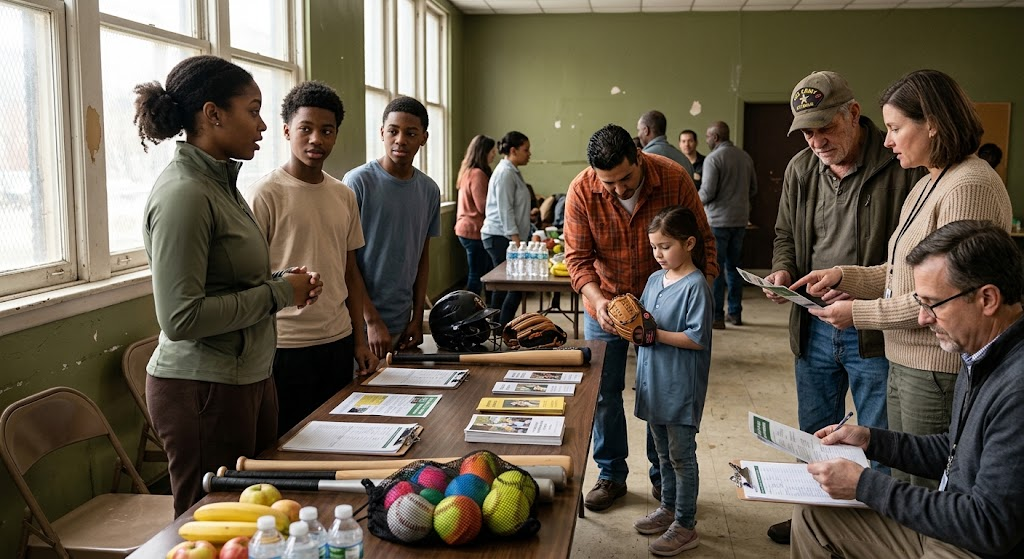
The Philadelphia legacy package focuses on several areas with direct community implications, including youth baseball and softball, veterans, education and nutrition.
That range is strategically important.
Youth sports can benefit from improved facilities and access to organized athletics. Veteran-focused programs can address community needs that extend beyond sports. Education initiatives can create longer-term opportunities for young residents, while nutrition programs address basic quality-of-life concerns.
The projects therefore turn an international sports brand into a vehicle for local investment.
This is one reason the legacy model deserves attention from other host cities.
A traditional economic-impact calculation might measure hotel spending, restaurant revenue, transportation activity and tax receipts. Those numbers show how much economic activity an event generates.
Legacy investment measures something different.
It asks how the event can produce lasting community value.
Philadelphia’s approach demonstrates why the two measurements should increasingly be evaluated together.
Host Cities Are Beginning To Demand More Than Visitor Spending
The economics of sports tourism have become too large for cities to evaluate events exclusively through attendance.
According to Sports ETA’s 2026 industry report, sports travelers generated $111.2 billion in direct spending in the United States during 2025, while the broader industry produced an estimated $274.5 billion in total economic impact.
Those numbers help explain why municipalities compete aggressively for major events.
But they also create a more difficult policy question.
If a city is contributing public resources to help stage an event that generates billions nationally, what portion of the resulting value should remain in the host community?
Philadelphia’s $5.5 million legacy commitment provides one possible answer.
Rather than relying entirely on indirect benefits, the event creates an explicit pool of funding for community projects.
That could become particularly important for future events that require larger public investments.

Legacy Funding Can Change The Way Cities Negotiate
The most significant consequence of Philadelphia’s experience may not be the projects themselves.
It could be the negotiating precedent.
Cities seeking future MLB All-Star Games, NFL Drafts, NCAA championships, international soccer tournaments or other major events can increasingly ask organizers to commit to measurable legacy programs as part of the hosting agreement.
Those programs could involve youth facilities, transportation improvements, public-space upgrades, environmental projects, workforce development or small-business support.
The concept is already familiar in international sports.
The difference is that American cities are increasingly hosting events at a frequency that makes long-term legacy planning more relevant.
The Philadelphia Phillies and Phillies Charities provide a local example of how the professional sports organization itself can become part of that investment structure.
This can create a three-way relationship between the league, the local team and the host community.
The league provides the event.
The team provides local infrastructure and relationships.
The city and community organizations identify priorities.
When those responsibilities are clearly defined, the legacy becomes easier to measure.
Youth Sports Could Become One Of The Most Visible Benefits
Youth sports are particularly well suited to sports-event legacy programs because they create benefits that can remain visible for years.
A professional baseball event lasts several days.
A refurbished youth field can serve children for decades.
That difference gives legacy investment a powerful narrative.
A young player who gains access to an improved field or organized program in 2026 could still be using that facility long after the All-Star Game has disappeared from television broadcasts.
The same principle applies to softball.
Philadelphia’s legacy investment can therefore extend baseball’s influence beyond professional fans and into families that may never attend Citizens Bank Park.
That is strategically important for the sport itself.
Major League Baseball faces a long-term challenge in maintaining participation and interest among younger generations. Community investment can help connect the professional game with the grassroots level.
For host cities, meanwhile, youth sports provide an easy way to demonstrate that a major event generated a tangible community benefit.
The Model Could Extend Beyond Baseball
Philadelphia’s example does not have to remain an MLB strategy.
The same concept could apply to other major sports.
An NFL Draft could establish a youth football and workforce-development fund.
A major soccer tournament could invest in community fields and coaching programs.
A college basketball championship could support recreation facilities and educational scholarships.
A golf tournament could finance environmental restoration.
An international sporting event could combine community grants with transportation or accessibility improvements.
The basic principle remains the same: the event should leave something useful behind.
This is increasingly relevant as American cities evaluate the costs associated with hosting major competitions.
| Traditional Event Measure | Legacy-Oriented Measure |
|---|---|
| Hotel occupancy | Long-term tourism conversion |
| Visitor spending | Community investment |
| Attendance | Local participation |
| Tax revenue | Youth and neighborhood benefits |
| Media exposure | Sustained destination visibility |
| Event infrastructure | Permanent public improvements |
| Short-term employment | Workforce development |
This broader scorecard could change how cities compare competing bids.
A city that receives slightly less visitor spending but secures substantially greater community investment may ultimately have the stronger agreement.
Philadelphia’s Timing Makes The Legacy More Significant
The 2026 All-Star Game occurred during a particularly important year for Philadelphia.
The city was simultaneously promoting its 250th anniversary, creating a massive tourism and cultural calendar around Independence-era history.
That combination gave the MLB event an opportunity to become part of a much larger destination story.
Visitors could come to Philadelphia for baseball while also experiencing Independence Hall, the National Constitution Center, the Liberty Bell area, museums, restaurants and other attractions.
The city therefore had multiple reasons for visitors to extend their stays.
That matters because longer stays increase the potential economic value of major sporting events.
A visitor who attends one baseball game but stays four nights can contribute substantially more to the local economy than a visitor who arrives for a single afternoon.
The legacy investment adds another layer.
The visitor spends money today.
The community investment can create benefits tomorrow.
A Legacy Agreement Can Help Justify Public Support
Major sports events inevitably generate debate about public spending.
Host cities may need to provide police resources, traffic management, sanitation, transportation services, permitting assistance and other forms of public support.
When residents ask what they receive in return, economic impact estimates can be difficult to translate into everyday benefits.
A youth sports field is easier to understand.
A nutrition program is easier to see.
An education initiative has a direct human outcome.
That makes legacy investment politically significant.
Philadelphia’s $5.5 million commitment provides tangible evidence that the event’s benefits are not limited to visitors, hotels and professional sports organizations.
This does not eliminate the need for careful economic analysis.
A $5.5 million investment does not automatically justify every public expense associated with an event.
But it gives residents another category of return to evaluate.
Future Host Cities Could Demand Measurable Legacy Targets
The next evolution of this model will likely involve measurement.
Cities could require organizers to establish specific targets before an event begins.
For example, a host agreement might specify how much funding will go toward youth programs, how many community facilities will receive improvements, how many local businesses will receive contracts, or how many residents will participate in free event programming.
That approach would make legacy commitments easier to compare.
It would also reduce the risk of vague promises that disappear after the closing ceremony.
Philadelphia’s experience provides a useful starting point because the announced investment already identifies concrete categories of community benefit.
The next step is determining the results.
How many children will participate?
How many facilities will improve?
How many veterans will receive services?
How many meals will be supported?
How long will the programs remain funded?
Those are the metrics that can transform a publicity announcement into a genuine legacy assessment.
The $125 Million National Legacy Figure Changes The Scale
MLB’s statement that its All-Star Legacy initiative has contributed nearly $125 million to host communities since 1997 is important because Philadelphia’s investment is part of a much longer experiment.
The program demonstrates that professional sports leagues can use recurring marquee events to distribute resources beyond the stadium.
The accumulated figure also provides a benchmark for future negotiations.
If MLB continues expanding its legacy commitments, host cities could increasingly view community investment as a normal component of event economics rather than an optional charitable gesture.
That could change expectations across professional sports.
Cities might begin asking every major event organizer:
What will this event leave behind?
That question is more difficult than asking how many hotel rooms will be sold.
It also produces a more meaningful answer.
Philadelphia Could Help Redefine What A Successful Sports Event Looks Like
The strongest legacy of Philadelphia’s 2026 MLB All-Star Game may ultimately have little to do with the final score.
The more important story is whether the event creates a lasting relationship between professional baseball and the communities surrounding it.
The $5.5 million investment provides the financial foundation.
Youth sports, veterans, education and nutrition provide the community priorities.
The All-Star Game provides the global platform.
And Philadelphia provides a real-world test of whether those elements can operate together.
For future host cities, this creates a potentially powerful negotiating framework.
Economic impact should remain important. Tourism should remain important. Hotel occupancy, restaurant spending, transportation demand and tax revenue all matter.
But those measurements should sit alongside a second question: what permanent value did the event create for residents?
If Philadelphia can demonstrate that its 2026 All-Star legacy projects produce measurable improvements over the coming years, the city’s experience could influence how American sports-event agreements are structured.
The next generation of host cities may no longer compete only for the right to stage the biggest sporting spectacle.
They may compete for agreements that deliver the strongest combination of tourism, economic activity, community investment and lasting infrastructure.
That would make Philadelphia’s $5.5 million commitment more than a charitable component of All-Star Week.
It could become a blueprint for how American cities negotiate the legacy of major sporting events.
