
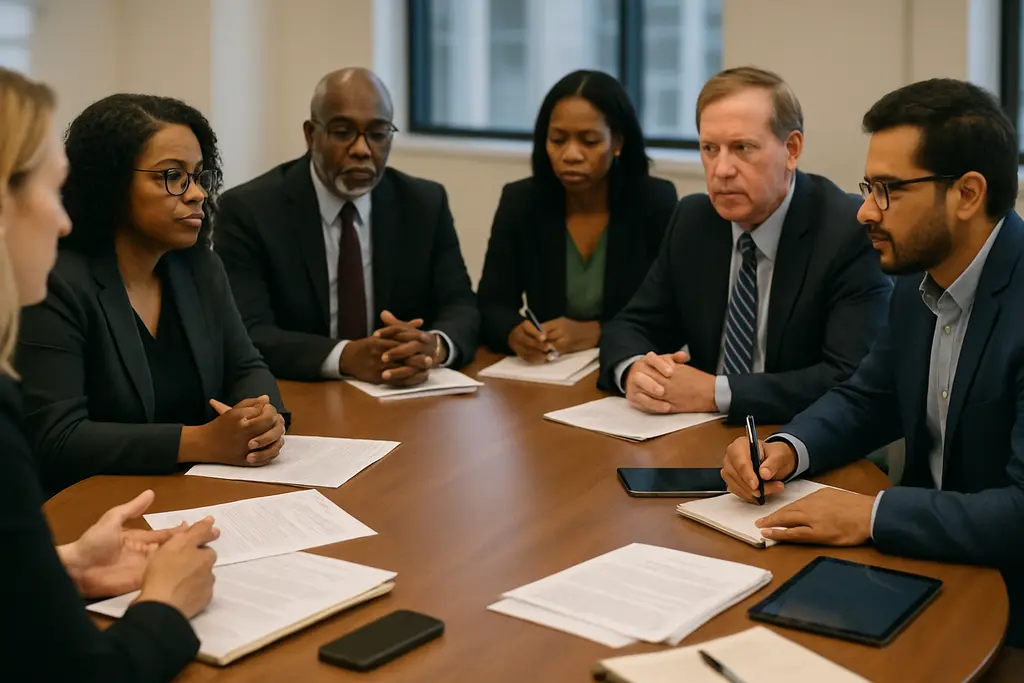
Richland Economic Development was the central thread in a recent Richland County Chamber business discussion: how public infrastructure, downtown redevelopment, industrial expansion, workforce efforts, and clearer civic communication can support growth without losing sight of public accountability. The available research does not include a formal roundtable agenda or verbatim minutes, so this analysis is limited to strategies documented in recent public reporting and project materials connected to the Richland Area Chamber & Economic Development and its partners.
The practical issue for Mansfield, Ontario, and the wider county is not whether growth is desirable. It is where growth should occur, what public tools should be used, how residents can track results, and whether investments in roads, utilities, buildings, workforce programs, and housing are reinforcing one another.
Richland Economic Development Priorities From The Roundtable
Richland Economic Development And Infrastructure Timing
One of the clearest themes was the link between long-term public infrastructure work and private investment. In an August 6, 2026 mid-year report to the Richland County Board of Commissioners, Chamber CEO Jessica Gribben said public infrastructure work around Mansfield and elsewhere in the county had helped spark new private investment in business and housing, according to Richland Source reporting.
That framing matters because infrastructure is often discussed as a cost before it is understood as an economic development tool. Water, sewer, stormwater, roads, airport-area access, site readiness, and utility capacity can decide whether a private project moves forward in Richland County or chooses another location. The civic question is how county and city leaders prioritize those investments when public funds are limited.
For Richland Economic Development work, timing is especially important. Infrastructure built too late can cause a project to stall. Infrastructure built without a clear land-use strategy can spread public costs across too many locations. The research points to local officials discussing the finite nature of public resources and the need for planning that helps guide where investments should go.
Industrial Sites And Workforce Signals
The business discussion also connected industrial growth to site preparation and workforce capacity. Recent local reporting described manufacturing expansion activity in the county, including job and payroll expectations tied to industrial projects. Those examples show how public incentives, available land, building space, and infrastructure can work together when employers are ready to expand.
Mansfield Lahm Regional Airport was another strategic area in the research. The Chamber has prioritized development and partnerships around the airport, and aviation career day participation grew from about 40 students to an expected total of more than 100 in the most recent year, according to the same August 6 reporting. That is a useful local signal: workforce development is not only about filling today’s jobs, but also about helping students see where future opportunities may exist close to home.
Residents should watch whether these workforce efforts remain connected to actual employer needs. Career awareness programs can help, but their public value increases when they connect students, schools, training providers, and employers in fields where Richland County is trying to compete.
Downtown Forward Connects Housing And Commerce
What Phase One Is Set To Add
Downtown Mansfield was another major part of the economic development conversation. Phase One of Downtown Forward is expected to restore about 180,000 square feet across 14 historic downtown buildings, create about 102 apartment units, and add about 50,000 square feet of commercial space, according to the Richland County Foundation. The project page says construction is expected to begin in fall 2026 and finish in late 2027.
Those numbers matter because downtown redevelopment can address several civic needs at once. Upper-floor housing can place more residents near restaurants, offices, services, and public spaces. Commercial square footage can create room for entrepreneurs and established firms. Historic rehabilitation can reuse existing buildings rather than relying only on outward expansion.
For Mansfield, the key question is how those units and storefronts interact with the surrounding district. Housing downtown can support foot traffic, but only if street-level businesses, parking policies, building access, utilities, and public safety services are aligned. Commercial space can attract tenants, but only if the market can support rents, buildout costs, and daily customer activity.
Historic Preservation As An Economic Tool
The Downtown Forward strategy also shows that historic preservation is being treated as an economic development asset, not just an architectural preference. The research points to restoration of historic upper floors, preservation of architectural character, and redevelopment of a large downtown property portfolio donated by the Fernyak family.
That approach can give Mansfield a growth path that differs from greenfield development. It keeps attention on existing public infrastructure, reuses buildings already tied to the city’s core, and may help connect housing demand with small business activity. The project still carries execution risks, as any large rehabilitation effort does, but the publicly stated scope gives residents concrete items to track: construction start, completion schedule, residential units, commercial space, and eventual occupancy.
Incentives, Planning, And Public Accountability
What Residents Can Track
Economic incentives were also part of the research record. Mansfield City Council approved Community Reinvestment Area agreements in July 2026 for two industrial expansions, with job and payroll projections attached. The research also described the Richland County Port Authority’s use of revenue bonds and sales-tax exemptions through lease-leaseback arrangements for development projects. Those tools can help close financing gaps, but they also require public tracking.
The useful civic test is not simply whether an incentive was approved. Residents, council members, commissioners, school districts, and taxing authorities should be able to see whether promised investment, job creation, payroll, and building activity happen on the schedule described when public support was granted.
- Which public body approved the incentive, bond, agreement, or infrastructure spending?
- What private investment, jobs, payroll, housing units, or square footage were projected?
- What reporting schedule will show whether the project met those projections?
- How does the project fit the county-wide land-use planning work described in recent reports?
- What infrastructure costs could follow after the initial project approval?
Those questions are practical rather than political. They help residents distinguish between strategic public participation and open-ended subsidy. They also help local governments explain why one corridor, site, or building may receive attention before another.
The planning discussion is closely tied to infrastructure. A county-wide land-use plan, as described in the research, can help guide where public resources should be placed. That matters for road work, utility extensions, housing locations, industrial site readiness, and downtown reinvestment. Readers following regional civic discussions can also find insights and details at the Houston LWS Forum, a related site within the same network.
Communication And The Business Climate

Why Project Storytelling Matters
The Chamber’s communication strategy is another piece of the local growth picture. The research notes that the Chamber launched “The Economic Edge,” a quarterly newsletter for site selectors, business leaders, and partners, and has been building tools such as centralized community event calendars to communicate project activity.
That kind of communication may sound secondary compared with buildings, roads, or jobs, but it can affect how outside decision-makers see Richland County. Site selectors and employers often need clear information about available properties, infrastructure, workforce assets, public incentives, and civic coordination. Residents need a different kind of clarity: what is being proposed, who approved it, what it costs, and how it may affect neighborhoods, schools, traffic, and tax bases.
Good communication also reduces confusion around long project timelines. A downtown rehabilitation beginning in fall 2026 and ending in late 2027 will require patience. Industrial expansions, infrastructure work, and workforce programs may take months or years before their full effects are visible. Clear public updates can help residents judge progress without relying on rumor or scattered information.
Richland Economic Development Roundtable Takeaways
The most important takeaway from the recent business discussion is that Richland Economic Development work is being treated as a connected system. Infrastructure investment supports sites. Sites support industrial expansion. Workforce programs help employers grow. Downtown housing can support commercial activity. Land-use planning can help local governments decide where limited public funds should go.
That system will need steady public review. Local leaders have pointed to private investment tied to infrastructure, manufacturing expansion activity, downtown redevelopment, airport-area workforce efforts, and new communication tools. The next step for residents is to track whether these strategies produce the stated results: completed buildings, occupied housing, retained and new jobs, stronger payroll, useful commercial space, and infrastructure that supports growth without creating avoidable public costs.
For Richland County, the strategy is pragmatic. Growth is not being framed as one project or one announcement. It is being built through a series of public and private decisions that residents can follow through council votes, county updates, foundation project pages, Chamber communications, and future development reports.
