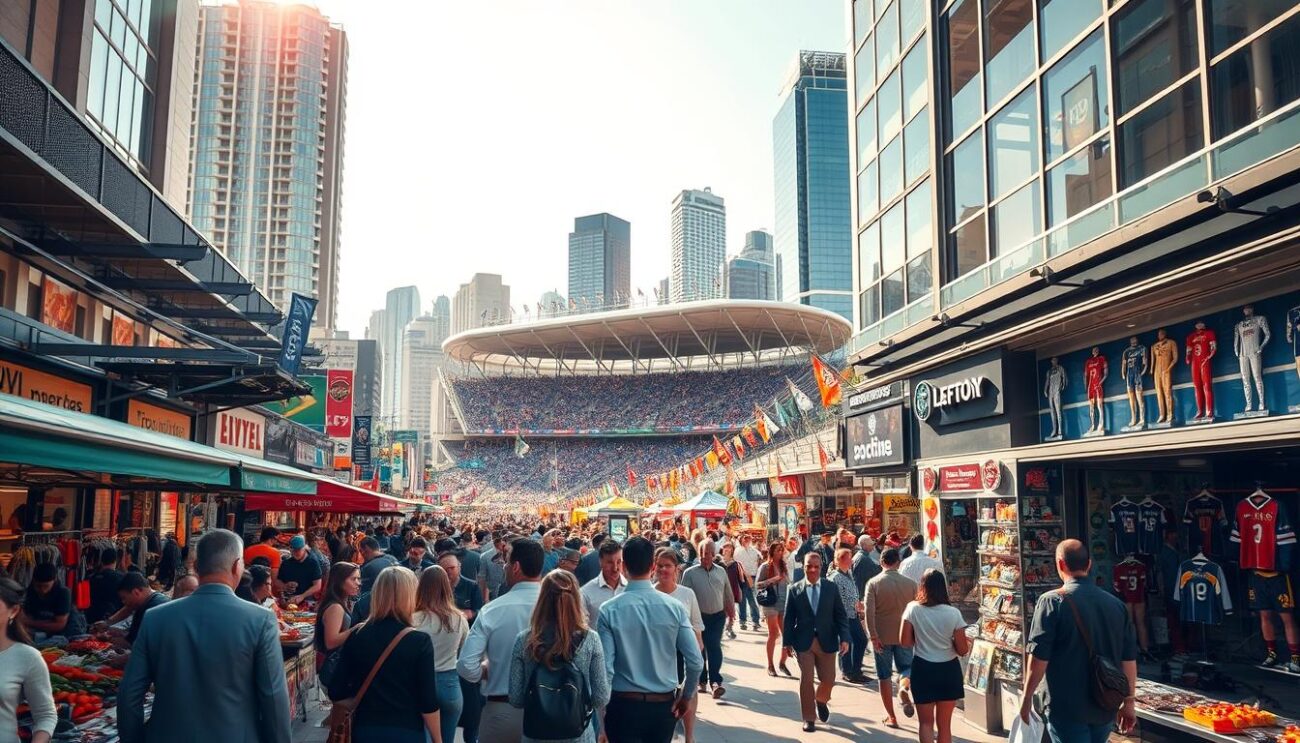
Cities and regions compete to host big tournaments and games. They see these events as key to growth. They aim to boost local economies through smart investments and global attention.
Events like the Olympics raise questions about costs. Rio 2016 had budget issues but brought in a lot of tourism money. This shows the tricky balance between spending and earning.
The real value is more than just winning. Hosting events brings in money from visitors at hotels, restaurants, and games. It also creates lots of job creation in building and hospitality.
There are also indirect gains like better infrastructure and more visibility. These draw in more business and tourists. Sports tourism plays a big role in community growth and image.
Looking at both short and long-term effects is key. A study on the economic impact of hosting large sporting events shows how cities can benefit. The lasting effects can change a community for years.
Direct vs. Indirect Benefits
Understanding the economic impact of a sporting event is key. It’s about seeing the immediate money and the long-term effects. Money flows through a host community in two main ways: direct and indirect benefits. Each supports different areas and brings unique benefits to the local economy.
Direct benefits are easy to see. They are the first money spent because of the event. This includes hotel stays, meals, shopping, and tickets. For a youth soccer tournament, families spend money in host city hotels, restaurants, and shops. This spending is a quick boost.
Major events also create jobs. Construction teams build or improve facilities. Event staff are hired for security, ticketing, and more. These jobs are short-term but very important.
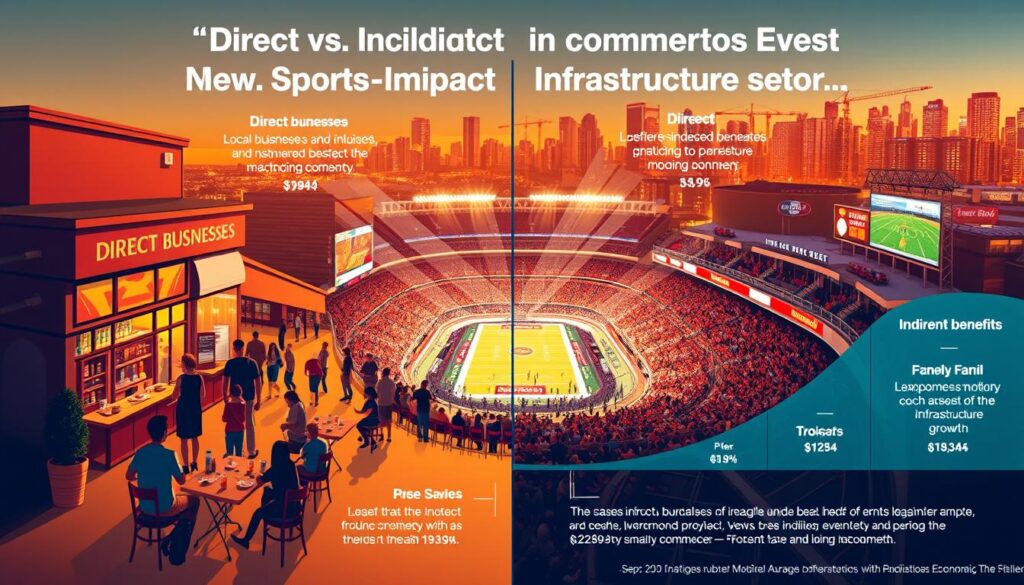
Indirect benefits are where real growth happens. This is the ripple effect of money moving around. When a hotel buys more from a local distributor, that’s an indirect benefit. When an event worker spends their paycheck at a local store, that’s an induced benefit.
This money flow supports the community. Increased sales tax from visitor spending helps fund public services. Local suppliers and service providers get new clients. A cafe might get a contract for future events. This helps community development beyond sports.
The difference in scale is clear. A weekend baseball tournament brings direct spending. An international event, like a marathon, brings massive tourism and lasting economic impact through media. Both show how new customers help local business grow.
However, attracting these lucrative events requires top-tier infrastructure, which is why understanding how to fund your facility through grants, bonds, and sponsorships is often the crucial first step.
Here’s how these benefits usually show up:
| Benefit Type | Primary Channels | Key Example | Long-Term Effect |
|---|---|---|---|
| Direct | Visitor spending on lodging, food, tickets; Event operations jobs | A family spends $800 on a hotel, meals, and team gear during a tournament. | Immediate cash infusion for specific businesses. |
| Indirect/Induced | Supply chain purchases; Employee spending; Increased tax revenue | The hotel orders more linens from a town supplier; the city uses new tax money to repair a community center. | Sustained revenue streams and improved public infrastructure. |
It’s important to see both direct and indirect benefits. Direct benefits give a quick win. Indirect benefits build a strong foundation for lasting economic impact. They ensure the event’s benefits spread widely, strengthening the local business ecosystem for years.
Case Study: Successful Event Hosting
The sports tourism industry is worth $52.2 billion in 2024. It brings new life to towns and cities across the country. By investing in sports facilities, communities can grow their economies. Let’s look at three places that have made sports tourism a key driver of development.
Rocky Mount, North Carolina, is a great example. The Rocky Mount Event Center turned a struggling downtown into a thriving area. It brought in regional tournaments, leading to new hotels and restaurants. Now, the area is full of life, thanks to the event center.
In Elizabethtown, Kentucky, the Elizabethtown Sports Park made a big impact. It brought in $150 million in economic impact. The park also sparked the growth of a new entertainment district. It shows how sports tourism can boost local businesses and create jobs.
Albertville, Alabama, is another success story. Sand Mountain Park made the city a hotspot for tournaments. This led to the building of new hotels, adding $20 million in annual economic impact. The park’s success shows focused investment can greatly improve a community’s economy.
The table below shows the big changes in these three communities:
| Community | Flagship Facility | Reported Economic Impact | Key Tangible Outcomes |
|---|---|---|---|
| Rocky Mount, NC | Rocky Mount Event Center | Significant Downtown Revitalization | New hotels & restaurants; created a vibrant community hub. |
| Elizabethtown, KY | Elizabethtown Sports Park | $150 Million | Catalyzed new entertainment district; major driver for local business. |
| Albertville, AL | Sand Mountain Park | $20 Million Annual Impact | New hotel development; established city as a regional sports destination. |
These stories all share a key point. A modern sports facility brings in visitors who spend money. This money supports local businesses, leading to more jobs and growth. This cycle helps build a stronger, more diverse local economy.
These are not just one-off stories. They show a proven way to grow. For more examples of sports tourism success, see how other places have followed this path. Investing in quality venues means investing in a community’s future. It brings more than just games; it brings lasting economic strength and community pride.
Engaging Local Businesses
For a host city, the most tangible benefits of a sporting event are often felt on Main Street. Shops, restaurants, and service providers see a big boost in sales. This direct infusion of spending is a key part of the event’s economic impact.
Data shows that family-owned restaurants, convenience stores, gas stations, and retail shops see a big jump in sales during event weekends.
To make the most of this, event organizers and city officials need to take action. They should create a formal way to get visitor spending into the community. This means working with local vendors, setting up sponsorship options for small businesses, and promoting local shops and restaurants.
Effective engagement includes:
- Creating a “Local Vendor Marketplace” at or near the event venue.
- Developing a visitor guide to highlight local businesses, promoted through event apps and websites.
- Offering special discounts to ticket holders at partnered shops and restaurants.
The financial boost leads to job creation. Jobs are created in construction, event setup, security, and guest services. Also, businesses may expand, leading to more permanent jobs in hospitality and retail.
Places like the Community First Champion Center show how these events help build the workforce. They offer valuable employment opportunities for students in various roles. This experience can launch a career.
Strategic job creation strengthens the local workforce. By keeping spending local, the community’s economic impact grows. This model, often helped by a local chamber of commerce, helps businesses and events grow together.
Measuring Long-Term Economic Benefits
Strategic host cities use events to create a lasting legacy. This legacy boosts local business and public infrastructure for years. The initial rush in hotel bookings and restaurant sales is just the start.
The real economic impact shows up in the years after. It’s seen in sustained growth and permanent improvements to the community.
Some wonder if big events really add lasting value or just a short-term financial boost. Data shows that without a plan, benefits can disappear fast. The key is to use the event’s global spotlight for lasting gains.
To measure success, we track specific metrics over five to ten years. These metrics show the health of the regional economy, not just visitor numbers.
| Key Metric | Measurement Method | Typical Timeframe | Example Impact |
|---|---|---|---|
| Annual Tourism Growth | Year-over-year comparison of overnight visitors and spending | 3-5 years post-event | A sustained 5-10% increase in off-season tourism |
| Local Business Revenue & Survival | Tracking sales tax data and business license renewals in event zones | 5+ years | Higher revenue and lower closure rates for restaurants and retail shops |
| Property Value Appreciation | Analysis of residential and commercial real estate prices near new venues | 5-10 years | Faster value growth in neighborhoods with improved infrastructure |
| New Non-Sports Investment | Monitoring permits and announcements for new corporate offices or facilities | 2-7 years | Attraction of technology or research firms citing improved quality of life |
The most lasting legacy is often in long-term infrastructure development. Cities get world-class transportation, public spaces, and venues. These become community assets.
A city might get a new light-rail line or a revitalized waterfront park. These improvements boost daily life and attract more visitors and businesses.
This infrastructure directly increases the economic impact. It makes a city more competitive for business and tourism. The initial investment grows as these amenities benefit the community for generations.
Success is measured by the whole picture, not just jobs created during construction. It’s about stable careers and a strong tourism economy all year.
By focusing on long-term indicators, cities can turn a short-term event into a lasting economic asset. The real victory is a more prosperous and resilient community, shown by lasting data.
Communicating Impact to Stakeholders
Hosting a sporting event brings economic benefits, but only if stakeholders get it. Turning complex data into a story is key. This helps city councils, investors, and locals support the event.
Success comes from working together and building strong partnerships. This is what industry experts say about hosting events.
Make the benefits clear and direct. Talk about jobs created and money made for local businesses. A good return-on-investment analysis, backed by examples from other cities, is very convincing.
Highlight how events boost local shops and restaurants. This shows the economic value of hosting an event.
Don’t forget the intangible benefits. Studies, like the one by Lohana et al., show sports tourism builds community pride and unity. It also helps keep local culture alive.
Telling these stories is vital. It shows the event’s true worth, beyond just numbers.
Good communication is the key to lasting success. It turns data into a story that brings everyone together. This unity is what makes an event a catalyst for growth and a better community.
