Let’s clear up the eco-friendly confusion. In the world of big events, a real environmental plan is now key to winning. It’s not just a PR move anymore.
Sponsors want more than just to be seen. They seek alignment with today’s values. Big events like the Olympics and the Super Bowl require solid environmental plans. It’s not just about looking good; it’s about winning deals.
Allegiant Stadium went 100% renewable. It wasn’t just a nice story. It was a big win for both operations and branding. Today’s fans, including Gen X and younger, support brands that act on their values.
Some call this greenwashing. Others see it as smart strategy. When people choose events or brands, they look for real action. A strong sustainability plan is not a cost; it’s a winning strategy.
So, forget vague promises. In today’s world, real environmental efforts make the difference between winners and losers.
Energy, Water, and Waste Strategies
Forget vague promises of a “greener tomorrow.” In the high-stakes game of venue operations, the winning playbook is clear. It’s about kilowatt-hours, gallons of reclaimed water, and tons of diverted waste. We’re not just swapping lightbulbs. We’re re-engineering venue infrastructure to slash costs and create a future-proof asset.
This isn’t just about saving the planet for the press release. It’s about saving millions on utility bills and creating a strong value proposition. Let’s look at the pros’ playbook.
Energy is a major player. The leaders don’t just buy green energy credits. They generate and control their own power. Venues like Allegiant Stadium and the Climate Pledge Arena have all-electric, fossil-fuel-free systems.
This approach turns a major cost center into a revenue stream. It’s a big investment, but the long-term benefits are huge. Predictable energy costs, immunity from market spikes, and a strong brand story are the rewards.
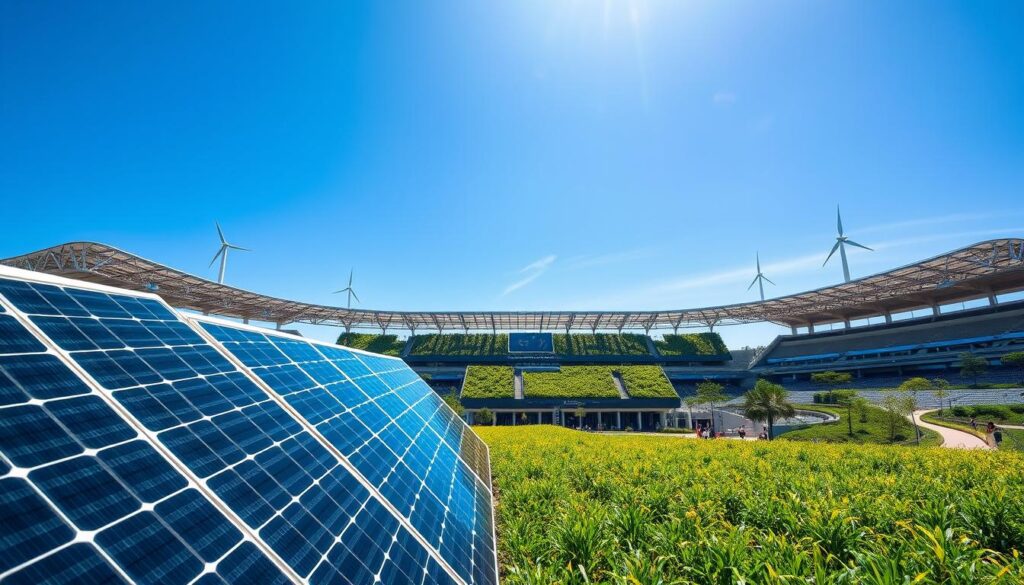
But energy is just the start. Water is the next big thing for smart operators. We’re beyond low-flow faucets. Allianz Field, for example, uses a 2.2-million-gallon stormwater system for irrigation and cooling.
This isn’t just conservation. It’s a closed-loop system that reduces dependency on municipal water. In a bid, this means a clear, defensible number: “Our venue will capture and reuse X million gallons annually, reducing municipal water draw by Y%.” That’s not just a green feature; it’s a solid financial model.
Then there’s waste. A “Green Team” is good, but the pros focus on systemic diversion. The Atlanta Braves aim for zero waste, not just more recycling bins. They’ve designed the entire operation to eliminate single-use waste at the source.
A detailed waste management plan is key. It shows a venue’s commitment to sustainability. This plan is a centerpiece of operational excellence, not just a line item.
LEED certification is more than a plaque. It’s a profit center. A LEED Platinum or Gold certification proves a venue’s operational efficiency and lower TCO. It’s not just a sustainability badge; it’s a financial report for the finance committee.
It shows a venue is a 21st-century asset, not a 20th-century liability. It signals to the host city that you’re building a resilient, future-proof asset for the community.
So, when you deconstruct a winning bid, you’ll find it’s not just about a cool arena. It’s a detailed, data-driven plan that proves the venue’s value to the community and the bottom line. That’s the playbook. That’s the new standard.
Materials and Turf Choices
Forget the grass; the real turf war in modern stadiums is fought with recycled plastic and reclaimed water. The materials you specify in your bid aren’t just specs on a page—they’re the physical DNA of your sustainability story. This is where the rubber (often literally, recycled from tires) meets the road. Every material, from the seat a fan sits on to the hot dog wrapper in their hand, is a chance to demonstrate a circular economy in action.
Start with the obvious, yet often overlooked, details. Race packets and event signage, traditionally single-use landfill fodder, can be crafted from 100% post-consumer recycled paper or, better yet, seed paper that attendees can plant. The “Farm to Fan” concept, pioneered by teams like the Atlanta Braves, isn’t just a cute alliteration. It’s a commitment to sourcing concessions from local, organic producers, slashing food miles and supporting the regional economy. It turns a hot dog and a beer into a statement of local commitment.
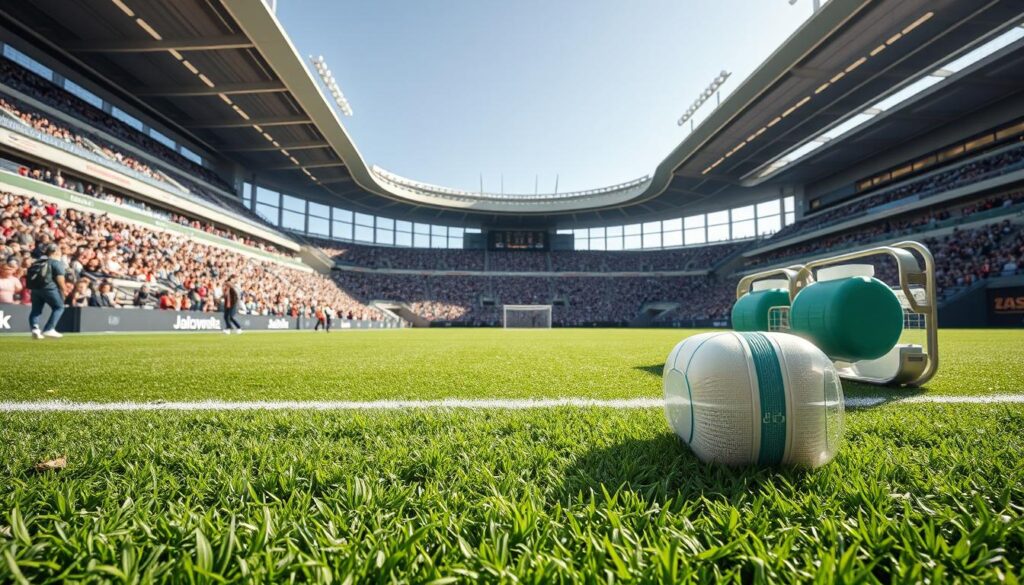
The real material showdown, though, happens underfoot. The turf war isn’t just grass versus plastic anymore. It’s about integrated systems. The most advanced venues are now ecosystems. They’re moving beyond the simple choice of natural grass or synthetic turf to systems that manage the entire water cycle. The goal is a closed-loop where nothing, specially water, is wasted.
This is where water reuse becomes the star player. The most innovative venues treat their stormwater as a resource, not a waste product. Take the system at Allianz Field, home to Minnesota United FC. It was a regulatory challenge turned into a PR and sustainability touchdown. The stadium captures, treats, and reuses 100% of its stormwater runoff for field irrigation and flushing toilets. What was a regulatory hurdle for stormwater management became a celebrated feature. This is the art of the possible: turning a compliance issue into a showcase of innovation.
Your material choices tell a deeper story of the lifecycle. Specifying recycled content in seating and structural elements, specifying locally-sourced, low-carbon concrete, and choosing synthetic turf solutions designed for water conservation and player safety—these aren’t just line items. They are a narrative. They tell a story of a bid that thinks beyond the final whistle, to the legacy of materials and their second, third, and fourth lives. It’s a sage move: the smartest bid doesn’t just build a venue; it builds a case study.
Fan Transportation and Carbon Accounting
Fan travel is a big challenge for reducing emissions. For one event, the emissions from 70,000 people driving and flying can be huge. It’s a chance for your bid to stand out.
Source 1 showed that incentives work. Free light-rail tickets, carpool parking, and bike valets are more than perks. They help reduce emissions.
But we need to do more. A detailed carbon accounting model in your bid can make a big difference. It shows your emissions are 20% lower than the competition’s.
Here’s how to turn fan travel into a bid-winning asset:
- Partner, Don’t Just Plan: Work with local transit for more hours and capacity. Also, team up with rideshare apps for green events.
- Data is Your Currency: Use cell data and ticket scans to model fan travel. This data is key for your carbon accounting.
- Account for Everything: Count all travel modes, not just cars. Every shuttle bus and bike lane lowers emissions.
This is where your bid shines. You’re not just listing initiatives. You’re showing a lower emissions report than anyone else. This is a clear advantage.
Let’s power our new infrastructure with solar. Solar-powered EV charging stations are a big win. They show your commitment and support cleaner travel.
Don’t see fan travel as a problem. See it as a chance to make your bid better. With solar power, you can make a big difference.
Grants and Incentives
Sustainability is not just about saving the planet; it’s also about making money. There’s already funding available to prove it. The smartest move in sports business today is focusing on the financial side, where green efforts turn into profits.
Financially speaking, things have changed. We’re no longer just looking at the cost of going green. We’re now seeing the benefits from grants, tax credits, and utility rebates that cover these costs. A smart CFO sees a sustainability officer as a way to make more money. There’s a lot of funding out there, from federal tax credits to state grants and utility rebates. It’s all about finding the best ROI.
Take Petco Park as an example. Its solar array was a smart investment. It got federal tax incentives, state grants, and cut down on huge utility bills. This shows that green projects can pay off big time.
But the biggest incentive might not be from the government. Look at Seattle’s Climate Pledge Arena. Amazon paid a lot to have its name on the arena. This deal is more than just a sponsorship; it’s a statement of commitment to sustainability. It shows that a venue’s green efforts can be a valuable asset to sell.
This financial magic is changing the sports industry. It’s not about finding money for sustainability; it’s about using sustainability to find new money. Venues that get this are building for the future, not just the next game. They see every green upgrade as a chance to make more money, following the latest sports tourism trends and fan engagement.
Storytelling Your Green Impact
What makes a stadium truly great? It’s not just the structure or the seats. It’s the story behind it. Your LEED plaque is a symbol of achievement. Your water reuse stats show your commitment to the environment.
But without a compelling narrative, these efforts go unnoticed. They blend into the background, lost in the noise of everyday life.
Take the Atlanta Braves, for example. They make recycling a fun activity for fans. Allianz Field organizes community clean-up days. These events are more than just tasks; they’re opportunities to win over the public’s heart.
By turning sustainability reports into engaging stories, you create a lasting impression. You show how your efforts benefit the community and drive innovation.
Real change requires solid evidence. The Costa Rica Convention Center is a prime example. They offset 100% of their emissions through CarbonClear Events. Their success is measured in real numbers: reduced emissions, energy savings, and community uplift.
Building a stadium is one thing. Creating a lasting legacy is another. Your final achievement is not just the stadium itself. It’s the eco-story that resonates with fans and leaves a mark on history.
